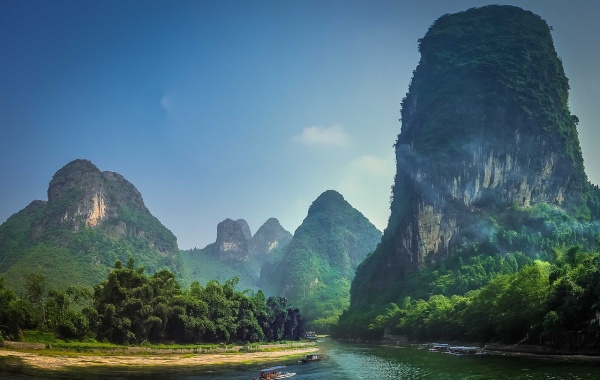
The natural landscape of Erwang Temple is not a canyon in the traditional sense,but rather a"humanistic scenic spot"where architecture and mountain terrain are seamlessly integrated—it is itself an artwork that breathes and resonates with Yulei Mountain.
Nature's Creation—An Architectural Poem on Yulei Mountain
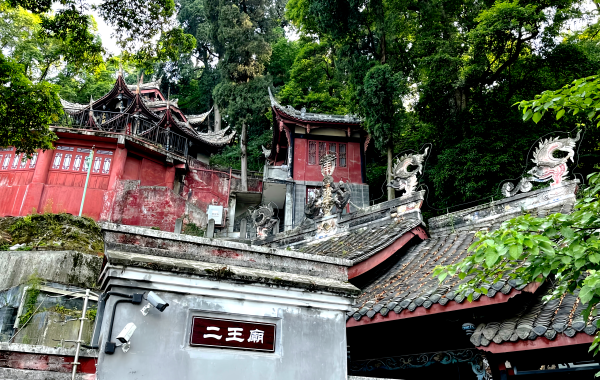
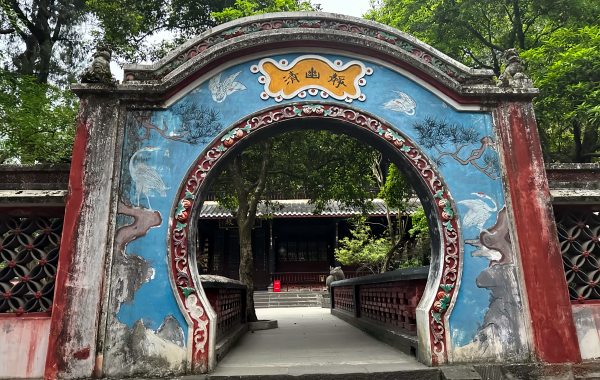
Erwang Temple does not have a separate"natural scenery"section,because it has achieved the ultimate integration of nature and humanity.The entire architectural complex follows the contours of the mountain,coexisting and breathing with the texture of Yulei Mountain.
Following the Shape of the Mountain—An Architectural Masterpiece Coexisting with the Cliff
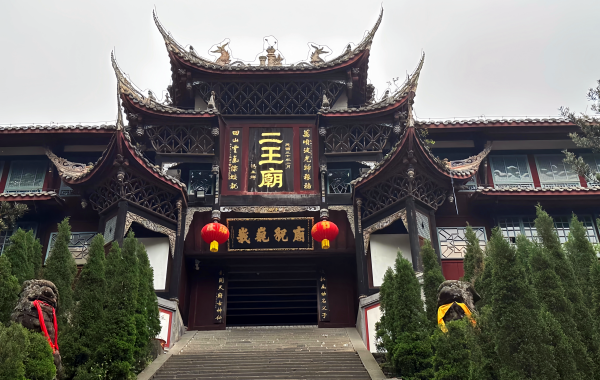
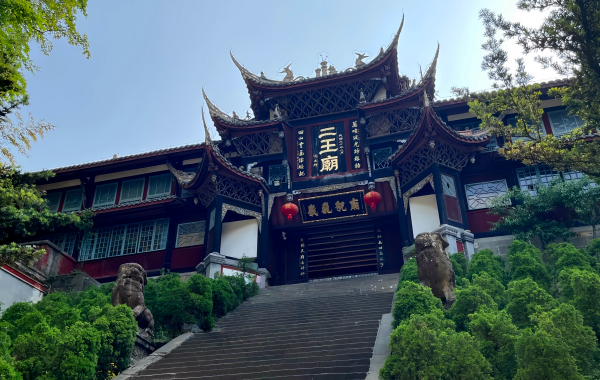
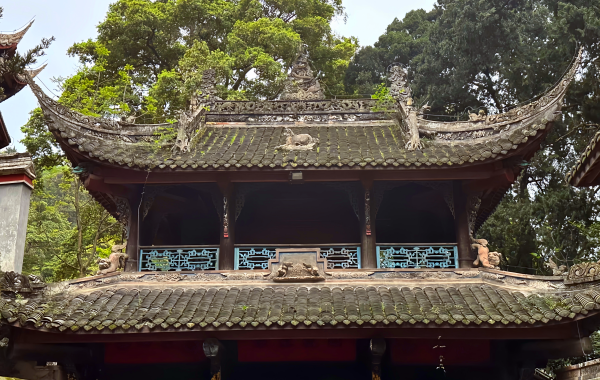
The most prominent style of the Erwang Temple architectural complex is its lack of emphasis on axial symmetry.The temple complex is built entirely according to the natural geographical environment,with buildings stacked and interwoven,creating a vertical height difference of approximately 50 meters and a unique architectural style characterized by overlapping platforms and interconnected corridors.Looking up from below,one sees buildings on each level;looking down,the halls and pavilions appear layered and harmoniously arranged.The entrance is a long,east-west oriented courtyard,aligned with the Minjiang River,and is part of the Songmao Ancient Road.
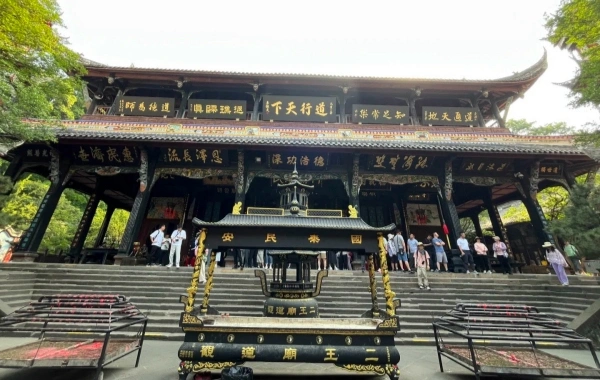
The architectural layout is ingenious:the designer offset the entrance,transforming the space of the courtyard in front of the mountain gate,thus creating a distinctive"mountain gate courtyard."Starting from the main gate's music pavilion,the Erwang Temple has three main halls and sixteen side halls,a grand scale,currently covering an area ofapproximately 10,000 square meters,with a building area ofapproximately 6,000 square meters.
Overlooking View–A God's-eye View of Yulei Pavilion and Qinyan Tower
Climbing to a high point within the temple,one can overlook the entire Dujiangyan Irrigation System.Entering from Qin Yan Tower,one enjoys a commanding view of the three engineering marvels:the Fish Mouth Diversion,the Feisha Weir Flood Discharge,and the Baopingkou Water Diversion.Yu Lei Pavilion offers an even better viewing platform,providing a panoramic vista of the entire Dujiangyan city area and the Minjiang Grand Canyon.The best time to visit is on a clear morning when the light is ample,allowing for a clear view of the magical spectacle of the Fish Mouth dividing the Minjiang River in two.Photography tip:Use a telephoto lens to capture the Fish Mouth,Anlan Suspension Bridge,and the Erwang Temple complex in one frame.
The Charm of Stone Carvings—Silent Water Management Maxims and Artistic Treasures
The most culturally rich"natural landscape"within Erwang Temple is undoubtedly the historical inscriptions embedded in the stone walls.The temple walls bear the motto of Li Bing and his descendants on water management:"Deepen the riverbed,lower the weir,"known as the"Three-Character Classic of Water Management."At the front of the temple is a map of the Dujiangyan irrigation area drawn in the late Qing Dynasty,along with numerous plaques and inscriptions praising Li Bing and his son.The right side of the rear hall also houses inscriptions by painters such as Zhang Daqian and Xu Beihong,adding artistic brilliance to this ancient temple.
Photography Tips:
The best panoramic view is from Qin Yan Tower,which can capture both the Fish Mouth Diversion Dam and the Erwang Temple complex in one shot;Yu Lei Pavilion is suitable for capturing panoramic views of the Dujiangyan Irrigation System and the light and shadow at sunset;The upturned eaves of the Music Tower are excellent subjects for photographing the details of ancient architecture,with the most charming light and shadow at dawn and dusk;Drones are allowed to fly,but be aware that the wind around Yu Lei Mountain is strong,so operate with caution.
Humanistic Ingenuity—Temple Civilization Suspended on the Cliff
The humanistic soul of Erwang Temple is hidden in every hall,every statue,and every plaque.
The Three-Tiered Main Hall—A Spatial Narrative of Faith
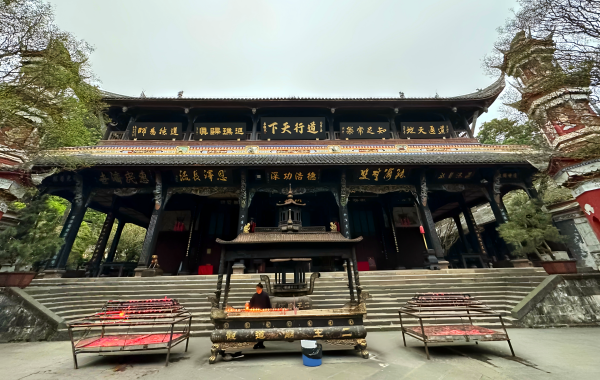
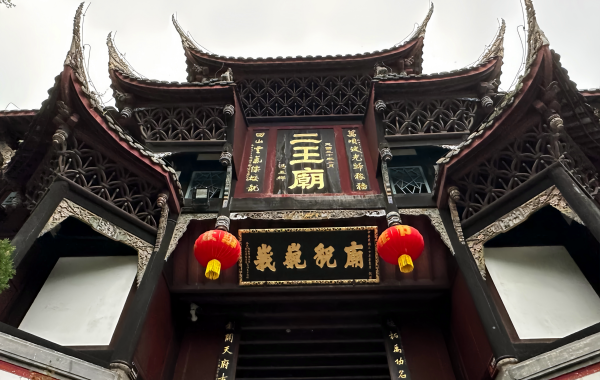
Music Tower(Main Gate):Built in the eighth year of the Qianlong reign(1743),it spans the stone staircase leading to the temple entrance.The building features a hipped roof with eaves extending 20 meters forward,showcasing exquisite design and superb craftsmanship.This is the entrance to the Erwang Temple and the site of the ancient stage,as if a ritual spanning time has begun.
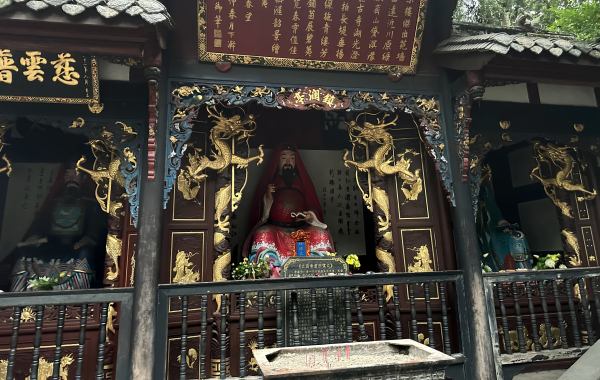
Erwang Main Hall:The main hall enshrines the statue of the Three-Eyed Erlang Shen,with an additional wooden statue of Yang Erlang Shen.As the ancestral temple of Erlang Shen,the Erwang Temple holds a very high position in folk beliefs.
Laowang Hall:This hall enshrines statues of Li Bing and his wife.The hall is bustling with incense offerings,and believers come to worship daily.
Sixteen side halls on either side,including the Azure Dragon Hall,White Tiger Hall,Three Officials Hall,Spirit Official Hall,City God Hall,Earth God Hall,Jade Emperor Hall,Goddess Hall,Kui Xing Pavilion,and Dragon God Hall,form a complete Taoist religious space.
Water Management Maxim–The Wisdom of Deepening the Riverbed and Lowering the Weirs
On the stone wall next to the Li Bing Hall inside the temple,the six-character mantra for water management is engraved:“Deepen the riverbed,lower the weirs.”This is the essence of water management left to posterity by Li Bing and his son,revered as a guiding principle by generations of water conservancy workers for over two thousand years.Although weathered by wind and rain,the inscriptions remain clearly legible,as if the water management maxims of a thousand years ago are still speaking to people today.
Folk Beliefs–The Millennial Tradition of the Erwang Temple Fair
Every year from the 24th to the 26th of the sixth lunar month,the Erwang Temple holds a grand temple fair.Legend has it that the 24th of the sixth lunar month is Erlang's birthday,and the following two days are Li Bing's birthday.People from the beneficiary areas of western Sichuan brave hardships,bringing offerings to the temple to worship,with daily numbers reaching tens of thousands.The Guanxian Local History records:"Every year after the rice planting,people from Sichuan offer incense and candles,paying homage to Li and Wang in an endless stream."During the temple fair,there are both officially presided over ceremonies and lively folk activities,providing an excellent opportunity to experience the folk culture of western Sichuan.