Xinzhai Jiana Mani Stone Scripture City: A Miracle of Faith Built from 2.5 Billion Stones

Xinzhai Jiana Mani Stone Scripture City: A Miracle of Faith Built from 2.5 Billion Stones

Overview: A World-Record Site That Is Still Growing

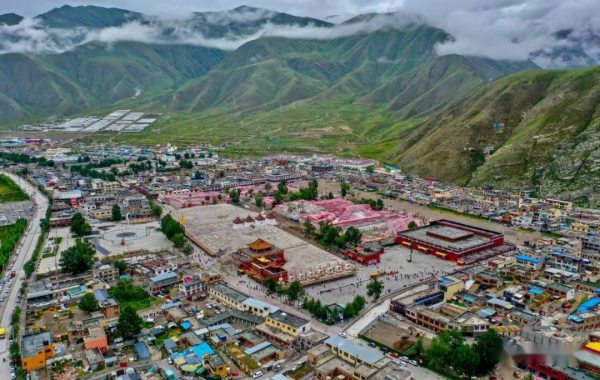
Xinzhai Jiana Mani Stone Scripture City—known in Tibetan as "Jiana Mani"—is situated in Xinzhai Village, Yushu City, within the Yushu Tibetan Autonomous Prefecture of Qinghai Province, located just 3 kilometers from the Yushu city center.

Key Highlights at a Glance

- Distinctions: The world's largest Mani stone mound / Certified by Guinness World Records

- Core Experiences: Feel the awe-inspiring power of faith before walls constructed from 2.5 billion Mani stones / Spin over 300 prayer wheels in a clockwise direction to pray for blessings

- Recommended Visit: 2–3 hours; it is suggested to arrive in the morning to avoid the strong winds typical of the plateau in the afternoon

- Location: Xinzai Village, Yushu City, Yushu Tibetan Autonomous Prefecture, Qinghai Province

  • Xinzhai Jiana Mani Stone Scripture City: A Miracle of Faith Built from 2.5 Billion Stones-1
  • Xinzhai Jiana Mani Stone Scripture City: A Miracle of Faith Built from 2.5 Billion Stones-2
  • Xinzhai Jiana Mani Stone Scripture City: A Miracle of Faith Built from 2.5 Billion Stones-3
  • Xinzhai Jiana Mani Stone Scripture City: A Miracle of Faith Built from 2.5 Billion Stones-4

Origins: A Natural Mani Stone and a 300-Year Legacy of Faith

Furong Ancient Town Furong Ancient Town Furong Ancient Town Furong Ancient Town

The Source of Faith—The Self-Manifesting Mani Stone and the Jana Living Buddha

The story of the Xinzai Jana Mani Stone Scripture City begins over three hundred years ago with a stone that "fell from the sky." Legend has it that when Dodé Songchö Pawang—a high-ranking monk of Tibetan Buddhism and the First Jana Living Buddha of Jegu Monastery (also known as Jana Doding Sangchö Payong)—arrived in Xinzai Village, he discovered a natural Mani stone upon which the Six-Syllable Mantra had spontaneously manifested. This high-ranking monk from the Kham region—who had previously practiced Buddhism at Mount Emei and Mount Wutai—immediately realized his true mission: to remain in this place to bring benefit and happiness to all sentient beings and to ensure the flourishing of the Dharma. Consequently, he settled there and spent the remainder of his life carving Mani stones alongside the local monastic and lay communities.

In the Tibetan language, the term "Jana" broadly refers to the Central Plains of China (the Han regions); this Mani stone city was named after a precious relic—a "town-guarding treasure"—that the Living Buddha had brought back from the Han regions. According to legend, Avalokiteśvara (Guanyin Bodhisattva) gave a prophecy to the Jana Living Buddha, instructing him to construct a Mani stone city in this location—a city that would capture the attention of the entire world—and stipulating that its length should span the distance of a single arrow's flight. The Living Buddha then shot an arrow westward from beside a clear spring at the eastern edge of Xinzai Village; the stretch of land extending from the spring's source to the spot where the arrow landed became the designated site for the foundation of the Mani Stone City. As for the stone material used for the carvings, the deities and Buddhas had long since arranged it: buried atop the cluster of mountains south of Xinzai Village lay Zangbaiyu—Tibetan White Jade—as pure and white as fine jade, a material utterly unique within a radius of hundreds, if not thousands, of miles.

The Path of Legacy—From a Single Stone to a City of Faith

Over the three centuries that followed, countless pilgrims—hailing from diverse backgrounds, ethnic groups, and regions—made their solemn vows. Generation after generation of stone-carving artisans meticulously chiseled scriptures, mantras, Buddha images, and classic texts onto stones, offering them up in devout reverence. Stone upon stone, each inscribed with sacred text, accumulated over time; inch by inch, the stone city rose higher, eventually taking on the magnificent form it presents today.

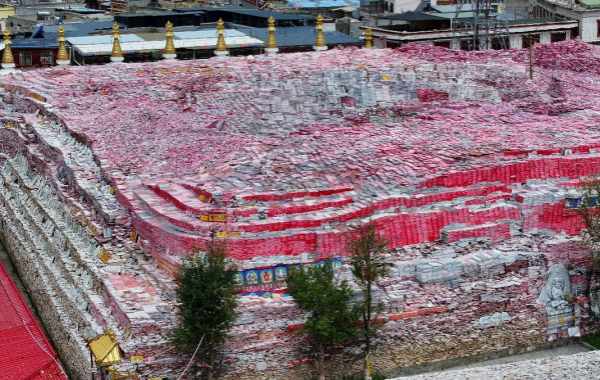
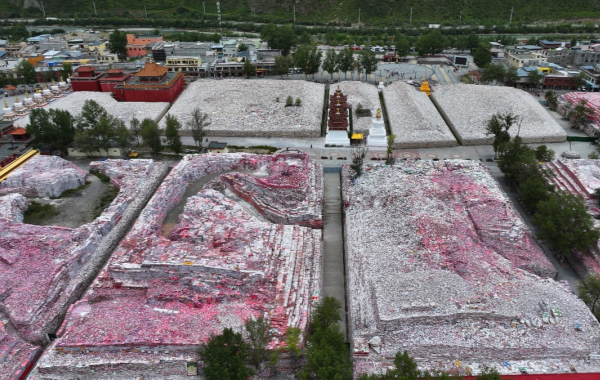
Unlike other monumental Buddhist heritage sites, the Jiana Mani Stone Scripture City is a miracle of faith born entirely from spontaneous, grassroots devotion. With every prayer for blessing and every vow made, believers would add a few more "Mani stones" to the growing pile. Through this cumulative process—day after day, year after year—it eventually evolved into a majestic stone city spanning an area of 24,000 square meters.

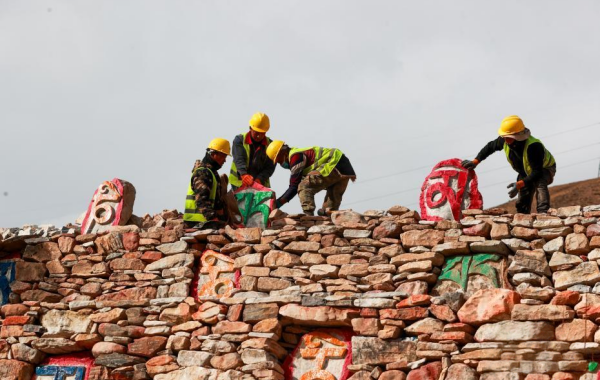
On April 14, 2010, a massive 7.1-magnitude earthquake struck Yushu. Jiana Mani—a National Key Cultural Heritage Site with a history spanning over 300 years—suffered severe damage. Approximately ten days after the quake, the government invested a total of 70.2 million RMB in the restoration of the Mani stone piles. Among the four "National Treasures" of cultural heritage sites in Yushu requiring post-quake restoration, this project was the first to commence work and the quickest to reach completion. Today, the restored Jiana Mani has not only regained its former scale and grandeur, but the shrine housed within the stone city also enshrines a statue of the First Jiana Living Buddha—the site's founder—alongside the miraculous "Self-Manifesting Mani Stone," standing guard over this sacred sanctuary of faith.

> In-Depth Exploration: Discover more sacred sites of faith. >> [Shanghai City God Temple]

A Must-See Spectacle: A Symphonic Poem of Stone and Faith

Furong Ancient Town Furong Ancient Town Furong Ancient Town Furong Ancient Town Furong Ancient Town

Nature's Masterpiece—An Open-Air Stone Carving Museum on the Qinghai-Tibet Plateau

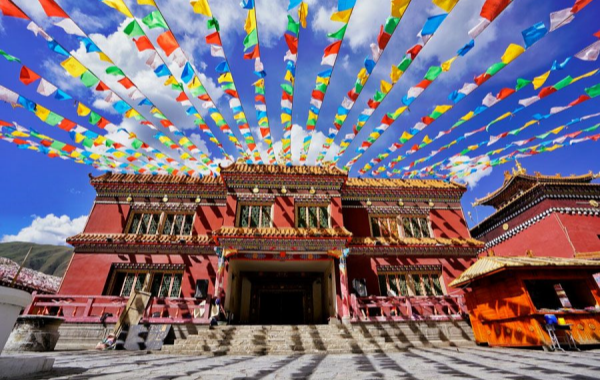
The Jiana Mani Stone Scripture City is situated deep within the heart of the Qinghai-Tibet Plateau, resting at an elevation of over 3,600 meters with an average annual temperature of approximately 2°C. The air here is thin yet pure, the ultraviolet radiation intense, and the sky displays that profound, deep azure characteristic of the high plateau. Standing within the Stone City and gazing upward, the white clouds seem almost within reach, while the distant mountain ridges undulate endlessly across the horizon. As the seasons turn, the Stone City reveals vastly different visages: in summer and autumn, the meadows surrounding the city burst with lush greenery—wildflowers dotting the landscape—creating a vivid contrast against the white stone walls; in winter and spring, snow blankets the stone mounds, prayer flags snap briskly in the wind, and the entire world is steeped in a silent, solemn palette of silvery white.

What is most breathtaking, however, is neither the vegetation nor the terrain, but rather the visual transformations the Stone City undergoes under the shifting natural light. In the early morning, as the first rays of sunlight crest the ridges and fall upon the Mani Stone City, the white stone surfaces and multicolored inscriptions take on a warm, soft texture within the gentle illumination. At high noon, the direct sunlight of the plateau causes every chisel mark on the stone carvings to cast a sharp, distinct shadow, making the three-dimensional depth of the inscriptions seem to leap out at the viewer. At dusk, the setting sun bathes the entire Stone City in a golden glow; prayer flags flutter in the breeze, and shadows stretch long across the stone walls—a truly golden hour for photography.

The climate of the high plateau is mercurial; within a single day, one might witness a rapid succession of clear skies, rain, snow, hail, and rainbows. This mysterious unpredictability of the weather harmonizes perfectly with the inherent religious atmosphere of the Stone City, creating a truly unique travel experience.

> Photography Tips: The best time for photography is between 8:00 and 10:00 AM, when soft side-lighting helps accentuate the textures and carvings of the Mani stones. The prayer corridors are ideal for capturing silhouettes of people amidst the interplay of light and shadow. Drone aerial photography offers a perspective that highlights the Stone City's orderly rectangular layout and the surrounding plateau landscape. Photographing in winter after a snowfall creates a visually pristine scene, where the white snow blends seamlessly with the white stone walls. Please note: when using drones at religious sites, it is essential to respect local beliefs and customs; it is advisable to seek permission or consult with locals in advance. 

Human Ingenuity—An Epic of Civilization Written in Stone

The Jiana Mani Stone Scripture City is by no means a mere pile of stones; it is a cultural monument forged from scripture and faith—the pinnacle of Tibetan stone-carving art.

2.5 Billion Mani Stones—A Vast Ocean of Faith

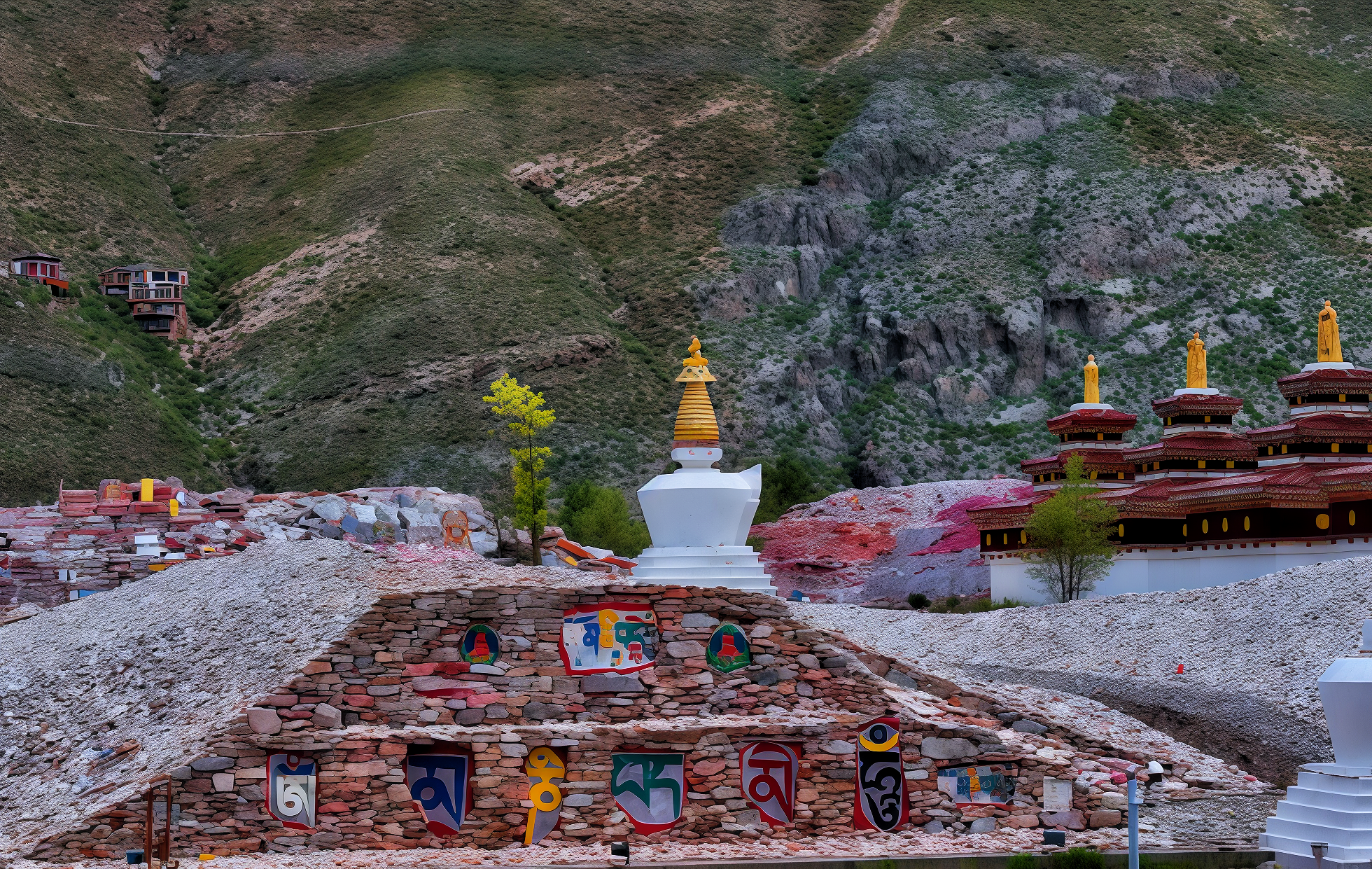
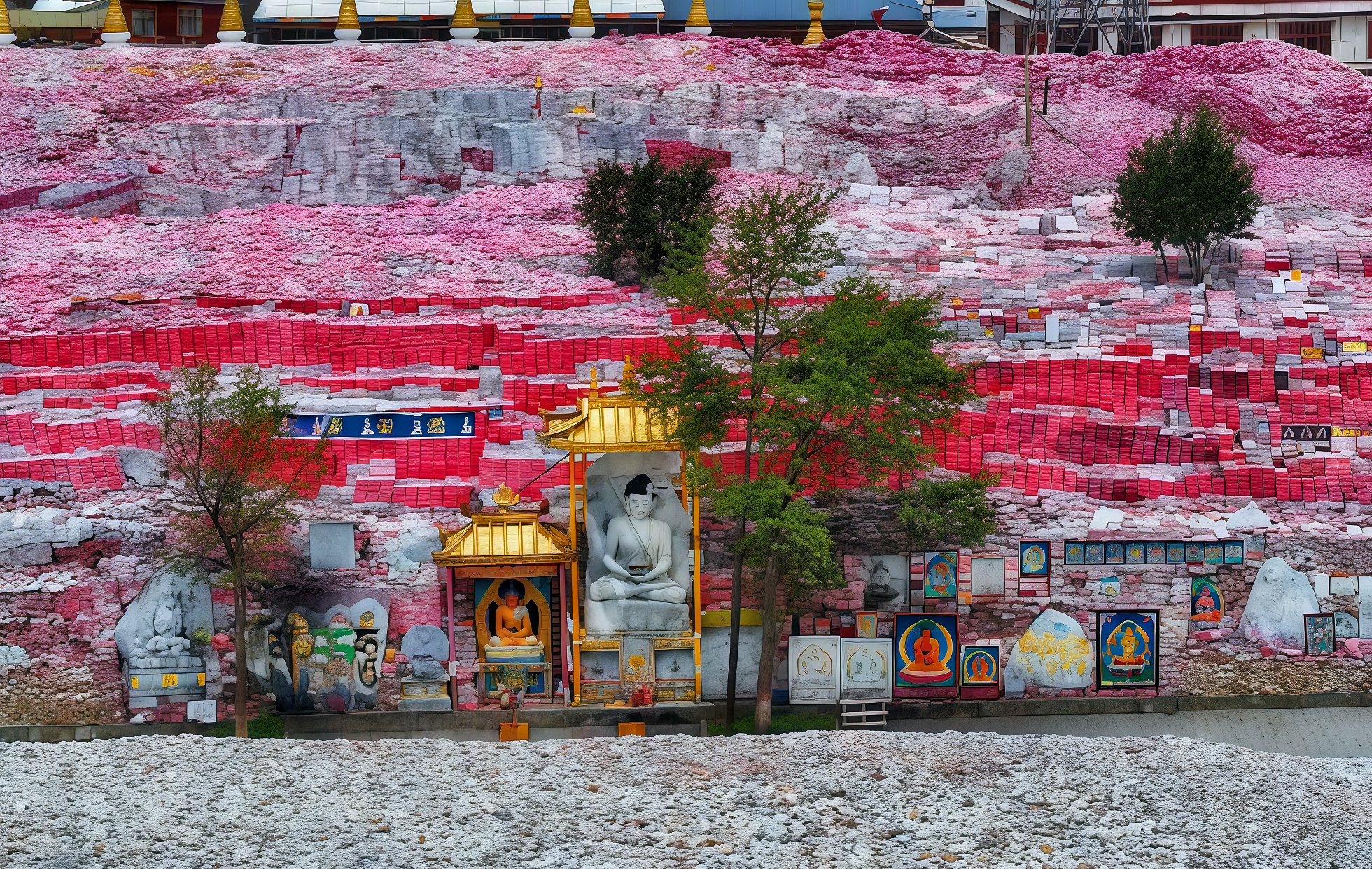
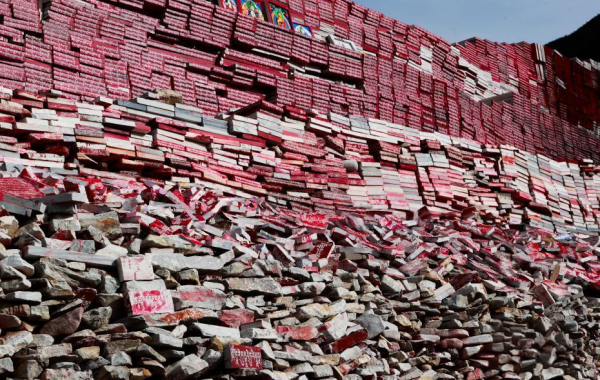
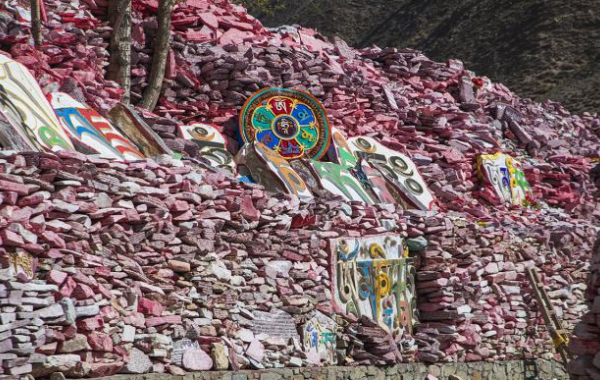
Stepping into the Jiana Mani Stone Scripture City, one is immediately struck by its sheer scale. The city of scriptures is constructed from approximately 2.5 billion Mani stones; stretching about 300 meters from east to west and 80 meters from north to south, it rises to a height of 4 meters, covering a ground area of ​​24,000 square meters with a total volume approaching 90,000 cubic meters. Experts have hailed it as "the only mountain in the world built entirely of written words."

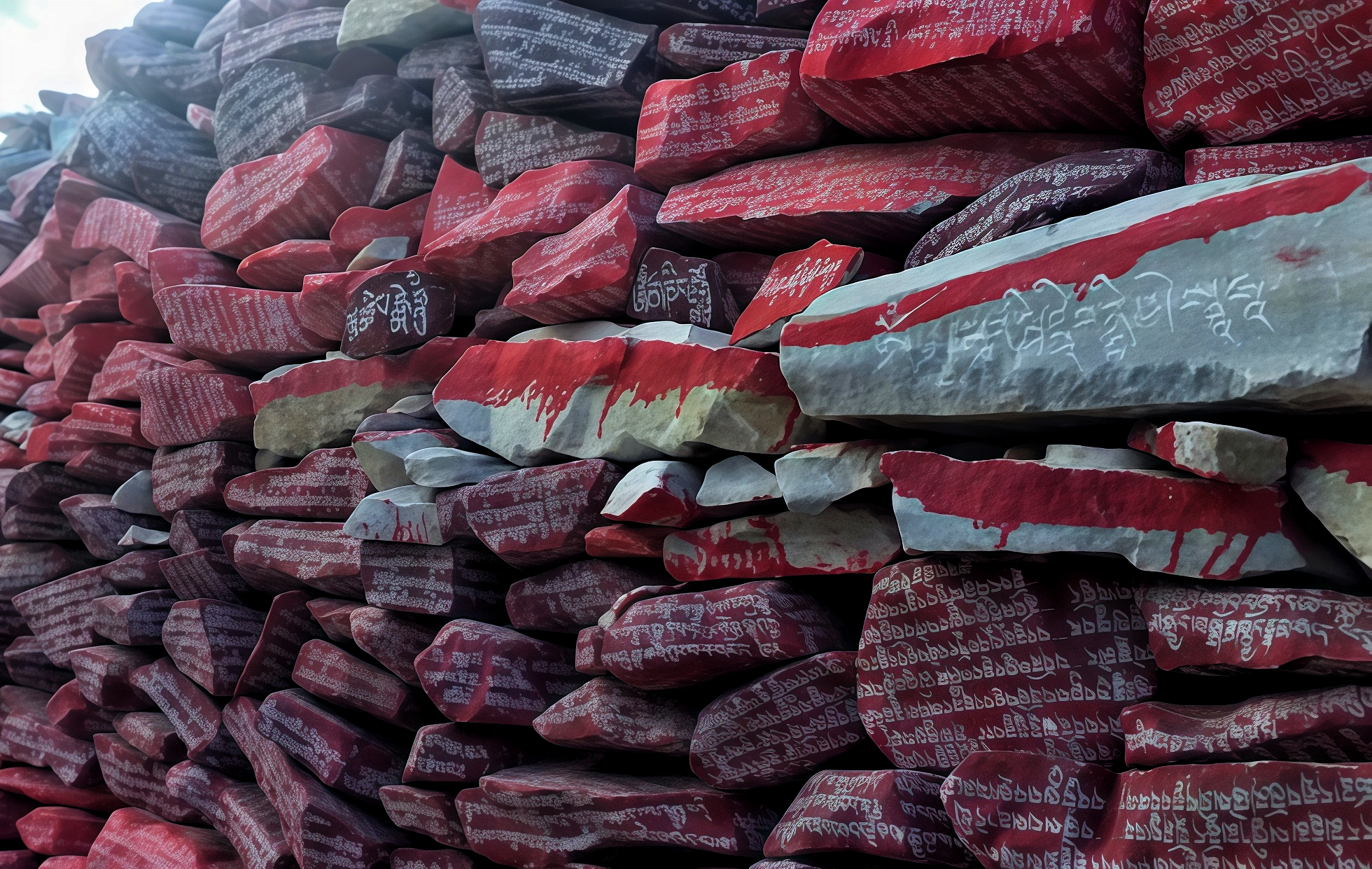
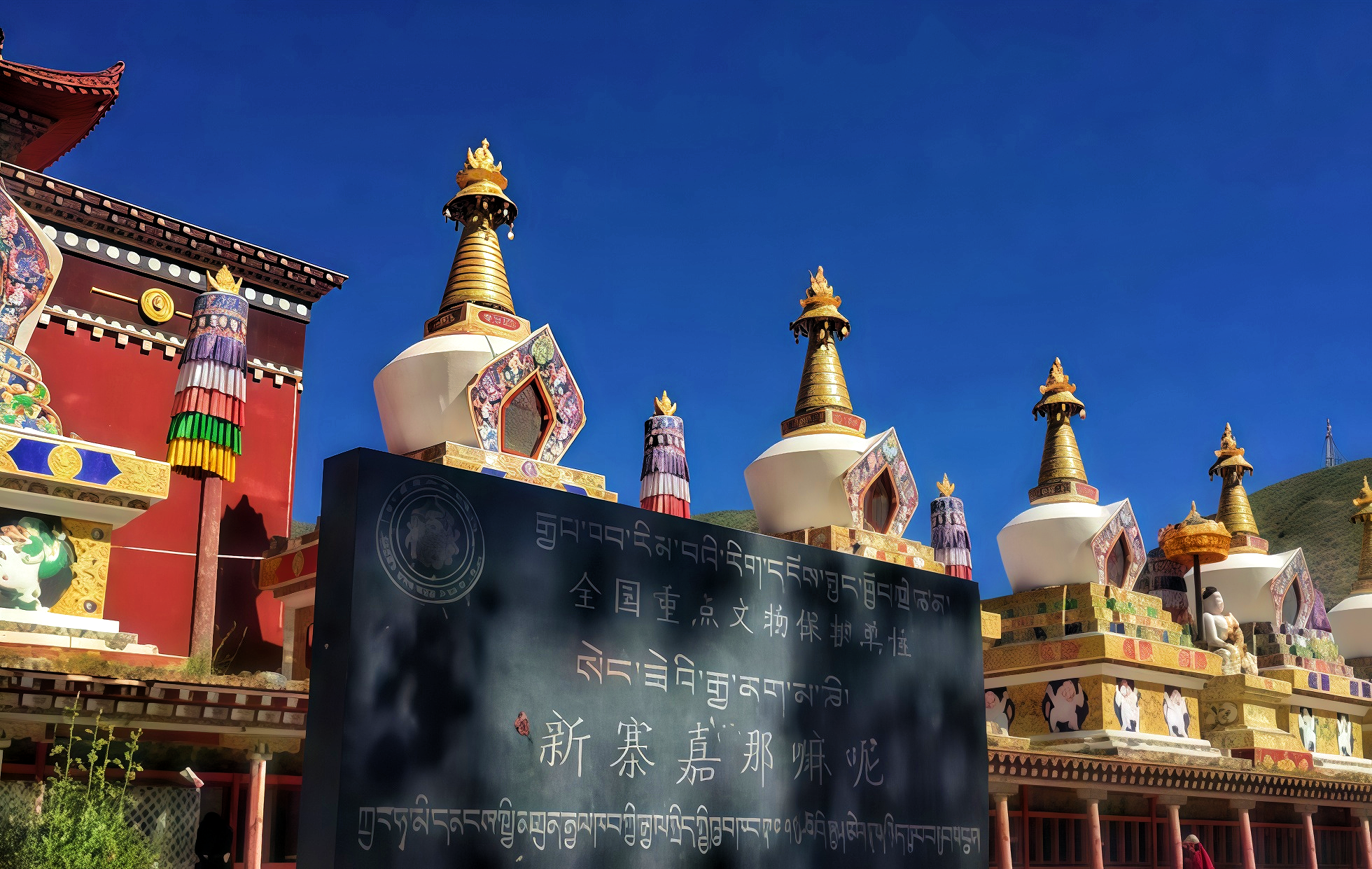
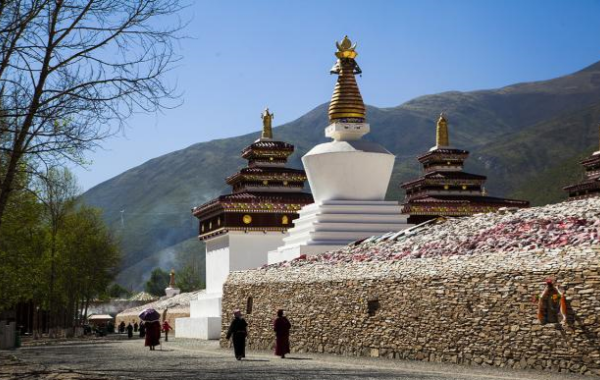
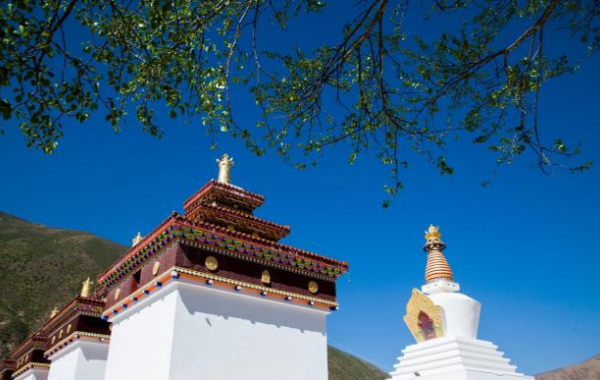
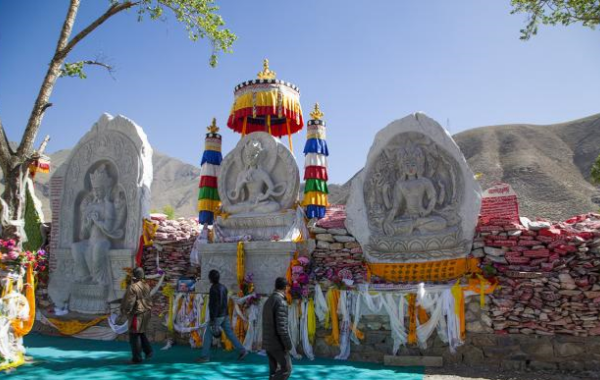
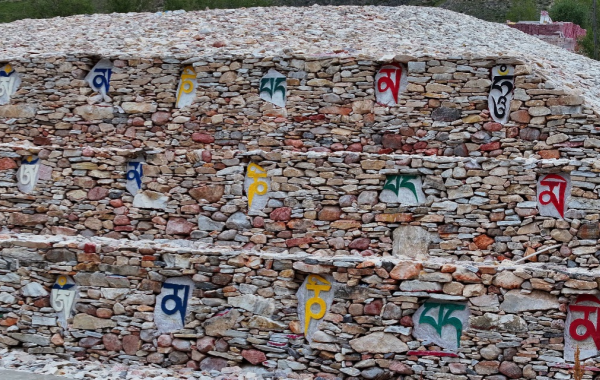
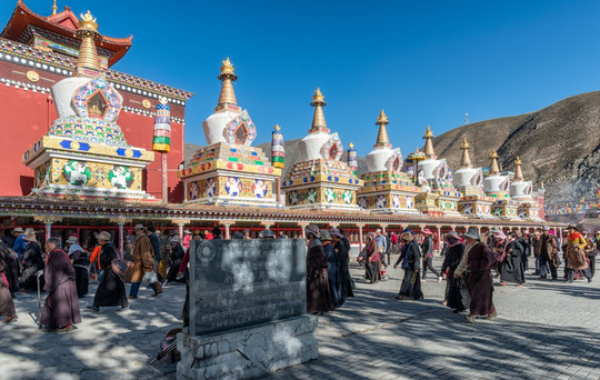
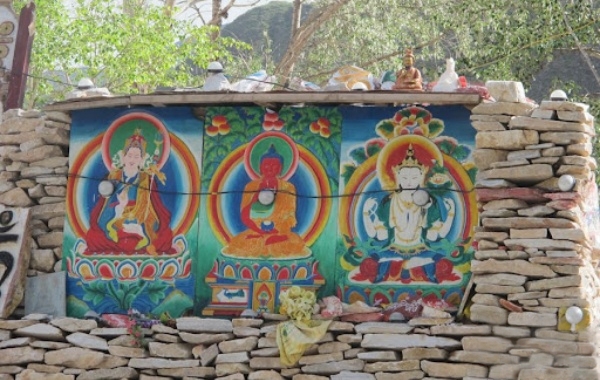
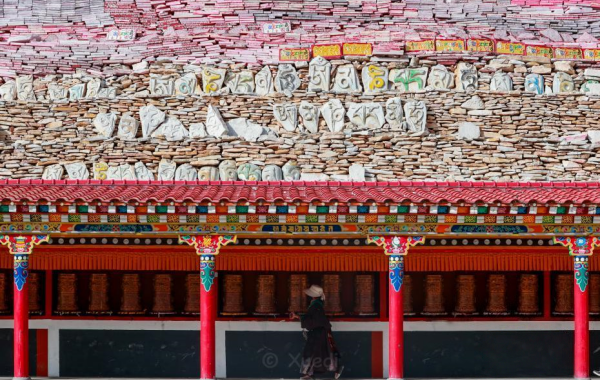
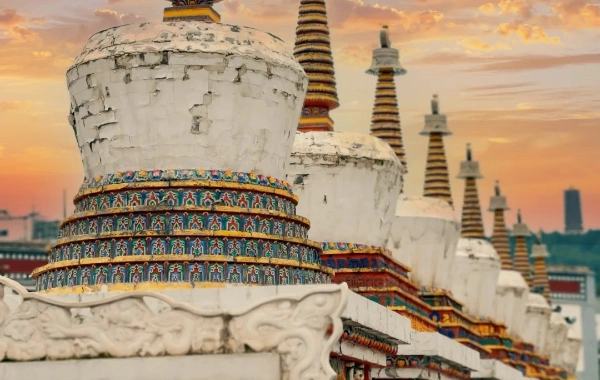
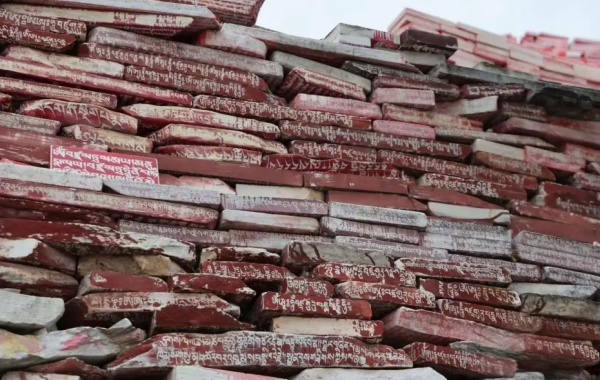
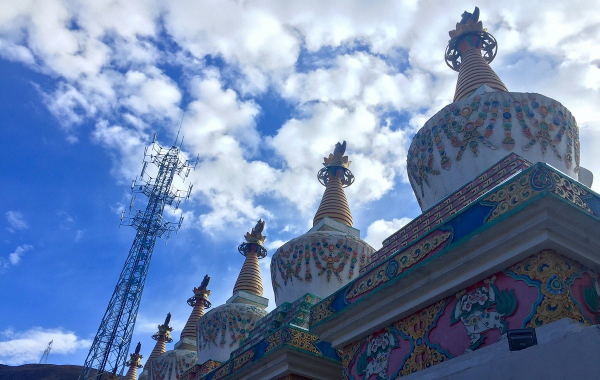
These Mani stones vary widely in size and shape—some are as large as a tabletop, while others are no bigger than an egg. Each stone surface is engraved with the Tibetan Six-Syllable Mantra, "Om Mani Padme Hum," alongside a wealth of other content including images of the Buddha, legal codes, calendrical calculations, and artistic treatises. Some artisans have meticulously carved entire Buddhist sutras across numerous stones—complete with covers and backings—assembling them into sets of "scripture books." To the east of the Mani mound stand eight white stupas and a massive prayer wheel, while the opposite side is almost entirely composed of Mani stones carved with images of the Buddha, displaying exquisite craftsmanship and harmonious color palettes.

The Art of Stone Carving—Spiritual Practice at the Blade's Edge

The stone material used for the Jiana Mani carvings is a variety of Tibetan white jade—pure and lustrous as true jade—known in Tibetan as Yongchi Gabu. It is quarried from the peaks of the Duocong Mountains situated south of Xinzai Village. The carving techniques employed are rich and diverse, encompassing intaglio (incised carving), relief carving, high relief, and bas-relief.

In Xinzai Village, the art of stone carving has been passed down through the generations. 46-year-old Cairen Kanzhuo represents the fourth generation of her family to practice this craft; she is also recognized as a regional-level inheritor of Intangible Cultural Heritage. Having begun her apprenticeship in stone carving at the age of eleven or twelve, she has now dedicated over thirty years to this art form. She explained: "I began carving stones alongside my father when I was just a child. After he passed away, our family's craft fell to me; I knew I had a duty to carry on this legacy."

Another stone-carving artisan—a "post-80s" generation artist named Tashi Lhatso—has gained a modest reputation for her ability to carve intricate, small-scale Mani stones. To the locals, she is a true Dodo (the Tibetan term for a stone-carving artisan)—a woman blessed with "skin as fair as milk, a heart as compassionate as a Bodhisattva, hands guided by divine skill, and a face as radiant as a celestial maiden." She is capable of carving around twenty Mani stones inscribed with the Six-Syllable Mantra in a single day. As she puts it: "Anything worth doing will eventually turn out well, provided one invests the necessary effort and accumulates enough experience." Today, Xinzhai Village is home to over a thousand Mani stone carvers; collectively, they generate an annual income of approximately 24 million yuan, with the most prolific artisans earning up to 100,000 yuan per year.

Xinzhai Monastery and the Prayer Wheel Corridor—The Spiritual Core of the "Stone City"

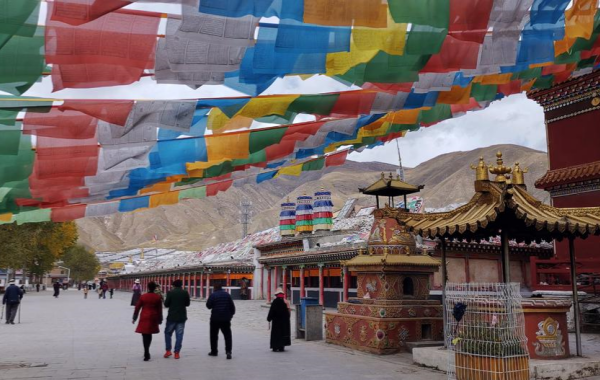
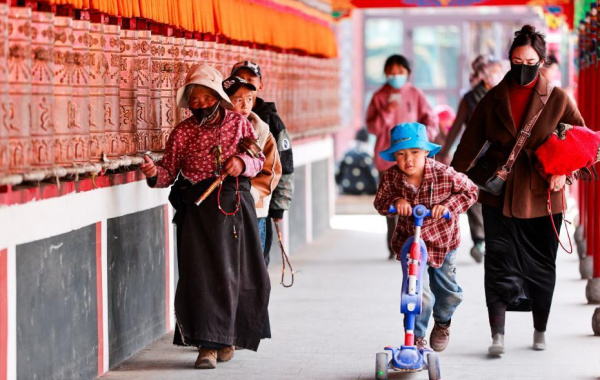
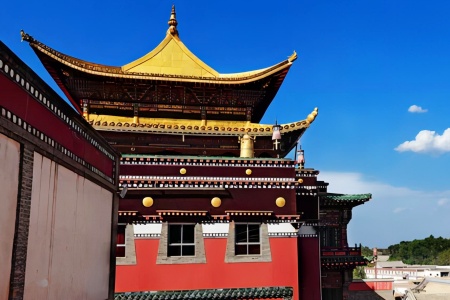
Situated to the south of the "Stone City" lies Xinzhai Monastery, an institution boasting a history just as ancient and profound as the city itself. Encircling the Stone City are ten massive prayer wheels and over three hundred smaller ones. From dawn until dusk each day, countless devotees circumambulate the Stone City in a clockwise direction, chanting the Six-Syllable Mantra aloud while spinning the prayer wheels held in their hands. They believe that with every turn of a prayer wheel—and every touch of a Mani stone—they are offering a blessing for the well-being of all sentient beings.

Pilgrimage on the 15th Day of the First Lunar Month—An Annual Feast of Faith

The 15th day of the first month of the Tibetan lunar calendar marks the most auspicious day of pilgrimage at the Jiana Mani Stone Scripture City. On this day, tens of thousands of devotees from regions such as Qinghai, Tibet, and Sichuan converge upon this sacred site. They circumambulate the Stone City, perform full-body prostrations, offer butter lamps, and scatter Lungta (prayer flags). The air before the monastery's shrine is thick with the smoke of burning incense, while the rhythmic chanting of scriptures rises and falls in waves—creating a scene of truly magnificent spiritual grandeur.

"A Cultural Treasure": A Testament of Faith Not to Be Missed

Mani Stones—Sacred Stones Endowed with a Soul

The term "Mani" is derived from Sanskrit Buddhist scriptures; it serves as an abbreviation for the Six-Syllable Mantra: "Om Mani Padme Hum." Adherents of Tibetan Buddhism regard the offering of inscribed stones—known as Mani stones—as a sacred act of merit: a means of seeking the Buddha's blessings, expressing spiritual reverence, and dispelling misfortune and illness. According to tradition, an ordinary stone, once inscribed with the Six-Syllable Mantra (Om Mani Padme Hum), ceases to be merely a stone; it becomes imbued with a soul and divine blessings. In Buddhist scriptures, the Six-Syllable Mantra is interpreted as embodying profound merits, such as liberating sentient beings across the Six Realms of Existence, dispelling the Six Afflictions, cultivating the Six Paramitas (perfections), attaining the Six Bodies of the Buddha, and giving rise to the Six Wisdoms.

The Stone-Carved Library: Wisdom Etched in Stone

Jiana Mani is not merely a city of faith; it is also a vast, open-air library of stone inscriptions. Beyond the Six-Syllable Mantra, this "Stone City" is home to tens of thousands of Mani stones inscribed with legal codes, astronomical calculations, artistic treatises, and excerpts from classic Buddhist scriptures. Some artisans have meticulously carved entire sets of Buddhist sutras across hundreds of individual stones—complete with covers and backings—assembling them into "stone books" that can be literally "read." For scholars researching Tibetan calligraphy, the history of Tibetan Buddhism, and Tibetan folk culture, Jiana Mani possesses an irreplaceable academic value.

The Stone Carvers: Guardians of Faith

In Xinzai Village, the carving of Mani stones is not merely a craft practiced for a livelihood; it is, above all, a spiritual discipline. Tashi Latso explains: "Before carving a Mani stone, one must first make a sacred vow. While carving, reciting the Six-Syllable Mantra just once is considered equivalent to reciting an entire volume of scripture. Furthermore, any sentient being touched by the wind after it has swept across these Mani stones is said to receive the blessings and benefits embodied within them." Today, Mani stones serve not only as objects of religious offering and prayer but have also become cherished souvenirs for visitors to Yushu, carrying the spiritual merits of Mani far beyond their place of origin.

Core Experience: An Immersive Journey into the Culture of Faith

Furong Ancient Town Furong Ancient Town Furong Ancient Town Furong Ancient Town

Five Must-Do Activities: Unlocking the Full Experience of the Stone Scripture City

1.  Circumambulate Clockwise to Pray for Blessings

Upon arriving at the Stone Scripture City, begin by walking a full circuit around the complex in a clockwise direction. Along the route, you will pass through the prayer wheel corridors; take the time to spin each of the ten large prayer wheels and the more than 300 smaller ones, one by one. Adherents of Tibetan Buddhism believe that every rotation of a prayer wheel is equivalent to reciting the scriptures contained within it once. This is not merely a physical journey, but—more importantly—a spiritual purification.
2.  Watch Stone Carvers at Work

At Xinzai Village and at the foot of the Stone Scripture City, stone carvers can be seen every day carving Mani stones on-site. You can witness firsthand how an ordinary piece of white Tibetan jade, amidst the rhythmic tapping of hammers and chisels, gradually reveals flowing lines of scripture and the exquisite contours of Buddhist deities. If you are interested, you can even try your hand at stone carving under the guidance of the artisans; the finished stone can then be enshrined within the Stone Scripture City, serving as a unique personal bond between you and this sacred site.

3.  Seek Out the Naturally Manifested Mani Stone

Inside the prayer hall of the Stone Scripture City, enshrined for veneration, lies the naturally manifested Mani stone originally discovered by the First Jiana Living Buddha—the very founder of the Stone Scripture City. Regarded by devotees as a sacred relic, this stone marks the genesis of every story associated with the Jiana Mani Stone Scripture City. When visiting the prayer hall, take a moment to quietly gaze upon it and feel the spiritual source of a faith tradition that has endured for three centuries.

4.  Attend a Grand Pilgrimage Ceremony on the 15th Day of the First Lunar Month

If your schedule permits, planning your visit for the 15th day of the first month of the Tibetan lunar calendar promises a cultural experience you will cherish for a lifetime. On this day, tens of thousands of devotees gather; the entire stone city becomes immersed in a vibrant atmosphere of fluttering prayer flags, fragrant Sang smoke, and chanting—creating a truly spectacular scene.

5.  Savor an Authentic Feast of Khampa Flavors

After your tour concludes, consider returning to Yushu City to enjoy an authentic Khampa-style Tibetan meal: Tsampa (roasted barley flour) paired with butter tea constitutes the most traditional and staple diet of the high plateau; hand-torn yak meat is tender and free of gamey odor—especially when dipped in a mixture of spiced salt and raw garlic, it is an absolute culinary delight; blood sausage, made by stuffing yak blood into casings and slicing it after cooking, is a quintessential representative dish of Tibetan cuisine; butter tea is rich, savory, and aromatic—making it the perfect beverage for replenishing your energy after traveling across the high plateau; finally, Chang (barley wine) is the traditional drink offered to guests in Tibetan households—it has a low alcohol content and a refreshingly sweet taste. Restaurants within the city center—such as Da Xunhua Mianpian and Yinxiang Jiegu—enjoy excellent reputations.

Suggested Itineraries

Half-Day "Essential & In-Depth" Tour (Recommended)

Arrive at the Stone Scripture City at 10:00 AM; walk the kora (pilgrimage circuit) in a clockwise direction, spinning the prayer wheels along the way to offer blessings (approx. 40 minutes) → Visit the Buddha Hall and the Prayer Wheel Hall to pay homage to the Self-Manifested Mani Stone and the statue of the Jiana Living Buddha (approx. 20 minutes) → Watch stone carvers at work carving Mani stones, interact with the artisans, and try your hand at stone carving (approx. 1 hour) → Ascend to a vantage point to overlook the entire Stone Scripture City and capture panoramic photos (approx. 20 minutes) → Proceed to visit Xinzai Temple (approx. 30 minutes) → Return after lunch. Total tour duration: approx. 3–4 hours.

> IntoTravelChina Advantage & Expert Guides: IntoTravelChina offers fully customized itineraries, including exclusive guides, transportation, and activity arrangements, ensuring a worry-free and deeply immersive travel experience. Click here to request a custom quote now.

Two-Day "Yushu + Stone Scripture City" In-Depth Tour

Day 1: Morning: Arrive in Yushu from Xining by plane or vehicle (approx. 800 km from Xining to Yushu; flight duration is approx. 1.5 hours) → Afternoon: Visit the Xinzai Jiana Mani Stone Scripture City for an immersive experience of the kora circuit and stone carving → Evening: Overnight stay in Yushu city center (Recommended: Gesar Palace Hotel—considered one of the best accommodation options in the city center, featuring clean and warm rooms; staff are also available to assist with oxygen tanks in case of altitude sickness) → Dinner: Savor authentic Khampa Tibetan cuisine.

Day 2: Morning: Head to the Princess Wencheng Temple to visit this Tibetan Buddhist monastery, originally built during the Tang Dynasty, and learn about the history of Princess Wencheng's journey into Tibet in 641 AD → Noon: Return to Yushu city center for lunch → Afternoon: Visit Jiegu Temple (one of the largest Tibetan Buddhist monasteries in Yushu) → Evening: Depart for your return journey.

> IntoTravelChina Advantage: We can book the most suitable accommodations for you, seamlessly coordinate all your activities, and provide detailed tour route maps along with safety guidelines.>> [Consult for Customization Now]

Comprehensive Travel Guide: Transport, Accommodation, and Seasons

Furong Ancient Town Furong Ancient Town Furong Ancient Town

How to Get There: The Route to the World's Largest Mani Stone Mound

The Jana Mani Stone Scripture City is situated 3 to 6 kilometers east of Yushu City; therefore, arranging your transportation with Yushu City as your starting point is the most convenient option.

-  From Across the Country: We recommend flying to Xining Caojiabao Airport, then transferring to another flight or a long-distance bus to Yushu. Flights from Xining to Yushu take approximately 1.5 hours, with multiple departures daily. Travel Tip: Yushu sits at an altitude of over 3,600 meters; it is advisable to spend one day in Xining to acclimatize to the high altitude before flying on to Yushu.

- From Xining: Direct flights are available from Xining Caojiabao Airport to Yushu Batang Airport (approx. 1.5 hours). Alternatively, you can take a scheduled bus from the Xining Long-Distance Bus Station to Yushu (approx. 12 hours). Travel Tip: If driving yourself or hiring a private car, take the Beijing-Tibet Expressway (G6) to Gonghe, then transfer to the Gongyu Expressway (G0613) to reach Yushu; the total distance is approximately 850 kilometers.

- From Yushu City Center: A taxi from downtown Yushu to the Jana Mani Stone Scripture City costs approximately 10–15 RMB, with a travel time of about 10 minutes. Travel Tip: You can also take a public bus bound for Xinzai Village; services are frequent.

- From Yushu Batang Airport: The airport is located approximately 20 kilometers from the Stone Scripture City. A taxi ride costs about 40–50 RMB and takes roughly 25 minutes.

Important Return Travel Note: Public transportation in Yushu City Center typically operates only until early evening; it is advisable to confirm the schedule for the last bus/service in advance. The most reliable option is to pre-book a ride-hailing service or contact your hotel to arrange a transfer vehicle.

Best Time to Visit

The Jana Mani Stone Scripture City is open to visitors year-round; however, the best time to visit is between May and September. During this period, the climate is relatively mild—with average temperatures ranging from 5°C to 18°C—and the white stone city looks most magnificent beneath the clear blue skies and white clouds.

- Summer & Autumn "Golden Season" (May–September): The climate is relatively mild, and the high-altitude meadows are lush and green. Daytime temperatures range between 10°C and 20°C, but there is a significant temperature difference between day and night (temperatures can drop to 0°C–5°C); we recommend dressing in layers (the "onion style") and packing plenty of warm clothing. UV radiation is extremely intense, so be sure to take adequate sun protection measures. July and August constitute the peak tourist season and coincide with the Yushu Horse Racing Festival, a time rich in traditional cultural festivities. - The Tranquil Winter-Spring Season (Oct–Apr): Visitor numbers are sparse, the snowy scenery is picturesque, and accommodation offers better value for money. During winter, daytime temperatures often hover below freezing, while nighttime lows can plummet to below -15°C; therefore, ample cold-weather gear is essential. Some flights and roads leading to Yushu may be affected by weather conditions; travelers should check road conditions and travel updates prior to their trip. The grand pilgrimage festival marking the 15th day of the first month of the Tibetan lunar calendar (typically falling in February of the Gregorian calendar) takes place during this period.

Note on High-Altitude Sickness: The Jiana Mani Stone Scripture City sits at an elevation of over 3,600 meters. It is recommended to spend 2–3 days in advance in Xining or Yushu City to acclimatize to the altitude. Upon arrival at the plateau, avoid strenuous physical activity, stay warm, and drink plenty of water; you may also wish to bring high-altitude aids such as Rhodiola supplements or portable oxygen canisters. If you experience symptoms such as headaches or nausea, stop immediately to rest and consider descending to a lower elevation. The vast majority of people will gradually acclimatize after staying at altitude for 24–48 hours.

Accommodation Options

- Yushu City Center (Recommended Choice):

Experience: Accommodation options are relatively abundant, ranging from budget-friendly inns to higher-end hotels. The city center sits at an elevation of approximately 3,700 meters, making it an ideal transit hub for high-altitude travel.

Recommended Accommodations: Gesar King's Palace Hotel (one of the better options in the city center, featuring clean and warm rooms; oxygen canisters are available upon request), Vienna Hotel (Yushu Tangbo Ancient Road Branch), Jingtu Mani Inn, and others.

Suitable for: The vast majority of travelers.

- Surroundings of Xinzai Village (For a Minimalist, Authentic Experience):

Experience: Located in close proximity to the Stone Scripture City—within easy walking distance. Accommodation here consists primarily of homestays; while facilities are relatively simple, they offer a unique opportunity to experience authentic Tibetan village life firsthand.

Recommended Accommodations: Jingtu Mani Inn (approx. 221 meters from the Stone Scripture City), Maguomu Homestay, and others.

Suitable for: Travelers who wish to be the very first to enter the Stone Scripture City early in the morning and those seeking a deeply immersive experience of the Tibetan village atmosphere. IntoTravelChina Accommodation Booking Tips:

We strongly recommend planning your itinerary and booking your accommodation at least 2–4 weeks in advance—especially during the peak travel season of July and August, and around the 15th day of the first month of the Tibetan lunar calendar—as hotels in Yushu city are often fully booked during these times. Booking through us not only provides access to real-time room availability but also allows for the convenient bundling of accommodation, attraction tickets, and transportation. This often results in package discounts and ensures a seamless, hassle-free travel experience. Simply let us know your budget and requirements, and we will match you with the perfect "Highland Home" for your stay. >> [Consult for Customization Now]

Extended Journeys: A Loop Route Connecting the Highlights of the Eastern Qinghai-Tibet Plateau

Furong Ancient Town

The Jiana Mani Stone Scripture City is by no means the end of your journey; rather, it serves as the perfect starting point for exploring the magnificent region of Yushu and the broader Qinghai-Tibet Plateau.

- Classic 4-Day In-Depth Yushu Loop: Xining (Departure) → Yushu (Xinzai Jiana Mani Stone Scripture City) → Princess Wencheng Temple (A testament to Tang Dynasty Han-Tibetan cultural exchange) → Gyegu Monastery (Yushu’s largest Tibetan Buddhist monastery) → Batang Grassland (Magnificent scenery of highland pastures) → Lebagou Rock Carvings (A cluster of millennia-old petroglyphs). This is a perfect journey that seamlessly blends spiritual culture, Han-Tibetan history, and stunning highland landscapes. 

- 7-Day Grand Qinghai-Tibet Plateau Loop: Xining (Kumbum Monastery) → Qinghai Lake (China’s largest inland saltwater lake) → Chaka Salt Lake ("The Mirror of the Sky") → Yushu (Jiana Mani Stone Scripture City) → Princess Wencheng Temple → Chamdo → Nyingchi → Lhasa. This is the ultimate pilgrimage—a spiritual journey leading from the sacred sites of Tibetan Buddhism to the holy city of the "Land of Snows."

Partner with IntoTravelChina to Embark on Your Exclusive Journey to the City of Faith

Furong Ancient Town

The story of the Jiana Mani Stone Scripture City is one of divine revelation etched into stone, a relay of faith spanning three centuries, and the spiritual practice of countless carvers performed at the very tips of their blades. IntoTravelChina specializes in crafting immersive, personalized, and hassle-free travel experiences across China. Our travel experts can assist you by:

- Tailoring Your Itinerary: Designing the perfect route—customized to your interests and schedule—that encompasses the Jiana Mani Stone Scripture City and other attractions in the Yushu region.

- Providing One-Stop Service: Handling all arrangements, including flight bookings, unique accommodations, transportation transfers, local guides, and activity reservations.

- Arranging Exclusive Experiences: Organizing in-depth guided tours led by expert Tibetan cultural guides, hands-on stone carving workshops with local artisans, special access to the grand pilgrimage ceremonies held on the 15th day of the Lunar New Year, and more.

Let your visit to the Jiana Mani Stone Scripture City be more than just sightseeing; let it be a spiritual odyssey—a profound dialogue with faith itself.

> Start Planning Your Journey Now

> We invite you to contact our professional travel consultants; we will provide you with a personalized itinerary proposal and price quote within 24 hours. >> [Consult for Customization Now]

What Our Clients Say?

Based on 10,000+ traveler reviews

...
Daniel Dorothea
Canada
Reviewed on April 29,2025
Shopping on Nanjing Road in Shanghai was just amazing! It's truly the "First Commercial Street of China", where tradition and modernity blend perfectly. You can find awesome souvenirs and experience the trendy vibes in cool stores. The neon lights at night are just spectacular, shining bright like Times Square in New York. The food here is incredible too. I had a feast for my taste buds. Shanghai, I'll definitely be back!
Destination(s): Shanghai
Date of Experience: May 08,2024
...
...
Elvis Eva
Canada
Reviewed on June 20,2025
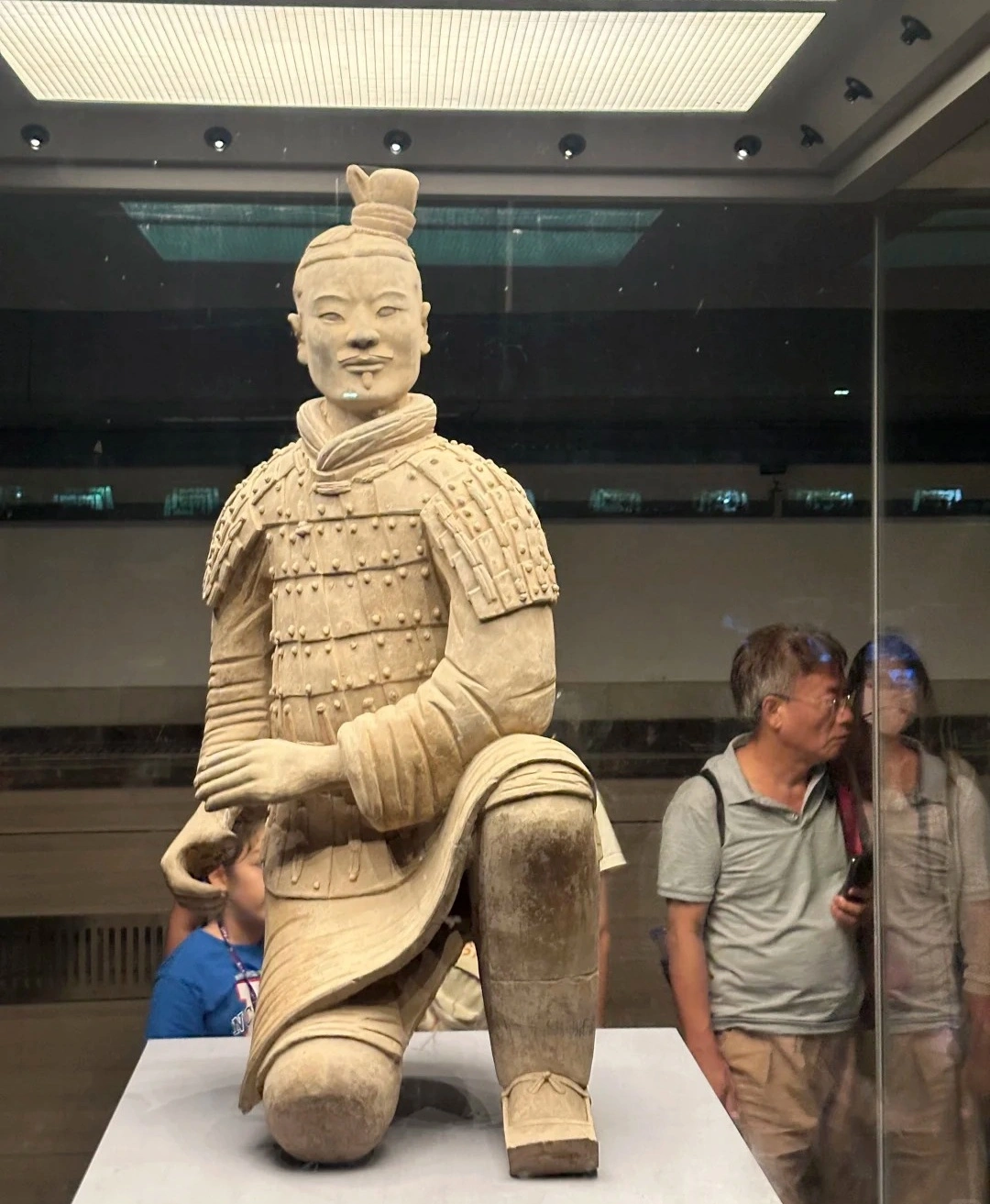
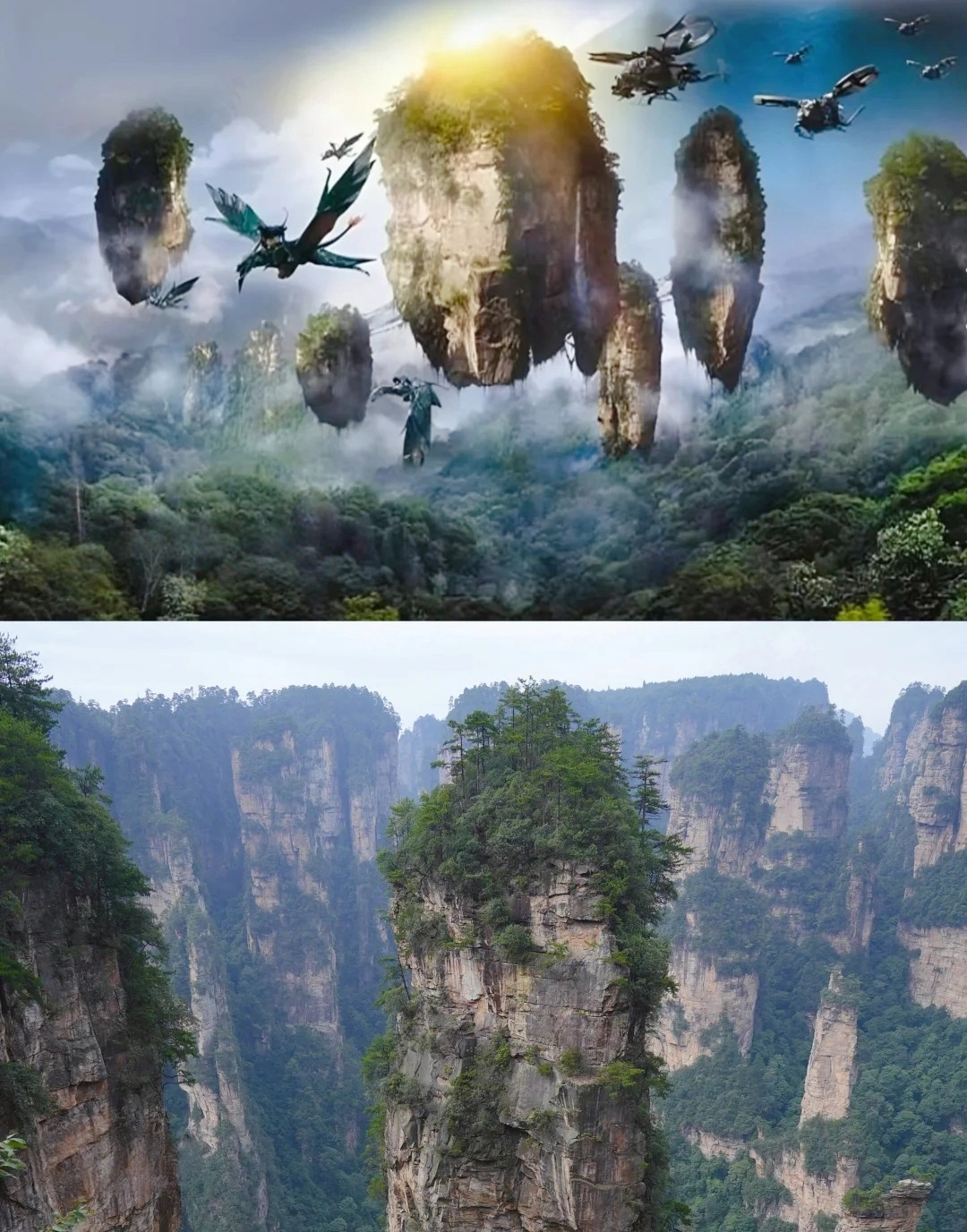
As a solo traveler from Canada, I was nervous about navigating China alone—but this 11-day tour was PERFECT! From hiking the Great Wall at sunrise (Day 3) to gasping at the Terracotta Army (Day 5), every day delivered ‘pinch-me’ moments. The real showstopper? Zhangjiajie’s Avatar Mountains (Day 7)! Our guide made the stone pillars come alive with stories. Massive thanks for handling all logistics—bullet train tickets, entry passes, car! And the 4-star hotels surprised me.
Destination(s): Beijing Xian Zhangjiajie Shanghai
Date of Experience: June 02,2025
... ... ...
...
Simon
America
Reviewed on May 29,2025
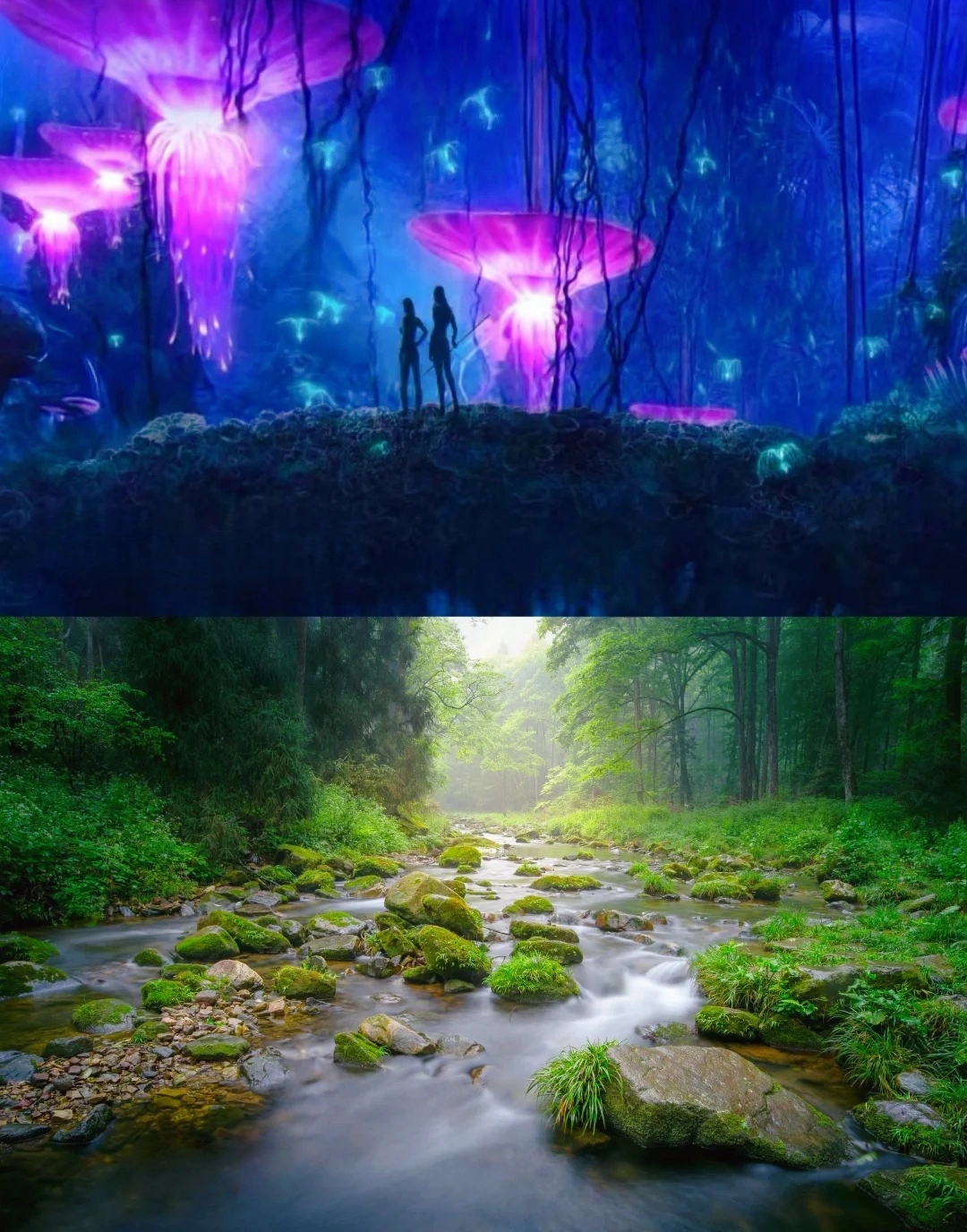
Our 2-day Zhangjiajie tour was beyond spectacular! As someone who’s visited Beijing and Shanghai for work, this trip revealed China’s wild, magical heart. Day 1 in Zhangjiajie National Forest Park felt like stepping onto Pandora—I’m a huge Avatar fan, and Yuanjiajie’s floating peaks left me breathless. The misty pillars and lush valleys like pure movie magic! Then came Fenghuang Ancient Town, we eat dinner beside the thundering waterfall. It seems Unreal! The night views of stilt houses glowing over the river were straight from a fairy tale. For fellow Avatar lovers and adventure seekers: Don’t miss this bucket-list experience! 10/10 would return. A Well-Traveled Film Buff, May 2025
Destination(s): Zhangjiajie
Date of Experience: May 08,2025
... ...

Ask a Question

Question Summary (100 characters)
Details (optional) (2,000 characters)
Name
Country
Phone
Email