Natural Creation—The Poetic Charm of Incense Burner Peak and Red Leaves
The Summit of Beijing:The View and Legend of Incense Burner Peak
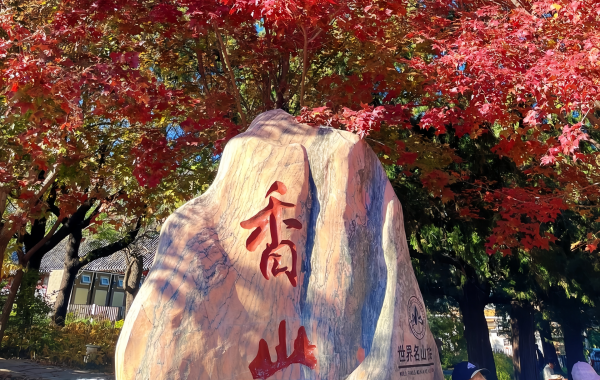
The main peak of Fragrant Hills,Incense Burner Peak,commonly known as"Ghost's Sorrow,"is 575 meters above sea level and offers a superb vantage point overlooking Beijing.At the summit are two enormous,breast-shaped rocks resembling an incense burner.When shrouded in mist,they appear as if incense smoke is rising from the burner,hence the name"Incense Burner Peak."On a clear day,from the summit,one can enjoy a panoramic view of Beijing—the Central Radio and Television Tower,the Olympic Tower,and the China Zun,among other iconic buildings,are all visible,while Kunming Lake in the Summer Palace is like a jade ribbon nestled at the foot of the Western Hills.The climb itself is a dialogue with nature,with ancient pines reaching for the sky and birdsong echoing through the secluded mountains;every step feels like stepping onto the pulse of history.
Photography tip:Climbing to the summit in the early morning allows you to capture the sunrise and sea ofclouds over Beijing,while in the evening you can capture the magnificent light and shadow of the"Western Hills Sunset."
Autumn Foliage Paradise:Eight Hundred Years of Beijing's Autumn Colors
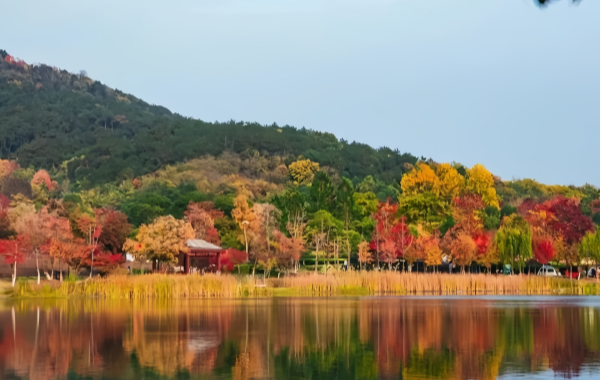
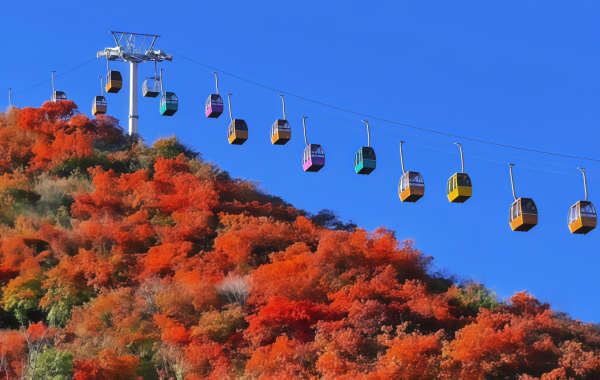
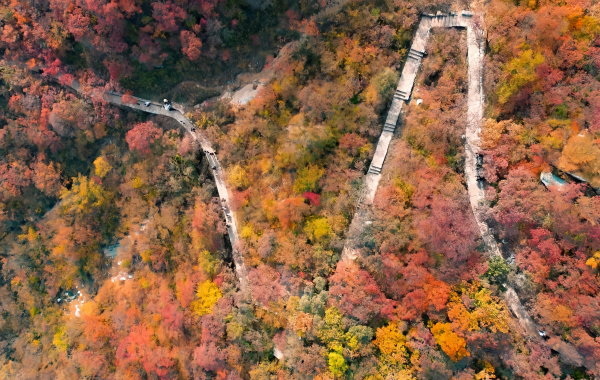
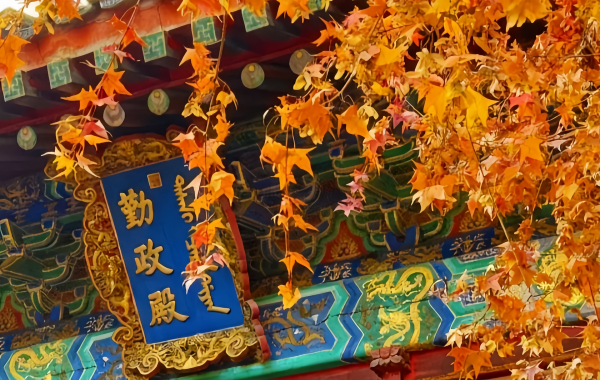
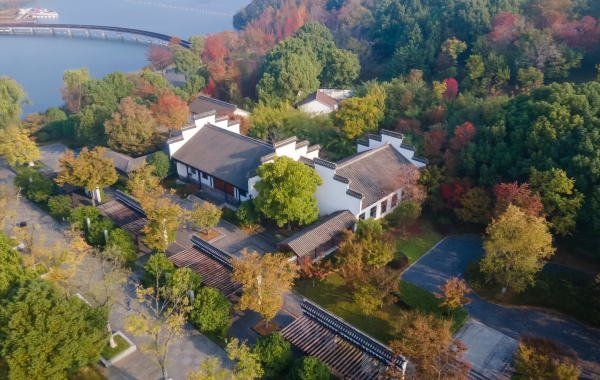
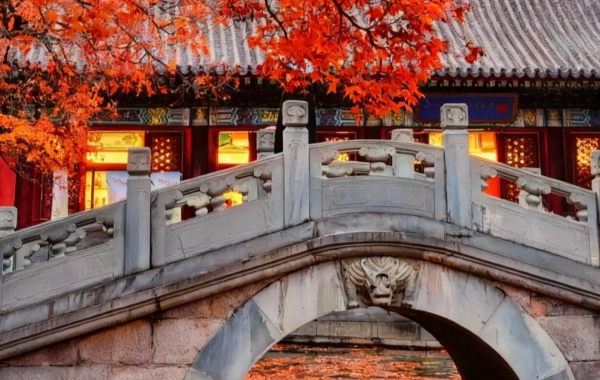
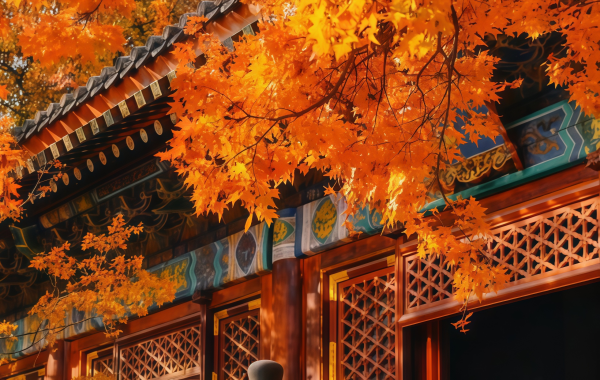
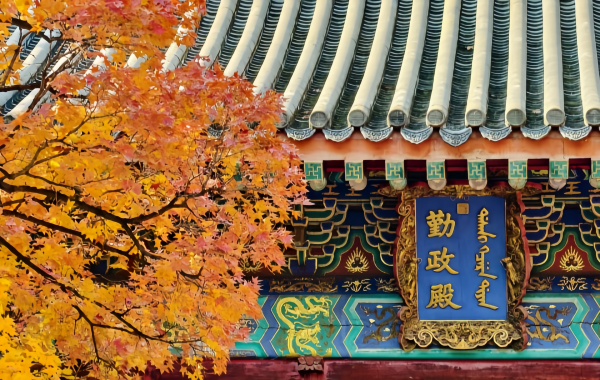
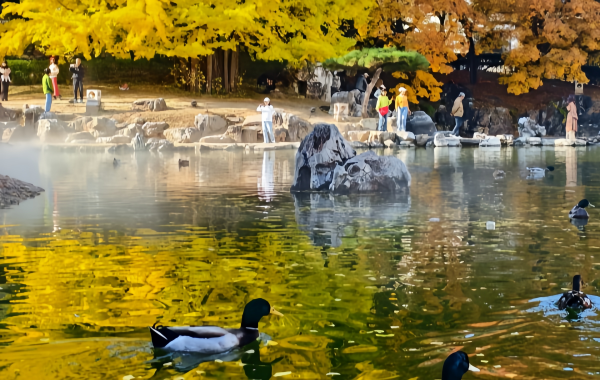
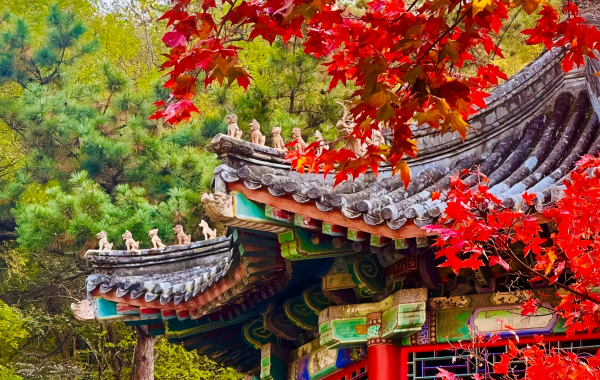
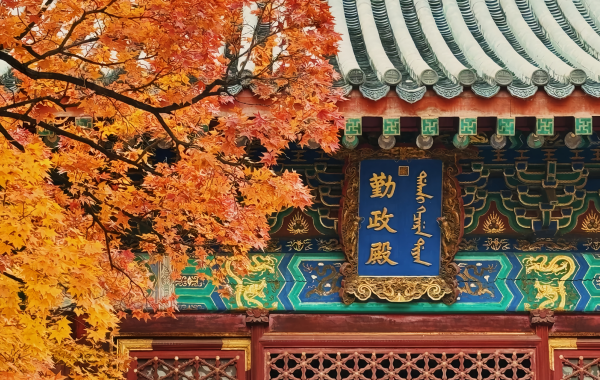
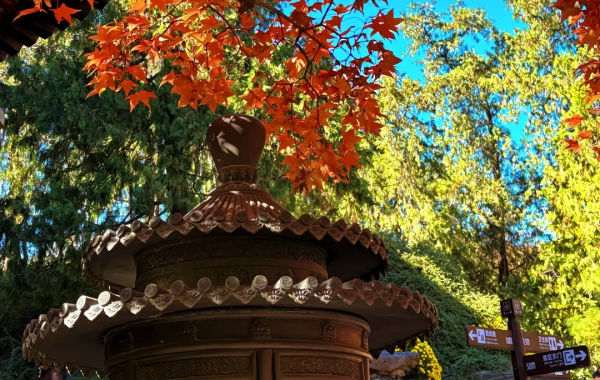
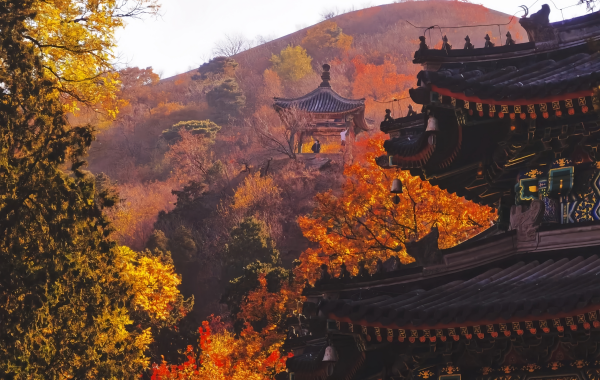
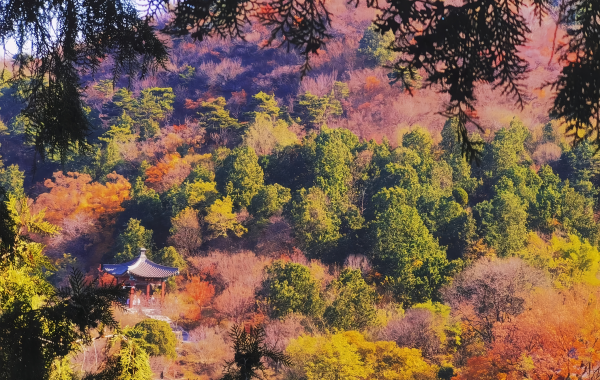
Fragrant Hills'red leaves are one of China's most famous autumn landscapes.The history of planting red leaves here dates back to the Yuan Dynasty,more than 800 years ago,making it a true"origin of Beijing's red leaves."The park boasts more than ten species of colorful-leaved trees,including smoke trees,maple trees,silver maples,and autumn privet,which,every late autumn,turn the mountains ablaze with color,earning it the title of one of the"Sixteen New Scenic Spots of Beijing."The park highly recommends five prime viewing spots:The maple trees in front of the Hall of Diligent Governance are considered"message trees"for the autumn foliage;their orange-red leaves contrast beautifully with the painted decorations of the imperial palace,making it a classic vantage point for capturing the perfect combination of architecture and red leaves.Jingcui Lake,named by Emperor Qianlong as"a screen of mountains with water,"features colorful leaves along its banks and mallards and mandarin ducks in the water,creating a vibrant watercolor painting.At Cuiwei Pavilion,one can experience the poetic imagery of Zhou Ang's lines,"Mountains and forests,city and court,all seem indistinct;red leaves and yellow flowers flow freely along the river,"and take photos with the century-old ginkgo tree.Xiangwu Cave offers a higher elevation and a wider view,allowing for distant vistas of Beijing on clear days.Spectrum Lake boasts a tranquil environment with two round lakes spanned by a bridge,surrounded by colorful trees,and offers opportunities to photograph the Incense Burner Peak from above.The best viewing period is typically from late October to early November,when the large temperature difference between day and night leads to a surge in anthocyanin production,resulting in the most intense red foliage colors.
Ancient Trees and Famous Trees:Living Fossils of Time
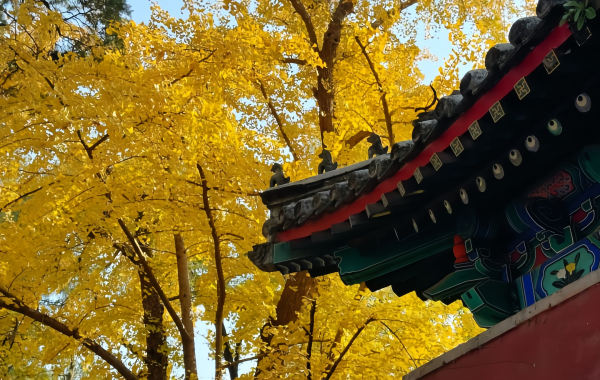
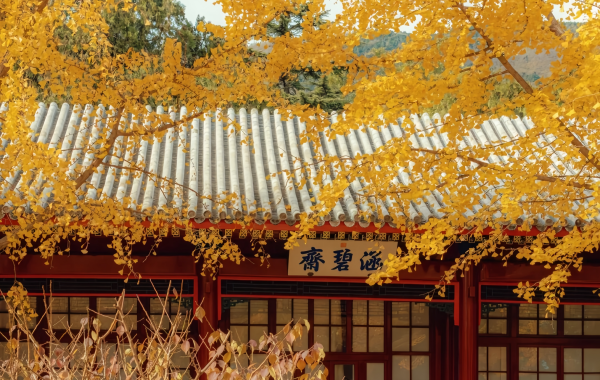
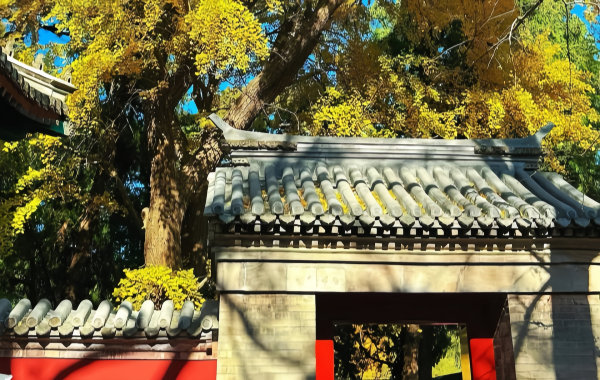
Xiangshan Park boasts a forest coverage rate of 96%,with numerous ancient and famous trees,making it a veritable"living plant museum."Along the main path of Zhisong Garden,over 100 ancient pines and cypresses stand tall and robust,their majestic shapes complementing the Zhaomiao Pagoda,creating the"Jade Pine and Pagoda Shadow"landscape.Near Cuiwei Pavilion,in the"Ancient Tree Demonstration Base,"century-old ginkgo and white pine trees stand quietly,witnessing the passage of time.In autumn,the ginkgo turns golden,the pines and cypresses remain verdant,creating a striking color contrast with the red leaves covering the mountains,providing excellent material for photography.
Humanistic Ingenuity—Royal Palaces and Ancient Temple Zen
Royal Palaces:Historical Treasures of Jingyi Garden
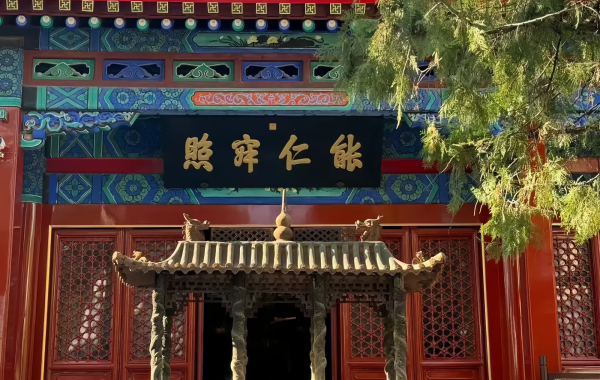
Qinzheng Hall:Located inside the park's east gate,it is the first of the twenty-eight scenic spots in Jingyi Garden,with a plaque inscribed by Emperor Qianlong.This was where Qing Dynasty emperors conducted state affairs in Xiangshan;the hall is magnificent and its paintings are vibrant.Two maple trees in front of the main hall are the first to change color each year,known as the"messenger trees"of Fragrant Hills'red leaves.Their orange-red leaves contrast beautifully with the royal palace,making it a classic photo spot in the park.
Zhao Temple and the Glazed Pagoda:Zhao Temple(Zongjing Dazhao Temple)was built to welcome the Sixth Panchen Lama,blending Han and Tibetan architectural styles.Behind the temple is the Glazed Pagoda,one of Fragrant Hills'landmark buildings.Seven stories high and octagonal,it is entirely decorated with glazed tiles,shimmering in the sunlight,complementing the"Jade Pine Pagoda Shadow"in Zhisong Garden.
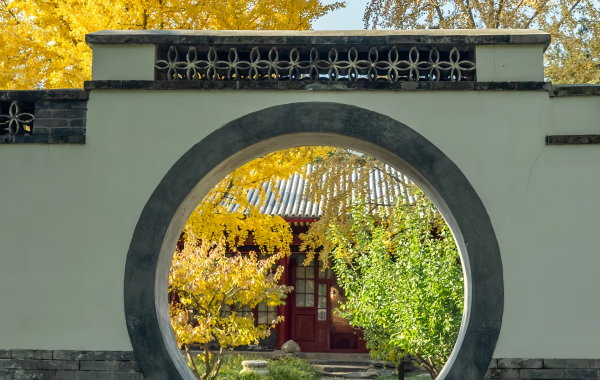
Jianxinzhai:Located on the north side of the park,it is an elegant ancient courtyard with unique Jiangnan characteristics.Pavilions and towers are built against the mountain,with winding paths leading to secluded spots,offering a rare tranquility within the park.
Ancient Temple and Zen Sounds:The Timeless Heritage of Biyun Temple
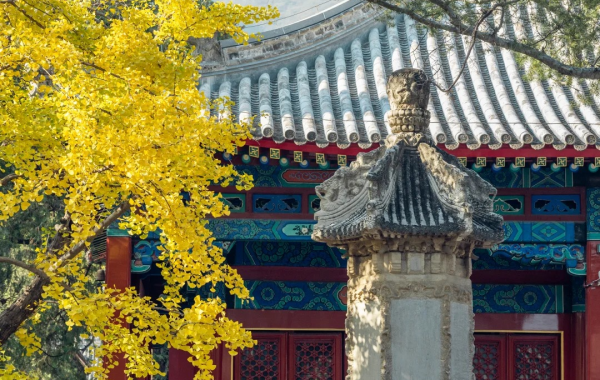
Biyun Temple is located outside the north gate of Fragrant Hills Park.It was first built in the second year of the Zhishun reign of the Yuan Dynasty(1331),and has a history of nearly 700 years.Built against the mountainside,the temple faces east and has six courtyards along the central axis.Along the central axis are the mountain gate,Maitreya Hall,Mahavira Hall,Bodhisattva Hall,Sun Yat-sen Memorial Hall,and Vajrasana Pagoda.The Vajrasana Pagoda is the most iconic building in the temple,its entire body carved from white marble with exquisite craftsmanship,a rare treasure of Buddhist art.The stone lions in front of the temple gate are relics from the Ming Dynasty,exceptionally finely carved and hailed as"the finest among stone lions."The temple grounds are filled with ancient trees and surrounded by springs,offering different scenery in each season,making it an ideal place to escape the hustle and bustle and explore history.After Sun Yat-sen's death in 1925,his coffin was temporarily placed here,and a Sun Yat-sen Memorial Hall is located within the temple grounds.Tip:Biyun Temple requires a separate ticket(10 yuan)or a combined park ticket(15 yuan)for entry.
Red Holy Land:Shuangqing Villa and the Journey to the Imperial Examination
Shuangqing Villa is located on the southeastern hillside of Xiangshan Temple.Originally the site of the Qing Dynasty's Jingyi Garden,"Songwu Yunzhuang,"it was named after two clear springs within its grounds.From March to November 1949,Mao Zedong worked and lived here,directing the Crossing the Yangtze River Campaign and laying the foundation for the People's Republic of China.Today,the villa retains its original appearance.Visitors can tour historical scenes such as Mao Zedong's office and bedroom,and view the"Eternal Youthful Vitality—A Special Exhibition on the Self-Revolution Practice of the Communist Party of China during the Xiangshan Period,"learning about that magnificent period of revolutionary history.In 2025,the park also launched the"Red Imprints:The Journey to the Imperial Examination"patriotic study tour route,covering eight revolutionary sites,suitable for families and enthusiasts of revolutionary culture to experience in depth.
Photography Tips:
The best panoramic view of the autumn foliage is from Xiangwu Cave,offering a high vantage point and expansive vistas of the mountainsides ablaze with red leaves and the cityscape of Beijing.The area in front of the Qin Zheng Hall is a classic spot for capturing the perfect combination of architecture and autumn foliage;it's recommended to visit in the morning when the light is optimal.Glasses Lake is ideal for shooting upwards from the summit of Xianglu Peak and is also a great place for photos with the"Xianglu Peak"sign.The Vajra Throne Pagoda at Biyun Temple,bathed in autumn ginkgo leaves,exudes a Zen-like atmosphere and is perfect for slow-shutter photography.