Bronze Splendor—A Metallic Poem Rewriting History
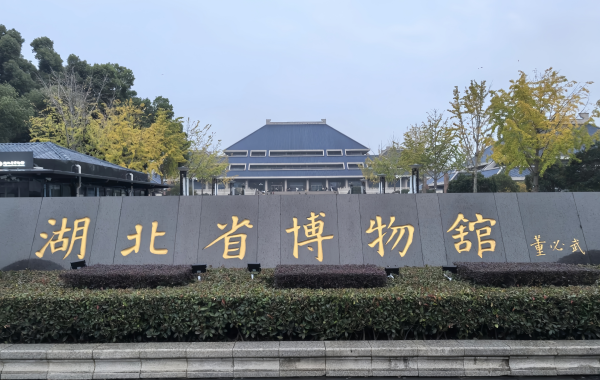
The Hubei Provincial Museum's bronze collection is an eternal symphony of craftsmanship,power,and music.
The Soul of Ritual and Music:National Treasures Rewriting World Music History
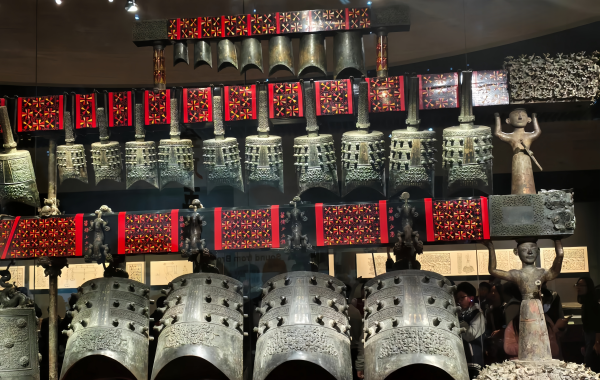
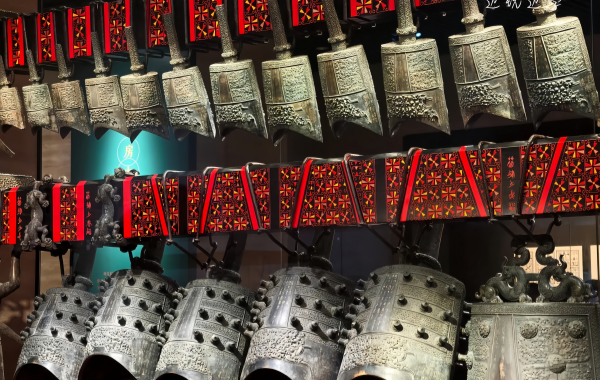
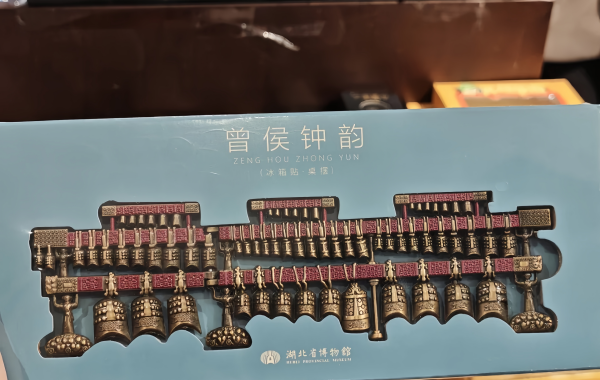
The Marquis Yi of Zeng's Bianzhong Bells:As the undisputed"chief"of the museum,its charm lies in its timeless and awe-inspiring presence.The complete set of chime bells comprises 65 pieces,suspended in three tiers and eight groups on a right-angled bronze and wood frame,weighing nearly 5 tons.It is the largest bronze chime bell musical instrument unearthed in China.Each bell can produce double notes in thirds,spanning five and a half octaves,with all twelve semitones present,allowing for the playing of pentatonic,hexatonic,or heptatonic scales.The bells and frame bear 3,755 characters of inscriptions,including numbers,records,musical notation,and musical theory,making it a veritable musical"encyclopedia"cast in bronze.Experts believe that the discovery of the Marquis Yi of Zeng's chime bells rewrote the history of world music.Visitor Tips:Daily chime bell and dance performances are held,allowing visitors to experience the beauty of music from 2,400 years ago.
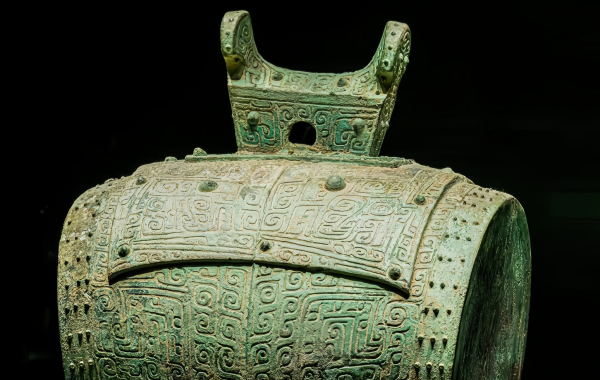
Chongyang Bronze Drum:This bronze drum,with a history of over 3,000 years,is the only extant Shang Dynasty bronze drum in my country.The drum-shaped body,ingeniously combining cloud and thunder patterns with nipple-shaped studs,topped with an arched concave crown,resembles a"bronze drum spirit"that has transcended time,silently narrating the mystery and splendor of the Shang Dynasty's bronze civilization.
Peerless Blade:The Immortal Legend of the World's Number One Sword
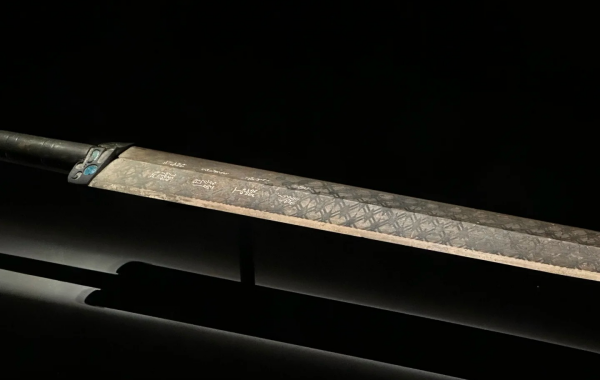
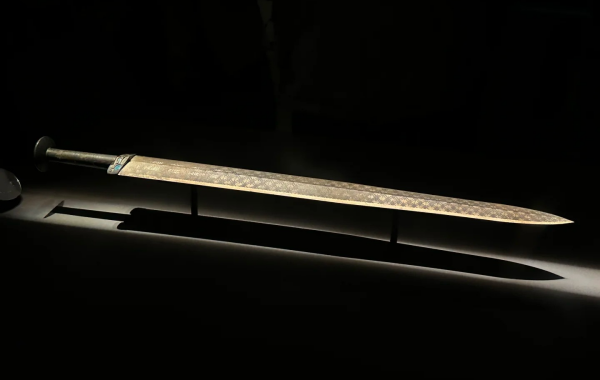
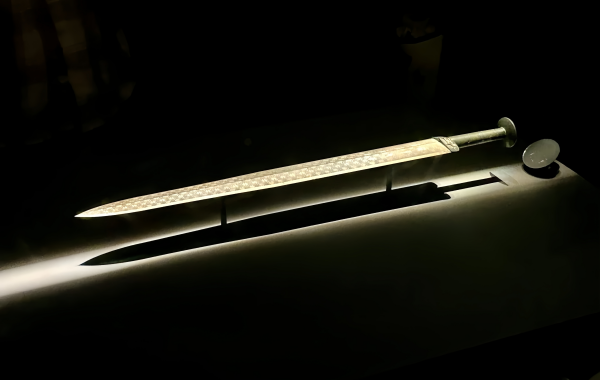
The Sword of Goujian,King of Yue:Unearthed in 1965 from Chu Tomb No.1 at Wangshan,Jiangling,Hubei Province,this sword is 55.6 cm long and 5 cm wide.After more than 2,500 years,it still gleams with a cold light,showing no signs of rust.The blade is covered with mysterious black rhomboid patterns,and the front and back of the guard are inlaid with beautiful designs using blue glass and turquoise,respectively.Near the guard on the front of the blade are two lines of bird-script inscription:"Sword made by King Goujian of Yue."Experts have confirmed that"Goujian"refers to Goujian.When unearthed,the sword was in a lacquered wooden scabbard;when drawn,it gleamed brilliantly.Tests showed it could easily slice through 20 sheets of white paper in one go.Its millennia-long resistance to rust continues to fascinate archaeologists and materials scientists.Visitor Tips:The Sword of Goujian,King of Yue,has a separate exhibition hall and is extremely popular.It is recommended to visit as soon as the museum opens to avoid peak queuing times.
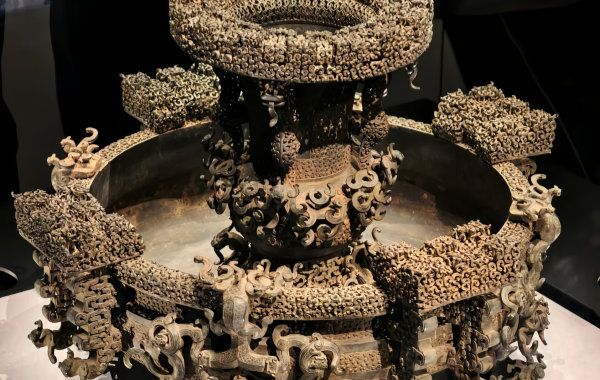
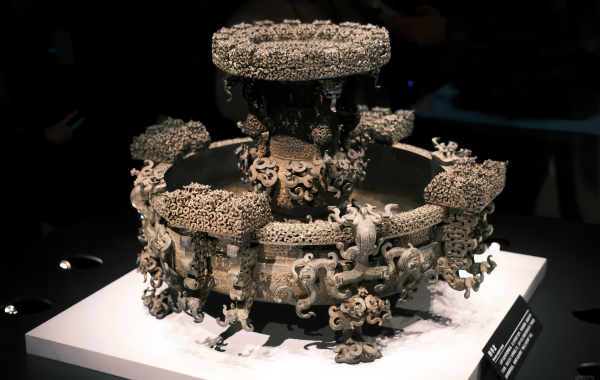
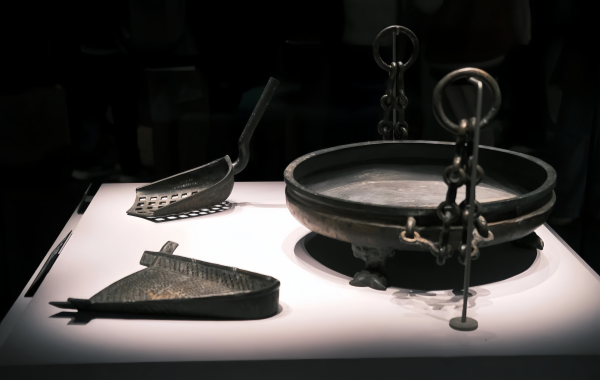
The Marquis Yi of Zeng's Zun and Pan:Composed of two vessels,the zun and the pan,it was cast using the lost-wax method.The zun's rim is decorated with openwork ornaments made of 34 layers of copper rods(the smallest diameter being 0.7 mm),a craftsmanship comparable to"3D printing 2400 years ago."The entire zun is decorated with 28 dragons and 32 coiled dragons,while the pan is decorated with 56 dragons and 48 coiled dragons.It is hailed as a pinnacle of Chinese bronze craftsmanship.
Lacquered Wood Ornaments—The Ultimate Expression of Chu Romance
The lacquered wood artifacts here are not only utensils for daily meals but also a magnificent reflection of the Chu people's spiritual world.
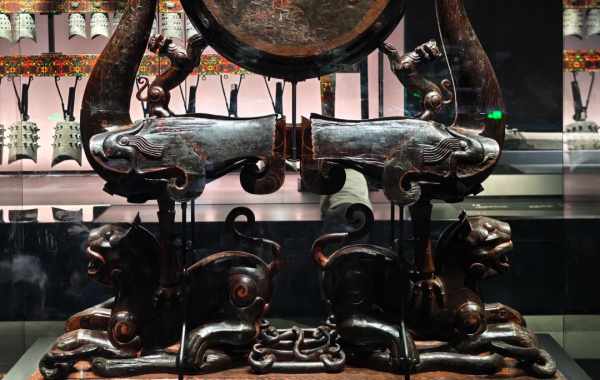
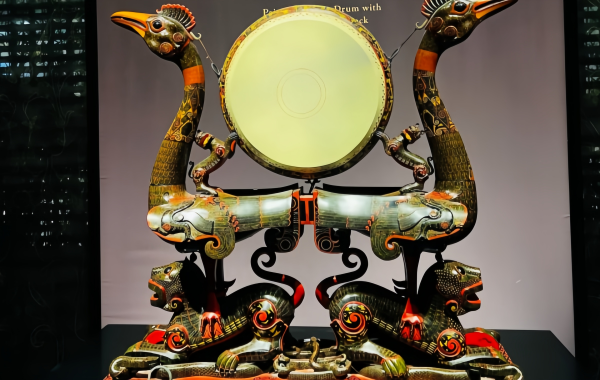
Tiger-shaped Bird-shaped Drum Stand:This is a symbolic artifact of Chu culture's romanticism.Unearthed in 2002 from Tomb No.2 at Jiuliandun,Zaoyang,Hubei Province,this piece measures 135.9 cm in height and 134 cm in width.It rests on a base of two reclining tigers with heads held high and tails curled,their backs turned to each other.On each tiger's back stands a long-legged phoenix,head held high,singing aloud.The phoenix-tiger motif symbolizes Zhurong(the phoenix),the ancestor of the Chu people,and the conquered Ba people(the tiger),reflecting the integration of ethnic groups and the hegemonic status of Chu culture.The entire piece is lacquered in black with red and yellow paint accents;even after 2300 years,the colors remain vibrant,showcasing the romantic and magical aspects of Chu aesthetics.
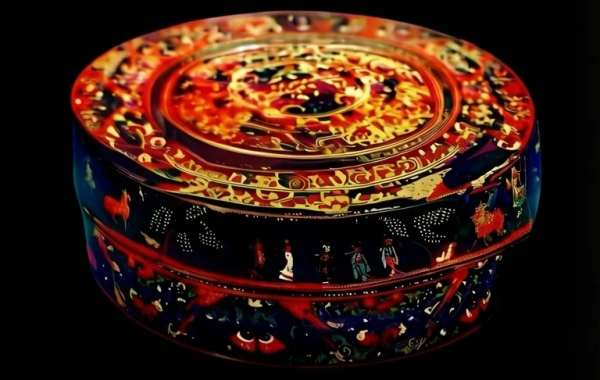
Painted Scene of Figures and Chariots:Unearthed in 1987 from the Baoshan Chu Tomb in Jingmen,Hubei Province,this is a lacquer painting on the outer wall of a lacquer box,measuring 87.4 cm in length and 5.2 cm in width when unfolded.The painting,rendered in shades of ochre,orange-red,navy blue,and brown,depicts a vibrant and lively scene of a noble procession.The artist ingeniously uses five swaying trees to divide the composition,earning it the reputation as China's earliest extant"comic strip"style narrative painting.
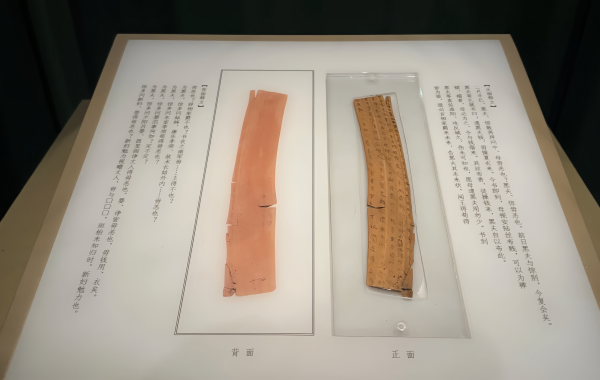
The Yunmeng Shuihudi Qin Bamboo Slips:Unearthed in Yunmeng,Hubei Province in 1975,these 1155 bamboo slips record Qin Dynasty legal documents such as the Field Law and Stable and Garden Law.This is the first systematic discovery of Qin Dynasty law in Chinese archaeological history.Articles such as"logging is prohibited in the mountains and forests in the second month of spring"reflect early environmental awareness,and the meticulousness of Qin law has astonished the archaeological community.Among them,the Hei Fu Family Letters is the earliest extant letter from a commoner,confirming the historical facts of the Qin's conquest of Chu.
Hidden Treasures:From Prehistoric Jade Figures to Yuan and Ming Dynasty Masterpieces
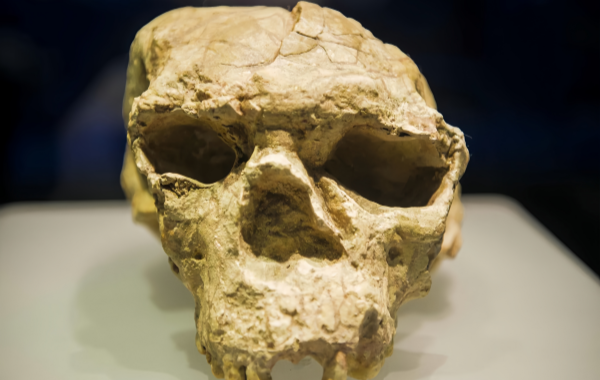
The museum also houses many other unmissable treasures:the Shijiahe Jade Figure,dating back approximately 4200 years,is only the size of a commemorative coin yet possesses clearly defined features and exudes a mysterious aura;the Yuan Dynasty blue-and-white porcelain plum vase with the"Four Loves"motif,depicting four elegant scenes of literati life,including Wang Xizhi's love of orchids and Tao Yuanming's love of chrysanthemums,is one of only three such pieces in the world,earning it the title of"the panda of porcelain";and the Yunxian Man skull fossil silently tells the story of ancient humans thriving in the Yangtze River basin millions of years ago.
Visitor Guide:
The most efficient route is to enter through the South Gate,head straight to the second-floor exhibition hall dedicated to the Sword of Goujian,King of Yue,then proceed to the first-floor exhibition hall dedicated to Marquis Yi of Zeng to admire the chime bells and bronze vessels.Afterwards,ascend to the third floor to visit"Eight Hundred Years of Chu"and"Treasures of King Liangzhuang,"finally crossing the connecting corridor to the North Hall to see the general history exhibition and the ceramics exhibition.
The"Looking Out Over Chu"exhibition hall on the second floor of the North Hall houses the Yunxian Man skull fossil,the Shijiahe jade figurine,the Chongyang bronze drum,and the Qin bamboo slips from Shuihudi,Yunmeng,among other treasures of the North Hall.
Please refrain from using flash photography to protect these precious artifacts.