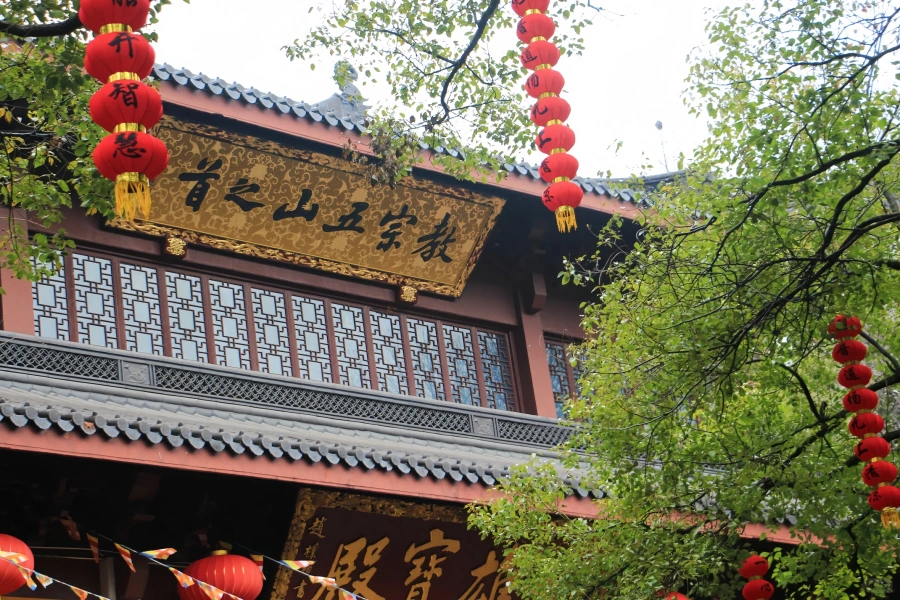
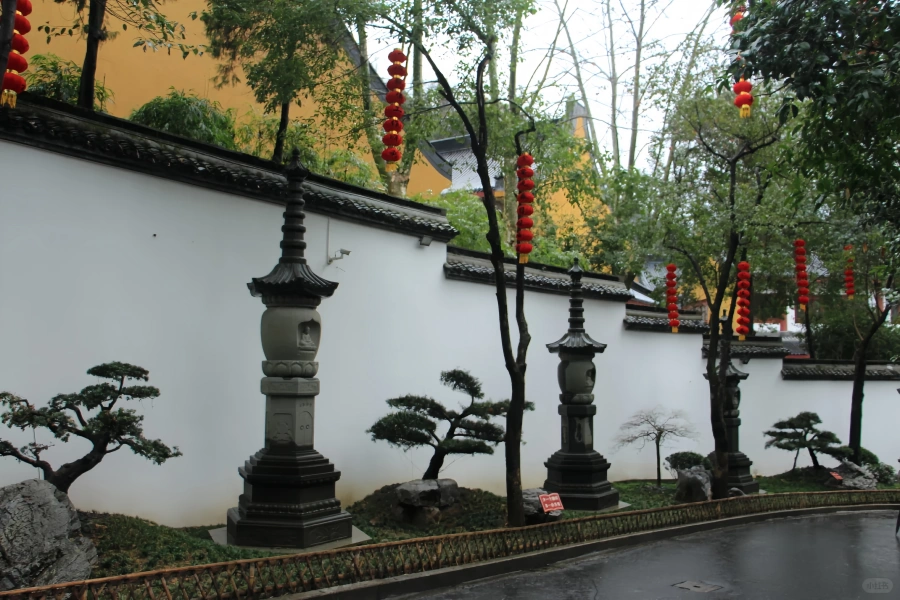
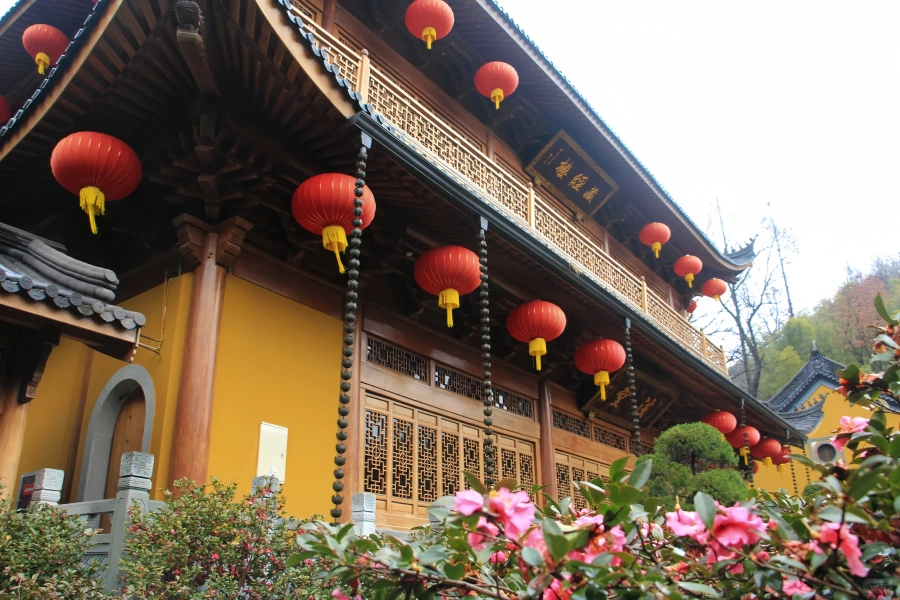
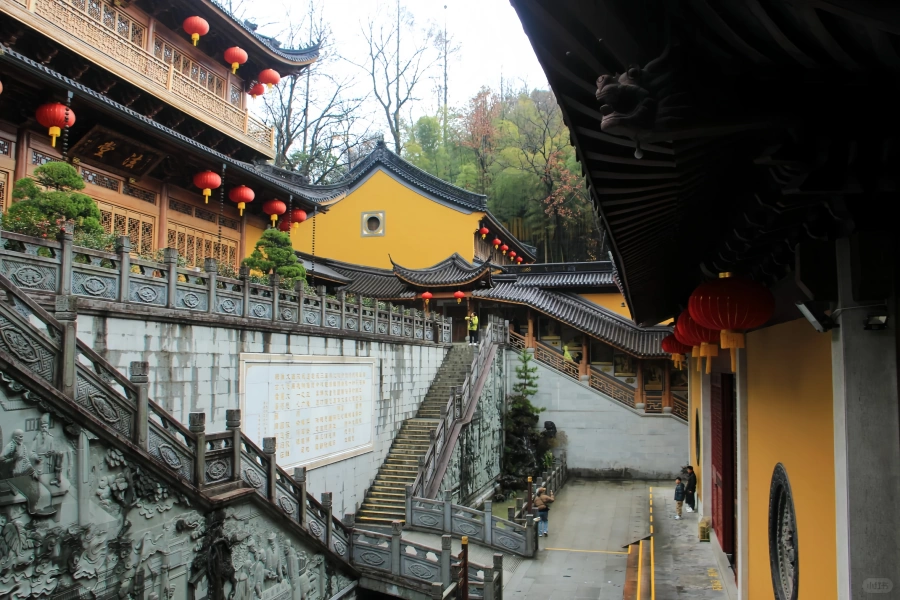
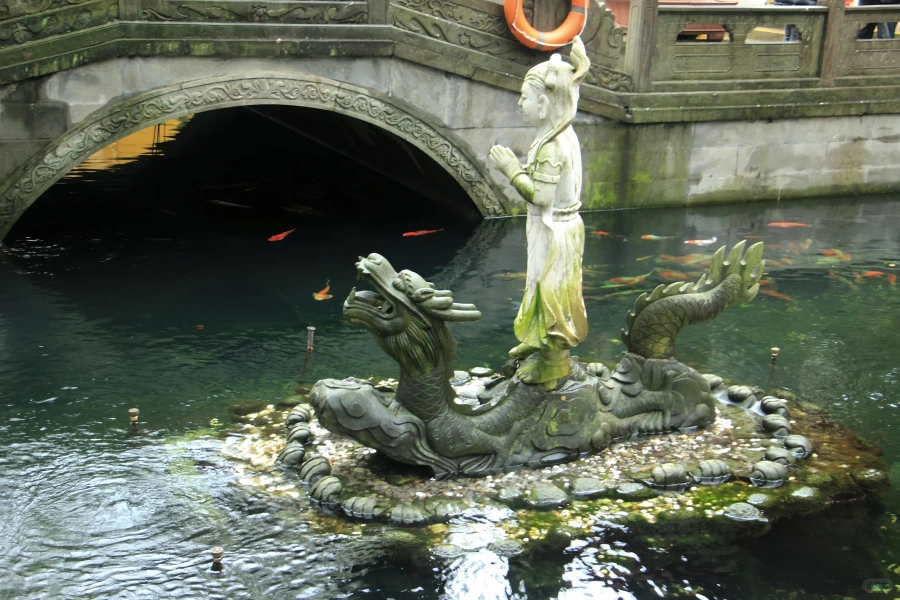
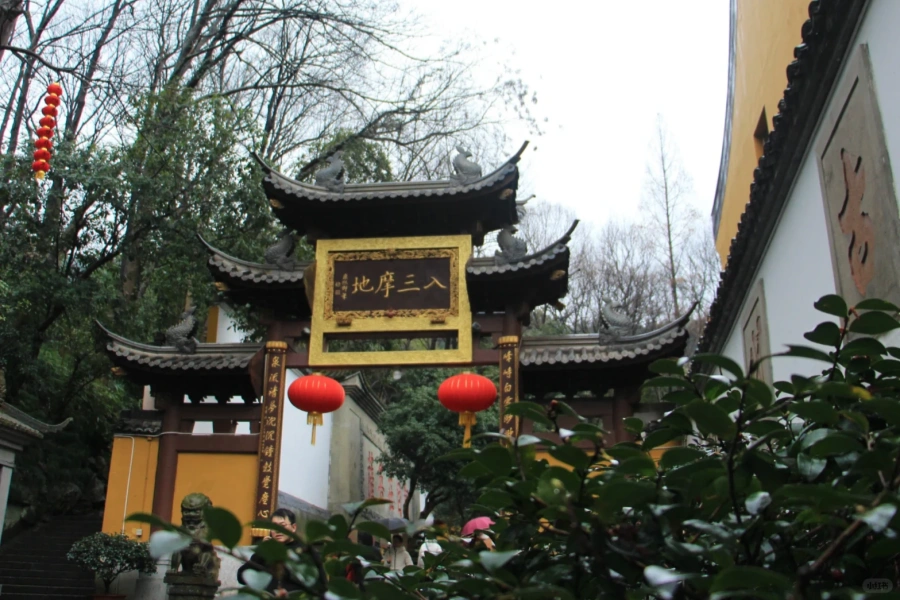
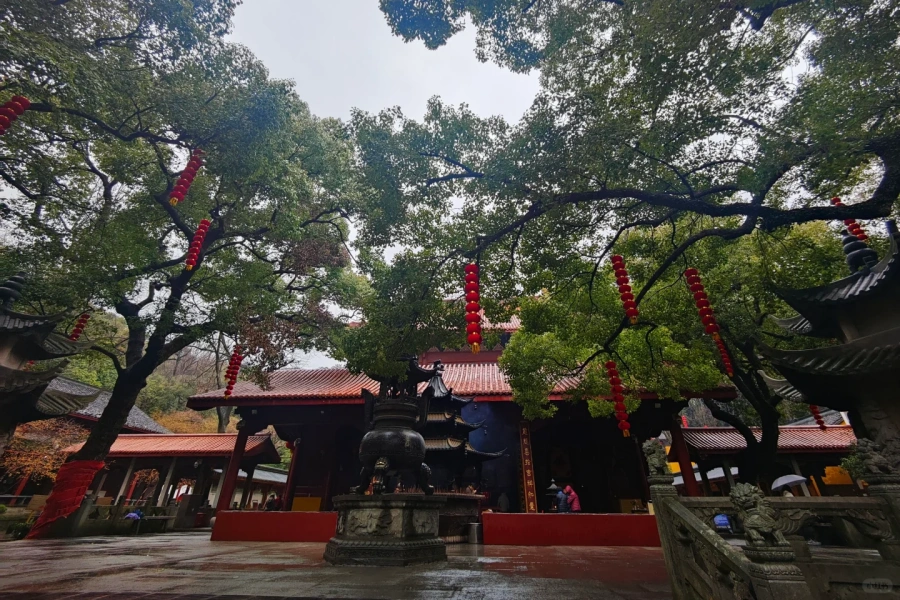
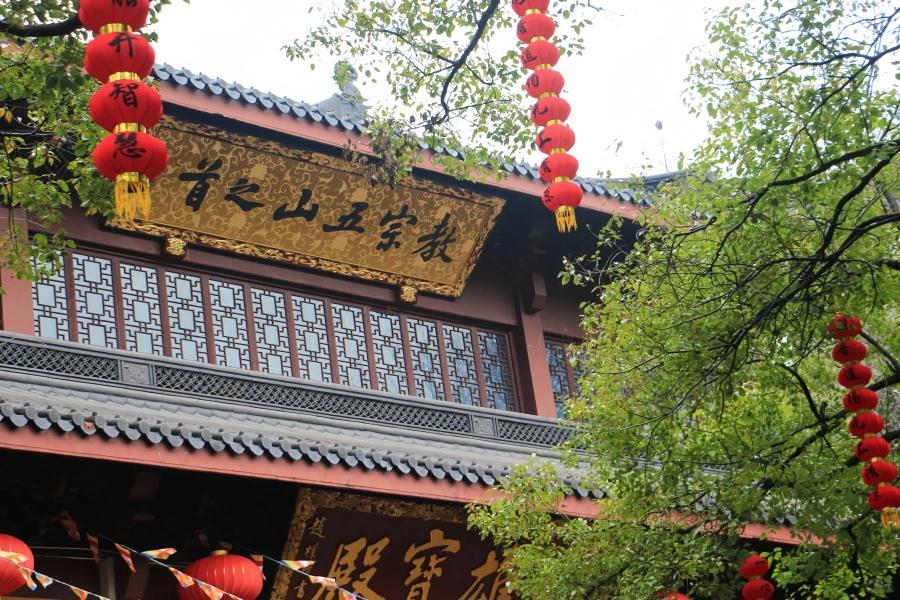
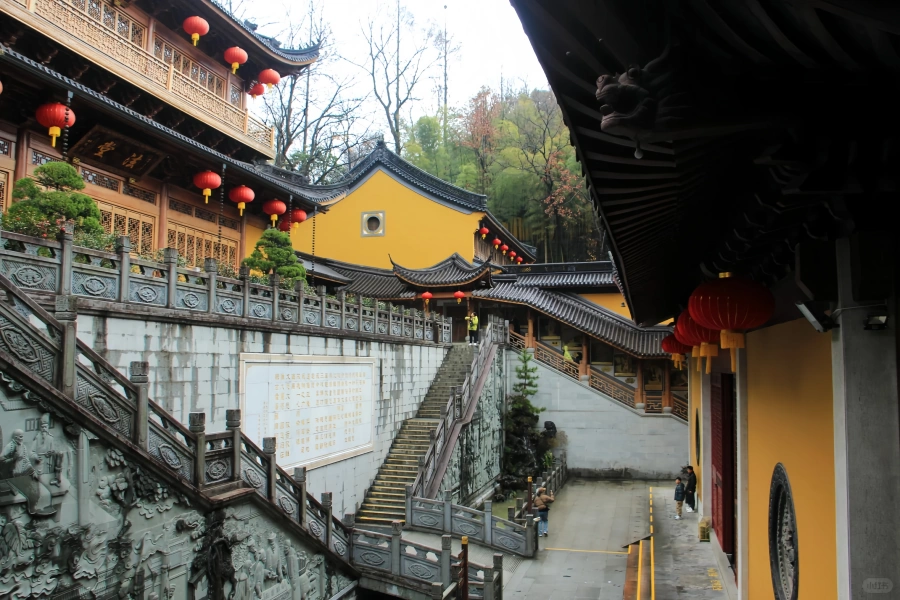
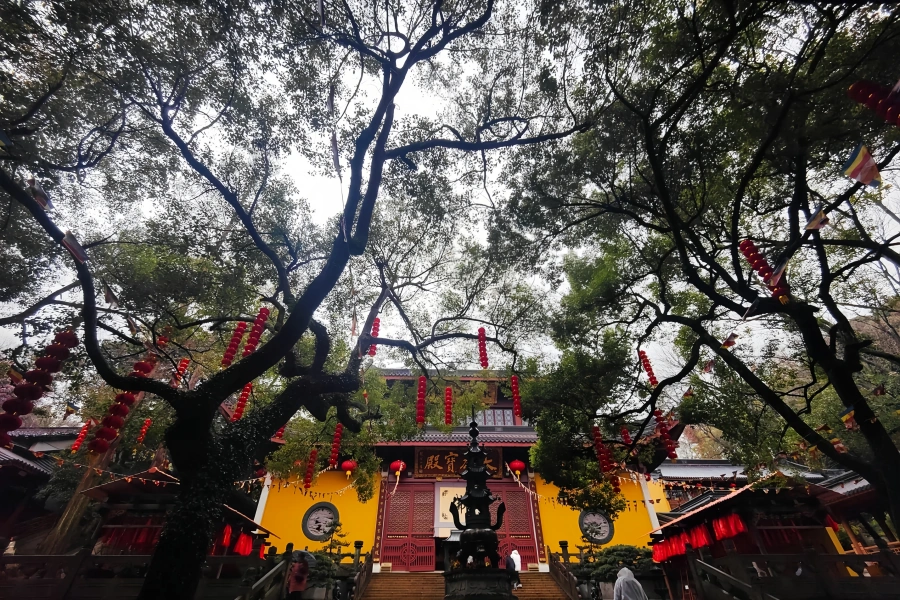
The beauty of Faxi Temple lies in its well-arranged architectural sequence built against the mountain and its perfect integration with the surrounding lush forests and bamboo groves, creating a wonderful artistic conception of "ancient temple hidden deep in the mountains".
Nature's Creation – The Serene Background of Tianzhu Mountain
The spiritual energy of a temple comes partly from its natural environment.
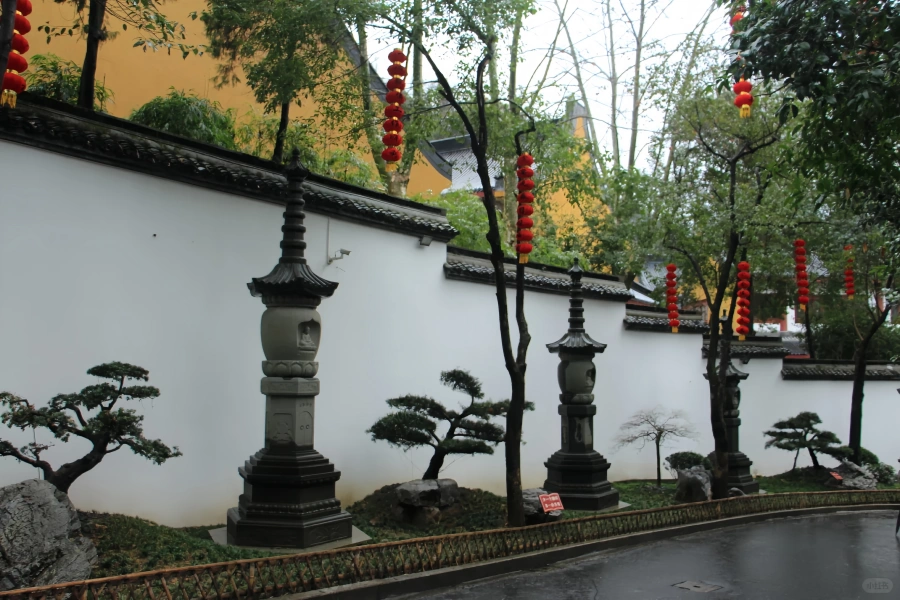
Breathing in the Foothills of Tianzhu Mountain: Faxi Temple, nestled against Maple Ridge and facing Tianzhu Creek, is hidden deep in the western part of the West Lake mountain range. Walking up Tianzhu Road from the bustling Lingyin Scenic Area, the city noise fades away, replaced by the babbling brook, rustling bamboo, and clear birdsong. This 1.5-kilometer-long incense path itself is a process of filtering out the noise and allowing the mind to settle. Ancient trees tower within the temple grounds, especially the centuries-old ginkgo and magnolia trees, their spring blossoms and autumn fruits adding a vibrant seasonal change to the solemn halls.
The gifts of clouds, mist, and light: Located in a mountain valley, a lingering mist often hangs between the eaves of the temple buildings in the early morning or after rain, creating a scene reminiscent of a fairyland. On sunny days, sunlight filters through the dense forest, casting dappled shadows on the yellow walls and black tiles, slowly shifting with the passage of time to form the most vivid pictures. This natural art of light and shadow is one of the core sources of the photographic charm of Faxi Temple.
Humanistic Ingenuity: The Beauty of Architecture and Faith in Ancient Temples
The architecture and furnishings of Faxi Temple strictly adhere to the norms of Han Chinese Buddhist temples, while also demonstrating ingenuity in the details.
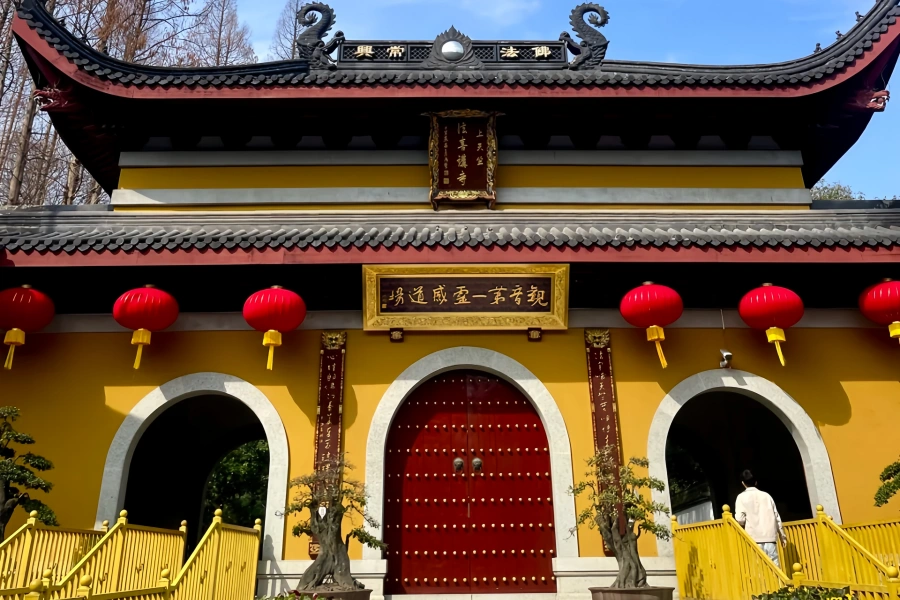
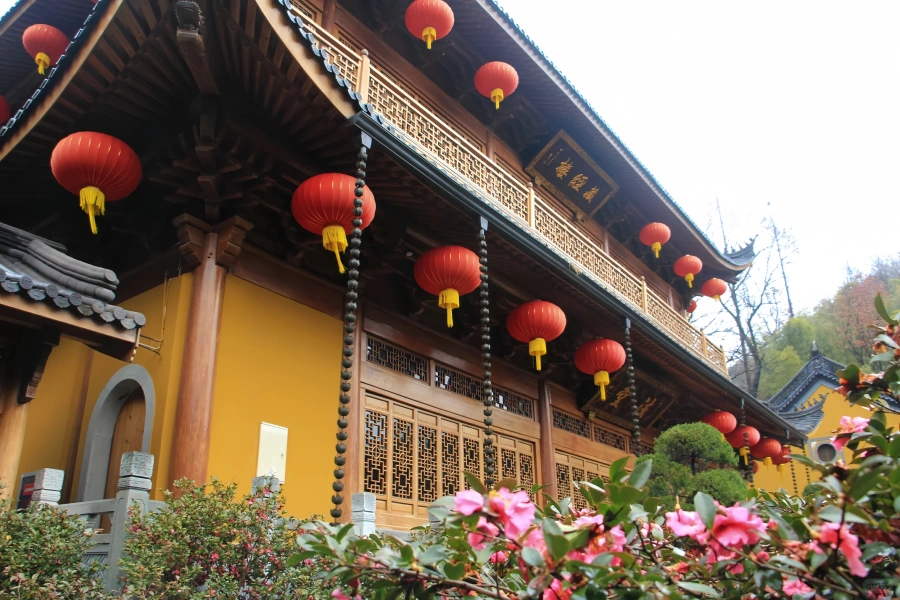
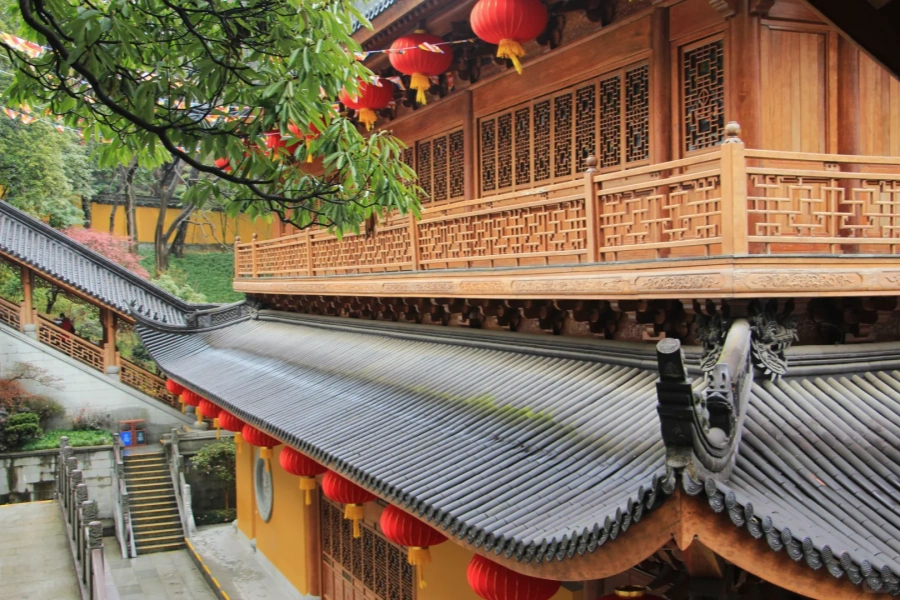
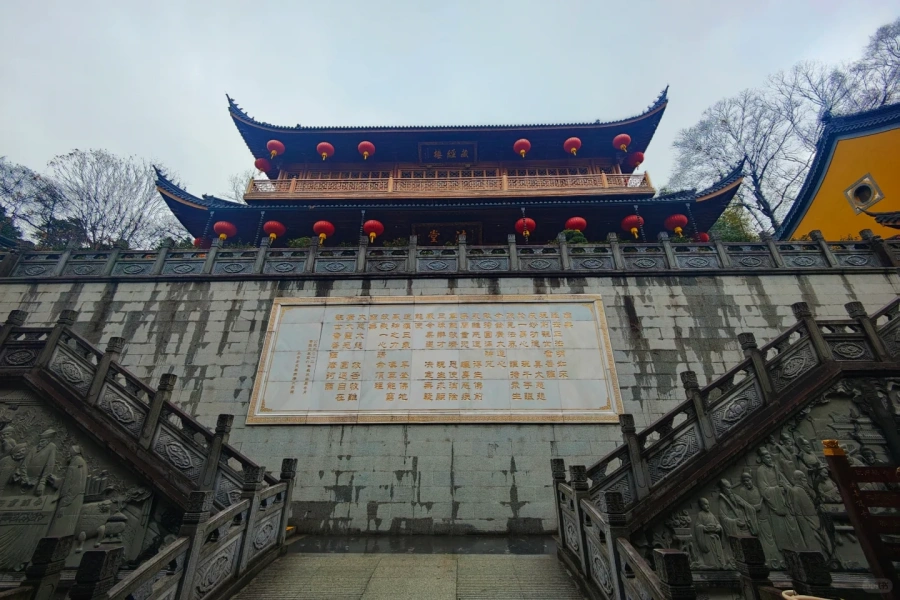
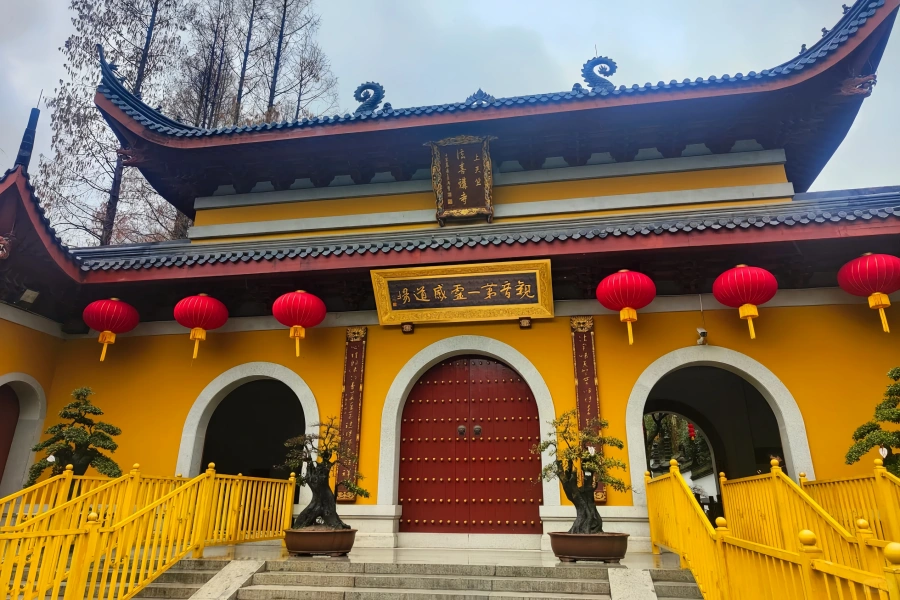
A solemn sequence along the central axis: the temple complex progresses layer by layer along the central axis, with the main buildings in sequence being the Mountain Gate (Hall of Heavenly Kings), the Hall of Perfect Enlightenment, the Great Buddha Hall, and the Sutra Repository (Dharma Hall). This layout gives people a sense of orderly progress and gradual immersion in the pilgrimage. The buildings are mostly in the Qing Dynasty style, with yellow walls and black tiles, and the color scheme is calm and dignified.
The Yuantong Hall and the Guanyin Statue: This is the core of the entire temple. The "Inspiring Guanyin" statue enshrined inside is carved from the extraordinary wood seen by Zen Master Daoyi, and is the source of Faxi Temple's thousand-year-old incense offerings. The hall is magnificent, and the plaque "Faxi Temple" is an imperial inscription by Emperor Kangxi. The atmosphere is extremely solemn and dignified, making it the main place for believers to make wishes and pray for blessings.
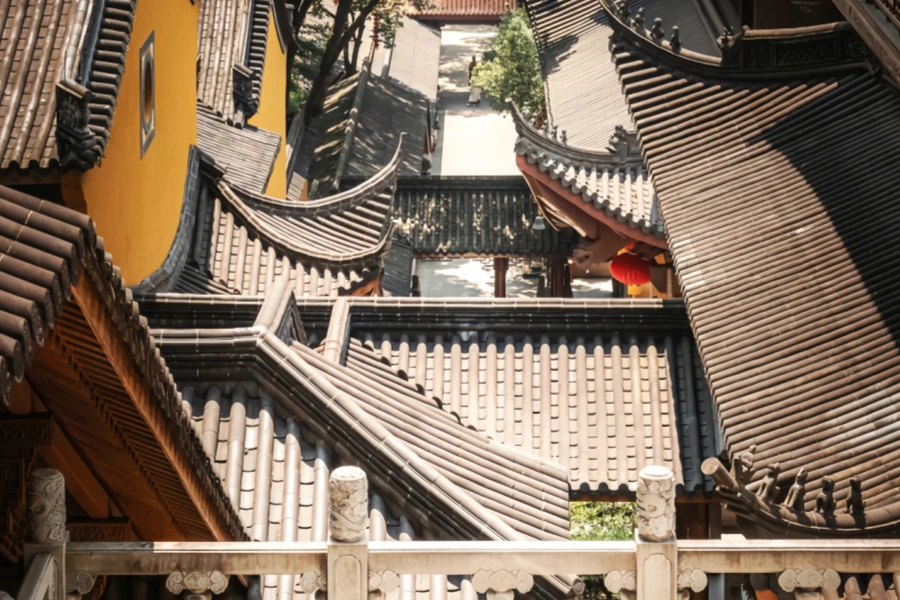
A Photogenic Perspective and Architectural Rhythm: The most distinctive architectural feature of Faxi Temple is its layout, which rises along the mountainside. Looking back from the Sutra Repository at the highest point of the temple (or from the adjacent walkway), the upturned eaves and yellow walls with their layered gray tiles create a strong sense of rhythm and geometric beauty. This classic viewpoint has become an iconic image of Faxi Temple.
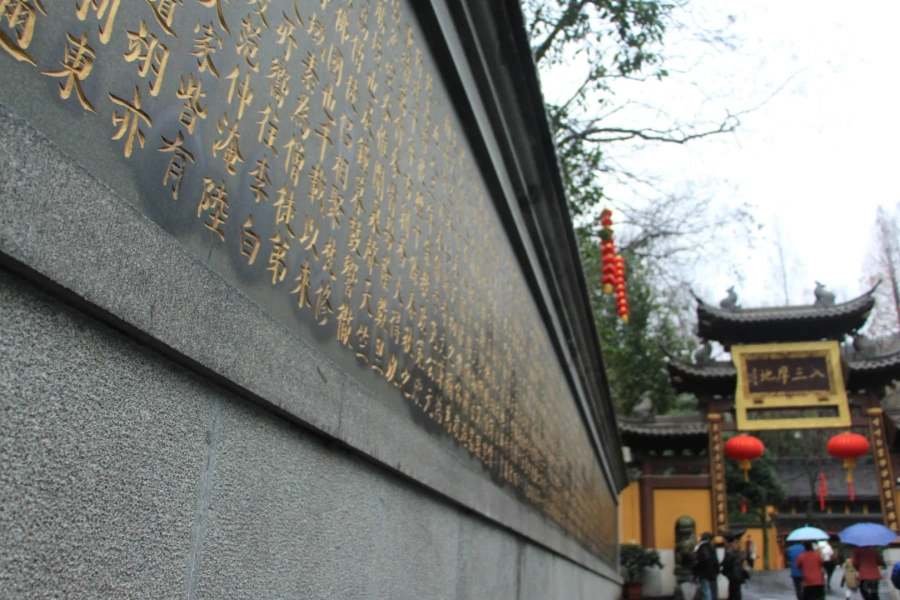
Couplets and cliff carvings: The temple preserves numerous couplets and plaques inscribed by famous figures throughout history, their words brimming with Zen wisdom. Outside the temple, along the mountain path, there are also many cliff carvings, such as "Guanyinzizai" and "Sanshengshi," which cleverly combine Buddhist culture with the landscape culture of West Lake.
The Hall of Five Hundred Arhats: Located on the west side of the temple, the hall houses five hundred bronze Arhat statues, each with a different form and exquisite craftsmanship. They are masterpieces of modern Buddhist sculpture art and are worth careful viewing.
Photography Tips:
Classic panoramic shooting position: Located on the platform in front of the Sutra Repository or overlooking from the side and rear walkway, this position offers a stunning panoramic view of the layered palaces. It is recommended to use a medium to long telephoto lens to compress the spatial perspective.
Details and light and shadow: Take advantage of the oblique light in the early morning or afternoon to photograph the shadows of trees on the yellow walls, the exquisite window frames, and the mythical beasts on the roof ridges.
People in simple and elegant clothing, with architecture as the background in front of corridors, stone steps or yellow walls, can take photos with a Zen-like feel.
Important Notes: Photography of Buddha statues is strictly prohibited inside the hall. Please be sure to abide by the temple's regulations and maintain silence.