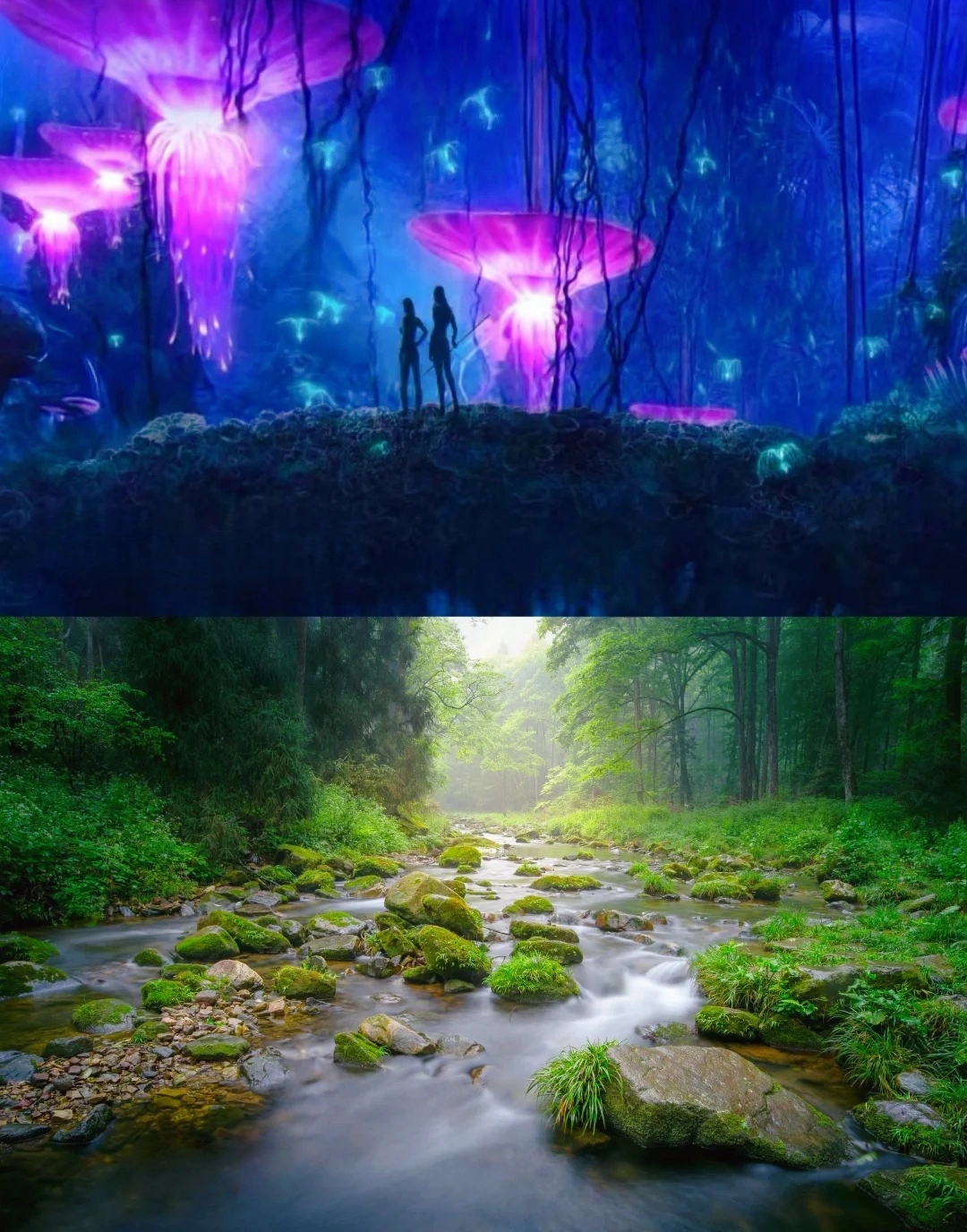
Nature's Handiwork—The Rhythm of Water and the Breath of the Mountains
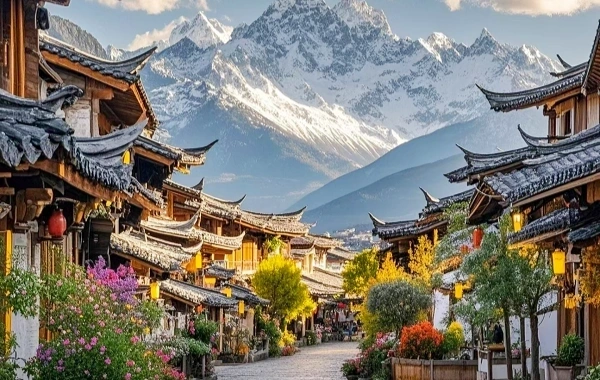
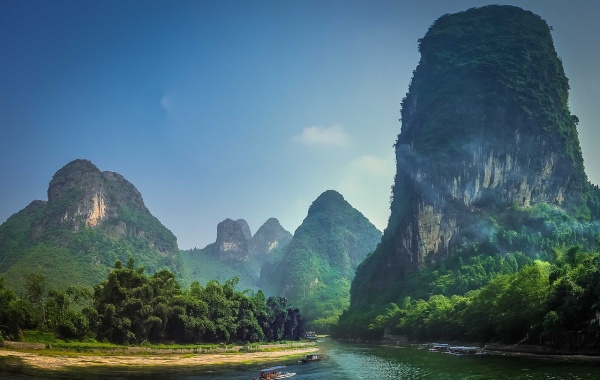
The natural landscape of Jiezi Ancient Town unfolds as an eternal dialogue between water,mountains,light,and shadow.
The Spirit of Water:The Lifeblood of a Western Sichuan Water Town
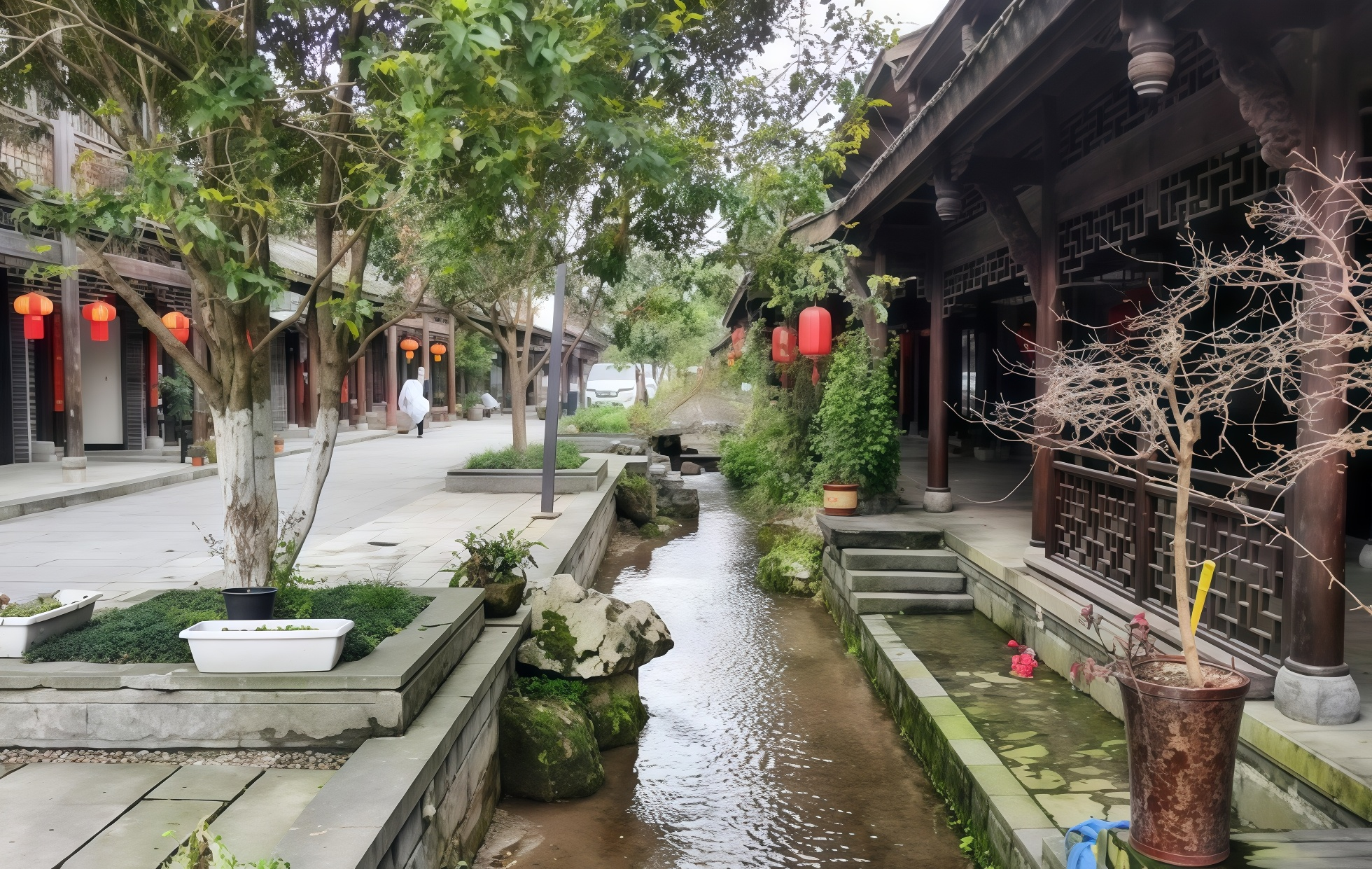
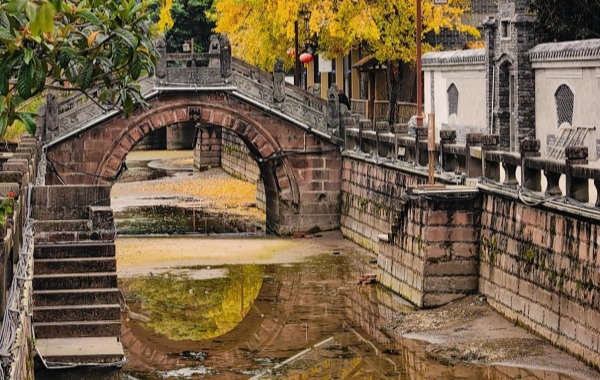
Jiezi Ancient Town proudly bears the title of"The Water Town of Western Sichuan."Its primary waterways—including the Wei River and the Bo River—weave through the landscape;the Wei River,in particular,embraces the ancient town,creating that signature charm where"water encircles the streets,and the streets come alive amidst the water."Weijiang Wharf:Built right alongside the town,the Weijiang Wharf no longer retains the bustling grandeur of its past,when boats and barges plied the waters in ceaseless motion.All that remains are the bluestone steps,sloping gently into the water,quietly awaiting the passage of time.Standing on the wharf,the river surface lies as still as a mirror;as a gentle breeze sweeps across,it stirs up tiny ripples that seem to weave the very tenderness of the four seasons into the flowing water.
The Confluence of Three Rivers:The title"Jiezi Ancient Town"is no mere empty boast—here,the Weijiang,Wenjing River,and Ganwuli River converge,their waters so crystal-clear that they reflect one's own image.This"Confluence of Three Rivers"is not merely a geographical reality but also a superb subject for photography enthusiasts;as the rivers wind around the town,they trace the quintessential contours of a water-town landscape in Western Sichuan.
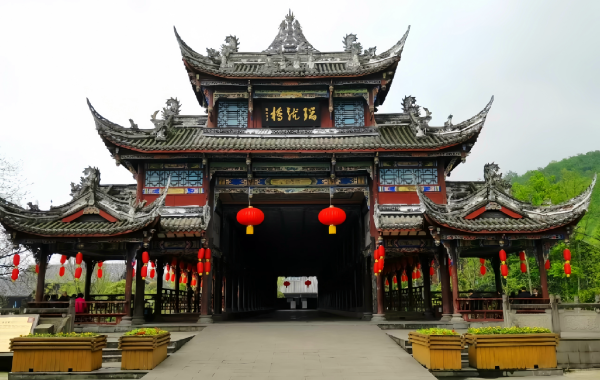
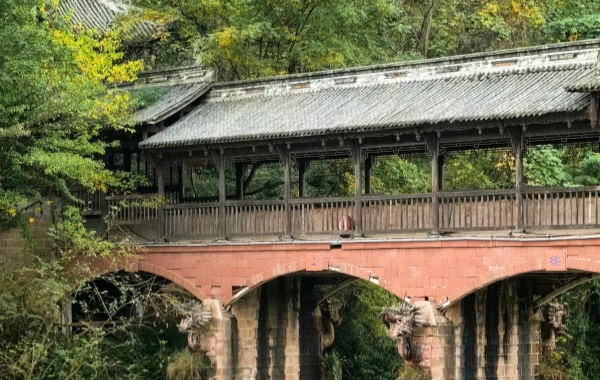
Ruilong Bridge:The ancient town's iconic covered bridge,designed in the architectural style of the Qing Dynasty,features a roof of blue tiles,upturned eaves,and intricately carved and painted beams that showcase exceptional craftsmanship.Along both sides of the bridge,exquisite murals—depicting scenes such as The Art of Tea and Ma Ming and The Hongwu Southern Tripitaka—span majestically across the Weijiang.Standing on the bridge,one can look down upon the ceaselessly rushing,emerald-green waters below,while the ancient streets lining the banks rise in staggered tiers;it is a scene where the vibrant pulse of human life blends seamlessly with the ethereal beauty of the surrounding mountains and rivers.
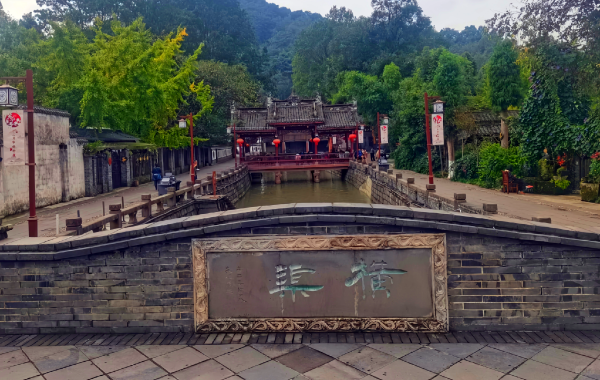
Yulong Bridge:An ancient bridge spanning the Weijiang River to the north of the town,serving as an essential thoroughfare along the banks of Longtan(Dragon Pool).Originally constructed during the reign of Emperor Qianlong in the Qing Dynasty,it was later destroyed amidst the turmoil of war.In the 23rd year of the Jiaqing reign,the forebears of Jiezi rebuilt the bridge;moved by the spirit and dedication of the local villagers,Li Tingbi—the Prefect of Chongqing Prefecture—bestowed upon it the name"Yulong Bridge"(Imperial Dragon Bridge).The bridge features a pavilion designed as a triple-eaved pailou(ornamental archway),where the sculpted figures and dramatic scenes of Sichuan Opera adorning the roof are rendered with astonishing lifelike vividness.
Mountains Like Screens:The"Forest Oxygen Bar"of Fengqi Mountain
Fengqi Mountain,which serves as the majestic backdrop to Jiezi Ancient Town,is one of the thirty-six peaks of Mount Qingcheng.
Kangdao(Fengqi Mountain Trail):As visitors hike up the mountain along this trail—which winds alongside both the slopes and the water's edge—they are greeted by a natural bamboo forest that acts as a living"oxygen bar,"offering a sudden sense of openness and refreshment.This six-kilometer trail is shaded by lush greenery and dotted with historical landmarks along the way—including the Small Stone Bridge,Longyin Bridge,and Huilong Bridge—while the very flagstones of the path are even etched with carvings of large crabs.Sunlight filters down through groves of bamboo and cedar trees;a brook babbles gently nearby,creating an atmosphere that is both refreshing and delightful.
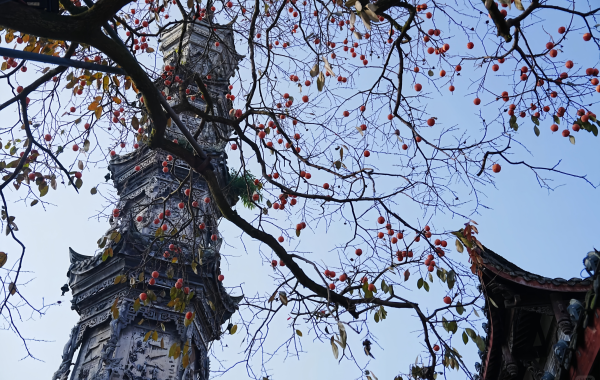
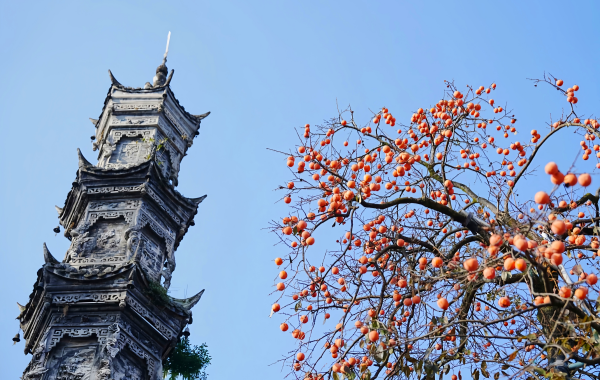
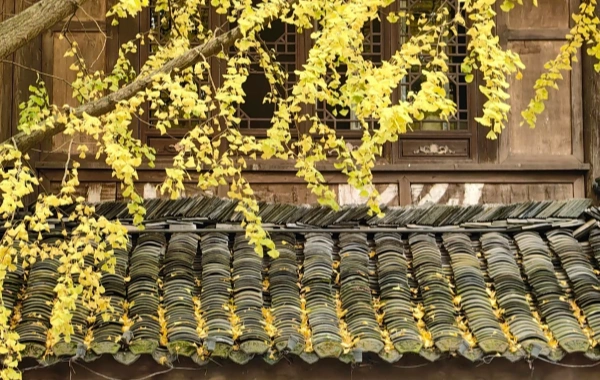
The Colors of the Four Seasons:In spring,azaleas blanket the mountainsides;in summer,emerald bamboo groves provide cool shade;in autumn,the forests are ablaze with vibrant hues;and in winter,falling snow brings a sense of Zen-like tranquility.The transition from autumn to winter is particularly enchanting:golden ginkgo leaves rustle as they drift down onto the grey roof tiles,while the persimmon trees beside the Ziku(Script Repository)Pagoda hold aloft their small,lantern-like fruits—creating a classic,picturesque scene that defines the autumn and winter landscape of Chengdu.
The natural scenery of Jiezi Ancient Town offers far more than just a visual spectacle;it is an experience best appreciated through"walking"and"breathing."It serves as an ideal sanctuary for"forest bathing"and meditation—a place where one can cleanse both body and soul.
Humanistic Craftsmanship—Traces of Civilization Beneath the Chuandou Timber Frames
The architecture here is not merely a collection of dwellings;it is the tangible embodiment of the philosophy of life held by the people of Western Sichuan.
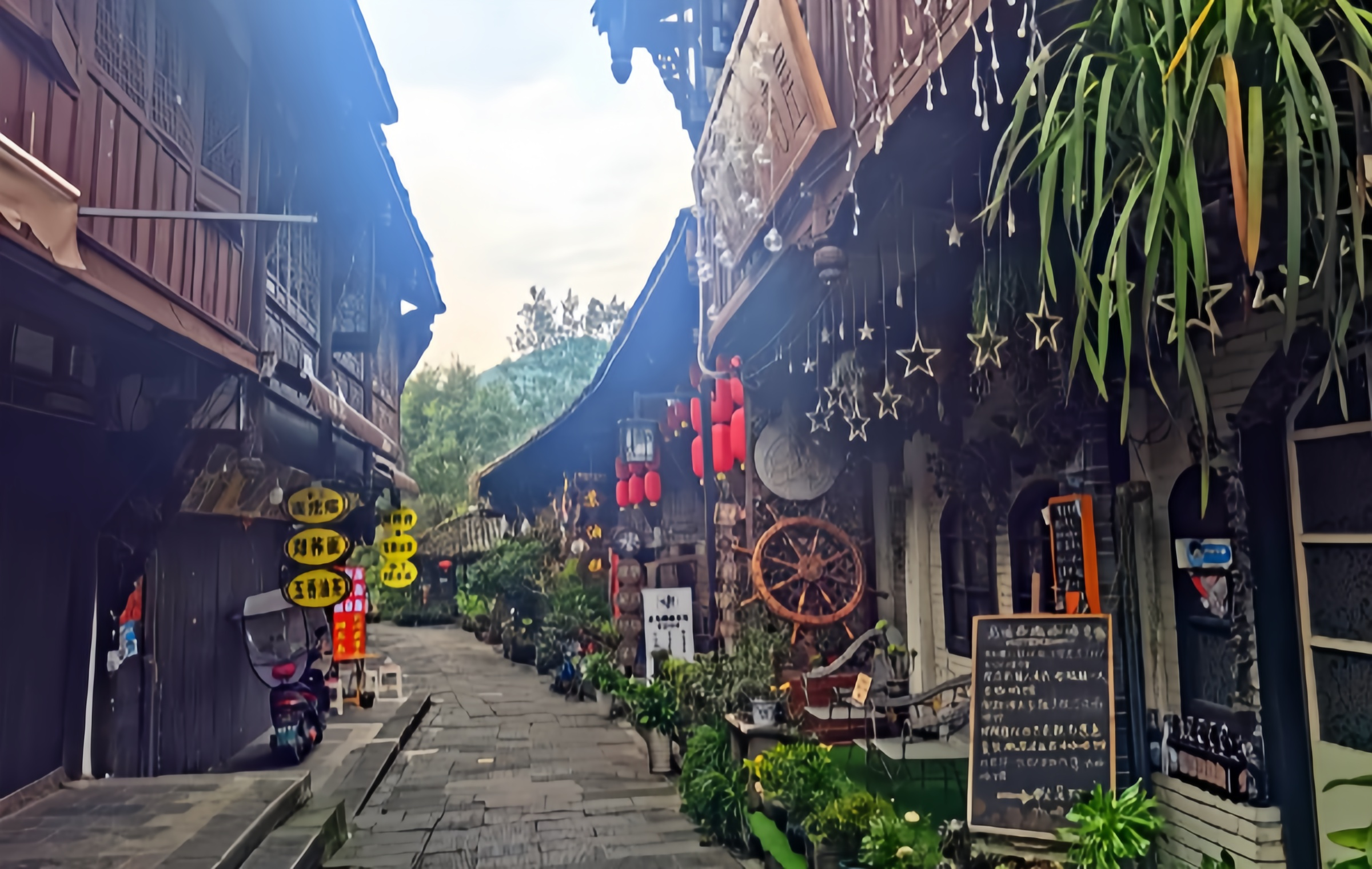
The Ancient Architectural Complex(Jiangcheng Street):The very soul of the ancient town.Centered around Jiangcheng Street,a network of six streets preserves a vast collection of ancient structures spanning 68,000 square meters.The buildings lining the streets were constructed largely in accordance with the Qing Dynasty Ministry of Works Regulations(Qing Gongbu Faze).Characterized by wooden Chuandou(pier-and-beam)structural frames,single-eave roofs,and grey roof tiles,the residential layouts predominantly reflect the architectural styles of the mid-to-late Qing Dynasty.The bluestone-paved streets are smooth and lustrous,flanked by traditional Western Sichuan Chuandou-style residences featuring grey tiles and white walls.Designed with a"shop in the front,courtyard in the back"layout,these homes feature wooden lattice windows intricately carved with scrolling vines and floral motifs,exuding an air of elegant antiquity.
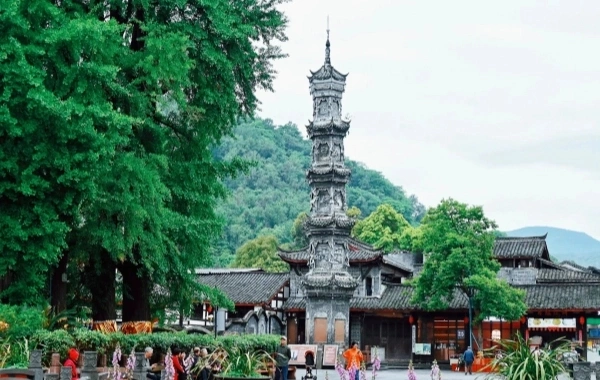
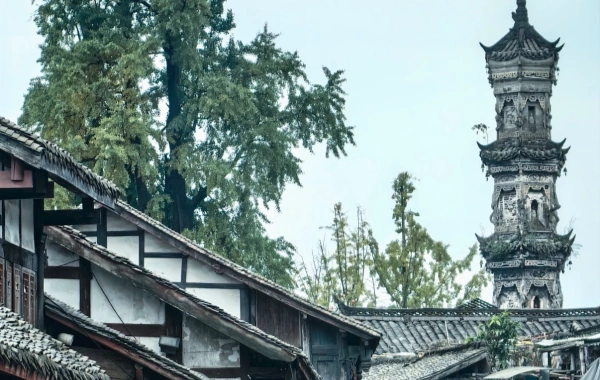
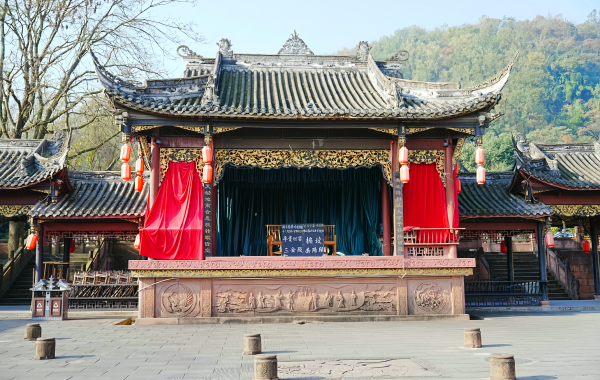
The Ziku(Script Repository)Pagoda:The cultural landmark of Jiezi Ancient Town.Constructed in the second year of the Xianfeng reign during the Qing Dynasty(1852),this hexagonal,five-story pavilion-style pagoda features a pointed spire and stands 20 meters tall.It remains the only surviving example of a Ziku of such exquisite craftsmanship in the Western Sichuan region.The exterior walls of the pagoda are adorned with bas-relief carvings depicting scenes from traditional operas—such as The Legend of the White Snake—as well as landscapes and floral motifs.Rooted in the ancient cultural belief of"revering and cherishing written paper"(and the notion that"cherishing words brings blessings"),the construction and maintenance of the Ziku Pagoda embody the people of Jiezi's spiritual pursuit of intellectual reverence and refined elegance.The pagoda visible today is the result of a restoration project completed in 2009.The Ancient Stage:A pivotal landmark for cultural heritage preservation,this structure features a spectacular nine-ridge,hip-and-gable roofline,walls adorned with stone bas-reliefs,and pillars characteristic of diaojiaolou(stilt-house)architecture.It serves as a magnificent showcase of the Chinese nation's exceptional architectural traditions and its deep-rooted folk culture.When no performances are scheduled,the stage remains quiet and empty—save for the stone benches arranged in neat rows,patiently awaiting the next festive occasion.
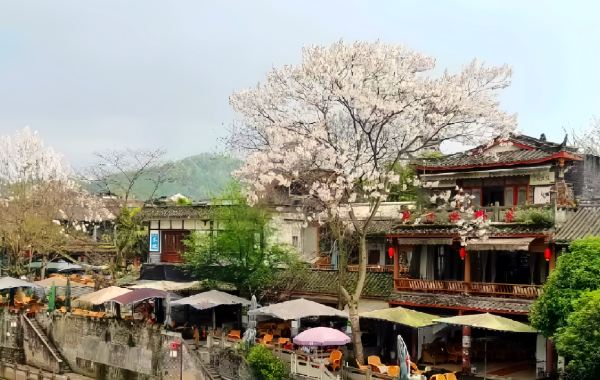
Ginkgo Plaza:The iconic gateway to the ancient town.Here stand five ancient ginkgo trees,each over a thousand years old,with trunks so massive that it takes three people to encircle them.In autumn and winter,their golden leaves pile up in layers against the backdrop of gnarled,ink-black branches;when sunlight filters through,it creates a breathtaking visual effect resembling a"cascading waterfall of gold."In front of the plaza stands a"viral sensation"persimmon tree,its branches laden with fiery-red fruit.Framed against the backdrop of the Zikuta(Scripture Tower)and the temple's upturned eaves,it forms a picturesque tableau—becoming the most stunning subject in every photograph taken here.
The Octagonal Well:Situated in the middle of the town's lanes,this well features an octagonal stone parapet carved from bluestone—now rendered smooth and lustrous by the gentle abrasion of passing time.The well water runs crystal-clear,reflecting the shifting patterns of the sky and clouds above.This ancient well,dating back to the Ming Dynasty,serves as the very lifeblood of the ancient town,having nourished generations of Jiezi residents for centuries.
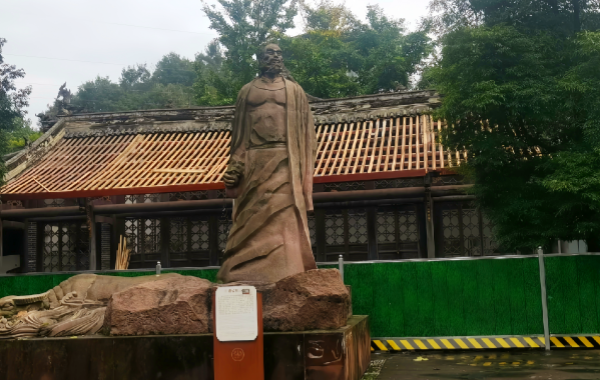
The Tang Gong Ancestral Shrine:Located at the head of Yulong Bridge,along the extension of Jiangcheng Street,this shrine was built to honor Tang Qiu—a renowned poet of the Tang Dynasty.Outside the shrine stands a stone stele erected during the Daoguang reign of the Qing Dynasty,bearing the inscription:"The Hometown of the Poet Tang Qiu."Nearby,along the riverbank,stands a statue of Tang Qiu himself,depicted holding a gourd—a traditional symbol of the wandering poet.
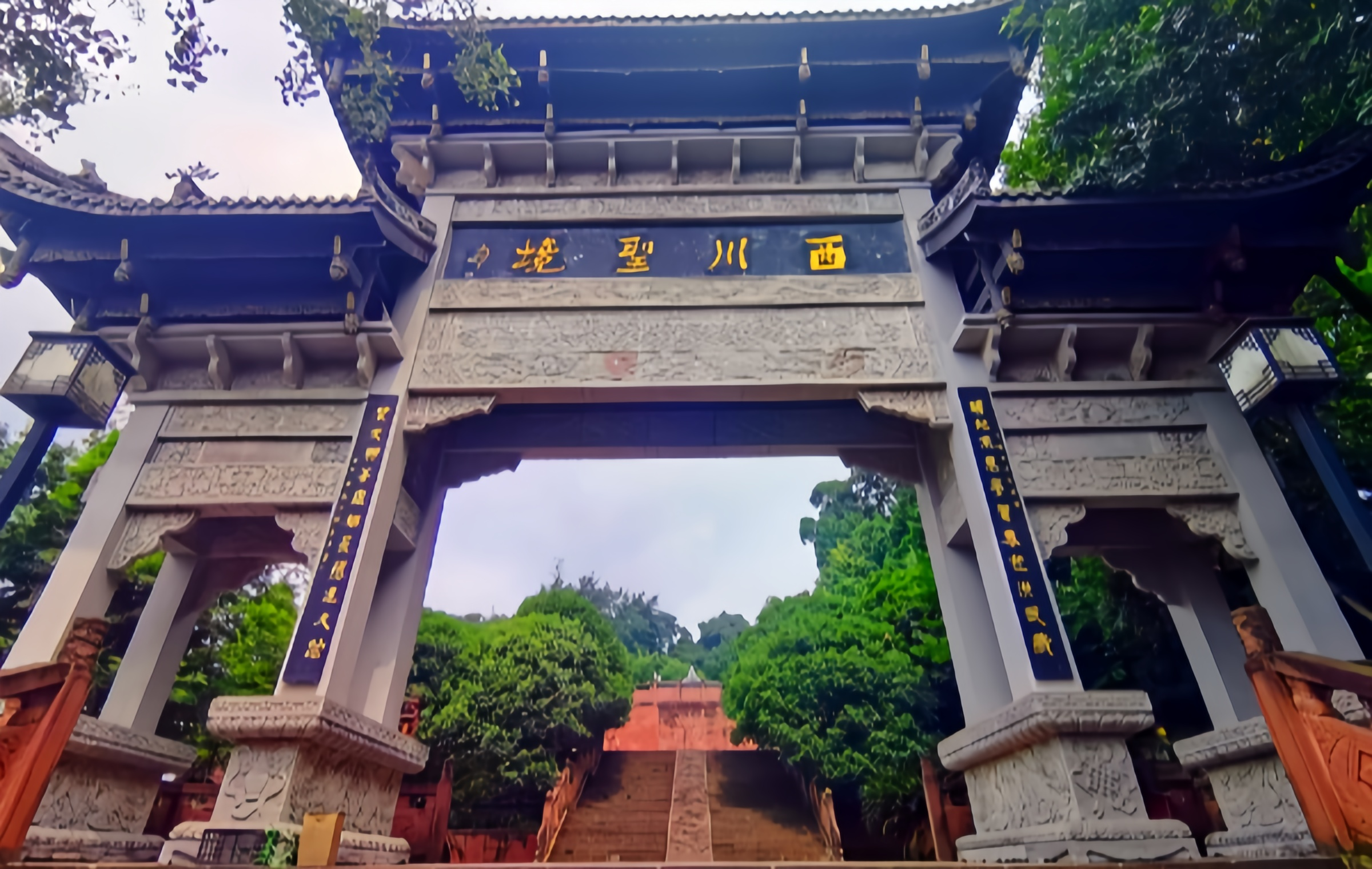
Guangyan Zen Monastery:Originally established during the Sui Dynasty under the name"Changle Temple,"the site was later bestowed with an honorary plaque inscribed"Guangda Yanming"(Greatness and Solemnity)by Emperor Wen of Sui.During the Yongle reign of the Ming Dynasty,Prince Zhu Chun of Shu petitioned the throne to grant the temple an official imperial title;Emperor Yongle subsequently bestowed the name"Guangyan Zen Monastery."As a truly bona fide imperial temple,it has long been hailed as the"Foremost Sanctuary of Western Sichuan."The monastery remains perpetually nestled amidst the lush,emerald peaks of Mount Fengqi,evoking a poetic atmosphere best captured by the lines:"Winding paths lead to secluded depths;within the Zen chambers,flowers and trees grow deep."
The Huayang Guozhi Museum:The first cultural exhibition hall in China dedicated exclusively to the Huayang Guozhi(Records of the States South of Mount Hua)—a seminal historical and geographical chronicle—this museum spans an impressive area of2,300 square meters.Opened on September 28,2025,the venue utilizes digital exhibition and interactive technologies to bring China's oldest surviving local gazetteer to life,allowing it to"step out"from the pages of ancient texts.The calligraphy on the plaque—composed of characters carefully selected from the works of Wang Xizhi—exudes an air of refined elegance and ethereal grace.
Photography Tips:
The best vantage point for a panoramic shot is atop Ruilong Bridge,which captures the Weijiang River,the ancient street,and the distant mountains all in a single frame.
Ginkgo Square is ideal for framing the Ciku Pagoda alongside the thousand-year-old ginkgo tree;it is at its most beautiful during the autumn season.
Yulong Bridge offers an excellent location for photographing the Dragon Pool(Longtan)with the backdrop of Fengqi Mountain.
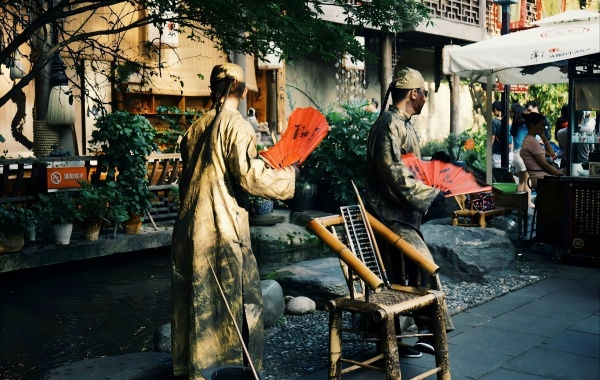
The narrow lanes and alleys of the ancient town are perfect for capturing candid moments of daily life;the lighting is softest and most beautiful during the early morning and at dusk.