The"Sunlit Golden Mountain"—A Snowy Realm Spectacle You Must Witness Once in a Lifetime
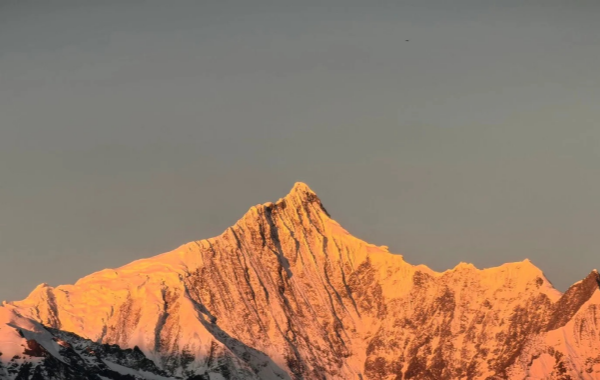
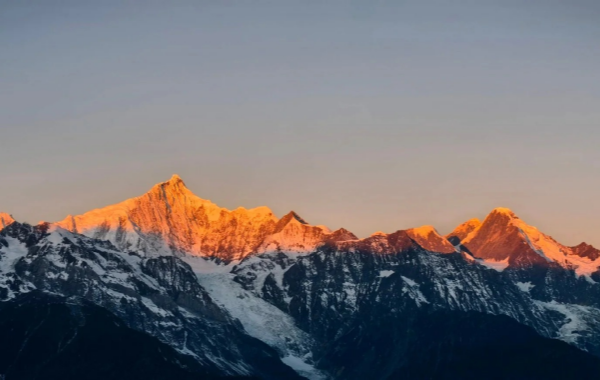
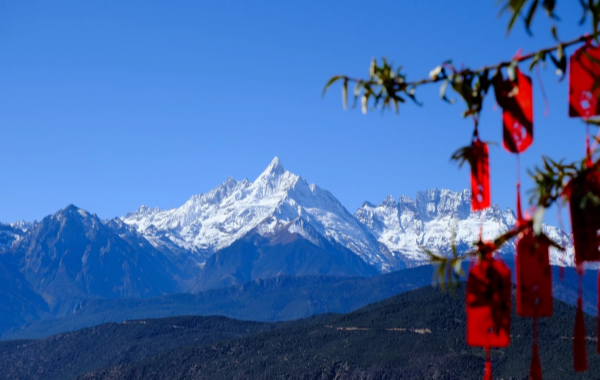
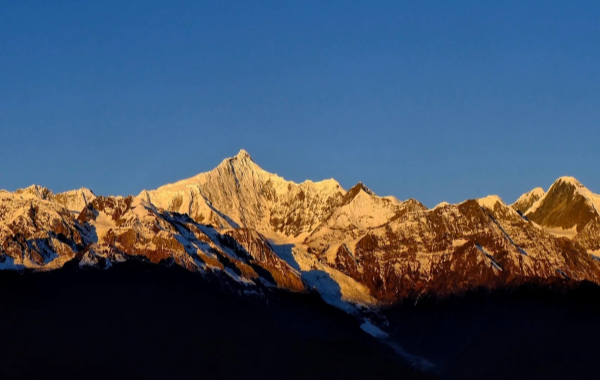
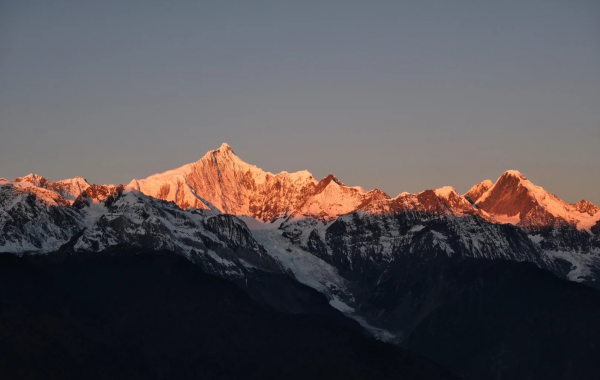
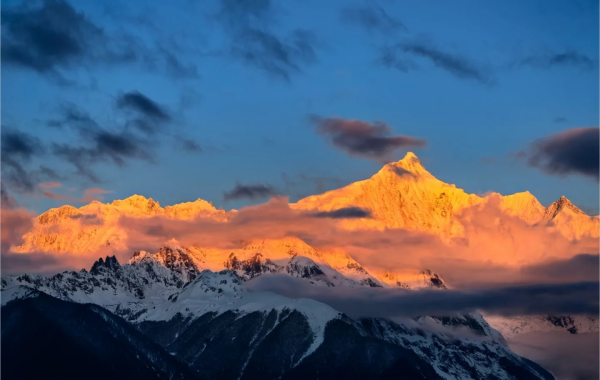
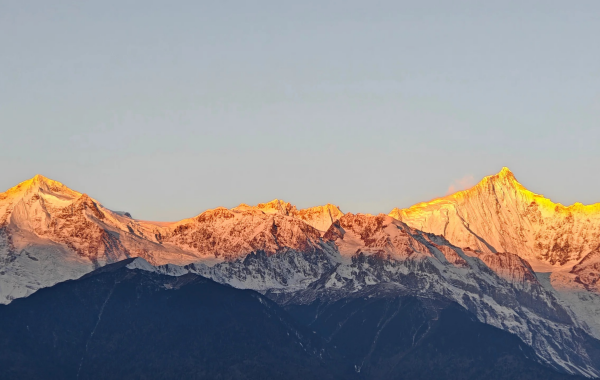
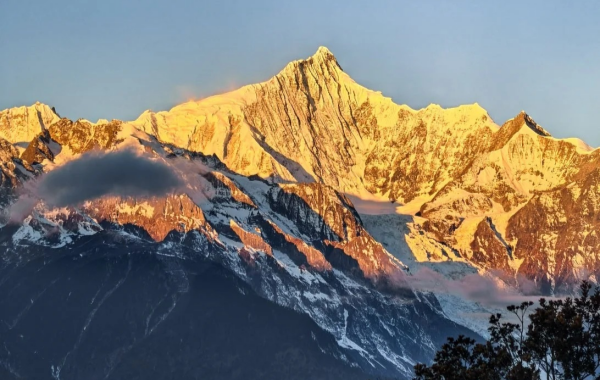
The very soul of Feilai Temple lies in a magnificent celestial spectacle that may unfold every single morning:the"Sunlit Golden Mountain."Just before the darkness of pre-dawn has fully receded,the thirteen snow-capped peaks of the Meili Snow Mountain range glow with a cool,silvery-white luster in the morning twilight.As the first ray of sunlight pierces the horizon,a golden glow begins at the very tip of the main peak—Kawagarbo—and slowly spreads downward.Within a matter of minutes,the entire snow mountain is instantly transformed into a gilded sanctuary,radiating a dazzling brilliance that leaves observers utterly breathless.This entire spectacle lasts only about twenty minutes,yet it offers a profound visual and spiritual experience—a moment truly unforgettable for a lifetime.
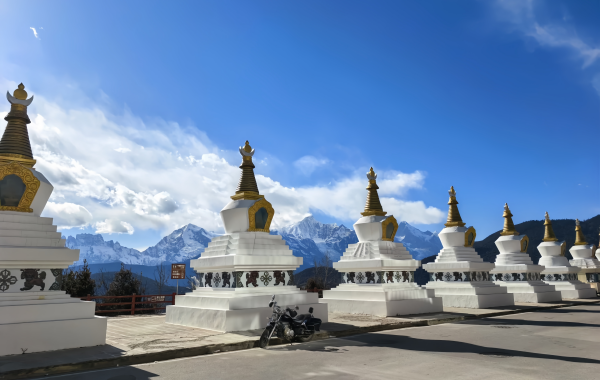
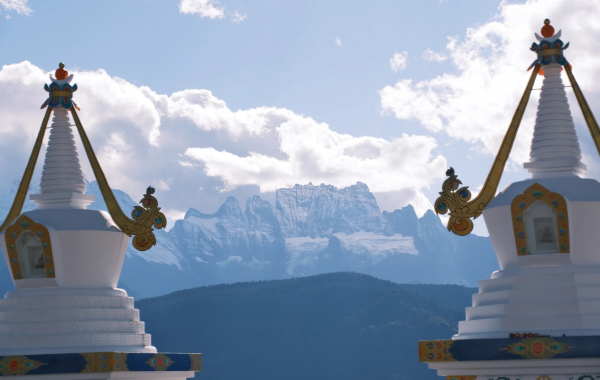
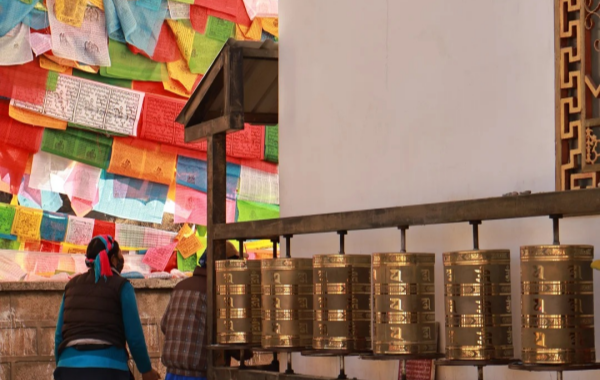
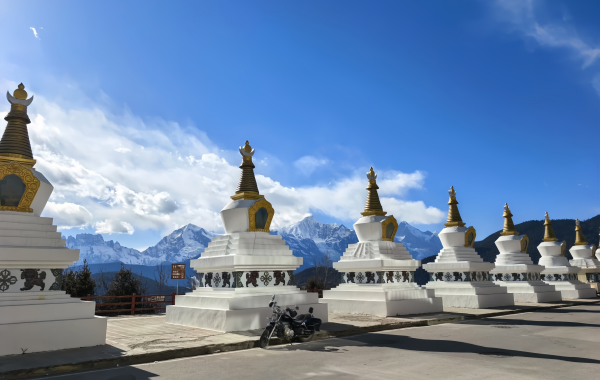
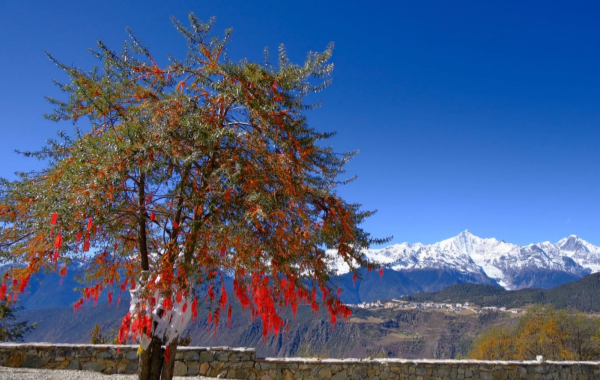
Feilai Temple Viewing Platform:This is the quintessential location for witnessing the"Golden Peaks at Sunrise"phenomenon.Situated at an elevation of approximately 3,400 meters,it faces Kawagarbo Peak directly,offering a completely unobstructed panoramic view.Five Tibetan Buddhist white stupas and fluttering prayer flags form the foreground,with the snow-capped mountains serving as the backdrop—creating one of the most iconic and recognizable scenes along the Yunnan-Tibet route.It is recommended to arrive and take your position 30 minutes before sunrise;sunrise typically occurs around 7:30 AM in winter and 6:00 AM in summer.
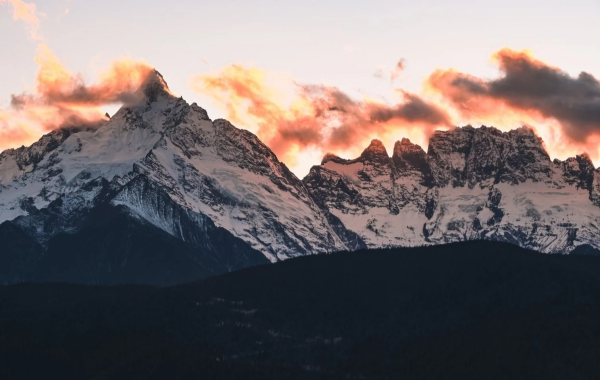
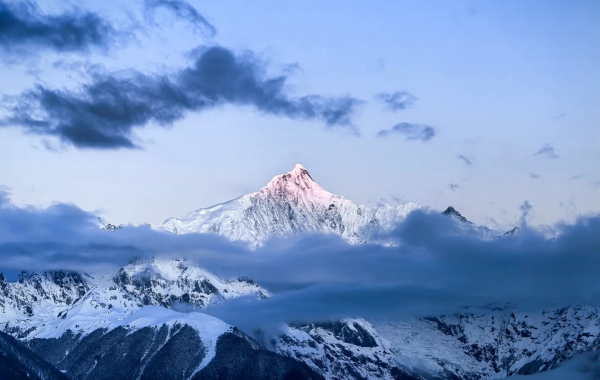
Wunongding Viewing Platform:Located near Feilai Temple,this spot is relatively less frequented by the masses.It is renowned for its panoramic views of the snow mountains,beautifully framed by a foreground of thirteen white stupas.In the late afternoon,visitors are often treated to a fairytale-like scene of swirling clouds enveloping the snow-capped peaks,making it an excellent destination for capturing stunning panoramic shots of the entire Meili Thirteen Peaks range.
Scenic Tips:The dry season runs from October to May of the following year;during this period,the weather is typically sunny with minimal cloud cover,offering the highest probability of witnessing the"Golden Peaks at Sunrise."The months of October through December,in particular,boast the clearest air quality,making this the prime window for"chasing the light."Photography recommendations include bringing a tripod for time-lapse photography and utilizing a telephoto lens to capture close-up details of the snow-capped mountains.
2.2 Cultural Craftsmanship:The Architecture and Murals of a 400-Year-Old Temple
Although Feilai Temple is modest in size,the sophistication of its architecture and artistry is truly breathtaking.
Haichao Hall:The Pinnacle of Architectural and Sculptural Beauty
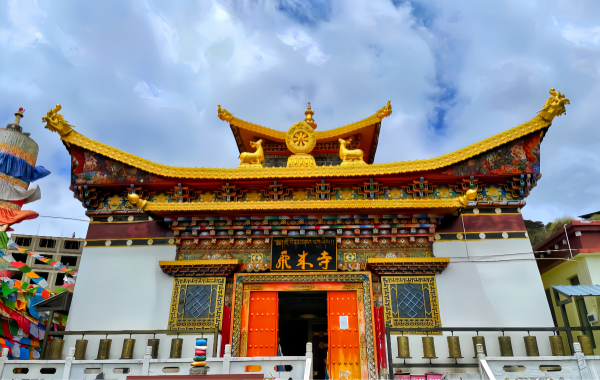
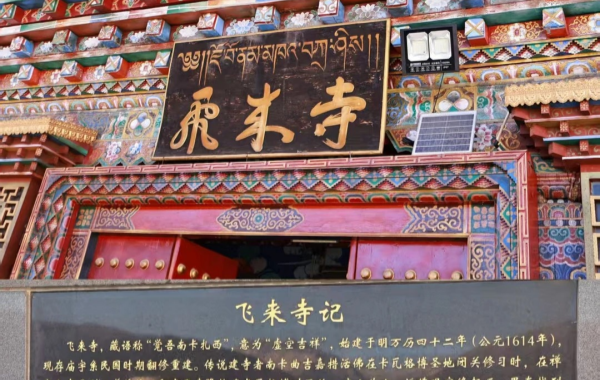
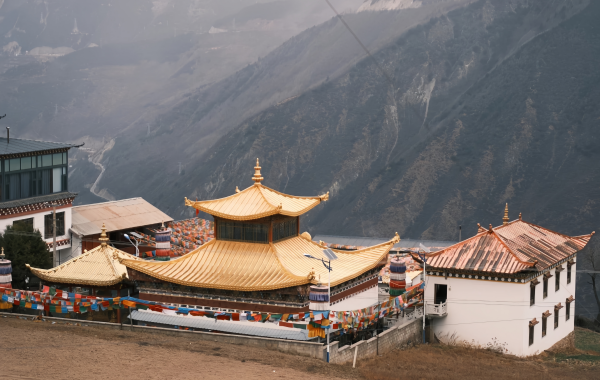
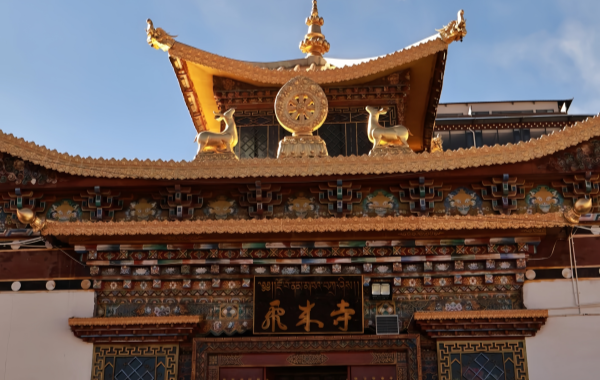
The entire Feilai Temple complex comprises the Zisun Hall,Guansheng Hall,and Haichao Hall,along with two flanking corridors,two side chambers,and four auxiliary halls.The structures are arranged in a staggered,multi-leveled layout,with the various halls and buildings harmoniously echoing one another to create a unique architectural pattern that embodies the fusion of Han Chinese and Tibetan styles,as well as the convergence of the three major spiritual traditions:Confucianism,Buddhism,and Taoism.The most awe-inspiring feature of the complex is its central structure:the Haichao Hall.The Main Hall features a single-eave Xuan Shan(overhanging gable)roof supported by a seven-purlin beam-lifting structure.Spanning three bays across its facade,the beam framework is constructed from massive round timbers,presenting an appearance that is both orderly and grand.The eaves are simple and airy in design;the eaves columns rest upon colossal Sumizuo(tiered pedestal)bases,the waist sections of which are intricately carved with bas-reliefs depicting human figures,floral motifs,and decorative patterns.Beneath the eaves,the wooden carvings are graceful and serene;the front of the hall is fitted with a complete set of lattice screens featuring exquisite patterns and executed with masterful,refined craftsmanship.
Bas-Reliefs on the Interior Rock Wall:Upon entering the Main Hall,one discovers a hidden wonder—a world unto itself.The main sanctuary is carved directly into the mountainside,utilizing the natural rock face of the mountain itself to form one of its walls.Here,artisans carved directly into the solid rock to create the centerpiece of the Haichao(Sea Tide)Hall:the"Sea Tide Dragon King Giving His Daughter in Marriage"relief.The left side of the composition features sculpted figures of the Eighteen Arhats,each displaying a distinct expression and demeanor;the right side depicts scenes and characters from the classic novel Journey to the West.Every figure is exquisitely crafted,appearing astonishingly lifelike and imbued with spirit.It is difficult to imagine how,centuries ago—in an era completely devoid of heavy machinery—ancient artisans managed to carve such a world-class masterpiece into the hard rock amidst these towering,rugged mountains.
Tibetan-Style Mural Art:The Main Hall enshrines statues of the Prince Siddhartha(as the Ascetic in the Snow Mountains),Guru Rinpoche(Padmasambhava),and the Buddha Jowo Nakha Tashi.The three surrounding walls are adorned with vibrant,colorful murals.Their subject matter encompasses the life and deeds of Tsongkhapa(founder of the Gelug school of Tibetan Buddhism),Shakyamuni Buddha,the Eleven-Faced Avalokitesvara,Chakrasamvara,various Dharma Protectors,and Zhuba Nakha Jiangcheng—the founder of Feilai Temple.The murals also feature portraits of the Living Buddhas associated with Deqin Temple and several other major monasteries throughout the Garze Prefecture in Sichuan.Covering an area ofover 60 square meters,these murals serve as invaluable historical artifacts for the study of the social history and ethnic culture of the Deqin region during that era.
A Place of Commemoration:Standing beside the temple is a monument dedicated to the"Martyred Heroes of the Sino-Japanese Meili Snow Mountain Expedition."Erected to honor the 17 members of a joint Chinese-Japanese climbing team who perished on January 4,1991,the monument serves as a solemn tribute to their sacrifice.Nearby stands a Buddhist stupa,constructed to commemorate the visit of the 10th Panchen Lama to Deqin in 1986.Here,the threads of faith and remembrance converge.
Photography Tips:
The best vantage point for capturing the"Golden Mountain in Sunlight"phenomenon is the main platform at the Feilai Temple Viewpoint;here,the white stupa and prayer flags frame the snow-capped peaks in a classic composition.
The Wunongding Viewpoint is ideal for capturing a panoramic view of the entire range of the Thirteen Peaks of Meili;the lighting is particularly excellent in the afternoon.
The Mountain-Circling Scenic Road(accessed via the path next to the CITIC Yuting Hotel)offers an exclusive,crowd-free perspective of the snow mountains,allowing you to photograph the sacred peaks from various angles.
The 30 minutes immediately before and after sunrise constitute the"golden hour"for photography;bringing a tripod to capture a time-lapse sequence will yield truly stunning results.