Human Ingenuity—Ancient Temples and Living Villages
The cultural landscape of the Dai Ethnic Garden offers an immersive experience—a profound journey through the realms of faith,architecture,and daily life.Manchunman Buddhist Temple:A 1,400-Year Vigil of Faith
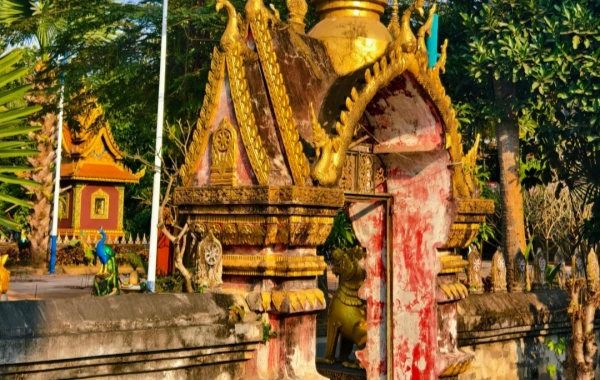
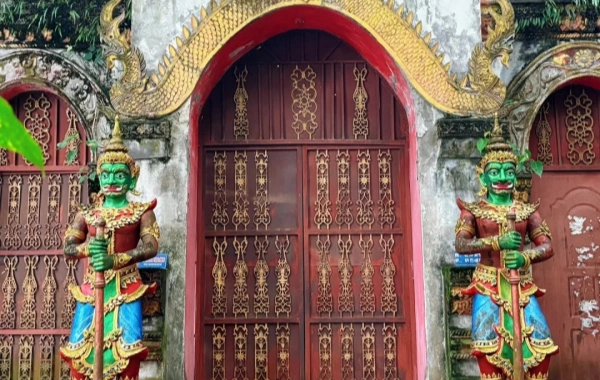
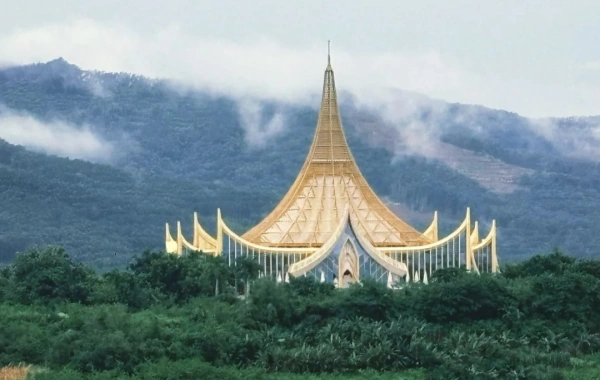
Stepping into the Manchunman Buddhist Temple feels akin to traveling back a millennium to the ancient Kingdom of Mengle.Founded in 583 AD,this temple boasts a history spanning over 1,400 years,making it one of the oldest Buddhist temples in Xishuangbanna.Legend has it that it was the very first temple constructed in the region following the introduction of Buddhism to Xishuangbanna.During a turbulent era,the temple was repurposed as a grain storehouse;consequently,it was spared from demolition and survived intact.The temple standing today is the result of gradual restoration efforts undertaken by local villagers and devotees,who contributed funds and materials throughout the post-1970s period.
Inside the main sanctuary,a scene of resplendent grandeur unfolds:gilded stupas,murals adorning crimson walls,and the interplay of light and shadow filtering through Bodhi leaves—every element radiates a solemn yet mystical religious aura.Entry into the sanctuary requires the removal of footwear—a ritual accompanied by a profound sentiment:"Cast aside your shoes,and with them,cast aside your arrogance.This reverence,spanning a thousand years,runs deep and enduring;please empty your ego and walk barefoot."The Manchunman Buddhist Temple enjoys renown throughout Southeast Asia;during major annual Buddhist festivals,monks and devotees from Sri Lanka,Thailand,Myanmar,Laos,and the local region converge here in great numbers.
Manting Buddhist Temple and the Great White Stupa:Sacred Sites of 1,400 Years
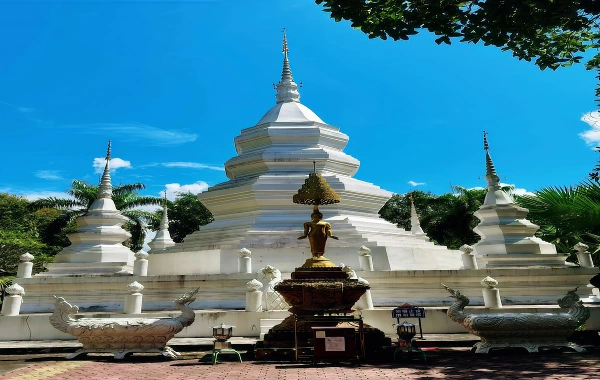
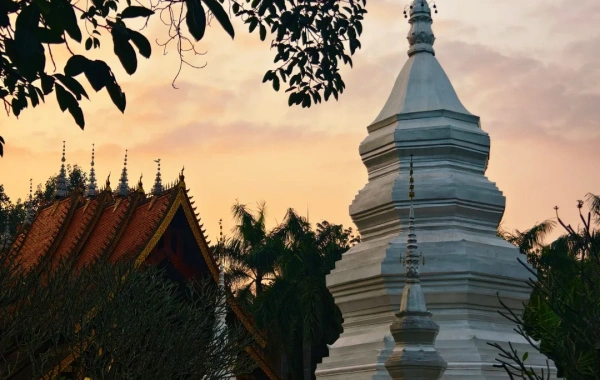
The Manting Buddhist Temple complex was established in 538 AD,likewise boasting a history of over 1,400 years.The Great White Stupa,situated adjacent to the temple,was constructed in 669 AD and stands as an iconic architectural exemplar of the Theravada Buddhist tradition prevalent throughout Southeast Asia.A remarkable natural wonder—the"Stupa-Embracing Tree"—can be found beside the temple;here,a banyan tree has sprouted directly from within the stupa,its roots and branches tightly enveloping the structure.The Dai people have long revered this banyan as a sacred,divine tree.According to legend,when the Lord Buddha,Siddhartha Gautama,traveled to Meng Han to deliver his teachings,he sat in meditation beneath this very tree for seven days and seven nights,gazing out upon the surging waters of the Lancang River as he contemplated the path to enlightenment.
The Dai Bamboo House:A Paradigm of Courtyard Garden Architecture
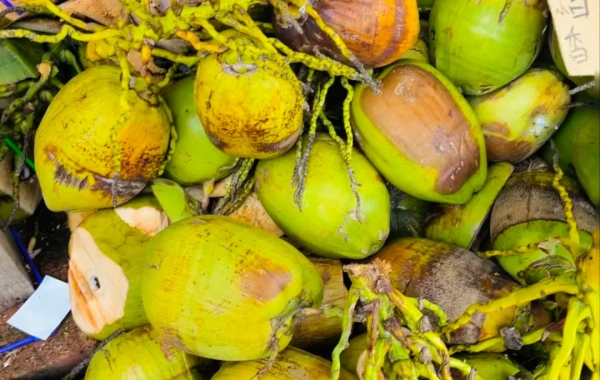
The bamboo house serves as the traditional dwelling of the Dai people—a living space embraced by surrounding lakes and rivers,shaded by lush greenery,filled with the fragrant scents of flowers and fruit,and permeated by the gentle,lingering resonance of Buddhist chants.Surrounding the bamboo stilt-houses,tropical fruits such as bananas,mangoes,lychees,Burmese grapes,and papayas are cultivated in abundance.Towering coconut palms,majestic talipot palms,and slender,graceful areca palms stand tall,adorning the Dai bamboo dwellings with an air of extraordinary charm.Landscape architects describe the Dai Ethnic Garden as a paragon of courtyard garden design;historians regard it as a living museum of ethnic history;and botanists hail it as a genetic repository for the plant kingdom.
Intangible Cultural Heritage:Dai Wisdom at Your Fingertips
As you wander through the villages,you can witness firsthand and experience various forms of Dai intangible cultural heritage:
-Dai Brocade Weaving:Women weave intricate patterns on ancient looms.
-Slow-Wheel Pottery:Using the most primitive methods,clay is transformed into functional pottery.
-Writing on Palm-Leaf Sutras:Scriptures are inscribed onto patra palm leaves using an iron stylus—a unique method of cultural transmission for the Dai people.
-"Zhangha"Storytelling:A traditional Dai folk art of rhythmic storytelling and singing,often referred to as the"Encyclopedia of the Dai People."
Must-See Wonders:A Symphonic Poem of Ancient Temples and Dai Bamboo Houses
The Tropical Courtyard Scenery of Olive Dam(Ganlanba)
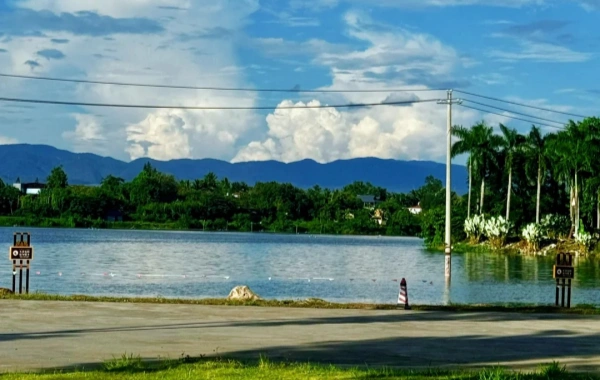
From a high vantage point,the five Dai villages within the park appear as if blanketed by the magnificent,sprawling tail of a giant green peacock;the individual villages and bamboo houses are completely obscured from view,leaving only the clear waters of the Lancang River visible to the right and Longde Lake to the left.Winding paths connect the villages,weaving through groves of tropical fruit trees to form a serene and bountiful pastoral tableau.
The Peacock Garden and Cockfighting Arena
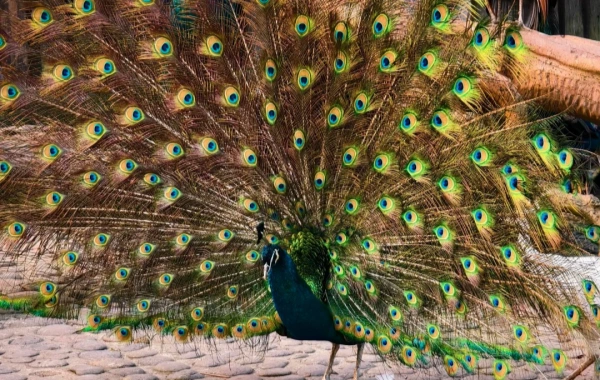
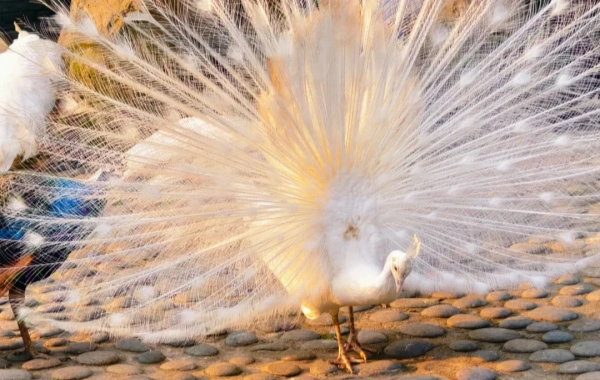
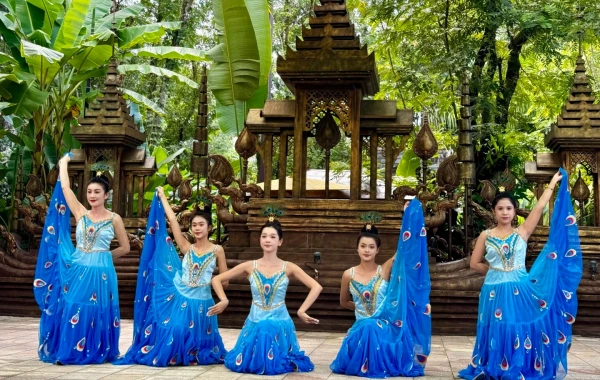
The park's Peacock Garden hosts scheduled peacock dance performances daily,featuring the breathtaking moment when the peacocks fan out their resplendent tails.At the Cockfighting Arena,visitors can observe the traditional Dai sport of cockfighting—a spirited spectacle where two roosters engage in fierce combat,exuding a raw,wild charm.
The Border Pier and the Lancang River
The border pier located within the scenic area served as one of the filming locations for the movie Operation Mekong.Standing by the pier,with the Lancang River rushing past and the river breeze blowing,you can gaze out at the scenic views on the opposite bank.
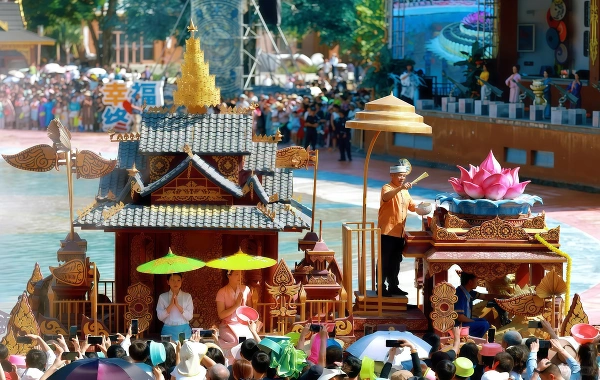
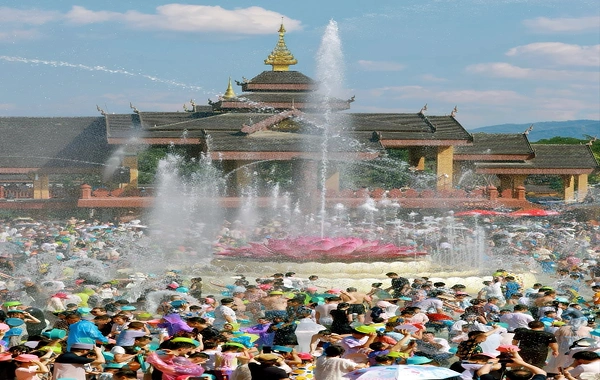
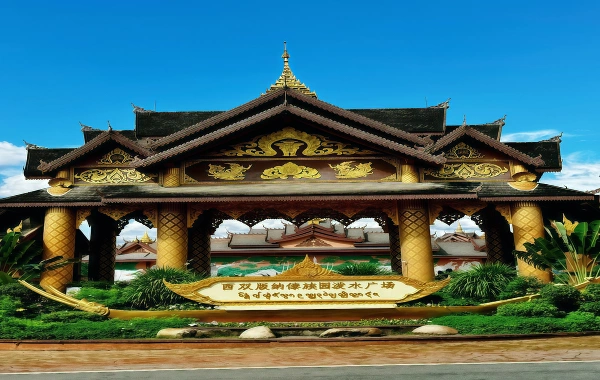
>Photography Tips:The golden pagoda at Manchunman Temple offers the best lighting during the early morning and late afternoon;both its architectural details and the ongoing religious activities make for excellent photo opportunities.Manzha Village preserves traditional Dai architecture,offering scenes of daily village life that possess immense humanistic charm.The Water Splashing Square is the ultimate spot for capturing moments of pure joy and festivity.