Nature's Creation—Water as Soul, Bridges as Bones, Lanes as Veins
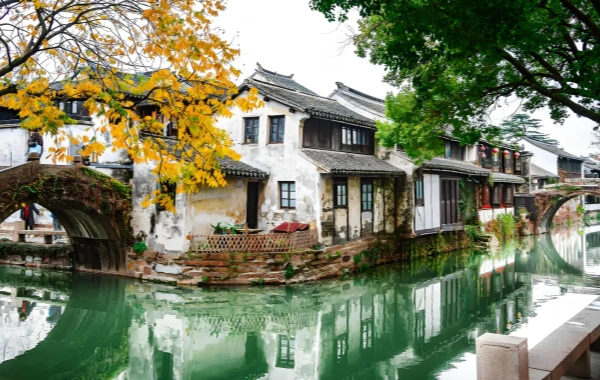
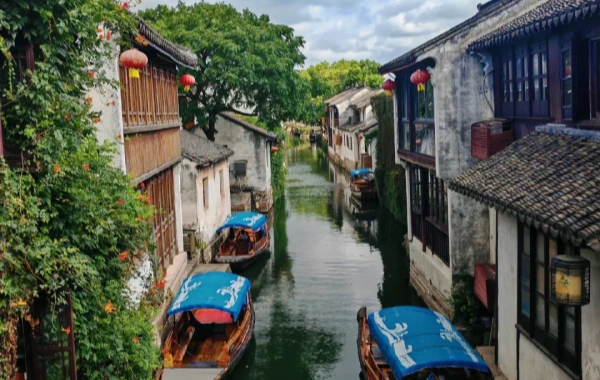
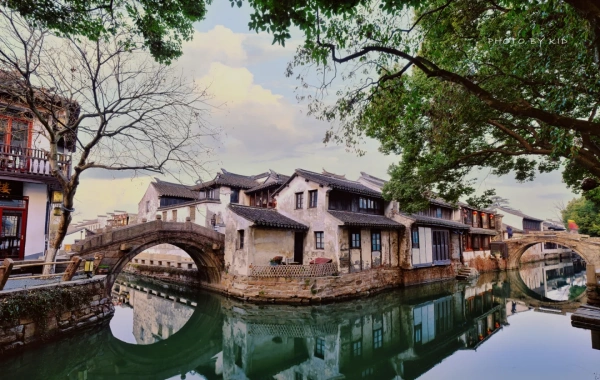
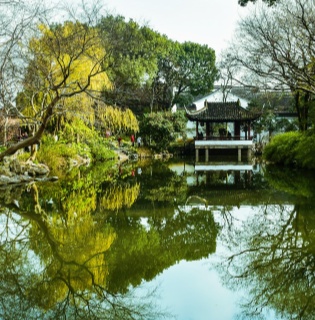
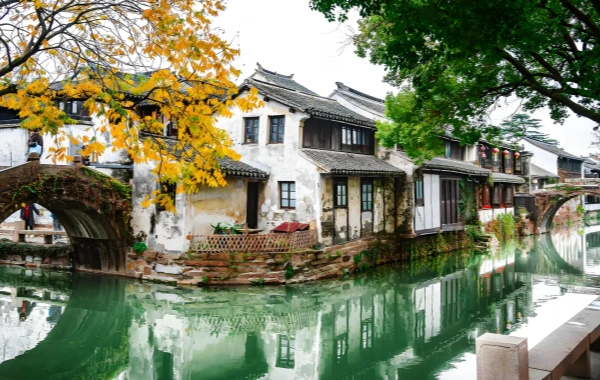
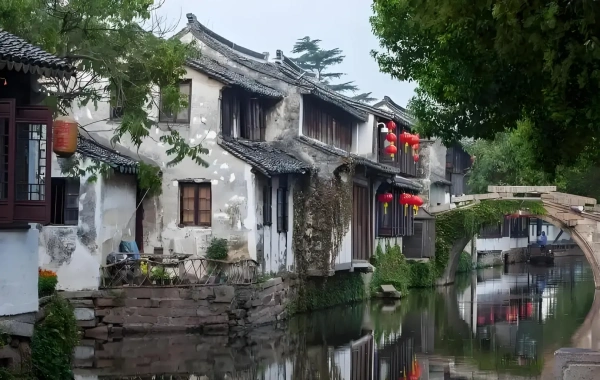
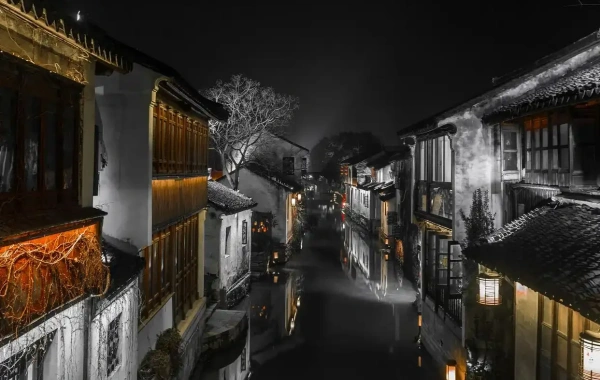
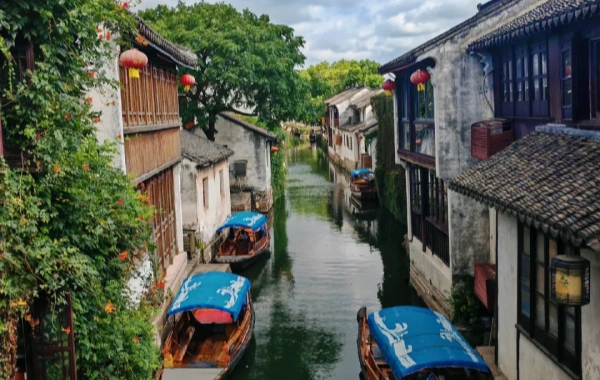
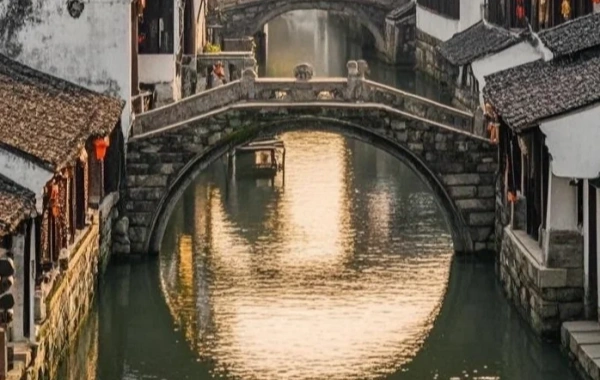
Zhouzhuang's framework and spirit are woven into its crisscrossing emerald waters, ancient bridges of varied forms, and deep, winding alleys.
The “Well” Pattern Waterways: The Town's Lifeblood and Lifeline
- Four main waterways—North-South City River, Back Harbor River, Oil Cart Pond River, and Central City River—converge here in a well-pattern, forming Zhouzhuang's unique grid-like waterway layout. These rivers serve not only as transportation arteries but also as the center of daily life, supporting laundry, trade, and transportation. Gliding through them in a hand-rowed boat is the only way to grasp Zhouzhuang's spatial logic and aesthetic of living.
Shuangqiao (Shide Bridge and Yong'an Bridge): Keys to the World
- These bridges symbolize not only Zhouzhuang but all of China's water towns. One bridge spans horizontally, the other vertically; one square, one round; one arched, one flat. Ingeniously constructed side by side, their arches and reflections resemble an ancient Chinese key. Chen Yifei's brush introduced it to the world, and it opened the gateway for the world to discover Zhouzhuang. Capturing the panoramic view of the Twin Bridges from the riverbank is a must-do for every visitor.
Fuan Bridge: Unique Aesthetics of Bridge and Pavilion in Harmony
- The oldest bridge in the ancient town, originally built during the Yuan Dynasty. Its uniqueness lies in the four bridge pavilions with upturned eaves at each corner, seamlessly integrating bridge and architecture to create the marvelous scene where “bridges enter through the front door, and boats pass right through the house.” From the bridge, one can overlook the depth of the water alleys and the houses lining both banks, making it an excellent viewing platform.
South Lake and Quanfu Long Bridge: The Expansive Spirit of Water Towns
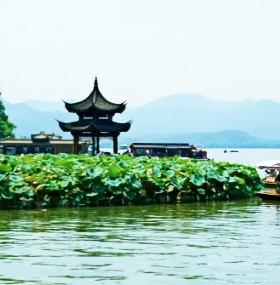
- Located south of the ancient town, the expansive lake surface contrasts sharply with the narrow water alleys within the town. On moonlit autumn nights, “Autumn Moon over South Lake” is one of Zhouzhuang's most celebrated sights. The Quanfu Chang Bridge, spanning the lake like a rainbow resting on the waves, connects Quanfu Temple with the ancient town. Strolling across it, the lake's reflection and the ancient town unfold before your eyes, bringing a sense of sudden clarity and openness.
Cultural Ingenuity: Merchant Mansions and Marketplace Charm
Here, grand courtyard residences and ordinary alleyways together narrate the complete story—from tales of immense wealth to the everyday rhythms of life.
Shen Mansion: The Ultimate Vision of Jiangnan Wealth
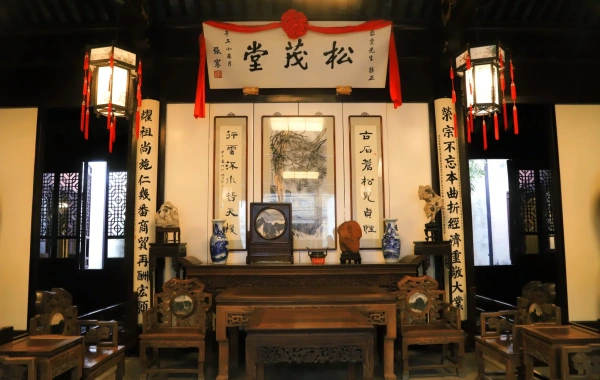
- Built by descendants of Shen Wansan, the wealthiest man in Jiangnan during the Ming Dynasty, this magnificent complex features seven courtyards, five gate towers, and over a hundred rooms, all constructed along the river with extraordinary grandeur. Its “Gallery of Horses” (corridor) and main hall “Songmao Hall” feature intricately carved beams and painted rafters, epitomizing opulence. Beyond showcasing ancient wealth, the Mansion connects to Shen Wansan's legendary life—spanning maritime trade, wealth rivaling nations, and ultimate tragedy—serving as a key to deciphering Zhoushang culture.
Zhang Hall: “Palanquins enter through the front gate, boats pass right through the house”
- Another Ming-era structure, it follows the typical layout of front hall and rear residence. Its ingenuity lies in the narrow river named “Chujing” that flows through the rear courtyard, complete with a private dock. This folk rhyme vividly captures its spatial uniqueness, embodying the wisdom of water town dwellings seamlessly integrated with waterways.
Miluo Pavilion: A Witness to Poetic Elegance
- This riverside pavilion gained fame in the 1920s when poets from the Nanshe Society, including Liu Yazi and Chen Qubing, gathered here to compose verse, drink wine, and champion revolutionary ideals. Today, it displays manuscripts of their poetic exchanges, adding a stirring humanistic note to the serene water town.
Zhouzhuang Museum & Ancient Theater: A Cultural Showcase
- Zhouzhuang Museum: Housed in a residence from the early Republican era, it systematically showcases the town's history, artifacts, folk customs, and agricultural heritage—a comprehensive classroom for understanding the ancient town.
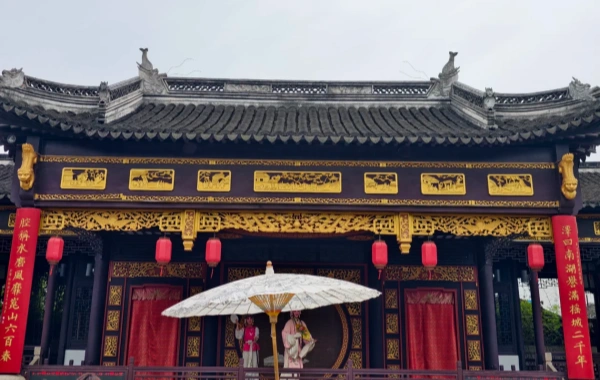
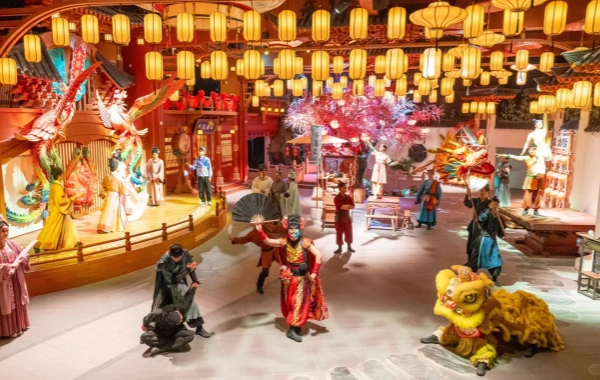
- Ancient Theater: Daily performances of traditional opera genres like Kunqu and Suzhou Pingtan (at fixed times). Listening to the water-grinding melody of The Peony Pavilion within exquisite ancient architecture offers an immersive experience of Jiangnan's refined elegance.
Chengxu Taoist Temple and Quanfu Lecture Temple: Spiritual Sanctuaries of the Ancient Town
- Chengxu Taoist Temple: Hailed as the “Taoist Temple on Water,” this renowned Jiangnan Taoist site enjoys thriving incense offerings.
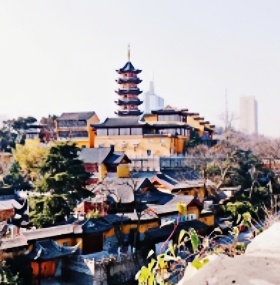
- Quanfu Temple: A temple built upon the water, its pavilions and halls arranged in harmonious tiers, resembling an elegant garden. The morning bells and evening drums add an ethereal Zen quality to the water town.
> Photography Tips:
The best vantage point for a panoramic view of the Twin Bridges is the riverside steps beside Shide Bridge;
From Fuan Bridge, capture the depth of the water alleys on both sides and the reflections of the bridge towers;
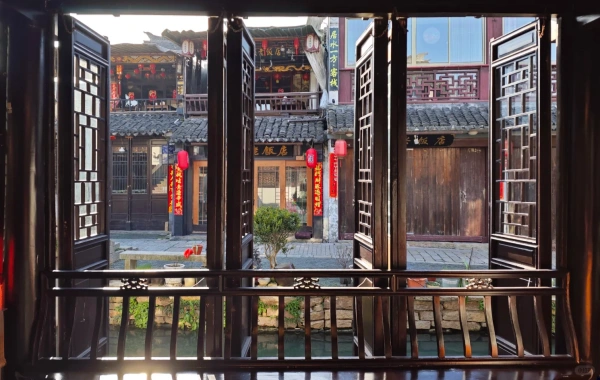
The carved lattice windows and interplay of light and shadow at Shen Ting's Walking Gallery offer superb architectural detail shots;
Between 6-8 AM, before crowds arrive, capture mist-shrouded water alleys and locals' daily scenes for cinematic appeal.