Mingsha Mountain & Crescent Spring: A Journey to a Thousand-Year Silk Road Marvel—Where Sand and Water Coexist

Mingsha Mountain & Crescent Spring: A Journey to a Thousand-Year Silk Road Marvel—Where Sand and Water Coexist

Overview: An Eternal Miracle Deep Within the Great Desert

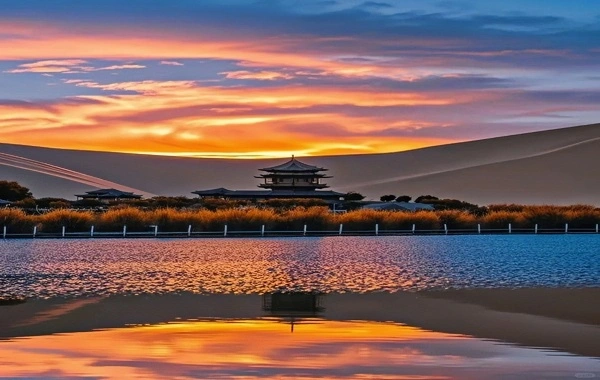
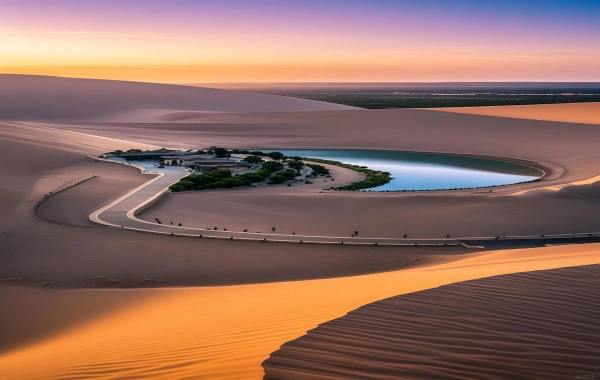
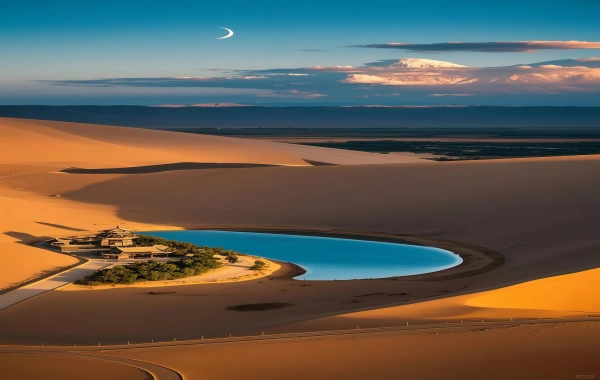
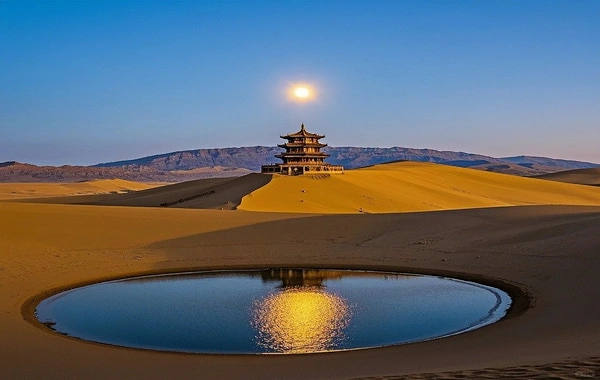
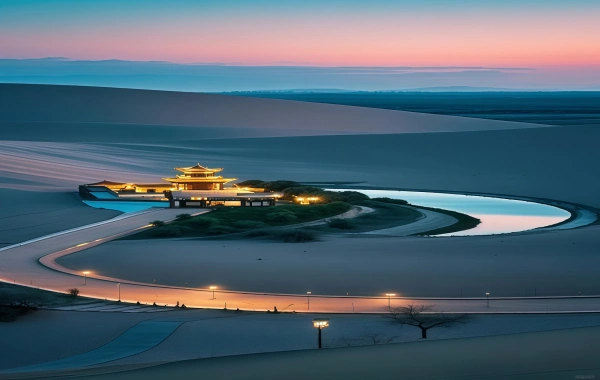
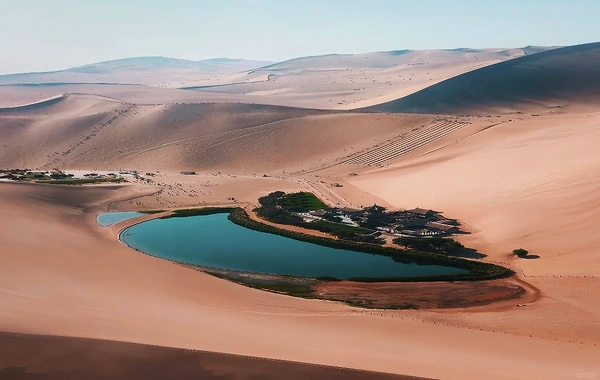
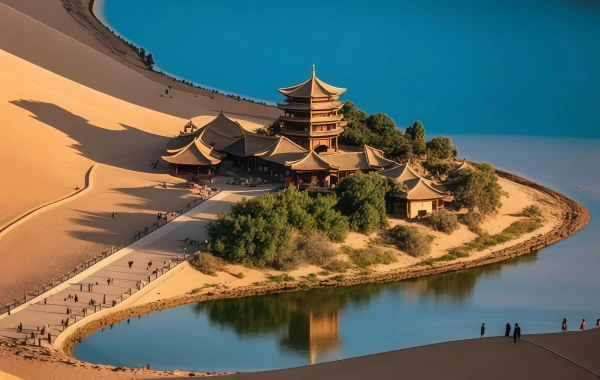
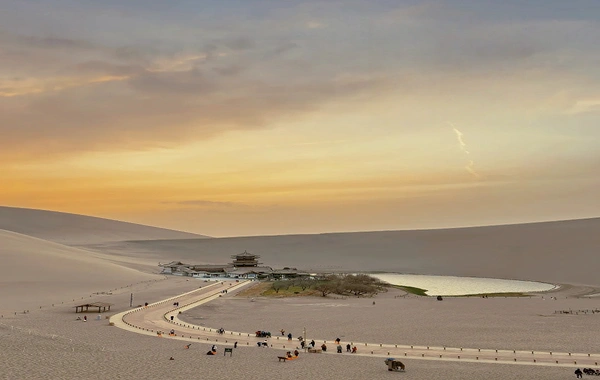
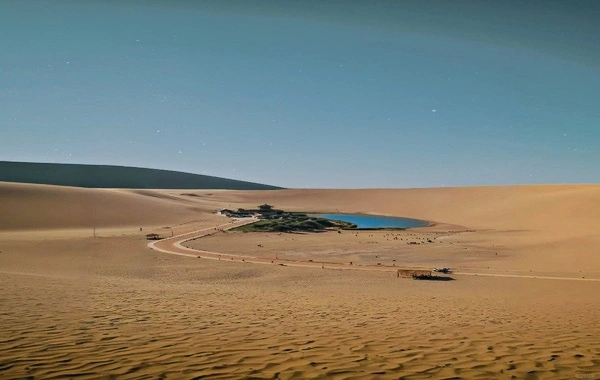
Mingsha Mountain (Singing Sand Mountain) and Crescent Spring constitute an unparalleled natural wonder situated on the edge of the Tengger Desert. Golden sand dunes roll across the landscape in undulating waves, while a crescent-shaped pool of crystal-clear water lies serenely amidst this sea of ​​sand—a spring that has remained unyielding and unfaded for a thousand years. 

Key Highlights at a Glance

Identity Tags: A Marvel of Sand-and-Water Coexistence / Foremost of the "Eight Scenic Spots of Dunhuang" / A Cultural Landmark of the Silk Road

Core Experiences: climbing the dunes to watch the sunset, and stargazing by the banks of Crescent Spring.

Suggested Visit Duration: 3–4 hours to half a day; entering the park in the late afternoon to witness the sunset and evening scenery is highly recommended.

Scenic Area Address: Mingsha Mountain & Crescent Spring Scenic Area, Dunhuang City, Gansu Province.

  • Mingsha Mountain & Crescent Spring: A Journey to a Thousand-Year Silk Road Marvel—Where Sand and Water Coexist-1
  • Mingsha Mountain & Crescent Spring: A Journey to a Thousand-Year Silk Road Marvel—Where Sand and Water Coexist-2
  • Mingsha Mountain & Crescent Spring: A Journey to a Thousand-Year Silk Road Marvel—Where Sand and Water Coexist-3
  • Mingsha Mountain & Crescent Spring: A Journey to a Thousand-Year Silk Road Marvel—Where Sand and Water Coexist-4

Origins: Silk Road Legends and Ecological Stewardship

Furong Ancient Town Furong Ancient Town

The Namesake of the Silk Road—The Legend of the "Heavenly Horse" and a Thousand-Year Ode

The name "Mingsha Mountain" (Singing Sand Mountain) derives from the distinct humming sound produced when grains of sand slide down its slopes; ancient scholars ranked this phenomenon—known as "The Singing Sands on a Sunny Day"—as the foremost among the "Eight Scenic Spots of Dunhuang." "Crescent Spring" earned its name from its resemblance to a slender new moon; historically referred to as the "Sand Well," it was also popularly known as the "Medicinal Spring," and its renown has spread throughout the Western Regions since the era of the Han Dynasty.

Perhaps the most moving of all the legends associated with this site is the tale of Emperor Wu of Han acquiring a "Heavenly Horse" from the nearby Wowachi Pool. In 113 BC, a magnificent steed—a "Heavenly Horse"—soared forth from Wowachi Pool (located near Crescent Spring) and was subsequently presented to Emperor Wu. Overjoyed by this auspicious gift, the Emperor composed the Song of the Heavenly Horse to commemorate the event. The Qing Dynasty poet Zhu Kun, in his Ode to Crescent Spring, captures the essence of this very legend with the lines: "The Star of the Stable once passed beneath these waters; a Heavenly Horse, separated from its herd, emerged from the clear waves." For millennia, Crescent Spring has remained, in the hearts of Silk Road travelers, a veritable "Spring of Life"—the most gentle and soothing source of solace amidst the vast, boundless desert. 1.2 The Path to Rebirth—From the Brink of Desiccation to the Return of Azure Waters

The modern saga of Crescent Spring is an epic tale of profound ecological awakening and scientific stewardship:

Ecological Crisis (1970s–1990s): Influenced by both natural and anthropogenic factors, groundwater levels in the Dunhuang Basin plummeted, causing the water level of Crescent Spring to shrink drastically. By the late 1990s, the average water depth had fallen to less than one meter, and the water surface area had dwindled to a mere 2.56 mu—leaving the spring facing the imminent threat of vanishing entirely.

National Action (2011–2020): The State Council approved the Comprehensive Plan for the Rational Utilization of Water Resources and Ecological Protection in Dunhuang. Construction on the project to restore and replenish Crescent Spring began in 2016; through the construction of low-level dams for groundwater recharge and strict restrictions on groundwater extraction, the initiative successfully raised the regional groundwater table.

Miraculous Rebirth (2020–Present): Following the completion of the project, the average observed water level at Crescent Spring began a steady ascent. The latest data from 2025 reveals that the groundwater depth at the monitoring point on the southern bank has reached 3.8 meters, while the water surface area has expanded to 31.73 mu—both marking their highest levels in over two decades. Crescent Spring has transformed from a "withered" state to one of "lush, pristine beauty," once again presenting the timeless spectacle of the "coexistence of sand and spring."

> Dive Deeper: Explore more of China's ecological restoration miracles >> [Yungang Grottoes]  | [Longmen Grottoes] 

Must-See Wonders: A Symphonic Poem of Nature's Artistry and Silk Road Heritage

Furong Ancient Town Furong Ancient Town Furong Ancient Town Furong Ancient Town Furong Ancient Town Furong Ancient Town

Nature's Artistry—The Singing Sand Dunes and the Ever-Flowing Spring

The natural landscape of Mingsha Mountain (Singing Sand Mountain) and Crescent Spring stands as an eternal masterpiece, sculpted jointly by the forces of wind, sand, and water.

Mingsha Mountain—A Singing Golden Sea of Sand

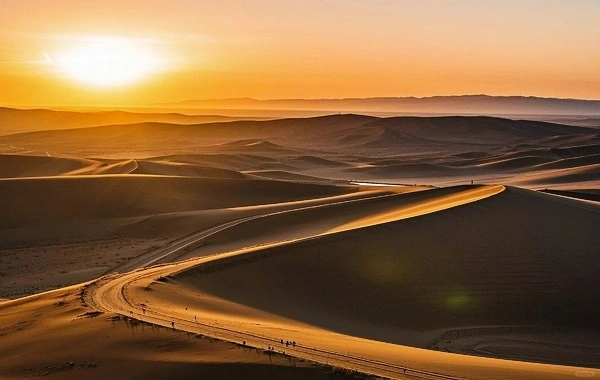
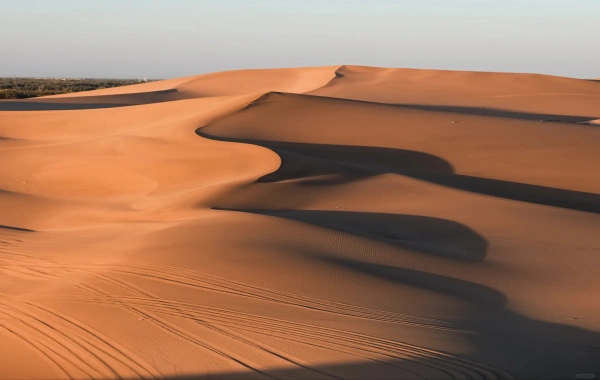
The "Singing Sand Dunes on a Clear Day": Mingsha Mountain was formed through the weathering and wind-driven transport of quartz sandstone. Its sand grains are crystal-clear and translucent, appearing in five distinct colors—red, yellow, green, white, and black—earning it the moniker "Five-Colored Sand." When visitors slide down the sandy slopes, the grains rub and collide against one another, emitting a resonant hum that resembles the ringing of camel bells or the rumble of thunder—this phenomenon is the origin of the legend of the "Singing Sand Dunes on a Clear Day." Scientists explain that tiny pores on the surface of the sand grains act as "resonating chambers"; the faint sounds generated by friction are amplified within these cavities, giving rise to this desert marvel.

Restoration After the Night: Most miraculous of all is the nature of the dunes at Mingsha Mountain: "buffeted by wind all night, yet restored to their original state by dawn." No matter how many people climb or slide down the dunes during the day, a single night's wind restores them to their pristine condition, allowing them to maintain their timeless, unchanging forms throughout the ages. Winds typically blow from the southeast, causing sand to migrate along the dune crests toward the northwest; this directional flow prevents the sand from burying Crescent Spring—the natural secret behind the thousand-year "coexistence of sand and spring." 

Dune Crests and Morphology: The crests of the Mingsha Mountain dunes are as sharp as knife blades. Standing atop a ridge and gazing into the distance, one sees the dunes stretching out like golden waves toward the horizon. Crescent dunes, pyramidal dunes, and conical dunes—each displaying a distinct form—combine to create a natural classroom for the study of geology.

Crescent Spring—The Fountain of Life in the Desert

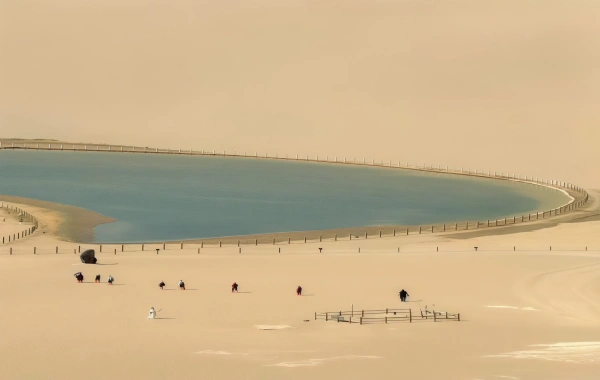
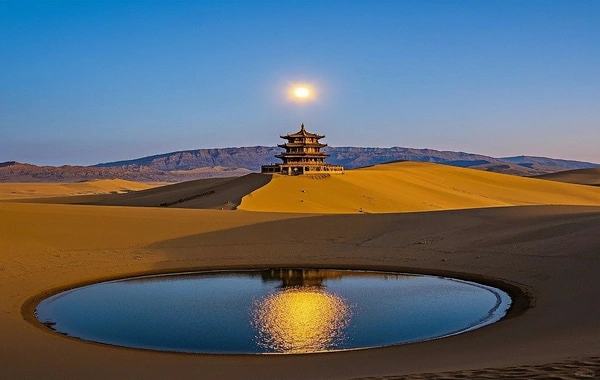
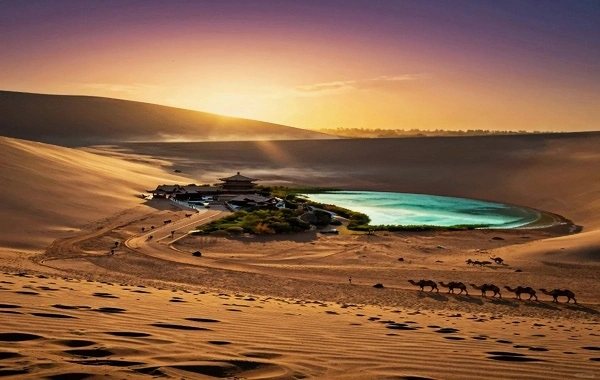
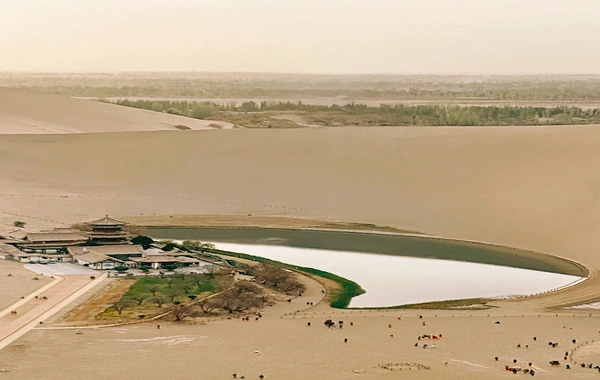
The Coexistence of Sand and Spring: Crescent Spring measures nearly 100 meters from east to west and approximately 25 meters from north to south, reaching a maximum depth of about 5 meters. Shaped like a slender crescent moon, it lies embedded within a vast golden sea of ​​sand. The spring water is crystal clear—transparent to the very bottom—and gleams with the emerald hue of jade. Remarkably, even amidst fierce winds, the spring remains unburied by shifting sands; situated deep within the Gobi Desert, its waters remain perpetually clear and never run dry. This extraordinary phenomenon owes its existence to the convergence of three exacting conditions: a stable underground water source, a favorable orientation of the surrounding dunes, and a precise balance of wind forces.

The Mystery of Its Formation: Crescent Spring is situated within the ancient riverbed of the Dang River; its water source consists of groundwater formed by the infiltration of meltwater from the glaciers and snowfields of the Qilian Mountains. This regional groundwater flows via subterranean channels into the natural depression where the spring lies, eventually welling up to the surface to form this perennial oasis that has endured for millennia. Scientists have hailed it as the "Premier Spring of All Deserts"—a title that is by no means an exaggeration.

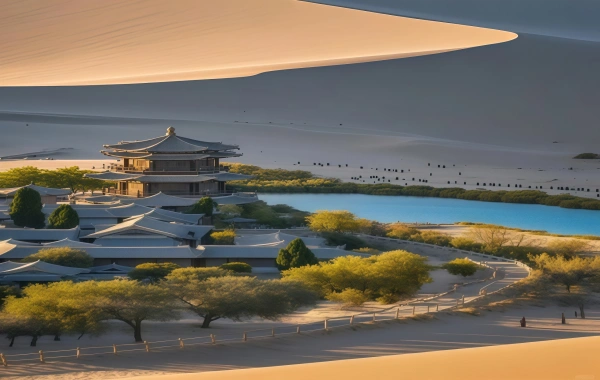
Vegetation by the Spring: The banks of the spring are lush with dense reeds, Euphrates poplars, and oleaster trees. Most renowned among them are the "Husband and Wife Willows"—planted in 1971, these trees have weathered countless sandstorms with tenacious resilience, becoming a cherished symbol of enduring love. On the southern bank, the reed beds sway gently in the breeze, while the waters mirror the towering sand dunes, creating a scene of poetic and picturesque beauty. A Desert Sanctuary—A "Breathing" Gobi Oasis

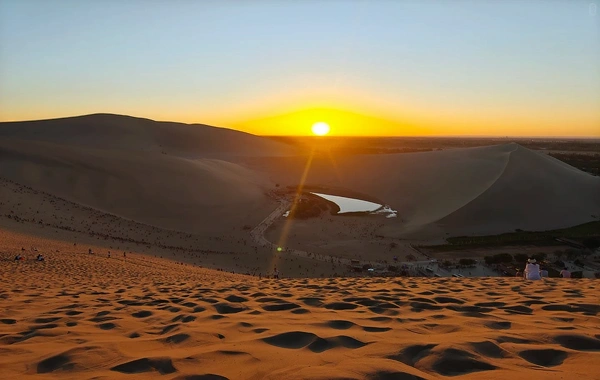
Desert Sunsets and Starry Skies: Mingsha Mountain (Singing Sand Mountain) is an exceptional location for watching the sunset. As the sun dips below the horizon, the sand dunes are painted in hues of orange-red, crimson, and gold—a shifting interplay of light and shadow resembling a flowing oil painting. After sunset, thanks to the minimal light pollution in Dunhuang, the Milky Way stretches across the firmament, visible to the naked eye—making it a paradise for astrophotography enthusiasts.

Five-Colored Sand Therapy: The "five-colored sand," heated by the sun's rays, is believed to possess remarkable therapeutic properties for alleviating lower back and leg pain, as well as rheumatic arthritis. The region has maintained a tradition of "sand therapy" since ancient times; a complimentary sand therapy zone is located on the eastern side of the scenic area, allowing visitors to experience this unique treatment firsthand.

Human Ingenuity—Cultural Footprints on the Ancient Silk Road

Yuequan Pavilion—An Ancient Structure Standing Watch for a Millennium

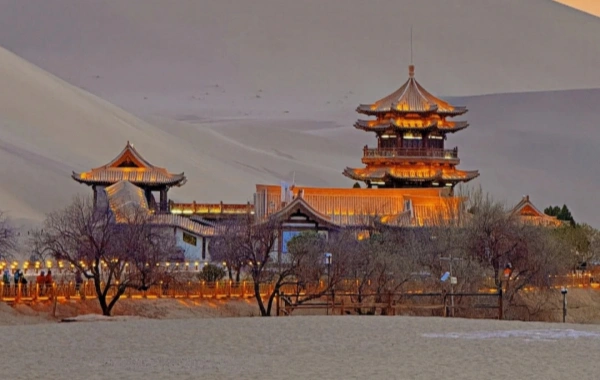
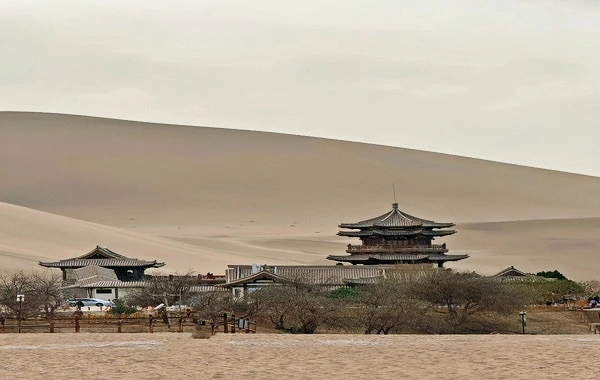
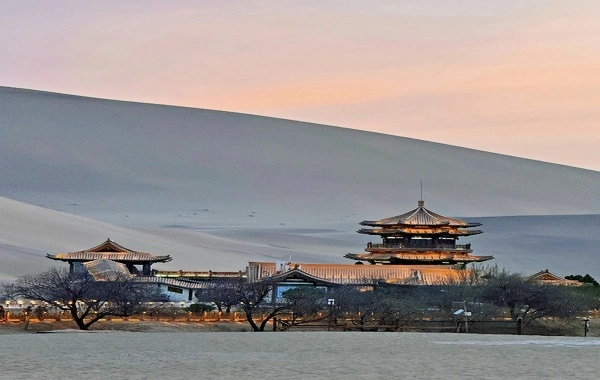
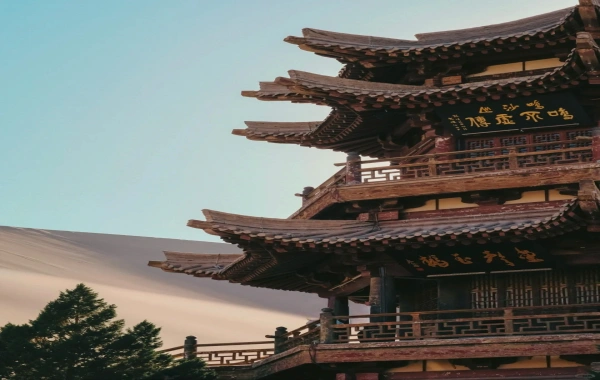
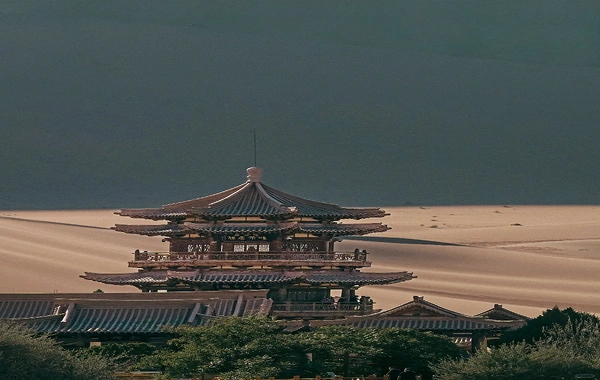
Situated beside the spring stands the quaint and historic Yuequan Pavilion. Originally constructed during the Han Dynasty, the current structure is a modern reconstruction comprising two levels. The upper level offers a panoramic view of Crescent Spring (Yueyaquan), while the lower level houses educational exhibits on the desert ecology of Dunhuang. The pavilion and its reflection shimmering in the spring waters create a captivating visual harmony, making it the quintessential vantage point for capturing panoramic photographs of Crescent Spring.

Originally, a complex of ancient structures stood along the southern bank of the spring. Stretching from east to west, this complex comprised over a hundred chambers—including the Hall of the Goddess (Niangniang Dian), the Dragon King's Palace, the Bodhisattva Hall, the Medicine King's Cave, and the Thunder God's Terrace. Each hall once housed over a hundred painted clay sculptures and featured hundreds of murals. Adorning the walls were inscribed plaques bearing titles such as "The Foremost Spring," "A World Apart," and "Reaching the Kunlun Peaks"—works of calligraphy so elegant and refined that they were considered masterpieces.

Ancient Willows and the "Couple Willows"

Zuo Zongtang's Willow: Growing beside the spring stands a venerable willow tree, said to be over a thousand years old. Legend has it that it was planted by Zuo Zongtang during the Qing Dynasty following his successful campaign to reclaim Xinjiang. With its sturdy trunk and lush foliage, it stands as a rare and vibrant patch of greenery amidst the desert landscape.

The "Couple Willows": Planted along the banks of the spring in 1971, these two willows have repeatedly suffered damage from desert sandstorms over the years. Yet, thanks to diligent care and maintenance, they have tenaciously survived. Standing side-by-side in a close embrace, the pair has become a cherished pilgrimage site for visiting couples.

Silk Road Caravans—The Timeless Sound of Camel Bells

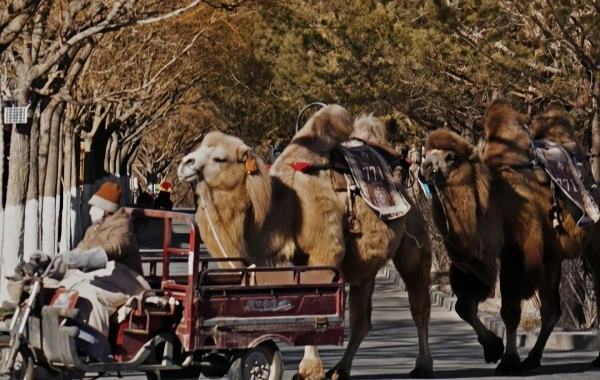
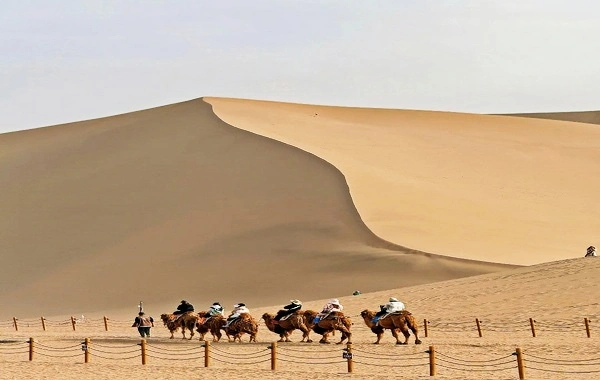
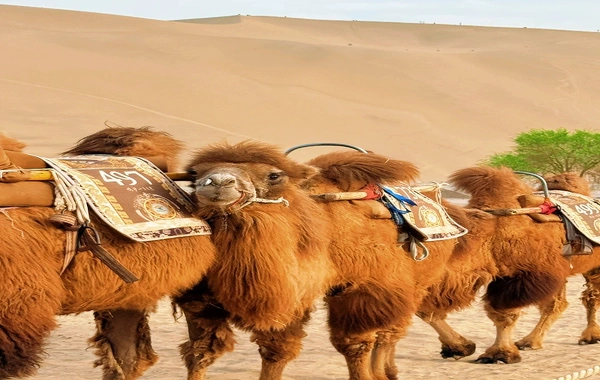
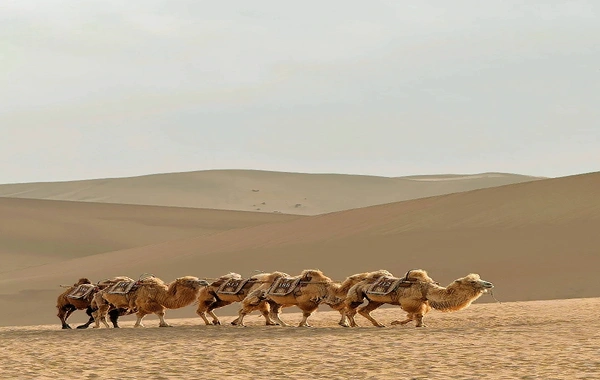
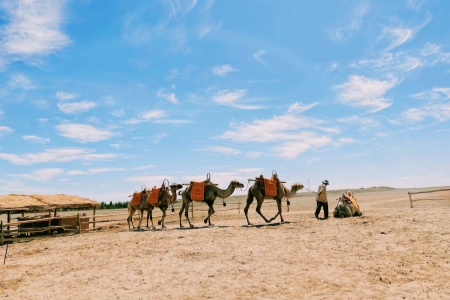
Riding a camel is the most classic and quintessential way to experience the magic of Mingsha Mountain. The camel caravans follow a fixed route, their bells chiming rhythmically—evoking the sensation of traveling back in time to the Silk Road era of the Han and Tang dynasties. The local camel handlers are mostly villagers whose families have lived by Crescent Spring for generations; they share a deep emotional bond with their camels and with this very desert landscape.

> Photography Tips:

The Wooden Walkway South of Yuequan Pavilion: The optimal vantage point for capturing a panoramic view of Crescent Spring, allowing you to frame the spring, the reeds, and the surrounding sand dunes all in a single shot.

The Top of Climbing Staircase No. 1: Offers a bird's-eye view of the entire Crescent Spring area; the interplay of light and shadow at sunrise and sunset is absolutely stunning.

The Summit of East Mountain: The perfect spot to capture silhouettes of the camel caravans, fully encapsulating the poetic imagery of "solitary smoke rising over the vast desert."

The Reed Beds by the Spring: Shoot from a low angle to create a visually rich, layered composition featuring the reeds, the spring waters, and the sand dunes.

Core Experiences: An In-Depth Guide to the Wonders of the Great Desert

Furong Ancient Town Furong Ancient Town Furong Ancient Town Furong Ancient Town Furong Ancient Town Furong Ancient Town

Five Must-Do Activities to Unlock the Legends of the Silk Road

1. Go for a Desert Camel Ride

Timing: Early morning (5:30 AM – 8:00 AM) or late afternoon (5:00 PM – 7:00 PM) to avoid the scorching heat of midday.

Route: Mingyue Square → Summit of East Mountain → Xiaoquan Bay; the entire journey takes approximately 40 minutes, and the cost is about 130 RMB per person.

Experience: Amidst the rhythmic chiming of camel bells and the boundless expanse of the sandy sea, you will feel as though you have traveled back in time to join a Silk Road merchant caravan.

2. Climb the Sand Dunes to Watch the Sunset

Key Highlight: At sunset, Mingsha Mountain (the Singing Sand Mountain) transforms into a true paradise for photographers! Recommended Entry Time: After 17:00

Route: Ascend to the summit via Climbing Stairway No. 1 (approx. 20–30 minutes) to enjoy a panoramic view of Crescent Spring.

Highlights: The setting sun paints the sand dunes a golden hue; once illuminated, Crescent Spring glows like a pearl in the desert.

3. Go Sandboarding and Listen to the "Singing Sands"

Experience: Swoosh down the dunes—the shifting sand grains create a resounding roar like thunder, offering an experience that is both thrilling and stress-relieving.

Cost: 20–40 RMB per ride (children must be accompanied by a parent).

4. Admire the Desert Starry Sky

Best Time: After 21:00 in the summer months, when the Milky Way stretches across the heavens, clearly visible to the naked eye.

Photography Tips: Bring a tripod and a wide-angle lens; use long-exposure settings to capture the trails of the stars.

5. Savor the Flavors of Dunhuang

Must-Try Delicacies: Donkey Meat Noodles, Huyang Braised Flatbread, Apricot Peel Drink, and Lamb Soup with Vermicelli.

Where to Eat: Shazhou Night Market—the lively, bustling atmosphere amidst the evening glow is truly soul-soothing.

Suggested Itineraries

One-Day "Sunset Panorama" Route (Highly Recommended; 3–4 hours):

17:00 – Enter the park → Take the sightseeing shuttle to Crescent Spring (10 RMB/one-way) → Take photos at the Crescent Spring Pavilion and the "Husband and Wife Willows" (30 minutes) → 18:30 – Ascend to the summit via Climbing Stairway No. 1 (20 minutes) → 19:00 – Watch the sunset and capture panoramic photos (1 hour) → 20:00 – Sandboard down the dunes → 20:30 – View the night scenery of Crescent Spring and the starry sky → Exit the park after 21:00.

One-Day "Sunrise Leisure" Route (Ideal for Avoiding the Heat; 3 hours):

5:30 – Enter the park → Go camel riding to watch the sunrise (40 minutes) → 7:00 – Take photos of the morning scenery at Crescent Spring → 8:00 – Go sandboarding or ride a desert ATV → 9:00 – Ascend to the summit for a panoramic overlook → 10:00 – Exit the park (to avoid the intense midday sun). Two-Day "Deep Immersion" Tour (Recommended in conjunction with the Mogao Caves):

Day 1: Morning visit to the Mogao Caves (reservations required 30 days in advance) → Enter Mingsha Mountain (Singing Sand Dunes) after 4:00 PM to watch the sunset and stargaze → Overnight stay in downtown Dunhuang;

Day 2: Early morning return visit to Mingsha Mountain (ticket valid for 3 days) → Experience camel riding and sand-sliding → Lunch: Savor the local specialty, "Donkey Meat Yellow Noodles" → Afternoon visit to the Dunhuang Museum or the Western Route sites (Yangguan Pass / Yumenguan Pass).

IntoTravelChina Advantage: We can book the perfect accommodation to suit your needs, seamlessly coordinate all your activities, and provide detailed safety guidelines for your desert adventures.

> Professional Guides: IntoTravelChina offers fully customized itineraries, including a dedicated private guide, transportation, and activity arrangements, ensuring a worry-free and deeply immersive travel experience. >> [Consult for Customization Now]

Comprehensive Travel Guide: Transportation, Accommodation, and Seasons

Furong Ancient Town Furong Ancient Town Furong Ancient Town Furong Ancient Town Furong Ancient Town Furong Ancient Town

How to Get There: A Seamless Connection Guide

There is no direct high-speed train station serving Mingsha Mountain and Crescent Spring; Dunhuang City serves as the sole transit hub.

From anywhere in China to Dunhuang | Recommended: Flight to Dunhuang Mogao International Airport | Travel Time: 2–4 hours | Upon arrival, take the airport shuttle bus (10 RMB) to the city center, then transfer to Bus Route 3 to reach the scenic area.

From Dunhuang City Center to the Scenic Area | Recommended: Bus Route 3 / Taxi | Travel Time: 15 minutes | Bus fare: 2 RMB; Taxi fare: approx. 15 RMB. Use navigation to search for "Mingsha Mountain Crescent Spring."

Connecting from Nearby Cities | Recommended: Private Charter / Self-Driving | Travel Time: From Jiayuguan (4 hrs) / From Lanzhou (10 hrs) | Ideal for incorporating into a broader "Hexi Corridor" tour itinerary.

Important Reminder: The scenic area entrance ticket costs 110 RMB (Peak Season) / 55 RMB (Off-Peak Season). It is valid for 3 days and allows for multiple entries; simply scan your national ID card for direct entry. 4.2 Best Time to Visit

Mingsha Mountain and Crescent Spring offer scenic beauty in all four seasons; however, the optimal time to visit is during the spring and autumn (April–May and September–October). During these periods, the climate is mild, sandstorms are infrequent, and the skies are a brilliant blue—conditions perfectly suited for outdoor activities.

Spring & Autumn "Golden Seasons" (April–May; September–October): Temperatures range from 20°C to 28°C; the sand is not too hot underfoot, and visitor crowds are moderate. This is the ideal time for photography and in-depth exploration.

Summer "Heat-Escape Season" (June–August): Daytime sand surface temperatures can exceed 60°C. It is recommended to visit during the early morning (5:30 AM – 8:00 AM) or late evening (after 5:00 PM). Visitors can also enjoy the unique "Concert Under the Stars," attended by thousands.

Winter "Tranquility Season" (November–March): Visitor numbers are sparse, and admission tickets are sold at half price. This season offers the unique experience of "desert snowscapes" and is perfect for travelers who prefer solitude or are traveling on a budget.

Daily "Golden Hours":

Sunrise Window (5:30 AM – 8:00 AM): Fewer crowds, cooler sand temperatures, and soft lighting—ideal for camel riding and portrait photography.

Sunset Window (5:00 PM – 8:30 PM): The interplay of light and shadow on the dunes is breathtaking, and Crescent Spring is beautifully illuminated. This is the busiest time of day and offers the best opportunities for stunning photos.

Accommodation Options

Within or Near the Scenic Area:

1. Desert Camping / Boutique Guesthouses: Offers an immersive experience and is convenient for stargazing photography. Prices range from 200 to 500 RMB per night, making them suitable for young travelers and couples.

2. Guesthouses at the Scenic Area Entrance: Within walking distance of the attraction (e.g., Lingquan Villa). Many feature rooftop terraces offering panoramic views of the sand dunes. Prices range from 150 to 300 RMB per night.
Dunhuang City Center (Highly Recommended):

1. Hotels along Mingshan Road / Yangguan Middle Road: Abundant dining options and convenient transportation links. A taxi ride to the scenic area takes just 10 minutes. Accommodation options range from budget-friendly to 5-star luxury, offering excellent value for money.
2. Target Audience: The preferred choice for the majority of visitors, particularly those planning to visit the Mogao Caves or explore the "Western Route" attractions. IntoTravelChina Accommodation Booking Tips:
We strongly recommend booking your accommodation 1–2 months in advance during the peak season (July–October), especially if you are interested in a desert camping experience. Booking through us not only ensures you have access to real-time room availability but also allows us to bundle your accommodation, attraction tickets, and transportation into a cohesive itinerary—often resulting in combined package discounts. Simply let us know your budget and preferences, and we will match you with the perfect "Home in the Sands." >> [Consult for Customization Now]
Journey Extensions: A Loop Tour Connecting the Highlights of the Hexi Corridor

Furong Ancient Town

Mingsha Mountain and Crescent Spring are by no means the end of your journey, but rather the perfect starting point for exploring the magnificent Hexi Corridor.

Classic 4-Day Loop: Dunhuang (Mingsha Mountain & Crescent Spring + Mogao Caves) → Jiayuguan (Fortress + Overhanging Great Wall) → Zhangye (Colorful Danxia Landforms) → Lanzhou. This is a perfect journey that seamlessly blends desert landscapes, cultural heritage, Danxia geology, and the Yellow River. 

Qinghai-Gansu Grand Loop (7–8 Days): Connects Dunhuang with destinations such as Qinghai Lake, Chaka Salt Lake, Emerald Lake, and Dachaidan, offering a diverse experience of China ranging from deserts to salt lakes, and from the Gobi to lush grasslands. 

Partner with IntoTravelChina to Embark on Your Exclusive Silk Road Adventure

Furong Ancient Town

The story of Mingsha Mountain and Crescent Spring is one of nature's artistry, the enduring memories of the Silk Road, and the preservation of our ecological heritage. IntoTravelChina specializes in crafting in-depth, personalized, and hassle-free travel experiences throughout China. Our travel experts are here to provide you with:

Tailor-Made Itineraries: We design the perfect route—including Mingsha Mountain & Crescent Spring and surrounding attractions—based on your specific interests and available time;

One-Stop Service: We handle all the details, including attraction tickets, unique accommodations, transportation transfers, local guides, and desert activity bookings;

Exclusive Experiences: We can arrange private time slots for activities such as camel riding, ensuring a more intimate and exclusive experience.

> Start Planning Your Journey Now

> We invite you to contact our professional travel consultants; we will provide you with a personalized itinerary proposal and quotation within 24 hours.  >> [Consult for Customization Now]

What Our Clients Say?

Based on 10,000+ traveler reviews

...
Daniel Dorothea
Canada
Reviewed on April 29,2025
Shopping on Nanjing Road in Shanghai was just amazing! It's truly the "First Commercial Street of China", where tradition and modernity blend perfectly. You can find awesome souvenirs and experience the trendy vibes in cool stores. The neon lights at night are just spectacular, shining bright like Times Square in New York. The food here is incredible too. I had a feast for my taste buds. Shanghai, I'll definitely be back!
Destination(s): Shanghai
Date of Experience: May 08,2024
...
...
Elvis Eva
Canada
Reviewed on June 20,2025
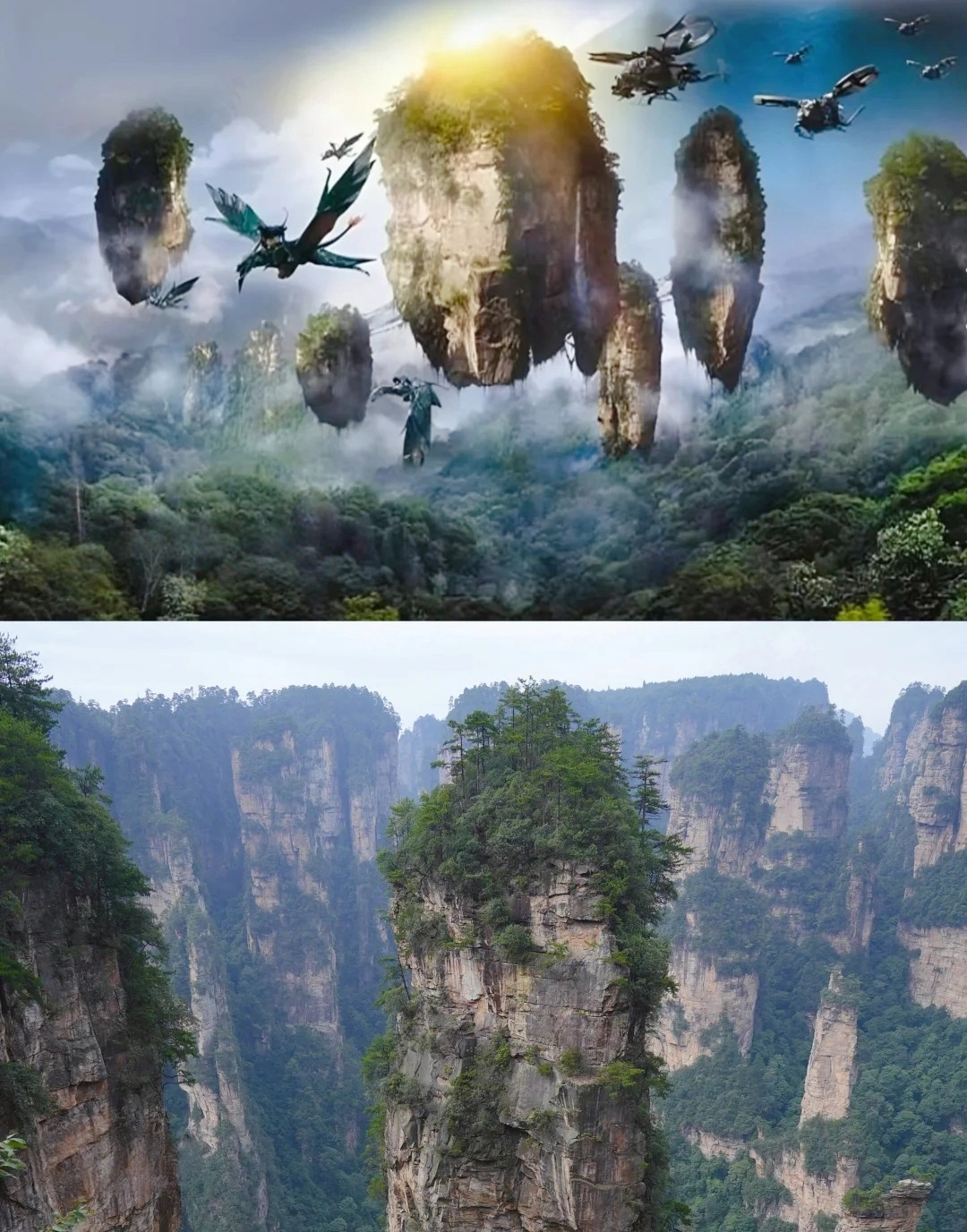
As a solo traveler from Canada, I was nervous about navigating China alone—but this 11-day tour was PERFECT! From hiking the Great Wall at sunrise (Day 3) to gasping at the Terracotta Army (Day 5), every day delivered ‘pinch-me’ moments. The real showstopper? Zhangjiajie’s Avatar Mountains (Day 7)! Our guide made the stone pillars come alive with stories. Massive thanks for handling all logistics—bullet train tickets, entry passes, car! And the 4-star hotels surprised me.
Destination(s): Beijing Xian Zhangjiajie Shanghai
Date of Experience: June 02,2025
... ... ...
...
Simon
America
Reviewed on May 29,2025
Our 2-day Zhangjiajie tour was beyond spectacular! As someone who’s visited Beijing and Shanghai for work, this trip revealed China’s wild, magical heart. Day 1 in Zhangjiajie National Forest Park felt like stepping onto Pandora—I’m a huge Avatar fan, and Yuanjiajie’s floating peaks left me breathless. The misty pillars and lush valleys like pure movie magic! Then came Fenghuang Ancient Town, we eat dinner beside the thundering waterfall. It seems Unreal! The night views of stilt houses glowing over the river were straight from a fairy tale. For fellow Avatar lovers and adventure seekers: Don’t miss this bucket-list experience! 10/10 would return. A Well-Traveled Film Buff, May 2025
Destination(s): Zhangjiajie
Date of Experience: May 08,2025
... ...

FAQ

What’s the scientific explanation for Crescent Moon Spring’s survival for millennia?

Formed from an ancient riverbed blocked by shifting sands, it’s fed by groundwater from the Dang River aquifer. Wind patterns blow sand upward, preventing burial.

How to book tickets, and is advance booking required?

Online booking is mandatory via the official WeChat mini-program or platforms like Ctrip/Meituan. Tickets allow 3-day multiple entries after initial validation.

What cultural symbols does the site represent?

A symbol of harmony between nature and humanity, it embodies the Silk Road’s spiritual legacy and Dunhuang’s desert resilience.

How to get to Mingsha Mountain and Crescent Moon Spring from downtown Dunhuang?

Bus 3 (1 RMB, 15 mins) directly from the city center; Taxi (~20 RMB, 10 mins). Parking is available at the North/South Gates.

What nearby attractions complement a visit here?

Mogao Caves (25 km east, a UNESCO World Heritage Site); Yadan Geopark (180 km west, surreal wind-eroded formations).

Ask a Question

Question Summary (100 characters)
Details (optional) (2,000 characters)
Name
Country
Email