Nature's Masterpiece—A Splash of Maple-Red Amidst the Verdant Greenery,Evoking Boundless Spirit
The Aiwan Pavilion:The Poetic and Pictorial Essence of China's"Four Great Pavilions"
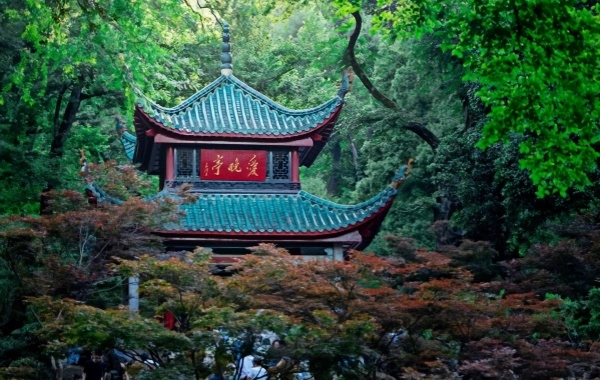
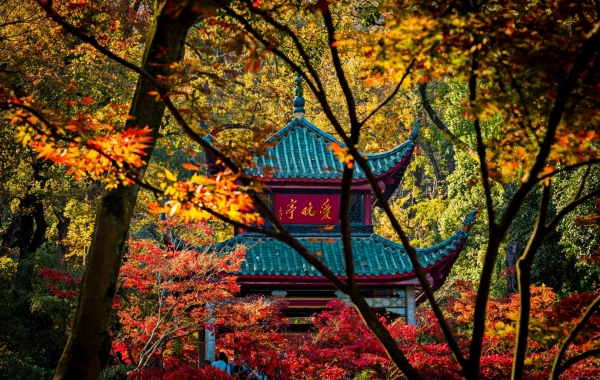
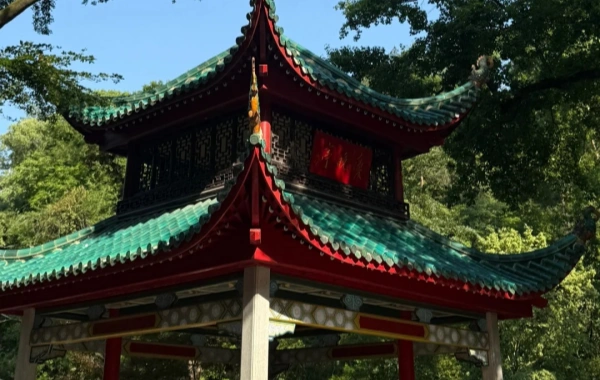
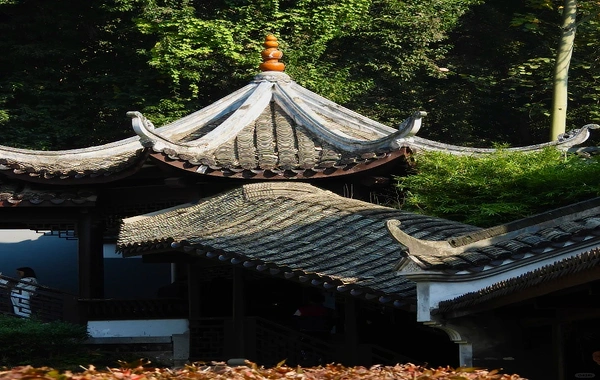
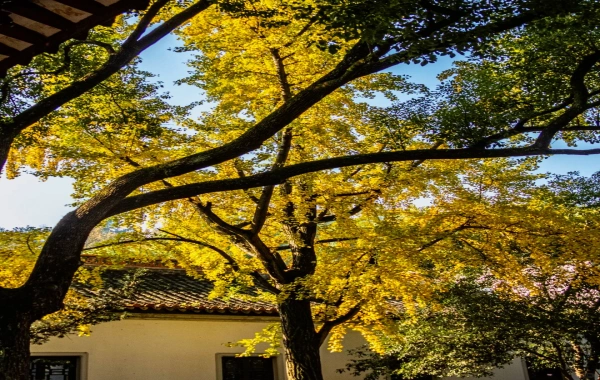
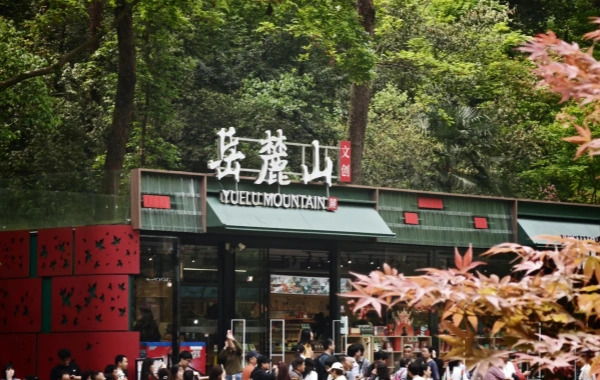
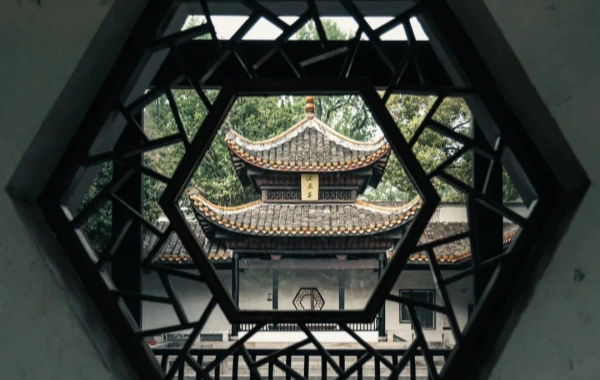
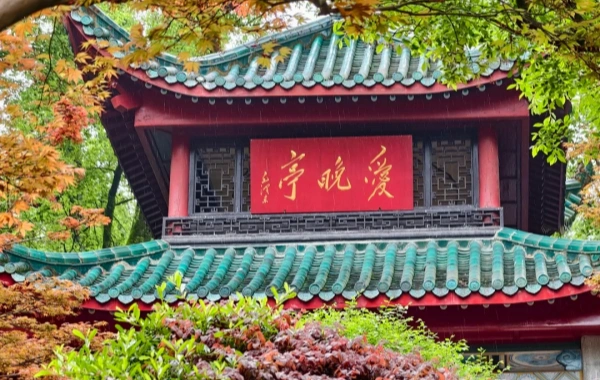
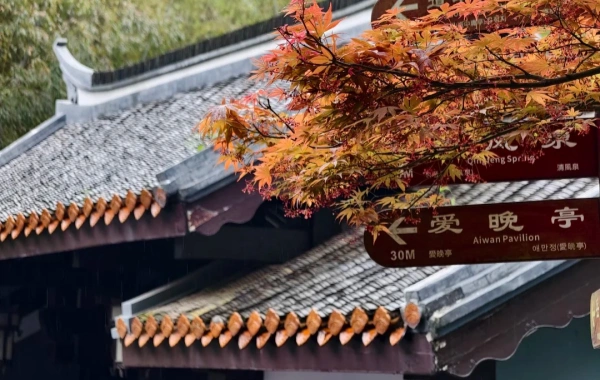
Nestled amidst a forest of trees within the Qingfeng Gorge on Mount Yuelu,the Aiwan Pavilion was originally constructed in the 57th year of the Qianlong reign of the Qing Dynasty(1792 AD).It was commissioned by Luo Dian,the Headmaster of the Yuelu Academy,and was initially named the"Red Leaf Pavilion."Later,Bi Yuan—the Governor-General of Huguang—renamed it the"Aiwan Pavilion,"drawing inspiration from a timeless couplet by the Tang Dynasty poet Du Mu:"I stop my carriage to admire the maple woods at dusk;the frost-kissed leaves glow redder than the flowers of early spring."Together with the Drunken Old Man Pavilion(Zuiweng Pavilion)in Chuxian(Anhui),the Mid-Lake Pavilion(Huxin Pavilion)on West Lake(Hangzhou),and the Joyous Pavilion(Taoran Pavilion)in Beijing,it is celebrated as one of China's"Four Great Pavilions."Architecturally,the structure features a double-eaved roof supported by eight pillars,adorned with glazed green tiles and upturned eaves that soar toward the sky;shaded by the surrounding greenery,it exudes an air of profound antiquity and elegance.Inside the pavilion hangs a horizontal plaque inscribed with lines from Mao Zedong's poem Qinyuanchun:Changsha in his own calligraphy—an addition that ensures this ancient structure not only embodies the poetic sentiments of the ancients but also resonates with the heroic spirit of the modern era.Every year in late autumn—from late November through mid-December—the sweetgum leaves blanketing the mountain slopes transform into a vibrant tapestry of red,orange,yellow,and green.It is as if Nature herself has poured her most magnificent palette across the mountain ridges,creating a scene of breathtaking beauty.
>Photography Tip:The maple leaf season—spanning from late November to mid-December each year—offers the prime viewing period.Visiting early in the morning(before 8:00 AM)allows you to avoid the crowds and take advantage of the soft,gentle lighting,making it the ideal time to capture the poetic interplay of light and shadow that brings the phrase"frost-kissed leaves glow redder than the flowers of early spring"to life.
Chuanshipo Lake:A Jade-Green Amber Hidden Within the Mountain Forests
Situated on the mountainside,Chuanshipo Lake is a rare expanse of open water found within the landscape of Mount Yuelu.The long corridors and pavilions lining the lake offer an ideal spot for visitors to pause and rest.Sitting quietly here,one can admire the mirror-like lake reflecting the surrounding green mountains and dense forests;the worries of the mundane world seem to flow right through this tranquil landscape—much like water wearing away stone—leaving one’s mind instantly unburdened.
Ascending the Yunlu Palace Terrace:A Panoramic View of the Xiang River’s Majestic Northward Flow
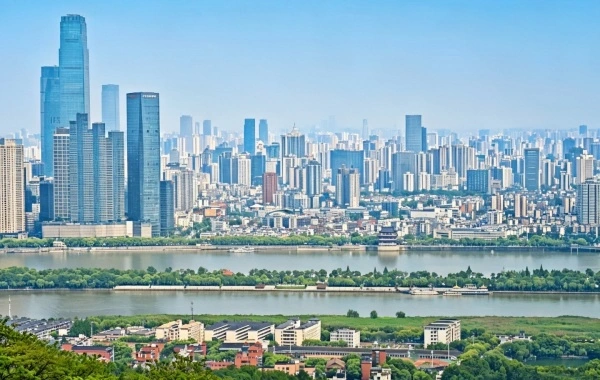
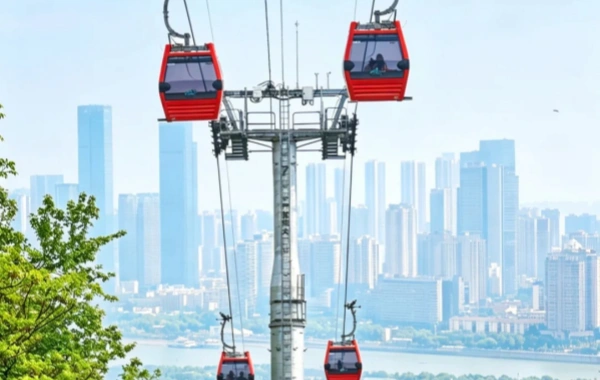
Upon reaching the observation deck at Yunlu Palace—situated at the very summit of Mount Yuelu—the vista before you suddenly opens up in breathtaking clarity.The vast Xiang River winds through the city of Changsha like a jade sash,while Orange Isle rests in the river's heart like an unsinkable giant vessel.Changsha’s unique urban layout—defined by its interplay of"mountains,water,islands,and city"—is instantly revealed in a single,timeless glance.In the evening,this serves as a prime vantage point for capturing spectacular photos of the Xiang River sunset and for gazing down upon the main city district as its lights begin to twinkle to life.
Humanistic Craftsmanship:A Pilgrimage to Taoist Temples,Buddhist Sanctuaries,and Modern Inscriptions
Ancient Lushan Temple:The Millennial Chants of Hunan’s Foremost Buddhist Sanctuary
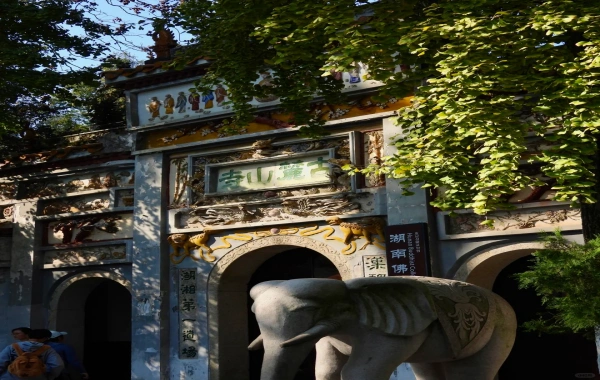
"The earliest renowned landmark of the Han and Wei dynasties;the foremost Buddhist sanctuary in the Hunan region."Ancient Lushan Temple was originally established in the fourth year of the Taishi era of the Western Jin Dynasty(268 AD).As the earliest surviving site marking the introduction of Buddhism into Hunan,it boasts a history spanning over 1,700 years.Within the temple grounds,the air is filled with the lingering resonance of Buddhist chants,and ancient trees reach skyward.Despite being destroyed by the fires of war on multiple occasions throughout history,the temple has invariably risen from the ashes to shine once more.To this day,the temple preserves ancient pines dating back to the Six Dynasties period—trees that have endured for over a millennium yet remain lush and vibrant.
Yunlu Palace:A Glimpse of"Star City’s"Sunset Glow and Nightscape
Continuing your ascent past Lushan Temple,you arrive at Yunlu Palace—a sacred sanctuary of Taoism.Originally built during the Ming Dynasty,this Taoist temple features rustic architecture and occupies a commanding high-altitude position,making it an exceptional vantage point for admiring the glow of the setting sun and the city’s nocturnal scenery.Two specific features—the"Flying Stone"situated in front of the palace and the"Immortal’s Footprint"attributed to LüDongbin—remain perennial favorites and topics of lively discussion among visitors.
The Yu Tablet:A Monument to Chinese Civilization Written in an"Inscrutable Script"
Perched upon a craggy,purplish-grey rock face at the mountain’s summit—and facing eastward—stands a stone inscription known as the"Yu Tablet."Legend has it that this inscription was created to extol the monumental achievements of Yu the Great in taming the floods.The stele stands 1.84 meters high and 1.4 meters wide;its 77 ancient seal characters possess a bizarre morphology—resembling at once rushing dragons and serpents,and huddled tadpoles.For centuries,these characters have defied decipherment,earning the stele the title of"The Unique Wonder of Mount Yuelu."
The Cemetery Complex of the Xinhai Martyrs:A Crimson Legacy of Loyalty Buried in the Green Hills
Mount Yuelu stands as one of the most renowned collective burial sites for revolutionary martyrs in modern Chinese history.The tombs of Huang Xing and Cai E are situated halfway up the mountain slope—solemn,majestic sites embraced by groves of pines and cypresses.The"Tomb of the Three Martyrs"—a shared resting place for revolutionary patriots such as Chen Tianhua,Yao Hongye,and Jiang Yiwu—is also located here.Scattered throughout the mountain forests,these modern burial sites serve not only as invaluable provincial-level cultural heritage sites but also collectively constitute an open-air museum dedicated to the history of the Xinhai Revolution.
Yuelu Academy:A Millennial Sanctuary of Learning with an Unbroken Educational Legacy
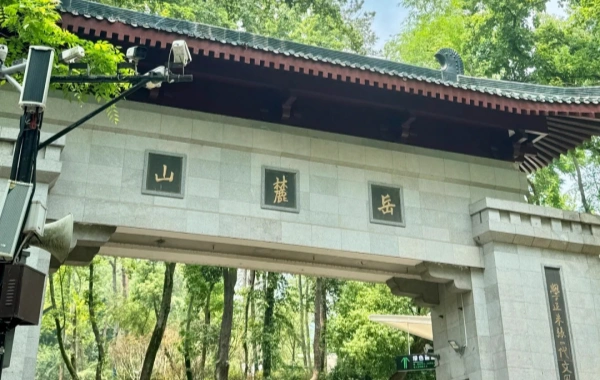
Nestled at the foot of the mountain,at the entrance to Qingfeng Gorge,Yuelu Academy serves as the very heart and soul of the entire Mount Yuelu scenic area,as well as the birthplace of Hunan University.Most of the extant structures date back to the Ming and Qing dynasties;arranged along a central axis that extends deep into the complex,features such as the Confucian Temple,the Imperial Scripture Library,and the Lecture Hall present a truly magnificent spectacle.Within the academy grounds,the stone stele inscribed with the virtues of"Loyalty,Filial Piety,Integrity,and Righteousness"stands in timeless dialogue with the plaque bearing the motto"Seeking Truth from Facts"—together embodying the ideal human character as envisioned by the Chinese people across the millennia.
The Former Site of the Wartime Command Headquarters of the 9th War Zone:The Command Center of the Battle of Changsha
Hidden deep within the Qingfeng Gorge of Mount Yuelu lies a secluded mountain cave—the former site of the Wartime Command Headquarters of the 9th War Zone.From 1939 to 1942,General Xue Yue—a renowned commander of the War of Resistance Against Japanese Aggression—strategized from this very location.He orchestrated three harrowing battles for Changsha,operations that not only dealt a crushing blow to the arrogance of the Japanese invading forces but also inscribed a heroic and tragic epic into the annals of the main battlefield of China's War of Resistance.