Nature's Masterpiece—A Silver Sash Suspended Amidst Stilt Houses
The natural landscape of Hibiscus Ancient Town is an eternal dance—a mesmerizing interplay of waterfalls,stilt houses,and shifting light and shadow.
The Town-Piercing Waterfall:Western Hunan’s Most Spectacular Silver Sash
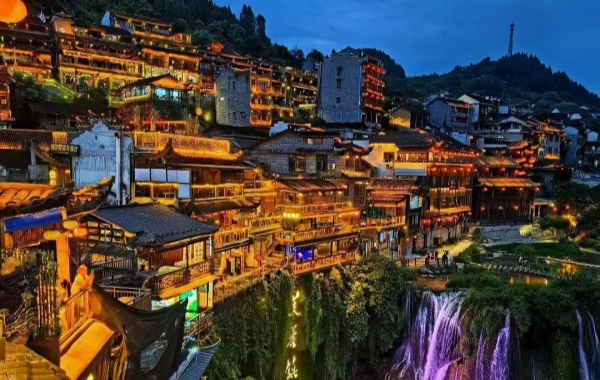
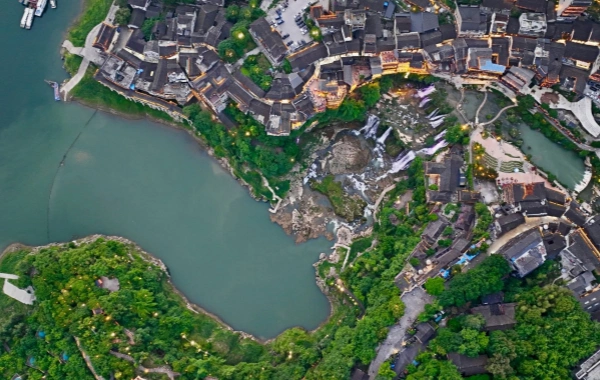
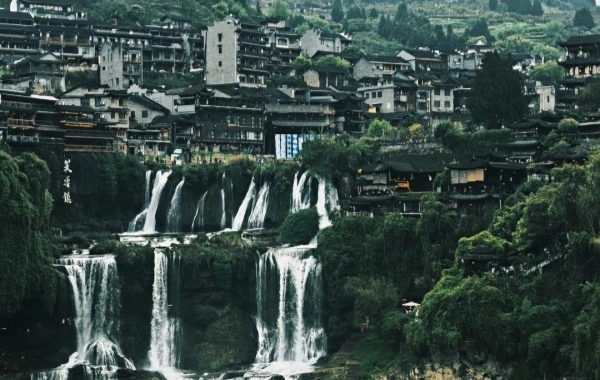
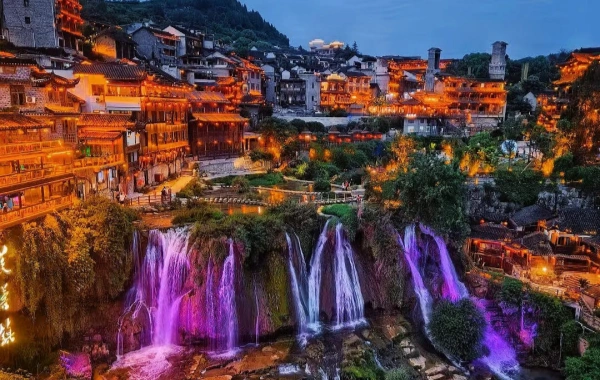
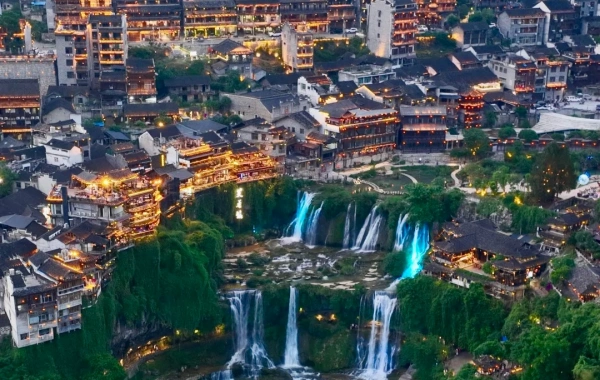
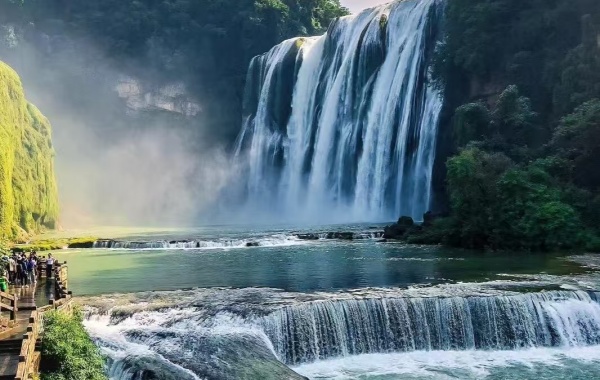
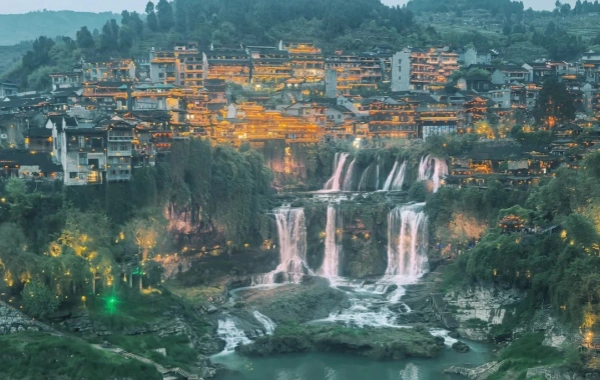
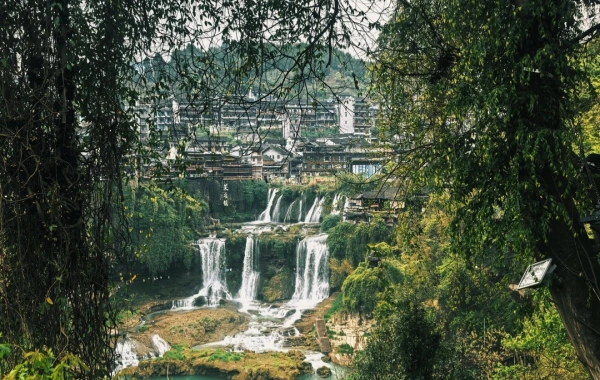
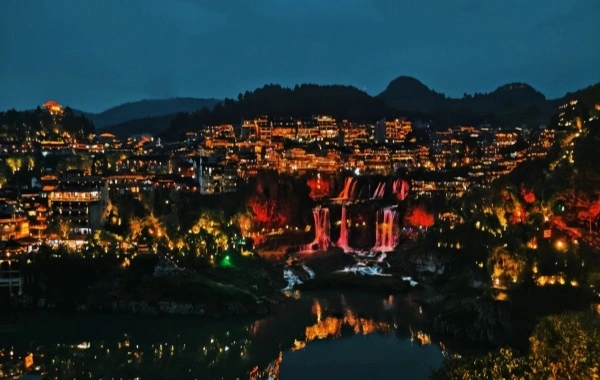
Of all the wonders in Hibiscus Town,none is more breathtaking than the magnificent waterfall that cascades right through the heart of the settlement.It is the largest and most spectacular waterfall in Western Hunan,standing 60 meters high and spanning 40 meters wide as it plunges down in two tiers from the cliffs,weaving its way between the stilt houses perched along the precipice.During the rainy season,when the waters swell and surge,the torrents appear to plummet straight down from the heavens;the thunderous roar of water crashing against rock echoes across the landscape,audible from as far as ten li away.As the massive volume of water plunges downward,the wind whips up a scattering mist;beneath the intense glare of the sun,a vibrant rainbow often arcs across the sky,creating a spectacle of extraordinary grandeur.During the dry season,the flow becomes gentle and serene,cascading like a silver curtain that harmonizes beautifully with the stilted houses of the ancient town.Even more wondrous is the hidden"Water Curtain Cave"located beneath the falls;as you pass through its entrance,you can experience the full force of the rushing water at close range.Amidst the deafening roar of the falls,the sheer impact of the experience strikes deep into the soul.
The scenic area features three superb observation decks:the"Waterfall Viewing Terrace"situated above the falls,the"Waterfall Covered Bridge"at the mid-section,and the"Waterside Terrace"located below.From these vantage points,visitors can capture that classic,iconic shot featuring both the waterfall and the stilted houses framed together in a single image.
The Stilted House Cluster:A Tangible Cultural Symbol Nestled Between Mountain and Water
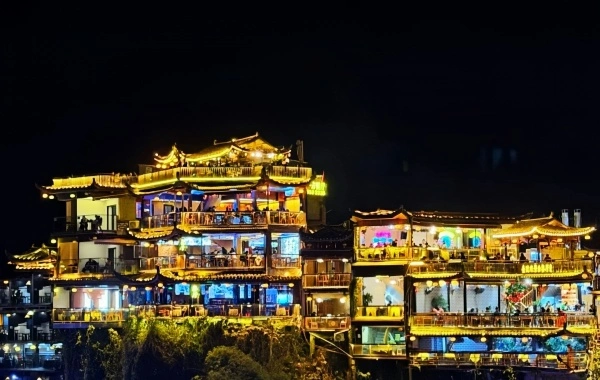
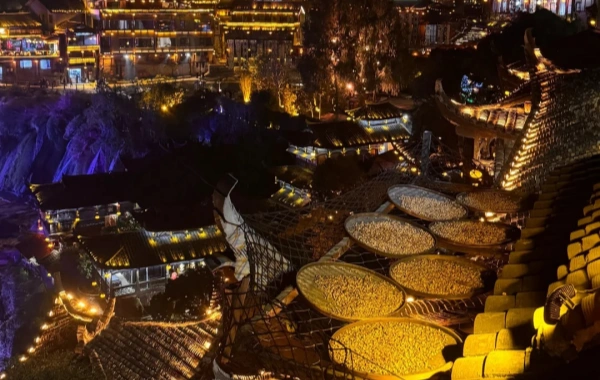
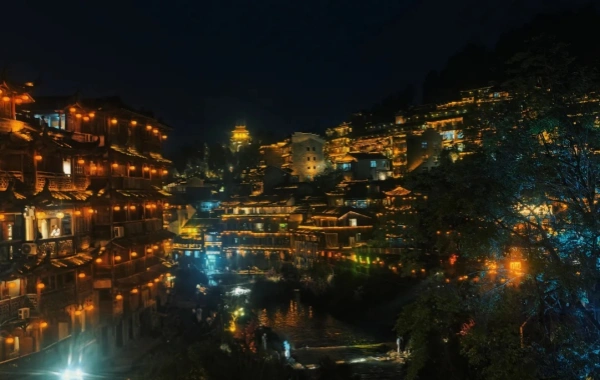
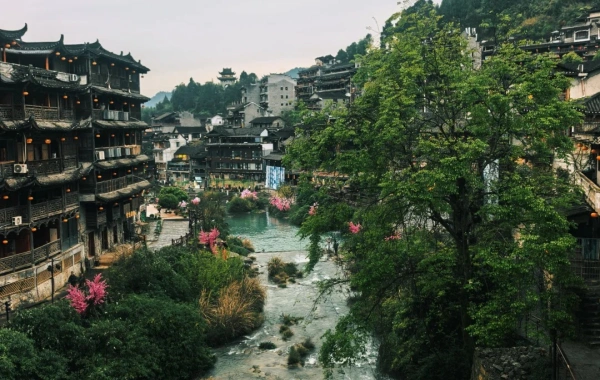
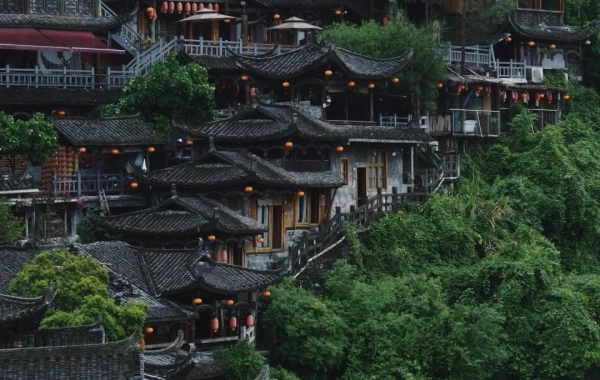
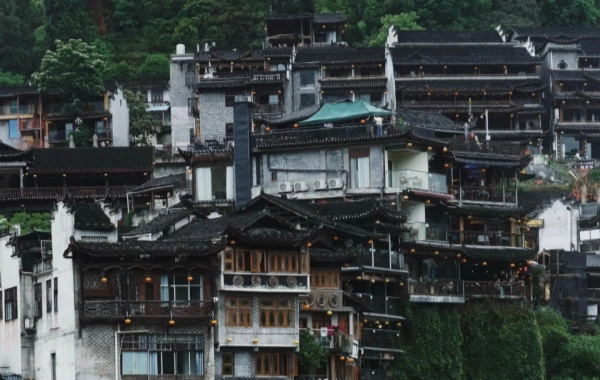
Ascending the steps along the bluestone-paved path,one finds stilted houses lining both sides.Built directly into the mountainside,they rise in cascading tiers from the riverbank,linked together by a five-li-long stretch of stone-paved street.Most of these stilted houses follow a traditional"one main hall,two side wings"layout:the ground level is left open to serve as storage space for sundries,while the upper floors serve as living quarters.The windows are adorned with exquisite carvings featuring Tujia ethnic motifs—such as the"Swastika Lattice"and"Butterfly Flower"patterns—symbolizing good fortune and happiness.In the evening,as the lingering glow of the sunset spills across the wooden windows of the stilted houses,the warm golden light reflects off the emerald-green waters of the Youshui River,composing a breathtaking landscape painting.With the passage of time,these historic stilted houses have shed their veil of mystery to emerge as highly sought-after boutique guesthouses.
>Photography Tips:The best time to capture the morning mist rising from the waterfall is between 6:00 and 7:00 AM,when crowds are sparse and the scenery is at its most beautiful.In the evening,after the lights are switched on at 7:30 PM,the waterfall's light show harmonizes with the myriad twinkling lights of the stilted houses,creating an atmosphere of pure romance.The wooden walkway situated behind the waterfall offers an exceptional vantage point for capturing portraits—specifically the classic"person standing behind the waterfall"shot—virtually guaranteeing a perfect photo every time.2.2 Cultural Craftsmanship—The Five-Li Stone Street and the Millennial Imprints of the Tusi Dynasty
The cultural landscape of Furong Ancient Town serves as a concentrated embodiment of the profound heritage of Tujia culture.
The Tusi Palace(Youyang Palace):Touching the Fading Echoes of the Tusi Dynasty
Originally built during the Tang Dynasty,the Tusi Palace served as both the administrative office and private residence for the Tusi(chieftain)of Xizhou.The surviving remnants—including intricately carved wooden pillars,stone foundations,and the ruins of the Council Hall—still allow visitors to tangibly connect with the traces of Tusi culture.Perched atop the ancient town's highest vantage point,the palace offers a panoramic view encompassing both the majestic waterfall and the entire town's Diaojiaolou(stilted houses)—a perspective far more comprehensive than that offered by standard waterfall viewing platforms.The Council Hall now houses the"History of the Xizhou Tusi"exhibition,which features a free display of precious artifacts—such as the Tusi's official seal,bronze vessels,and traditional attire—accompanied by detailed interpretive texts;it is an attraction that history enthusiasts simply cannot afford to miss.
The Xizhou Bronze Pillar:A National Treasure Witnessing a Millennium of Peace
Erected in the fifth year of the Tianfu era of the Later Jin Dynasty(940 AD),the Xizhou Bronze Pillar is an octagonal,eight-sided monument standing twelve chi(approx.4 meters)tall and weighing 5,000 jin(approx.2,500 kg).Designated as a National First-Class Cultural Relic,it serves as a vital historical document for the study of ancient Tujia history.The pillar records the historic"Battle of Xizhou"and the subsequent peace treaty signed between the King of Chu and the local"Tusi King."It stands as a silent witness to a millennium-long journey in which the Tujia people and the Han people transitioned from conflict to reconciliation,fostering a harmonious coexistence between ethnic groups.Revered by the Tujia people as a sacred object,the Bronze Pillar was officially designated by the State Council in 1961 as a Major Historical and Cultural Site Protected at the National Level.
The Five-Li Stone Street:A Millennial Ancient Path Traversing Time
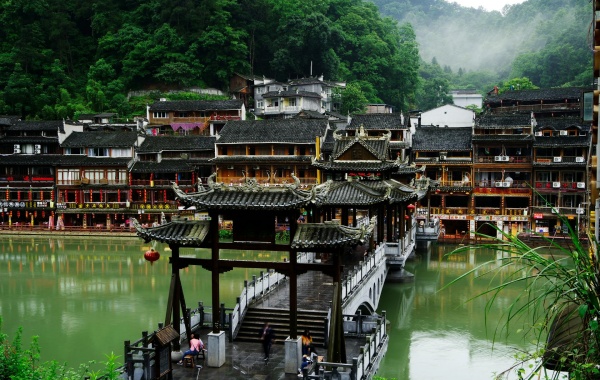
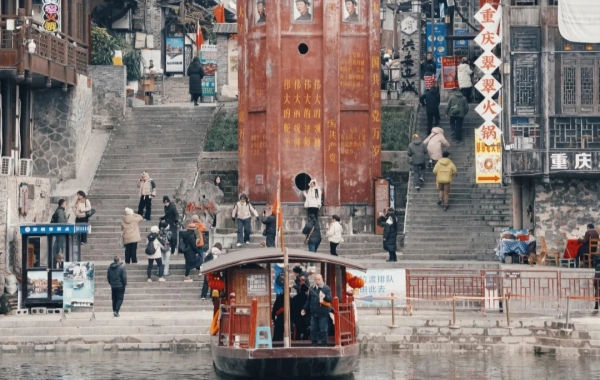
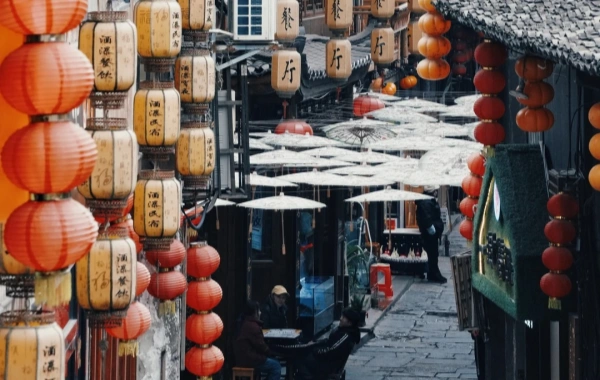
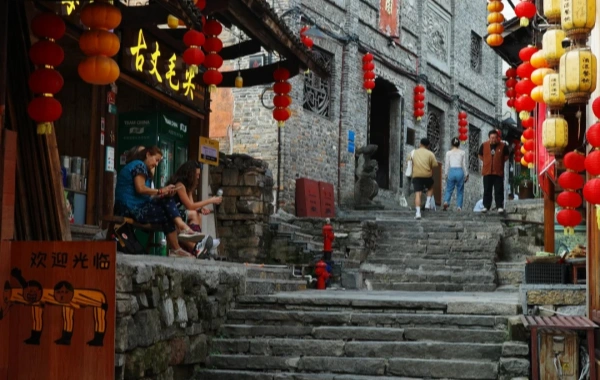
Strolling along the town's five-li-long main street—with your feet treading upon bluestone slabs polished to a glossy sheen by the passage of time—feels akin to stepping into a time tunnel.Beginning at the wharf on the banks of the Youshui River,the street ascends via stone steps,winding its way through the entire length of Furong Ancient Town;it is flanked on both sides by shops with traditional plank doors and classic Tujia Diaojiaolou stilted houses.Amidst the long,quaint alleys,the mottled bluestone paths,and the aged stilted houses with their dark-tiled roofs and grey-brick walls—where small groups of visitors wander leisurely—the air is permeated everywhere with a rich,rustic atmosphere of history and culture.The Tusi King Bridge and the Baishou Hall:Masterpieces of Tujia Architecture
The Tusi King Bridge is a unique Tujia"wind-and-rain bridge"—a covered bridge offering shelter from the elements.Adorned with strings of red lanterns and crimson ribbons,it serves as the quintessential vantage point for capturing panoramic views of the ancient town's stilt-houses.The Baishou Hall(Hall of the Hand-Waving Dance)was historically a vital venue where the Tusi Kings—the local chieftains—convened councils and hosted distinguished guests.It also served as a sacred site where the Tujia people worshipped their ancestors and held grand Baishou(Hand-Waving)song-and-dance festivals.A quintessential example of Tujia stilt-house architecture,the hall features soaring eaves with upturned corners,wooden walls clad in grey tiles,intricately carved window lattices,and a color palette that exudes a sense of dignified antiquity.
Flowers Blooming in Furong:The Carnival of Bizika:An Immersive Tujia Cultural Performance
Furong Town preserves a wealth of ancient customs and traditions.The large-scale,immersive,and site-specific cultural performance Flowers Blooming in Furong:The Carnival of Bizika is staged continuously throughout the scenic area daily from 10:00 AM to 10:00 PM.It has recently been recognized and included in the National Directory of Elite Tourism Performances.Visitors can personally experience the Tujia people's Intangible Cultural Heritage performances—such as the Baishou(Hand-Waving)Dance and the Mogusi Dance—and immerse themselves in the town's rich cultural heritage.