Big Wild Goose Pagoda: A Journey Through Time from Silk Road Buddhist Chantes to the Grandeur of the Tang Dynasty

Big Wild Goose Pagoda: A Journey Through Time from Silk Road Buddhist Chantes to the Grandeur of the Tang Dynasty

Overview: An Eastern monument witnessing a thousand-year dialogue between civilizations
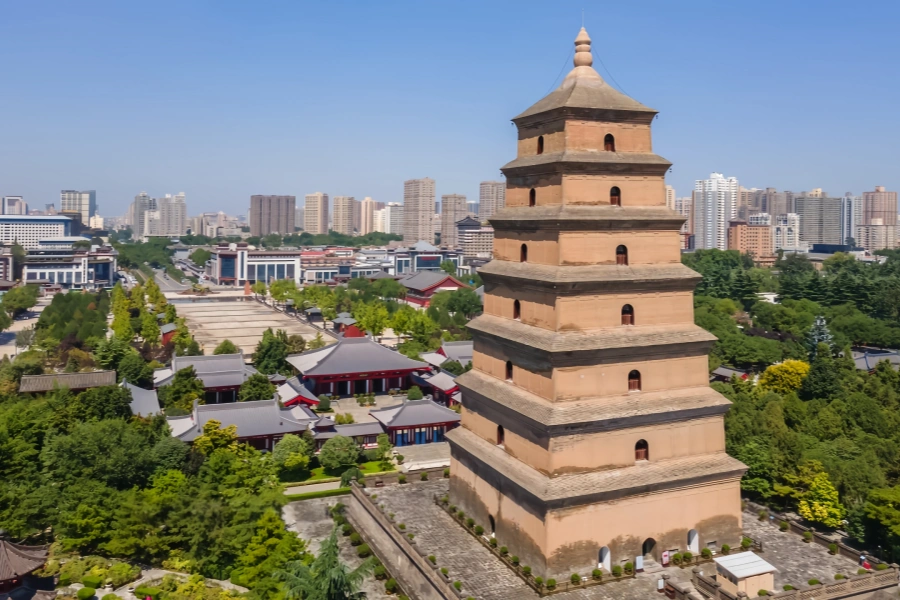
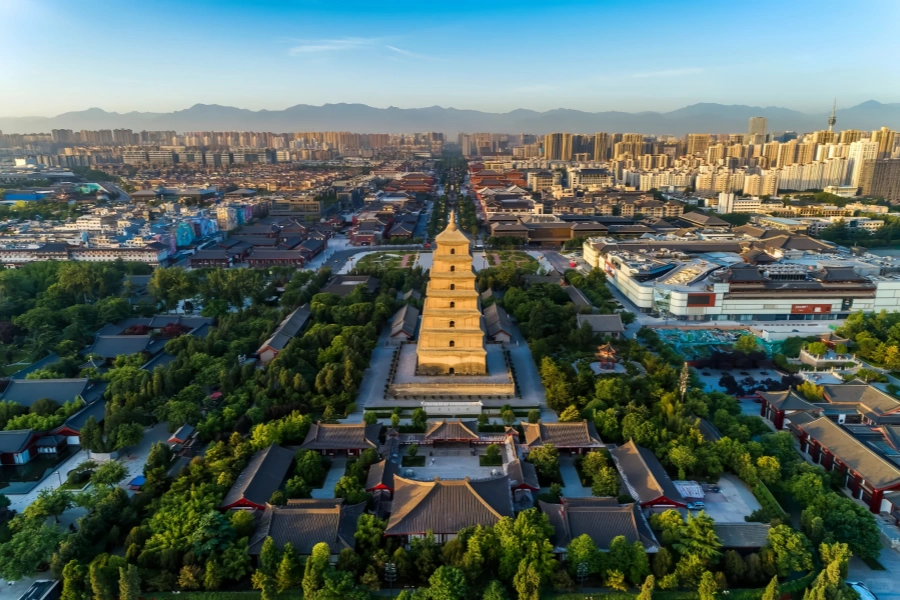
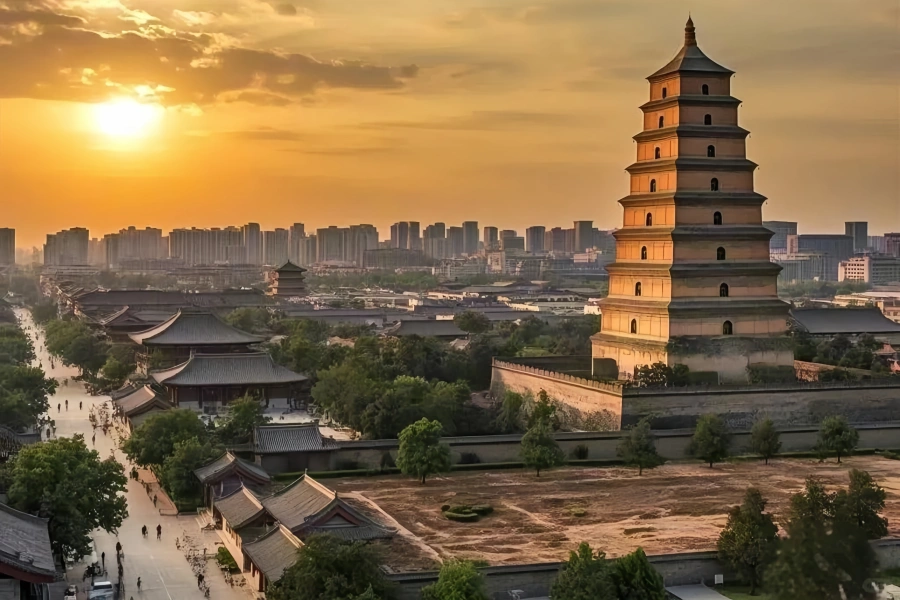
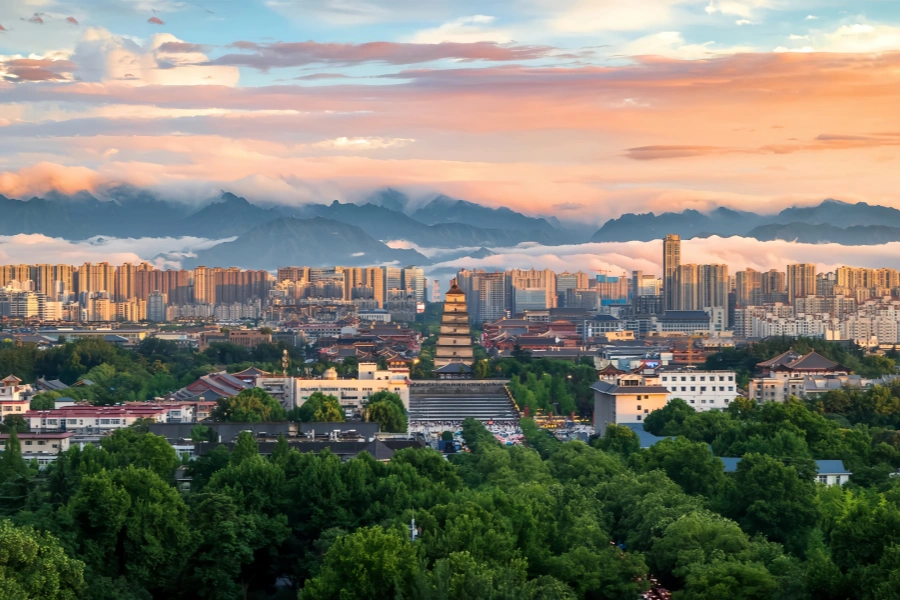
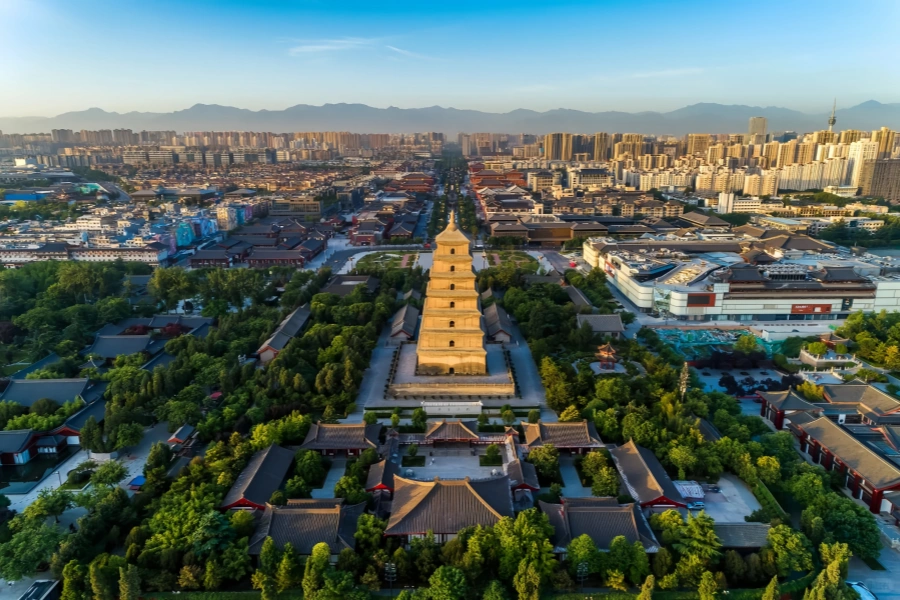
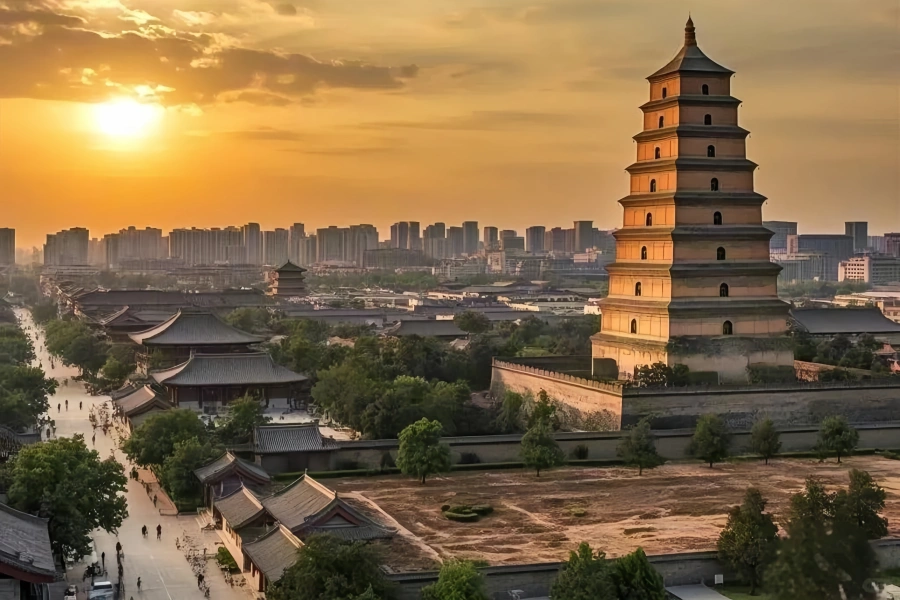
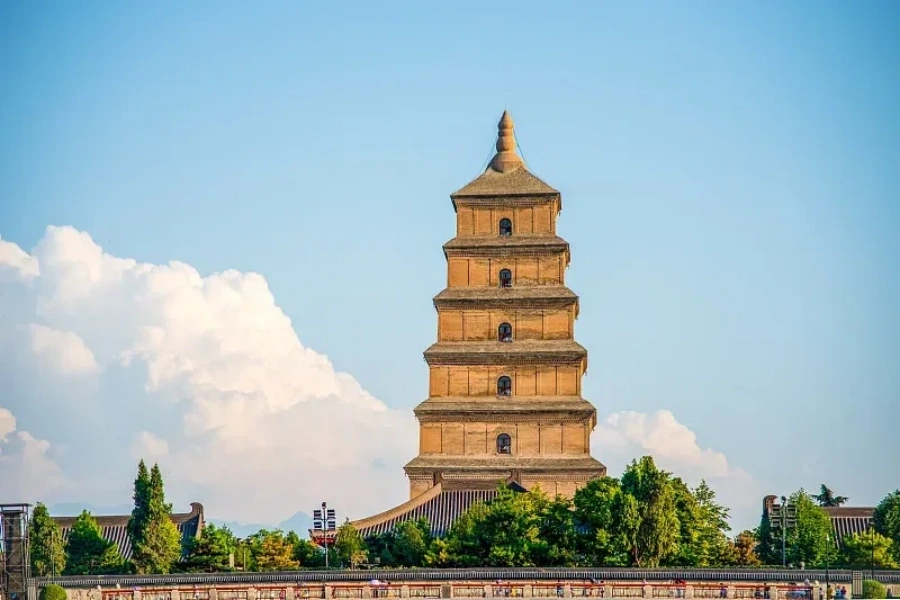
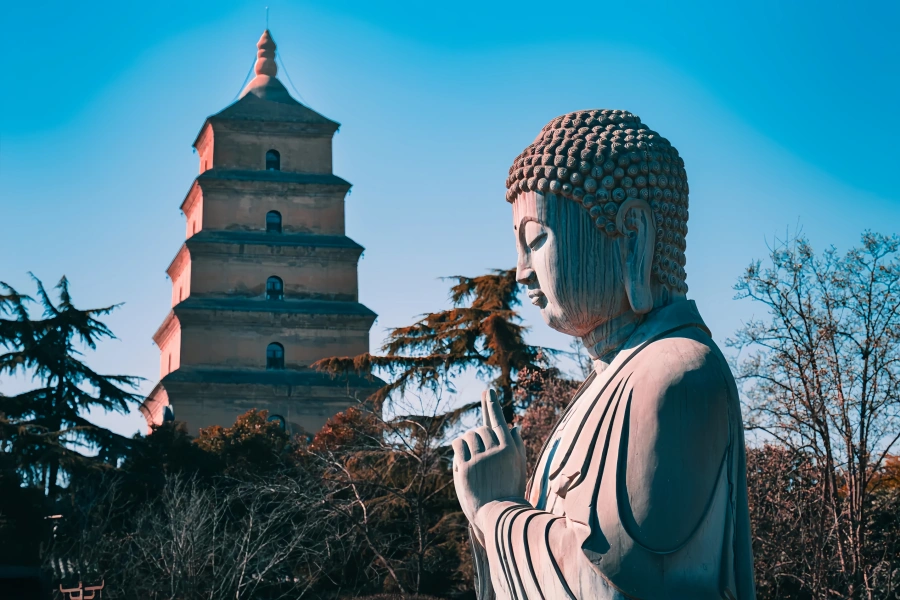
The Big Wild Goose Pagoda is a 64.5-meter-tall square brick pagoda in the Tang Dynasty. It is not only a key site of the World Heritage Site "Silk Roads: Chang'an-Tianshan Corridor", but also a symbol of the inclusive spirit of Chinese civilization.

Key Highlights at a Glance
Identity Tags: World Cultural Heritage Site / Holy Land of Xuanzang's Spirit / Xi'an City Cultural Living Room
Core experiences: Climb the tower for panoramic views of the ancient city's central axis, enjoy Asia's largest musical fountain, take a night tour of the Tang Dynasty Never Sleeping City, and experience the "Wild Goose Pagoda Inscription" culture.
Recommended visit duration: half a day to one day. It is highly recommended to spend the evening exploring the transition from historical solemnity to the grandeur of the Tang Dynasty.
Address: No. 1 Ci'en Road, Yanta District, Xi'an, Shaanxi Province (inside Da Ci'en Temple)

  • Big Wild Goose Pagoda: A Journey Through Time from Silk Road Buddhist Chantes to the Grandeur of the Tang Dynasty-1
  • Big Wild Goose Pagoda: A Journey Through Time from Silk Road Buddhist Chantes to the Grandeur of the Tang Dynasty-2
  • Big Wild Goose Pagoda: A Journey Through Time from Silk Road Buddhist Chantes to the Grandeur of the Tang Dynasty-3
  • Big Wild Goose Pagoda: A Journey Through Time from Silk Road Buddhist Chantes to the Grandeur of the Tang Dynasty-4

Origin: The Journey to the West to Seek Buddhist Teachings and the Glory of a Prosperous Age

Furong Ancient Town

Origin of the Tower's Name - A Legend of Compassion
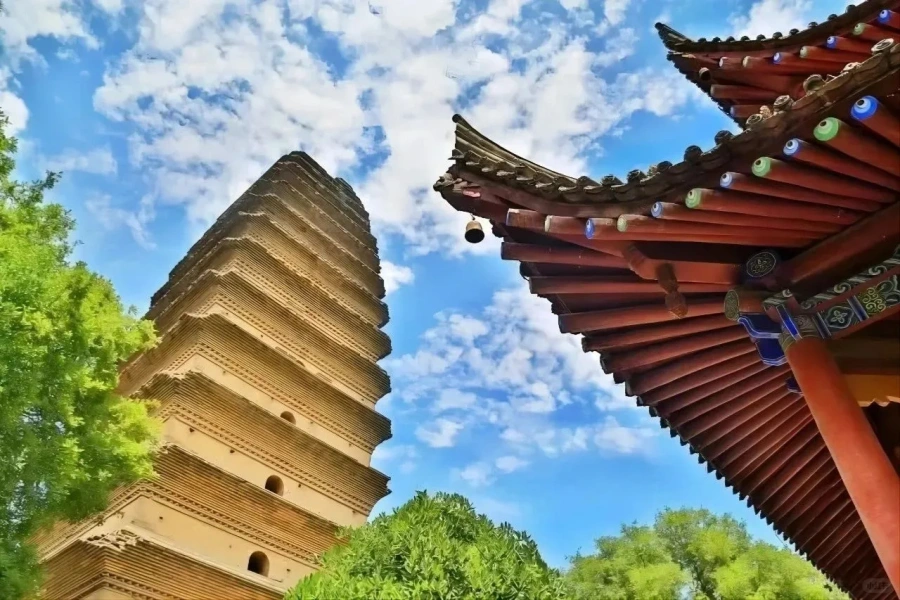
The most widely circulated story about the origin of the name "Big Wild Goose Pagoda" is a Buddhist tale filled with compassion. Legend has it that monks in an ancient Indian monastery were suffering from food shortages when a flock of geese flew overhead, prompting one monk to sigh with emotion. Upon hearing his cry, the lead goose broke its wing and fell to the ground, offering its body to the monks. Deeply moved, the monks buried it in the monastery and built a pagoda in its memory, naming it "Wild Goose Pagoda." This pagoda, built under the supervision of the monk Xuanzang based on the style of Indian Buddhist pagodas, thus acquired its name, corresponding to the later-built "Small Wild Goose Pagoda."

The Story of the Pagoda's Construction—Xuanzang's Grand Aspiration
The construction of the Big Wild Goose Pagoda was directly inspired by the great feat of the Buddhist monk Xuanzang's journey to the west to seek Buddhist scriptures.
Return from the west: In the nineteenth year of the Zhenguan era of the Tang Dynasty (645 AD), the monk Xuanzang brought back a large number of Buddhist scriptures, statues and relics from India.
Request for the construction of a pagoda: In order to properly preserve these priceless treasures, in the third year of Yonghui (652 AD), Xuanzang wrote to Emperor Gaozong of Tang and requested that a stone pagoda be built in the Da Ci'en Temple.
Imperial order: Emperor Gaozong, considering the immense scale of the stone pagoda project, ordered the construction of a five-story brick pagoda instead. Since then, the Big Wild Goose Pagoda has stood as a center for the preservation, translation, and dissemination of classical texts for over a thousand years, and the Great Ci'en Temple where it is located became the ancestral temple where Xuanzang founded the Faxiang School (Weishi School).

Historical Transformation – From the Fifth to the Seventh Floor
The Big Wild Goose Pagoda is not static; it has undergone several major renovations and is itself a living architectural history.
Initial construction (652 AD): modeled after Indian style, with brick exterior and earthen core, consisting of five stories.
First renovation: During the reign of Emperor Gaozong of Tang, the building was heightened to nine stories.
The second renovation took place during the reign of Empress Wu Zetian in Chang'an (701-704), when the building was expanded to ten stories.
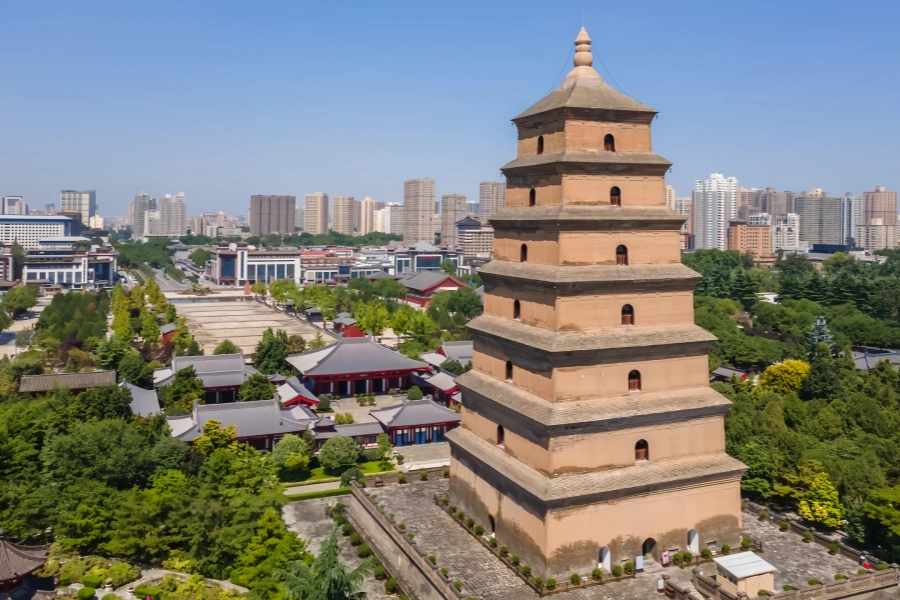
The design was finalized in 1604 (the 32nd year of the Wanli reign of the Ming Dynasty). The exterior of the pagoda was thickened and encased in bricks, which eventually became the seven-story pagoda we see today, with a total height of 64.5 meters.

In-depth understanding: Explore more of China's World Cultural Heritage sites >> [Xi'an Baoshan Pagoda] [Hangzhou Leifeng Pagoda]

Must-see wonders: architecture, cultural relics, and the grandeur of the Tang Dynasty

Furong Ancient Town Furong Ancient Town Furong Ancient Town Furong Ancient Town

Architectural Wonders – Silent History Books
The Big Wild Goose Pagoda itself is a huge cultural relic, and its architectural details speak to the grandeur and ingenuity of the Tang Dynasty.

Structure of the pagoda: As the oldest and largest existing square-pavilion-style brick pagoda from the Tang Dynasty, the Big Wild Goose Pagoda is a model of the Sinicization of Buddhist pagodas. The pagoda is square-pyramidal in shape, tapering with each layer, giving it a stable and solemn appearance. Each layer has arched doorways on all four sides, allowing visitors to climb up and enjoy the view.

The mystery of the millennium-old underground palace: Similar to Famen Temple, the Big Wild Goose Pagoda may also have an unexplored underground palace beneath it. Exploration has revealed a cavity beneath the pagoda's base, which could very well contain Buddhist treasures brought back by Xuanzang, adding another layer of mystery to the ancient pagoda.

The "Two Saints and Three Perfections Stele": Located on either side of the south gate at the base of the pagoda, it is the most prized possession of the Big Wild Goose Pagoda. The west stele bears the inscription "Preface to the Sacred Teachings of the Great Tang Tripitaka" written by Emperor Taizong of Tang (Li Shimin), while the east stele bears the inscription "Record of the Preface to the Sacred Teachings of the Great Tang Tripitaka" written by Emperor Gaozong of Tang (Li Zhi). Both inscriptions were written by Chu Suiliang, a great calligrapher of the early Tang Dynasty. The inscriptions praise Xuanzang's achievements, and due to the exquisite writing, calligraphy, and engraving, they are known as the "Two Saints and Three Perfections Stele."

Humanistic Imprints – A Vibrant Epic
The cultural value of the Big Wild Goose Pagoda has long transcended the religious realm and is deeply integrated into the cultural heritage of China.

Inscribing Names on the Wild Goose Pagoda – A Millennial Cultural Heritage: During the Tang Dynasty, newly appointed Jinshi (successful candidates in the highest imperial examinations) would invariably visit the Wild Goose Pagoda after a banquet at Qujiang, where they would nominate the best calligrapher among their cohorts to inscribe their names on the pagoda wall. This practice, known as "Inscribing Names on the Wild Goose Pagoda," was considered the highest honor in life. Bai Juyi, after passing the imperial examinations, left behind the proud lines, "At the place where names are inscribed under the Ci'en Pagoda, the youngest among the seventeen." This tradition has become a cultural symbol, and even today, parents still come here to pray for their children's success.

The Poetry Tower Resonates – A Literary Pinnacle: Countless poets have ascended the tower to compose poems, leaving behind timeless masterpieces. Du Fu, Cen Shen, and others once visited the Wild Goose Pagoda together. Cen Shen's lines, "The pagoda's momentum surges forth, solitary and towering into the heavens," vividly depict the ancient pagoda's magnificent grandeur.

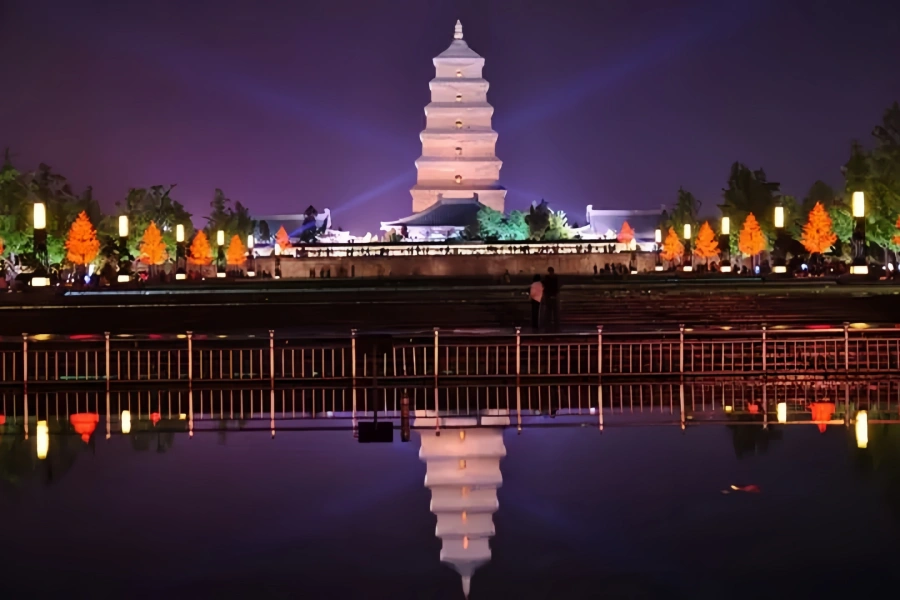
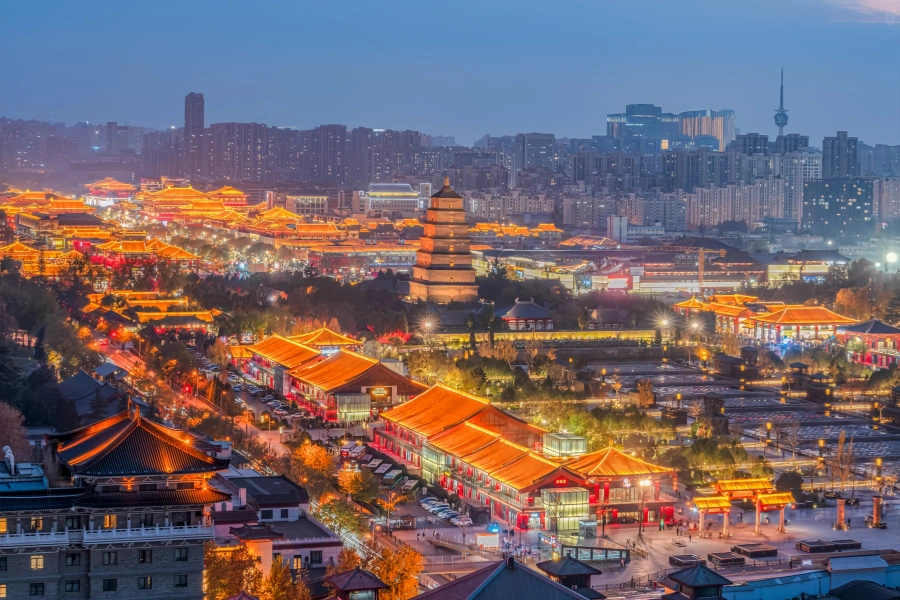
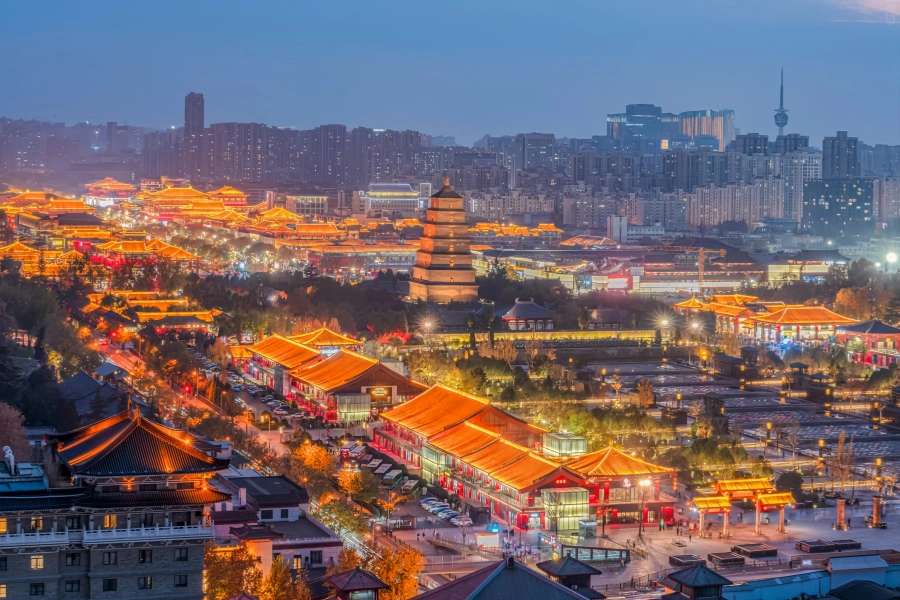
A New Beginning of Light and Shadow – A Modern Symphony: Today, the North Square of the Big Wild Goose Pagoda boasts Asia's largest matrix musical fountain. At night, the water jets dance to the music, illuminating the ancient pagoda in a dreamlike atmosphere alongside the lights. Adjacent to it is the Tang Dynasty Never Sleeping City, which, against the backdrop of the prosperous Tang Dynasty, vividly recreates the splendor of a thousand years ago through lights, sculptures, and continuous street performances.

Photography Tips:
Best panoramic viewpoint: The observation deck on the 4th floor of Joy City offers a perfect framed view of the modern shopping mall and the ancient Wild Goose Pagoda, creating a visually stunning experience.
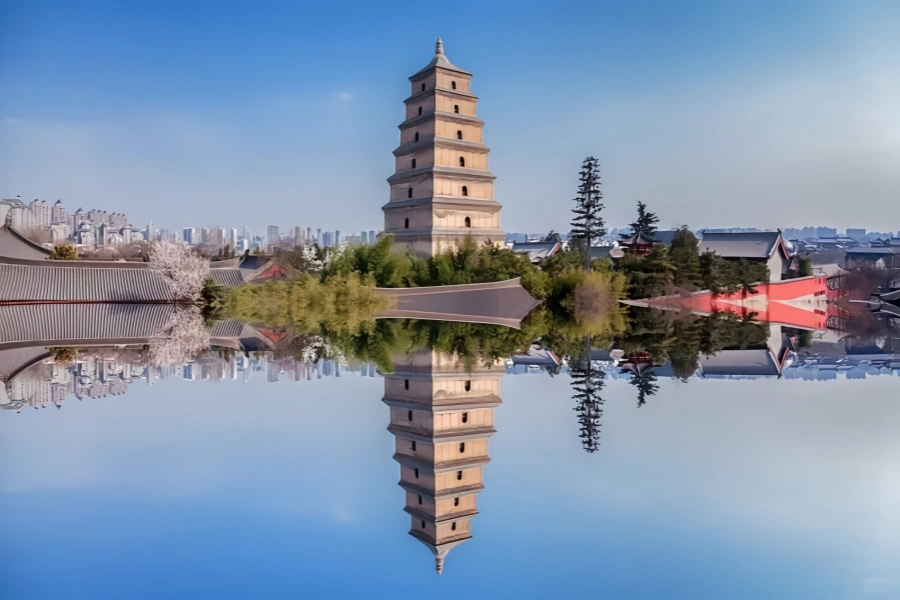
Classic reflection spot: Beside the stone arch bridge in the Tang Dynasty Ci'en Temple Relics Park, you can capture the tranquil scene of the pagoda's reflection in the water.
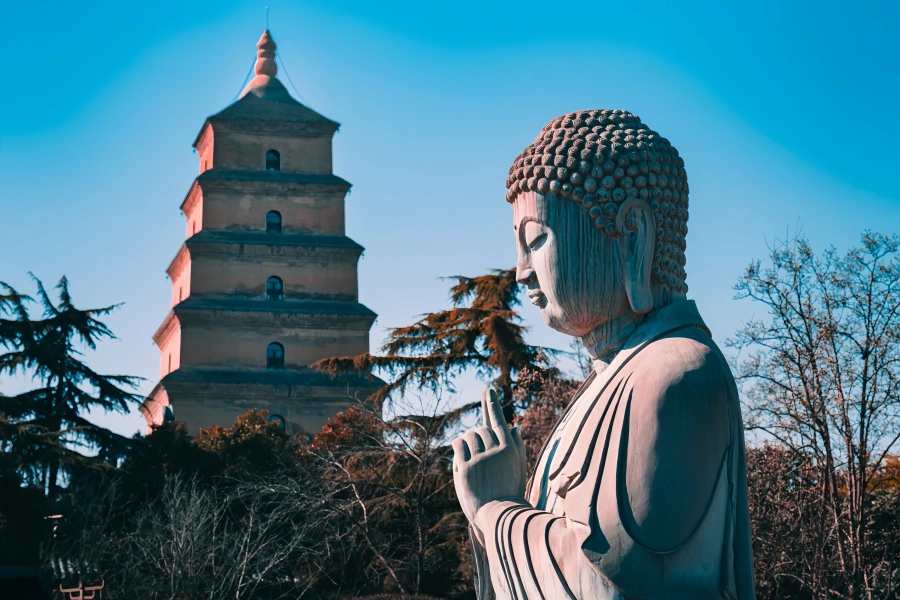
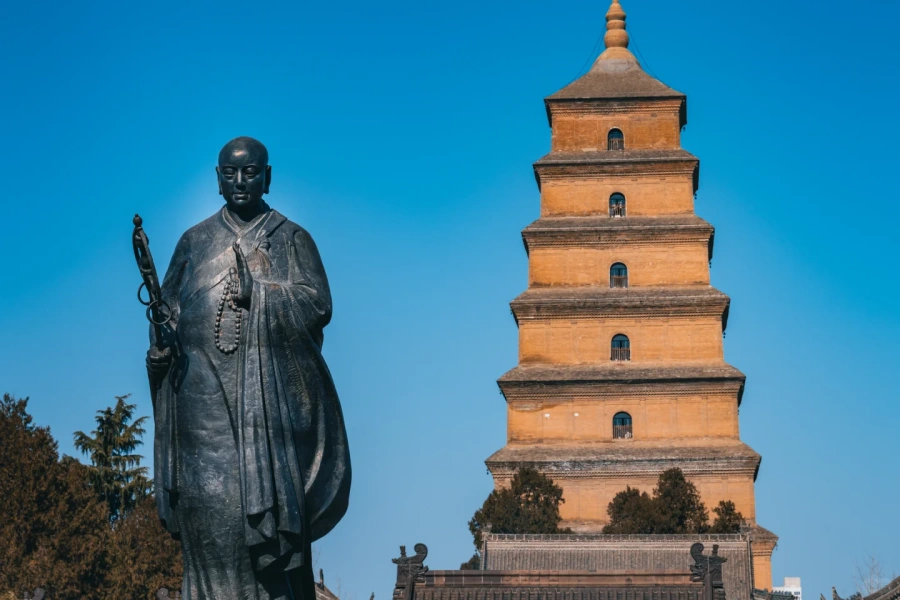
> Photo spot with cultural atmosphere: South Square of Da Ci'en Temple, with the bronze statue of Master Xuanzang in the foreground to photograph the Big Wild Goose Pagoda, solemn and dignified.
> Fantastic Nighttime Camera Spots: During the musical fountain show in the North Square, facing the Big Wild Goose Pagoda offers a stunning view of lights, water curtains, and the ancient pagoda reflecting each other.

Core Experience: An Immersive Guide to Tang Dynasty Life

Furong Ancient Town Furong Ancient Town Furong Ancient Town

Five Must-Do Things to Unlock the Complete Tang Dynasty Journey
1. Ascend the seven-story pagoda once, and overlook the ancient and modern Chang'an.
Experience: Climb the steep wooden stairs inside the tower to reach the top. To the south, you can see the Qinling Mountains stretching like dark eyebrows, and to the north, you can see the magnificent scenery along the central axis of the ancient city, instantly understanding the artistic conception of "a towering peak spanning the sky".
Note: A separate ticket is required to enter the tower, and there are queues with limited capacity. It is recommended to avoid peak hours.
2. Attend a nighttime feast of sound and light, traversing a thousand years of prosperity.
Key point: The night view is the soul of the Big Wild Goose Pagoda! It is recommended to arrive in the afternoon to connect day and night.
Experience: Watch the musical fountain show at the North Square (especially recommended for the light show at 7:00 PM or 9:00 PM), then stroll to the brightly lit and bustling Datang Everbright City, where you may encounter street performers such as "Tumbler Girl" and "Poet Li Bai".
3. Find a tranquil garden and contemplate the Zen-like beauty of its scenery.
Experience: Free admission to the Tang Dynasty Da Ci'en Temple Ruins Park. This area was once the west pagoda courtyard of the temple. Ancient trees, stone Buddhas, streams, and the distant pagoda silhouette create a stunning landscape, making it a perfect secluded spot to avoid crowds and capture Zen-inspired photos.
4. Wear a set of Tang Dynasty Hanfu and step into a magnificent Tang Dynasty painting.
Experience: Rent an exquisite Hanfu (traditional Han clothing) and get your makeup and styling done around the Never-Sleeping City, transform into a Tang Dynasty lady or gentleman, take photos in the ancient-style building complex, and immerse yourself in the cultural atmosphere.
5. Savor a table of authentic Qin cuisine and experience the vibrant life of Chang'an.
Must-try dishes: Try Shaanxi specialties such as mutton stew with bread, Biangbiang noodles, and gourd chicken at nearby restaurants.
Snack Exploration: At the "Tang Food Workshop" inside the Tang Dynasty Never Sleeping City, you can experience Tang-style pastries, or walk to the nearby streets to find more authentic local snacks.

Suggested tour routes
The essence of the Big Wild Goose Pagoda scenic area lies in its "solemnity by day and prosperity by night." With numerous surrounding attractions, it is perfect for a comprehensive day trip.

A one-day "time travel" in-depth tour (highly recommended):
Morning (Historical Visit): Enter from the south gate of Da Ci'en Temple, visit the temple complex, pay homage to the "Two Saints and Three Perfections Stele," and then climb the Big Wild Goose Pagoda for a panoramic view. After leaving the temple, stroll to the tranquil Tang Da Ci'en Temple Ruins Park to experience the Zen atmosphere.
Lunch (Taste): Head to Joy City or a nearby restaurant for lunch. There are many restaurant options here, and the observation deck on the 4th floor of Joy City is an excellent spot for taking photos.
Afternoon (Bowen): Take the subway for one stop to the "Shaanxi History Museum" (reservations are required several days in advance), and systematically learn about the glorious history of the Zhou, Qin, Han and Tang dynasties in the "National Treasure" section.
Evening to night (dream mode): Return to the North Square of the Big Wild Goose Pagoda, secure a good viewing spot in advance, and watch the musical fountain and light show. Afterwards, head south into the Tang Paradise pedestrian street for an immersive experience of the dazzling Tang Dynasty night scene and street performances.

IntoTravelChina Tip: This itinerary is packed with activities, involving reservations and transfers between different venues. We can handle your ticket reservations for Da Ci'en Temple and Shaanxi History Museum in one stop, arrange transportation connections efficiently, and provide the latest performance schedule for the city's nightlife district, ensuring a worry-free trip.

Professional Guide: IntoTravelChina offers personalized itineraries, including a dedicated guide, transportation, and activity arrangements, ensuring a worry-free and in-depth travel experience. >> [Inquire Now for a Customized Itinerary]

Complete Travel Guide: Transportation, Seasons, and Accommodation

Furong Ancient Town Furong Ancient Town

How to get there: A seamless connection guide
The Big Wild Goose Pagoda is located in the central urban area of ​​Xi'an, and public transportation is extremely convenient.
Subway (preferred): Take Xi'an Metro Line 3 or Line 4 to "Dayan Pagoda Station", and exit from Exit B/C/D to reach the surrounding area of ​​the scenic spot.
By bus: Take one of dozens of bus routes, such as Tourist Route 4, Tourist Route 6, or Route 610, to the "Big Wild Goose Pagoda" station.
By car: Navigate to "Dayan Pagoda North Square" or "Joy City", but parking lots in the vicinity are very tight at night and on weekends, so it is recommended to take the subway first.

Best time to visit
The Big Wild Goose Pagoda is a popular tourist destination year-round, but spring and autumn are the most comfortable seasons and the best time to visit.
Spring and autumn (March-May, September-November): The climate is mild, with many sunny days and high visibility, offering excellent views from the tower. In spring, the park is lush and green, and in autumn, the ginkgo leaves turn golden, creating a captivating scene.
Summer peak season (June-August): Hot weather and many tourists, but plenty of nighttime activities, including fountains and vibrant night markets. Be sure to take precautions against sunburn and heatstroke, and try to avoid the midday heat.
Winter's tranquil season (December-February): Fewer tourists, and if it snows, the snow-covered Wild Goose Pagoda is exceptionally enchanting. Nights are cold, but the lights shine even brighter in the crisp air. Please dress warmly.

Tickets and opening hours
Da Ci'en Temple entrance fee: 40 yuan/person (peak season).
Tickets to climb the Big Wild Goose Pagoda: 25 yuan per person, must be purchased separately at the foot of the pagoda.
Opening hours: Da Ci'en Temple: Peak season (March 16 - November 14) 8:00-17:30; Off-season (November 15 - March 15 of the following year) 8:00-17:00. The North Square, the Never-Sleeping City, and other surrounding areas are open all day free of charge. The night lights are usually turned on after 19:00.

Accommodation options
Surrounding areas of the scenic area (preferred, convenient for nighttime visits):
Datang Everbright City/Qujiang Area: High-end hotels and characteristic homestays are clustered together, and the scenic area is within walking distance, providing a strong sense of immersion. After the night tour, you can easily return home.
The area along the Big Wild Goose Pagoda subway line offers diverse options and high cost-effectiveness when using subway transportation.
Downtown (Convenient Option):
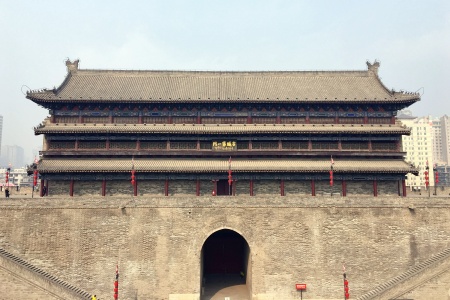
Near the Bell Tower/South Gate: Located in the traditional city center, it offers extremely convenient dining and transportation options, making it easy to connect with attractions such as the city wall and Muslim Quarter. The Big Wild Goose Pagoda can be quickly reached by subway.

IntoTravelChina Accommodation Booking Recommendations:
For travelers planning an in-depth experience of the Big Wild Goose Pagoda and the vibrant nightlife of Qujiang, we strongly recommend accommodation in the Qujiang area or along the subway lines. Booking through us ensures precise matching based on your budget and needs (such as family rooms or rooms with scenic views), and we can also package your accommodation with your itinerary and tickets to guarantee you're at the most exciting locations at the most opportune time, ensuring you don't miss a single beautiful moment. >> [Click to contact an IntoTravelChina travel consultant]

Extending the journey: Connecting the essential elements of the ancient capital of Chang'an

Furong Ancient Town

The Big Wild Goose Pagoda is an excellent starting point for opening the scroll of Xi'an's thousand-year history, easily connecting the essence of the ancient capital.

A classic 3-day loop tour of the ancient capital: Xi'an (Big Wild Goose Pagoda, Shaanxi History Museum) → Lintong (Terracotta Warriors, Huaqing Pool) → Xi'an (Ming City Wall, Forest of Steles, Bell and Drum Towers, Muslim Quarter). This is a complete journey through time and space, from the grandeur of the Tang Dynasty to the magnificence of the Qin and Han Dynasties, and finally to the everyday life of the city.
Literary Tang Dynasty Themed Tour: Based on the routes released by the Xi'an Municipal Bureau of Culture and Tourism, the itinerary can be planned as follows: Big Wild Goose Pagoda → Tang Paradise → Qujiang Pool Relics Park → The Twelve Hours of Chang'an Themed Street, immersing visitors in the artistic conception of Tang poetry and the culture of the Tang Dynasty. >>Contact us to customize the above related itinerary

Join hands with IntoTravelChina to open your own Chang'an travel adventure

Furong Ancient Town

The story of the Big Wild Goose Pagoda is related to the persistence of faith, the inheritance of culture and the dialogue of civilization. IntoTravelChina focuses on creating a deep, personal, and hassle-free Chinese travel experience. Our travel experts can help you:
Tailor-made itinerary: Design the perfect route to include the Big Wild Goose Pagoda and Xi'an and even the whole of Shaanxi according to your interests and time.
One-stop service: Get ticket reservations, special accommodation, cross-city transportation and professional explanation services for all popular venues.
Exclusive experience: Arrange intangible cultural heritage workshop experience, Hanfu makeup follow-up, private viewing time to avoid crowds, etc.

Let your trip to the Big Wild Goose Pagoda is not only a check-in, but also an in-depth dialogue with the soul of the Tang Dynasty.
> Start planning your journey today
> Welcome to contact our professional travel consultants, we will provide you with an exclusive itinerary plan and quotation within 24 hours. >> [Click to contact IntoTravelChina Travel Consultant]

Recommended Tours

Top 3 tours chosen by most customers to explore in the best way. Check the detailed itinerary, or tailor your own trip now with us.

Zhangjiajie Tour
Xi'an to Dunhuang Silk Road Tour

4 Days  |  Xi'an-Dunhuang

What Our Clients Say?

Based on 10,000+ traveler reviews

...
Daniel Dorothea
Canada
Reviewed on April 29,2025
Shopping on Nanjing Road in Shanghai was just amazing! It's truly the "First Commercial Street of China", where tradition and modernity blend perfectly. You can find awesome souvenirs and experience the trendy vibes in cool stores. The neon lights at night are just spectacular, shining bright like Times Square in New York. The food here is incredible too. I had a feast for my taste buds. Shanghai, I'll definitely be back!
Destination(s): Shanghai
Date of Experience: May 08,2024
...
...
Elvis Eva
Canada
Reviewed on June 20,2025
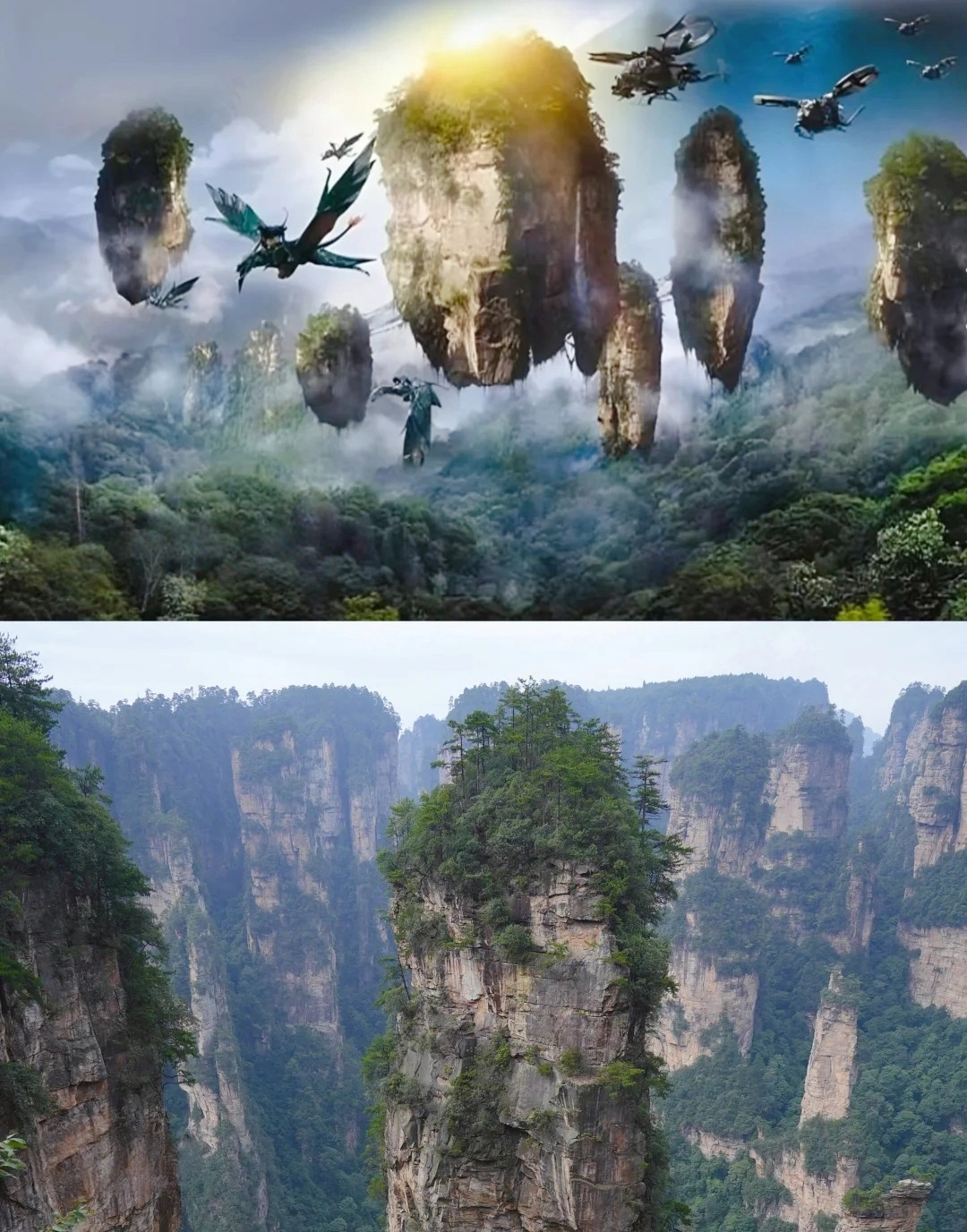
As a solo traveler from Canada, I was nervous about navigating China alone—but this 11-day tour was PERFECT! From hiking the Great Wall at sunrise (Day 3) to gasping at the Terracotta Army (Day 5), every day delivered ‘pinch-me’ moments. The real showstopper? Zhangjiajie’s Avatar Mountains (Day 7)! Our guide made the stone pillars come alive with stories. Massive thanks for handling all logistics—bullet train tickets, entry passes, car! And the 4-star hotels surprised me.
Destination(s): Beijing Xian Zhangjiajie Shanghai
Date of Experience: June 02,2025
... ... ...
...
Simon
America
Reviewed on May 29,2025
Our 2-day Zhangjiajie tour was beyond spectacular! As someone who’s visited Beijing and Shanghai for work, this trip revealed China’s wild, magical heart. Day 1 in Zhangjiajie National Forest Park felt like stepping onto Pandora—I’m a huge Avatar fan, and Yuanjiajie’s floating peaks left me breathless. The misty pillars and lush valleys like pure movie magic! Then came Fenghuang Ancient Town, we eat dinner beside the thundering waterfall. It seems Unreal! The night views of stilt houses glowing over the river were straight from a fairy tale. For fellow Avatar lovers and adventure seekers: Don’t miss this bucket-list experience! 10/10 would return. A Well-Traveled Film Buff, May 2025
Destination(s): Zhangjiajie
Date of Experience: May 08,2025
... ...

Ask a Question

Question Summary (100 characters)
Details (optional) (2,000 characters)
Name
Country
Email