Nature's Creation—The Eternal Dialogue Between Karst and the Lijiang River
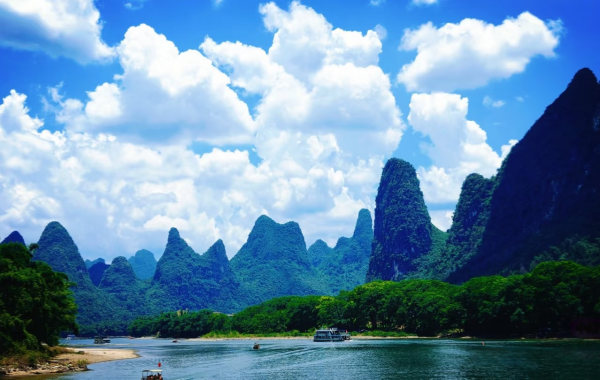
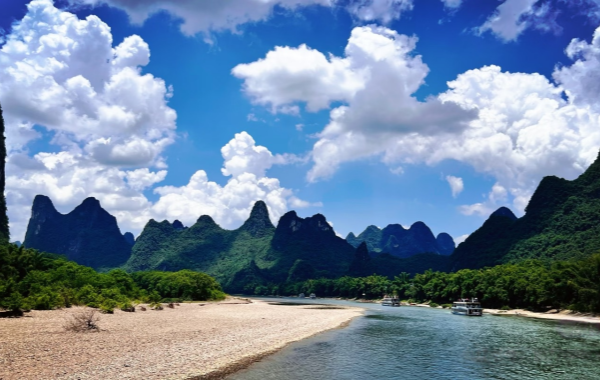
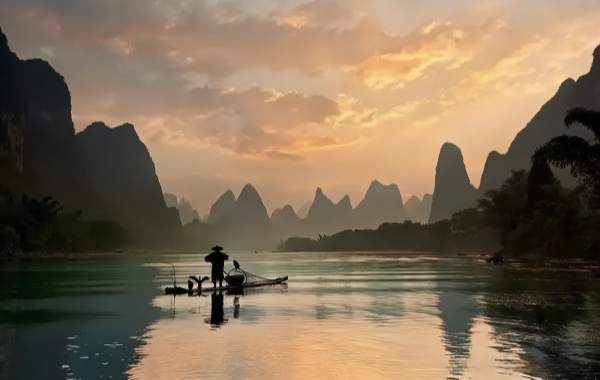
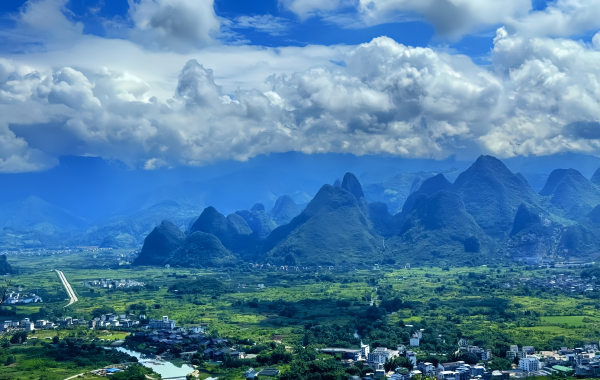
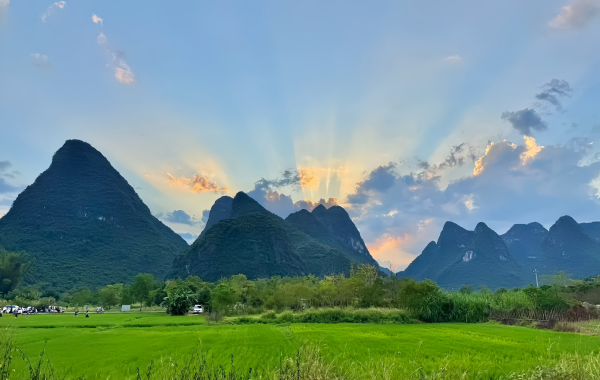
Xingping's natural landscape is a visual epic jointly composed by karst peaks and the Lijiang River.
The Elegant Peaks:Poems Rising from the Earth
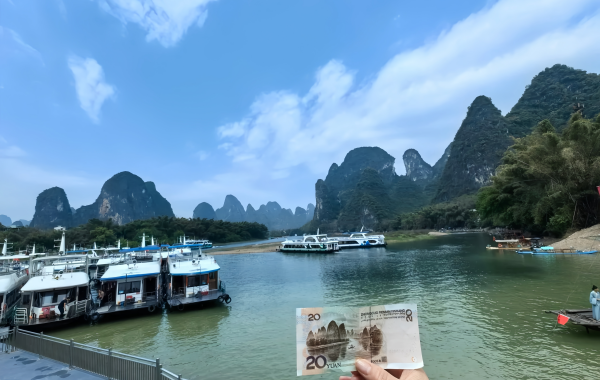
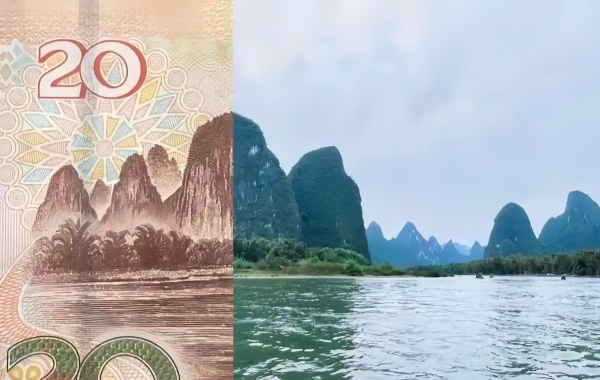
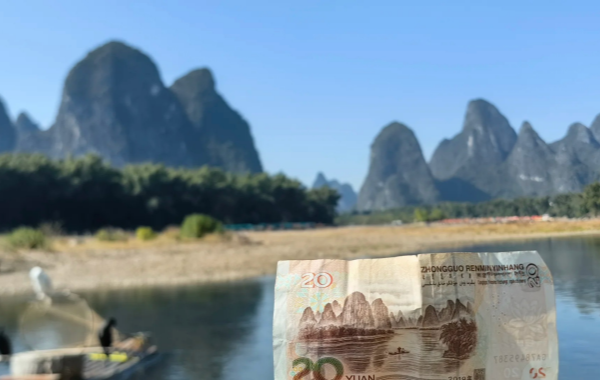
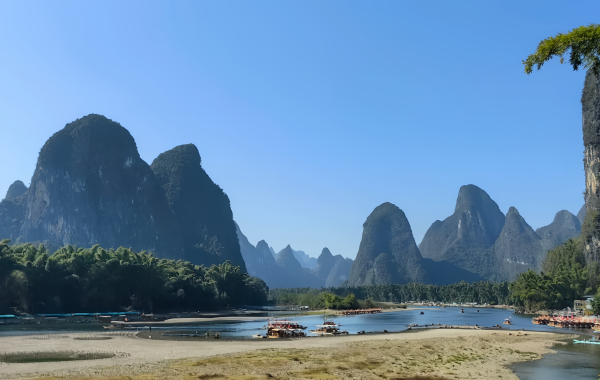
Yuanbao Mountain(background of the 20-yuan banknote):This is Xingping's most recognizable landmark.From a distance,the mountain peak resembles a giant ingot standing on the riverbank,its verdant reflection mirrored on the calm,mirror-like surface of the river,a harmonious interplay of reality and illusion,seemingly created by nature.The best viewing spot is on the steps opposite"Wangwang Fish Restaurant."Around 7 AM in the morning mist or 6:30 PM in the backlight,you can take stunning photos with a 0.5x wide-angle lens on your phone,capturing images reminiscent of those on RMB banknotes.Photography tip:Holding a 20 RMB banknote in the frame alongside the background creates a classic composition full of artistic flair.
Nine Horses Painting Mountain:A massive natural rock face along the Li River,named for its rock formations resembling nine galloping horses.Some are galloping,some drinking,some looking back—each with a unique posture,testing the imagination of every viewer.A local folk song goes:"Look at the horseman,look at the horseman,how many pairs of horses are there?If you see seven,you'll be a runner-up;if you see nine,you'll be a champion."A bamboo raft ride from Xingping Wharf takes about an hour,allowing you to feel as if you're part of a painting—the best way to experience the essence of the Li River cruise.
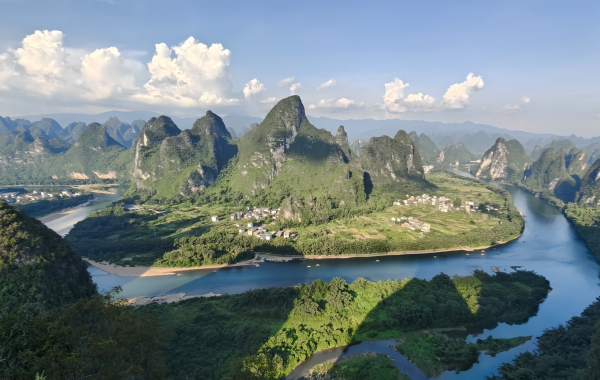
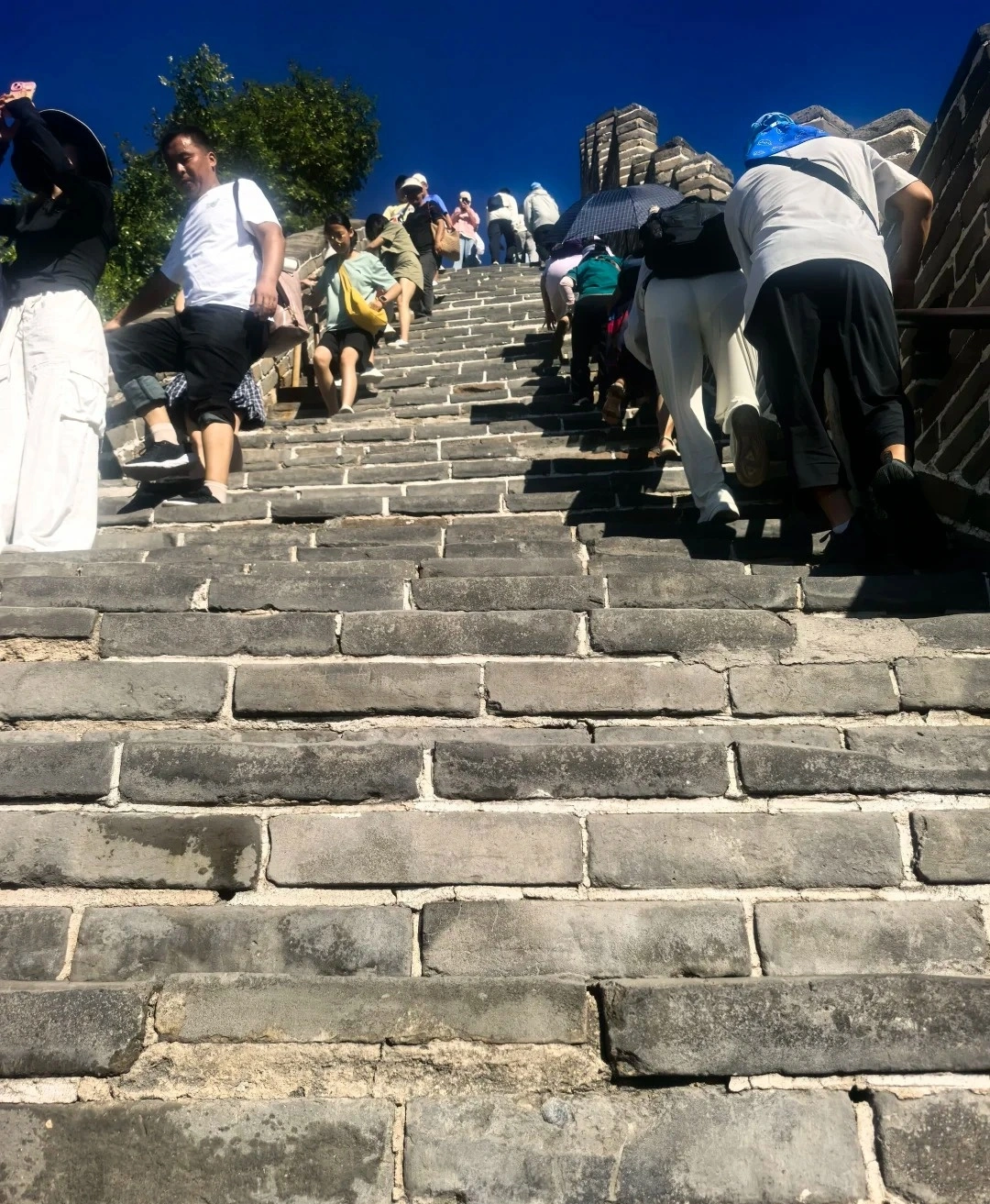
Laozhai Mountain:Only about 300 meters above sea level,yet it boasts over 1,100 steps leading to the summit.Climbing Laozhai Mountain is a small adventure full of stories—this mountain trail was actually built in 1999 with donations from a Japanese friend,Hayashi Katsuyuki.Deeply captivated by the scenery of Xingping,he spent two years building the hiking trail and the"Friendship Pavilion"at the summit,and has maintained its cleanliness daily ever since.He married a Chinese woman,opened the Laozhai Mountain Hotel at the foot of the mountain,and dedicated the rest of his life to this landscape.From the summit,the Li River draws a magnificent nearly 180-degree arc at the foot of the mountain,offering panoramic views of Xingping Ancient Town and the surrounding peaks.The breathtaking sunset is truly awe-inspiring.Travel Tips:The mountain path is steep,with some sections requiring climbing iron ladders.It is not recommended to travel on slippery days,especially in rainy weather.
The Vibrant Water:The Breath and Pulse of the Li River
Yellow Cloth Reflection:Here,the Li River widens and becomes as smooth as a mirror,clearly reflecting the peaks such as Yuanbao Mountain,blurring the lines between reality and illusion—a perfect depiction of"clearly seeing the mountain peaks,yet the boat sails atop them."This is also the location for the giant"Yellow Cloth Reflection"painting hanging at the Chinese Embassy at the United Nations Headquarters,a perfect representation of Chinese landscape aesthetics.Photography tip:A windless early morning is the best time to photograph the reflection,as the river surface is calmest and the reflection is most complete.
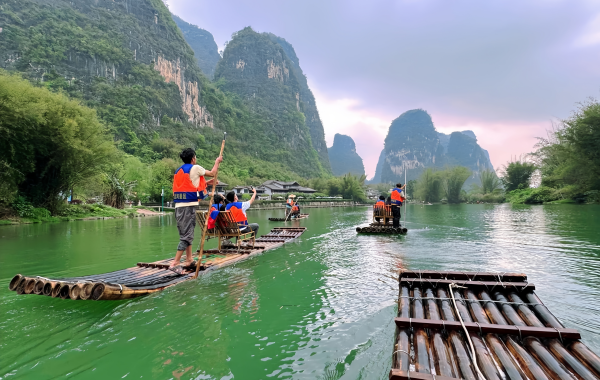
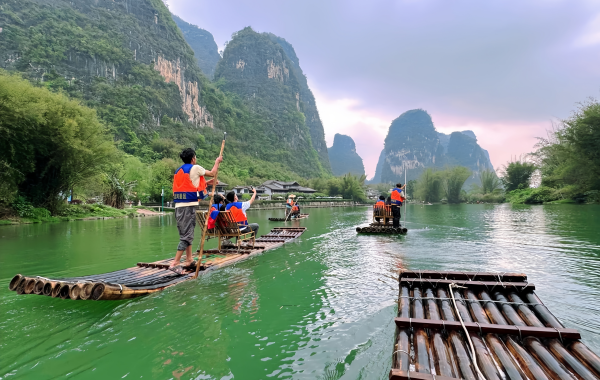
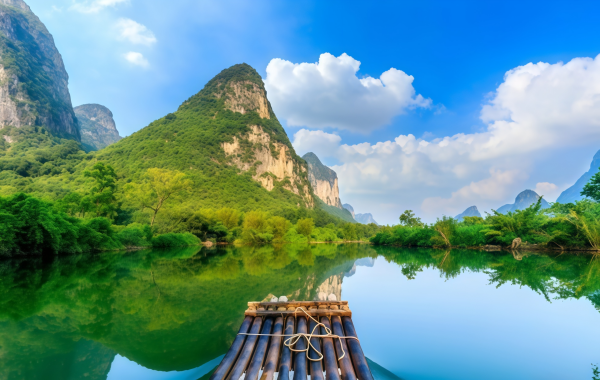
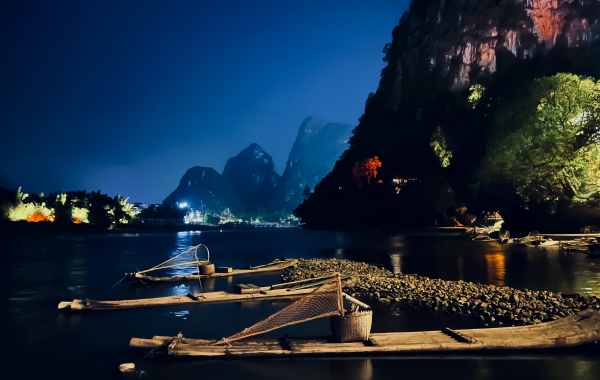
Li River Bamboo Rafting:Board a bamboo raft at Xingping Chaobanshan Wharf and slowly glide into the Li River.The towering peaks on both banks unfold like a scroll painting.The river water is crystal clear,with swaying aquatic plants and schools of fish swimming.The raft operators are mostly local fishermen,speaking with a Guilin-Liuzhou accent,occasionally humming a few folk songs;their simple,rustic voices blend seamlessly with the landscape.The rafting route is usually a round trip from Xingping Wharf to Nine Horses Painting Mountain,taking about an hour.Along the way,you can enjoy the key scenic spots such as the 20 RMB note background,the Yellow Cloth Reflection,and Nine Horses Painting Mountain.Photography tip:Be careful to protect your camera equipment while riding the bamboo raft,as there may be occasional splashes of water.
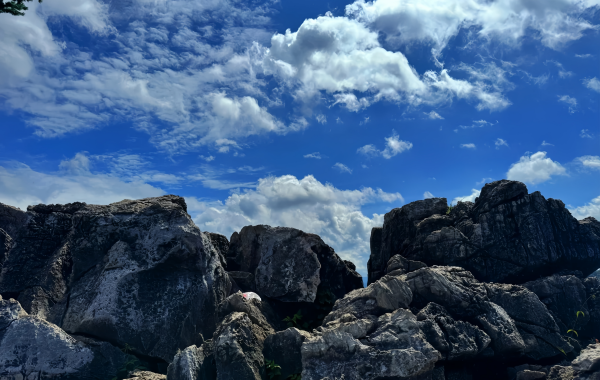
Rugged Rocks:Silent History and Legendary Vessels
Luosi Mountain:Resembling a giant snail spiraling upwards,this mountain is a classic example of the karst peaks along the Li River.
Lotus Cave:The cave is filled with stalactites of countless shapes,among which the lotus-shaped stone curtains are particularly unique,forming an underground palace sculpted by nature over millions of years.
Green Retreats:Idyllic Living Amidst Mountains and Rivers
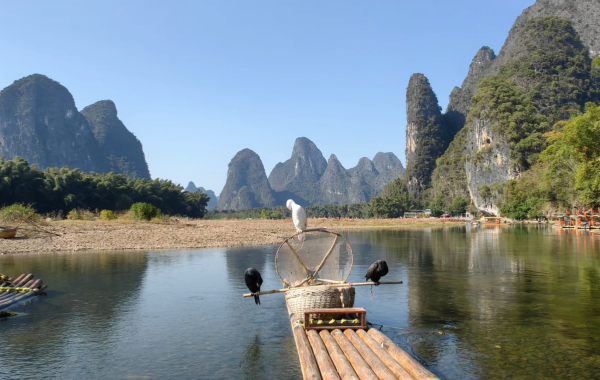
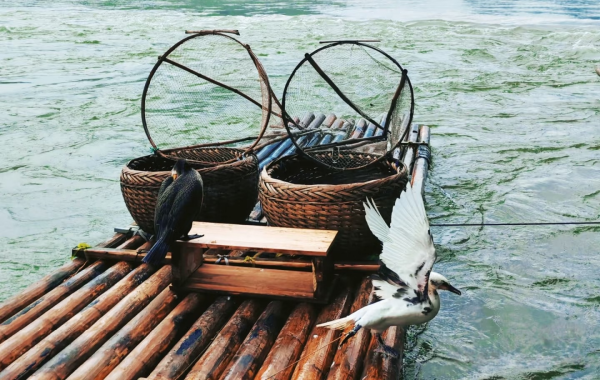
Although Xingping's arable land accounts for less than 8%of its area,the Li River has nurtured a unique rural ecosystem.Along the river,pomelo groves and kumquat orchards dot the landscape.Cormorant fishing in the fishing villages is the most vivid testament to the Li River's thousand-year-old fishing and farming culture—fishermen train cormorants to dive into the river to fish,an ancient technique still practiced today.At dawn or dusk,fishermen can often be seen working on the river with their bamboo rafts and cormorants,creating a scene of authentic Li River culture amidst the interplay of light and shadow.2.2 Humanistic Ingenuity–The Vibrant Life and Spirit of an Ancient Town
Every bluestone slab and every carved wooden door here carries the weight of a thousand years of history and stories.
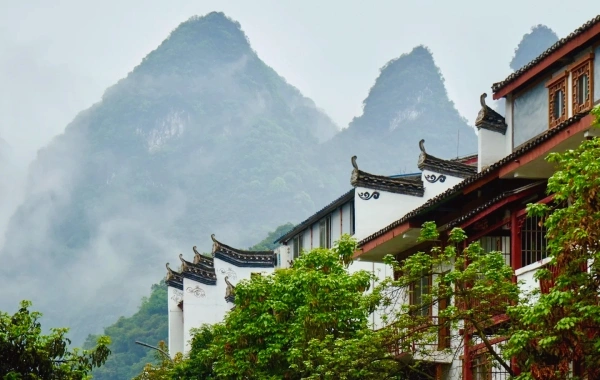
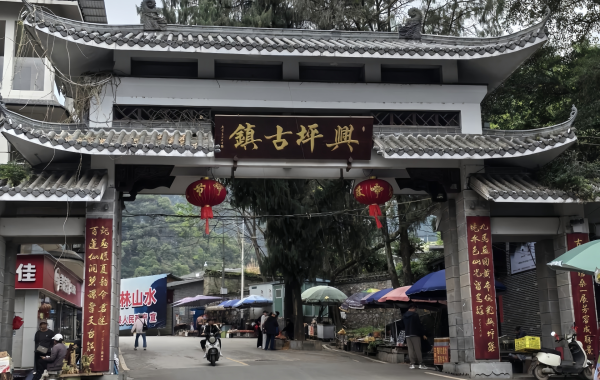
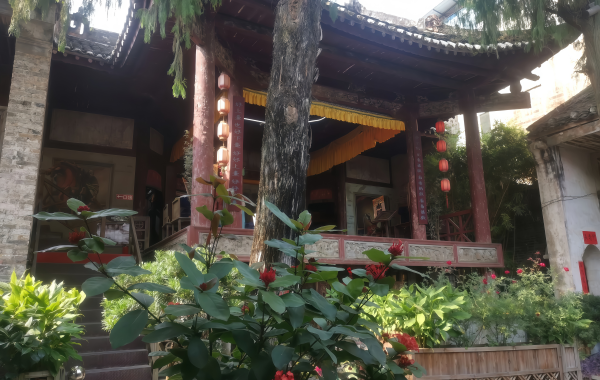
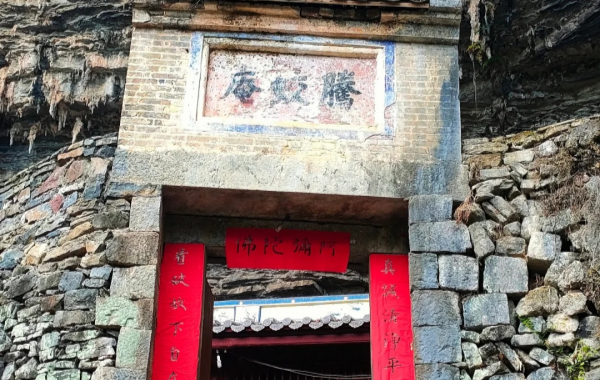
Xingping Ancient Street:A bluestone-paved street about 1 kilometer long,winding from the southeast of the ancient town to Rongshutan and Xingping Wharf.Along both sides of the street stand numerous provincial guild halls,most of the ancient brick and tile structures well-preserved.Strolling along,the blue bricks and gray tiles,wooden arcades,and mottled carved window lattices exude the charm of northern Guangxi folk houses from the Ming and Qing dynasties.The old street is short,but it's brimming with life–local grandmothers sit on their doorsteps basking in the sun,the sweet aroma of pine pollen candy wafts from the handicraft workshops,and time seems to slow down here.The time from 7 am to 9 am is the quietest,and the old street is most picturesque in the morning mist.
The Ancient Stage(Guanpang Temple):Built in the fourth year of the Qianlong reign of the Qing Dynasty(1739 AD),it has a history of nearly 300 years and is one of the best-preserved Qing Dynasty stages in northern Guangxi,holding significant value for the study of Guangxi opera history.The stage features flying eaves and bracket sets,carved beams and painted rafters.During festivals,traditional operas such as Guiju and Cai Diao are performed here;the sound of gongs and drums evokes the bustling era of merchants gathering here.
Xingping Fishing Village:Located about 2 kilometers from the ancient town on the banks of the Li River,this ancient fishing village dates back to the Wanli period of the Ming Dynasty(about 500 years ago).The village houses,with their blue bricks and black tiles,sloping roofs,horse-head walls,and flying eaves and painted rafters,stand in neat rows,exhibiting typical Ming and Qing Dynasty features of northern Guangxi residences.This small village has an extraordinary history—in the winter of 1921,Sun Yat-sen,preparing to establish his Northern Expedition headquarters in Guilin,passed through Yangshuo and arrived at Xingping Fishing Village,spending the night on a boat moored in the river in front of the village.In July 1998,then-US President Clinton visited the Li River and the fishing village,making this small village famous both at home and abroad.Today,the village still preserves the old house where Clinton rested during his visit,allowing tourists to trace the president's footsteps.
Tengjiao Temple:An ancient temple built in the Ming Dynasty,hidden in a cave at the foot of Luosi Mountain,its incense has burned for centuries,adding a touch of Zen to this landscape.
Xiping County Town Ruins:Located on Shizi'an Hill,southeast of the ancient street,the outline of the city walls is still discernible,and fragments of ancient bricks,tiles,and ceramics can be seen everywhere.The once bustling county town is now a quiet place surrounded by green hills and villages,prompting a感慨about the vicissitudes of life.
Photography Tips:
The best panoramic view is from the"Friendship Pavilion"atop Laozhai Mountain,offering a breathtaking view of the Li River's Great Bend and the entire Xingping Ancient Town.
The best spot for the 20 RMB banknote background is on the steps opposite"Wangwang Fish Restaurant,"ideal for photos taken in the morning mist or with backlighting at dusk.
The Yellow Cloth Reflection is best captured on a windless morning when the river is as smooth as a mirror,resulting in the most complete reflection.
The ancient street is best photographed in the morning with sidelighting,showcasing the blue brick and wooden arcade buildings with a"Lingnan ink painting"feel amidst the interplay of light and shadow.
Drones are permitted to fly,offering aerial views of the Li River peaks and the entire ancient town—truly epic images.