Three Natural Bridges: A Journey into the Karst Wonders of the Earth's Depths

Three Natural Bridges: A Journey into the Karst Wonders of the Earth's Depths

Overview: A Natural Wonder That Leaves the World Breathless

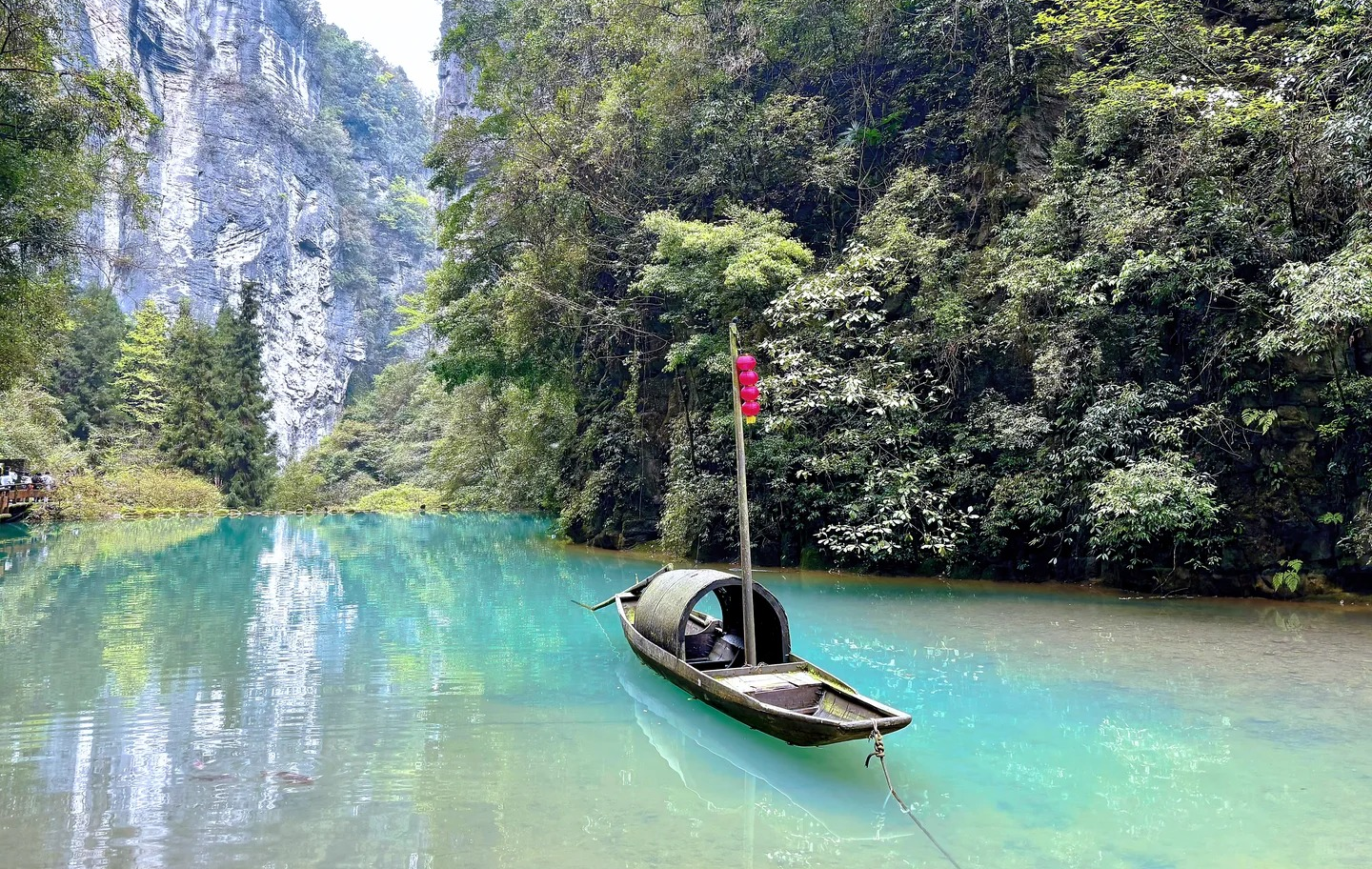
The Three Natural Bridges (Tiankeng Three Bridges), tucked away in Xiannvshan Town within Chongqing’s Wulong District, constitute a core component of the UNESCO World Natural Heritage site, "South China Karst."

Key Highlights at a Glance

Distinguishing Tags: World Natural Heritage / Asia’s Largest Natural Bridge Cluste

Core Experiences: Hiking beneath colossal natural bridges and overlooking the panoramic view of the sinkholes.

Suggested Visit Duration: Half a day to one full day; can be combined with nearby attractions such as the Longshuixia Gap or Xiannvshan Mountain.

Address: Xiannvshan Town, Wulong District, Chongqing.

  • Three Natural Bridges: A Journey into the Karst Wonders of the Earth's Depths-1
  • Three Natural Bridges: A Journey into the Karst Wonders of the Earth's Depths-2
  • Three Natural Bridges: A Journey into the Karst Wonders of the Earth's Depths-3
  • Three Natural Bridges: A Journey into the Karst Wonders of the Earth's Depths-4

Origins: A Geological Epic Spanning Eons—and Legends of Light and Shadow

Furong Ancient Town Furong Ancient Town Furong Ancient Town

Fissures in the Earth: How the Three Natural Bridges Were Formed

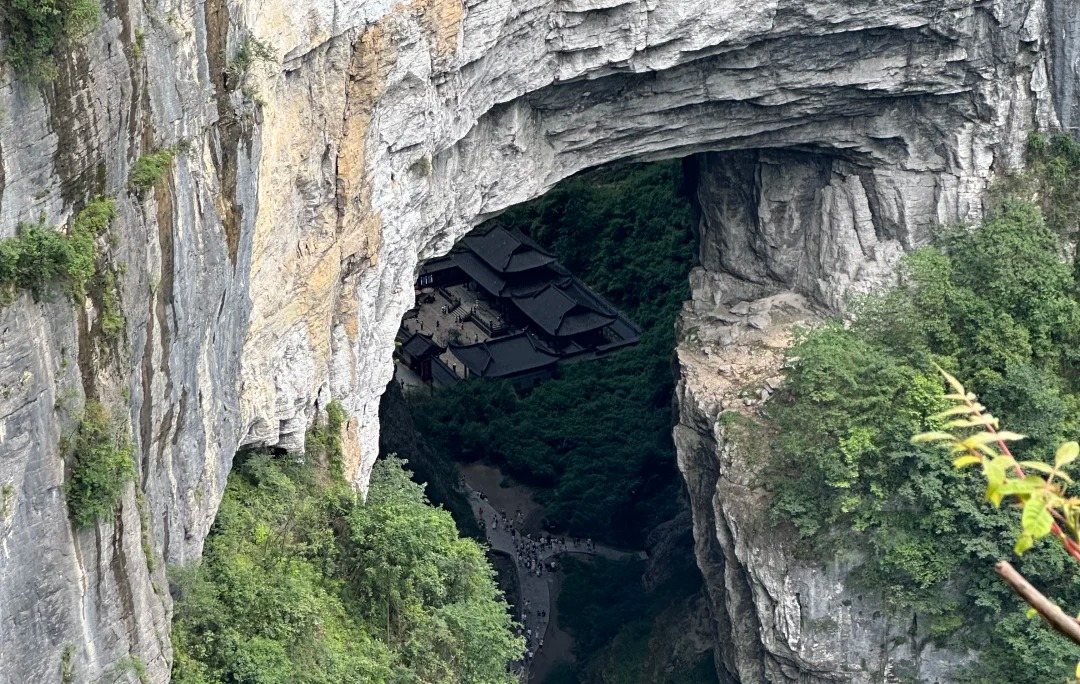
The Three Natural Bridges are not man-made structures, but rather masterpieces meticulously sculpted by nature over hundreds of millions of years. In ancient times, this region lay beneath a vast ocean. As the Earth's crust underwent continuous uplift, carbonate-rich rock layers were raised to the surface, forming massive deposits of soluble limestone. Over millions of years, abundant rainfall and surface water ceaselessly seeped downward through fissures in the rock mass, gradually dissolving the stone to create a vast network of underground caverns and subterranean rivers deep beneath the surface. Eventually, when the cavern ceilings could no longer support their own immense weight and collapsed layer by layer, the colossal sinkholes were revealed to the world. The remnants of rock that remained standing between the sinkholes—having not yet collapsed—formed the magnificent natural bridges we see today; they are natural geological masterpieces, meticulously sculpted by the ceaseless work of groundwater. These three stone bridges—the Tianlong Bridge, Qinglong Bridge, and Heilong Bridge—are aligned longitudinally, spanning the canyon in succession to create a spectacular sequence: "Tianlong Bridge → Tianlong Sinkhole → Qinglong Bridge → Shenying Sinkhole → Heilong Bridge."

Rising to Prominence—From a Secluded Sanctuary to the Global Silver Screen

The Three Natural Bridges site was once a little-known, secluded sanctuary nestled deep within the Wujiang River basin. Local inhabitants had lived and thrived here for generations, yet few realized the global significance of these three colossal bridges hidden deep within the canyon. It was not until 2007—when the site was inscribed on the UNESCO World Heritage List as a key component of the "South China Karst" system—that this hidden wonder truly entered the public consciousness. However, what truly propelled the Three Natural Bridges to widespread fame and international acclaim was a series of cinematic masterpieces that dazzled audiences on the global stage:

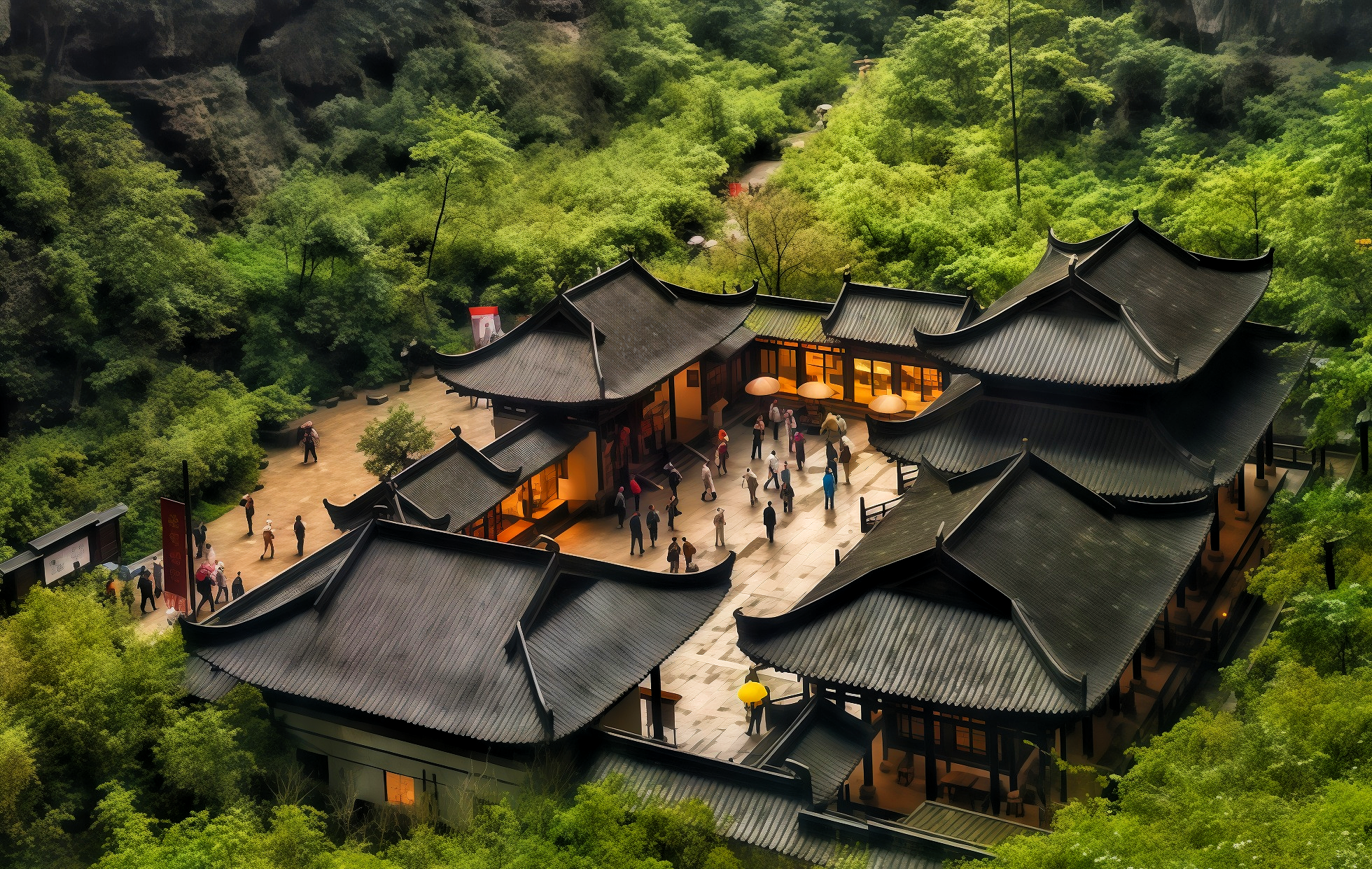
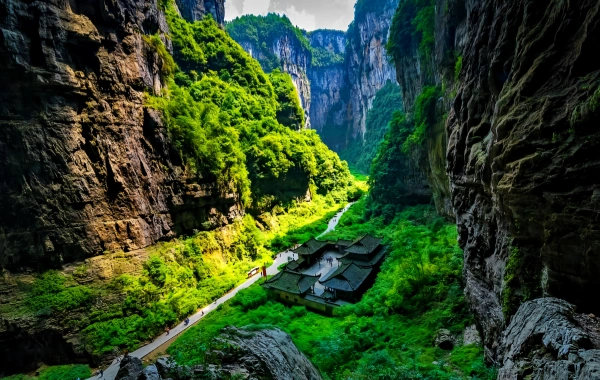
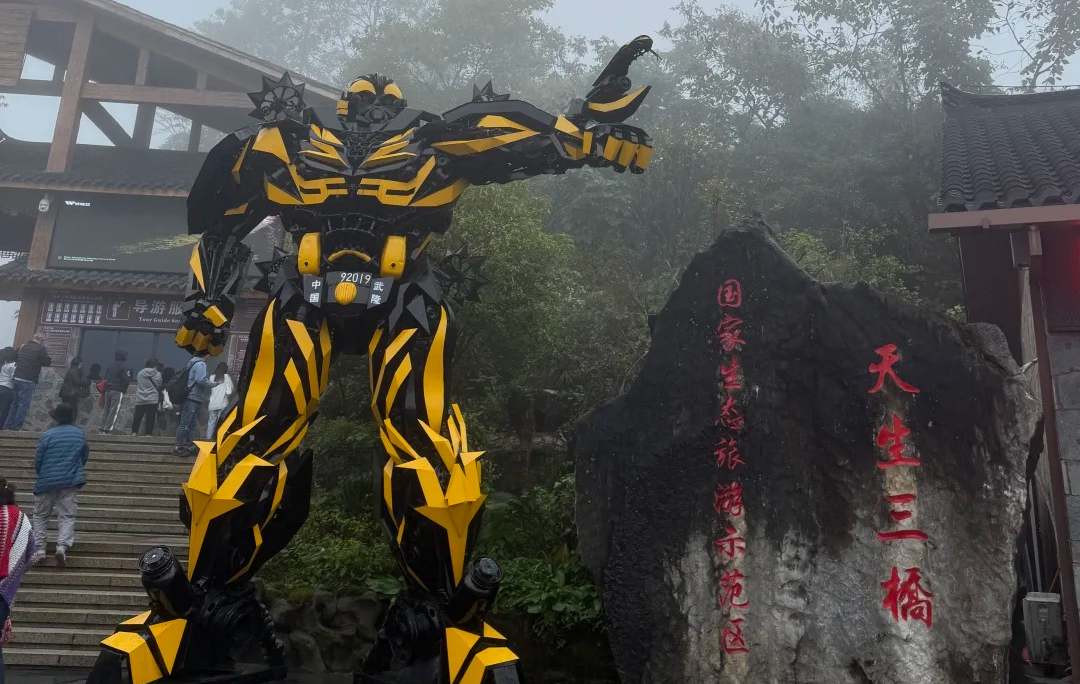
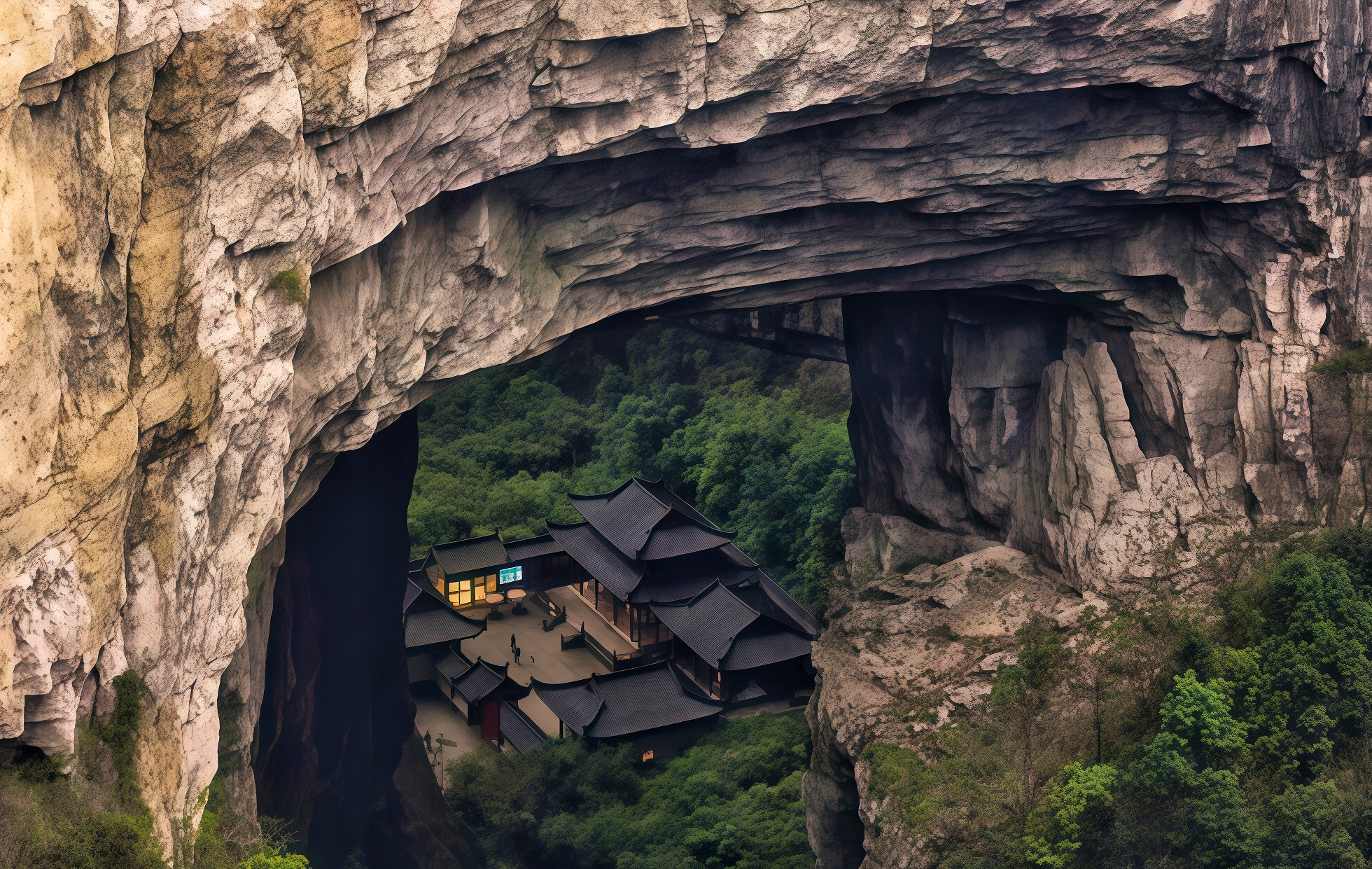
In 2006, while scouting locations for his film Curse of the Golden Flower, director Zhang Yimou was instantly captivated by the valley floor beneath the Tianlong Bridge—a basin encircled by towering cliffs and plunging abysses. Drawing inspiration from the architectural style of Han and Tang dynasty postal stations, the film crew constructed a charmingly rustic, traditional courtyard complex known as the Tianfu Official Posthouse. With its grey walls, azure roof tiles, and gracefully upturned eaves, the structure sits nestled between massive rock formations deep within the canyon. A memorable long take in the film—depicting black-clad assassins scaling walls, leaping across rooftops, and descending from the heavens to launch a surprise attack on the ancient posthouse—offered global audiences their very first glimpse of such an incredible and surreal landscape within China. In 2014, the Hollywood blockbuster Transformers: Age of Extinction chose this site as a filming location. In the film, during the climactic battle in Hong Kong, Optimus Prime is flung into a mysterious valley—a location that is, in reality, the Three Natural Bridges site in Wulong, Chongqing. During his location scouting visit, director Michael Bay was so overwhelmed by the scenery that he exclaimed, "This is one of the most beautiful places on Earth." Today, the Tianfu Official Post Station has become the most recognizable and central attraction within the Three Natural Bridges Scenic Area. The courtyard still preserves props and models of the "Golden Armor" guards used during the filming of the movie Curse of the Golden Flower. Internally, the site serves a dual purpose: showcasing the cultural history of the ancient postal relay system while also functioning as a film and television tourism destination—making it an absolute must-visit "check-in" spot for tourists.>>[Stone Forest of Yunnan]

Must-See Wonders: A Dual Spectacle of Nature and Culture

Furong Ancient Town Furong Ancient Town Furong Ancient Town Furong Ancient Town Furong Ancient Town

Nature's Handiwork—Rifts and Sculptures of the Earth

The natural landscape of the Three Natural Bridges is a grand symphony of stone, light, water, and space.

Tianlong Bridge: A Magnificent Overture and the Gaze of the "Eye of Heaven"

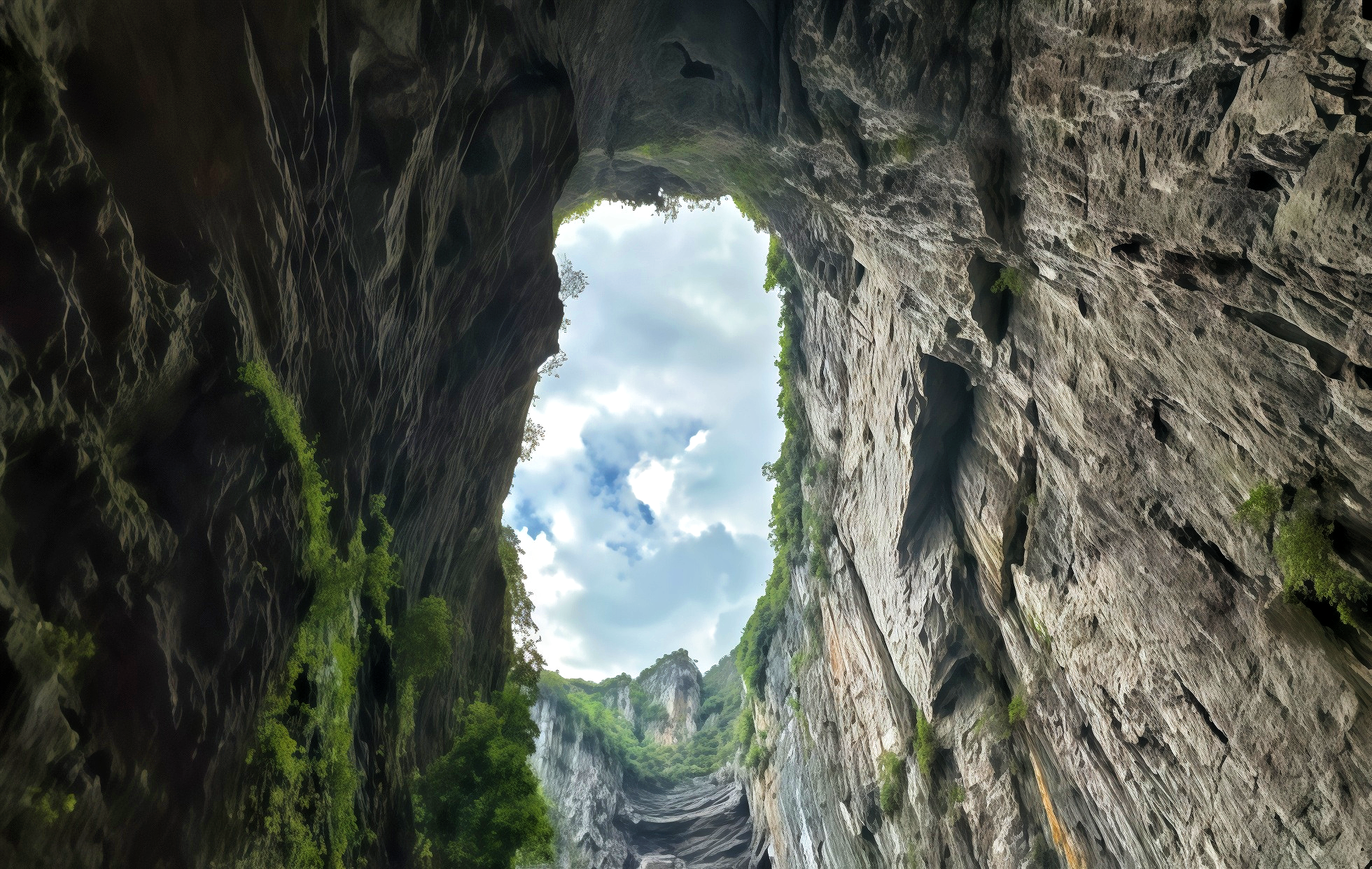
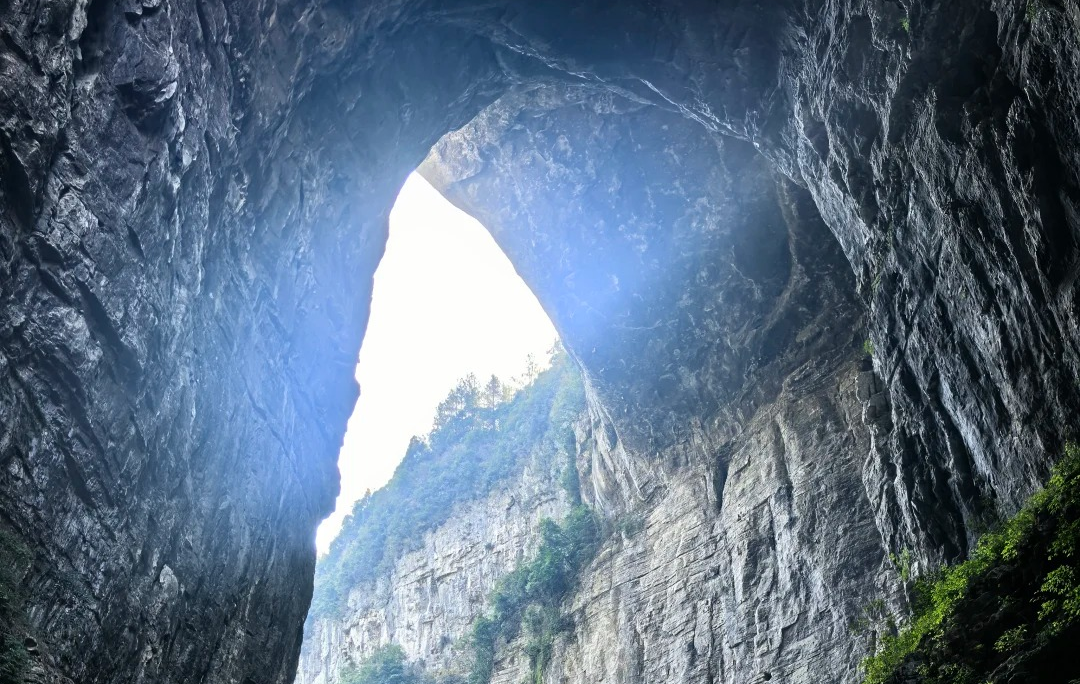
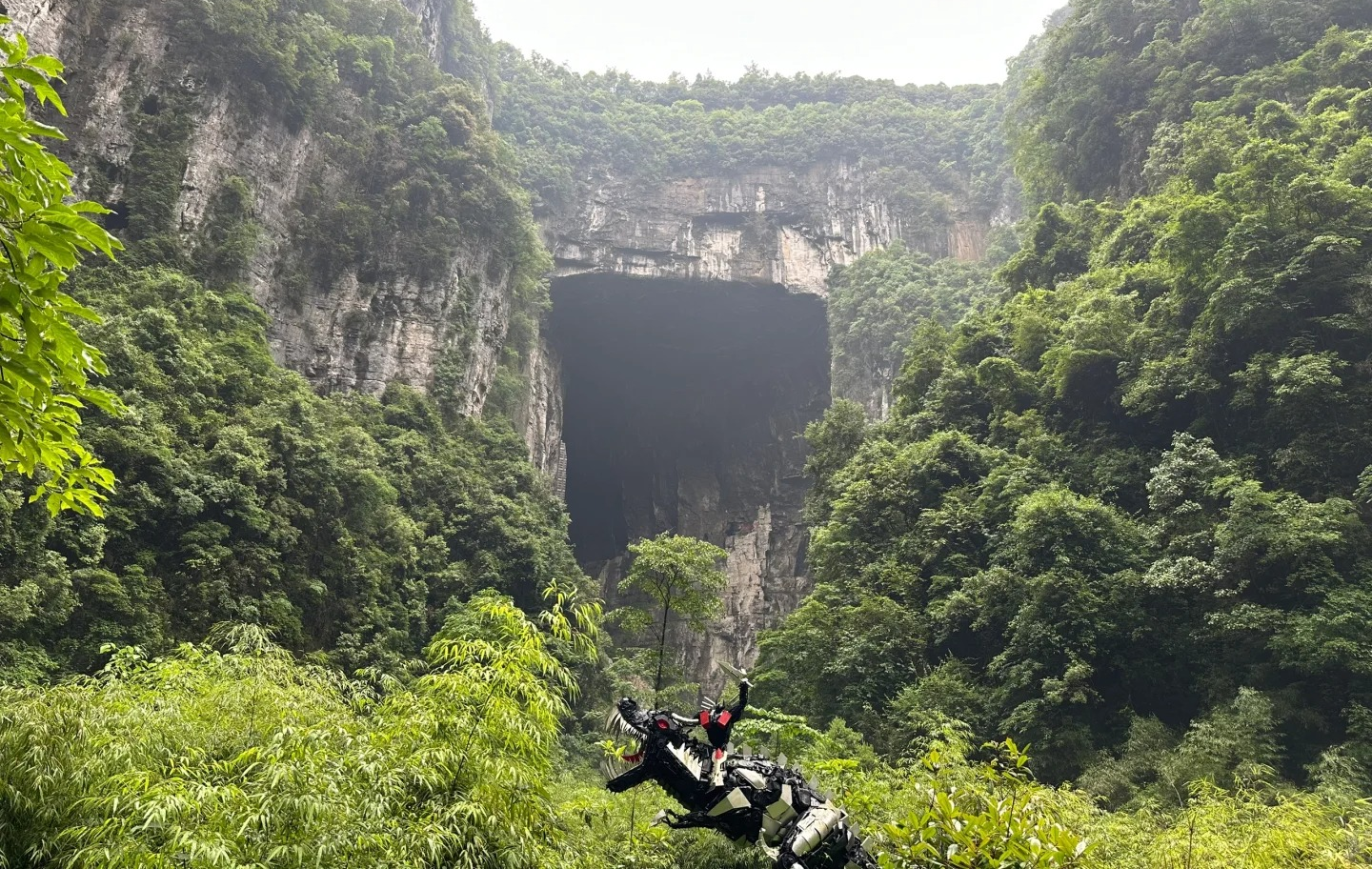
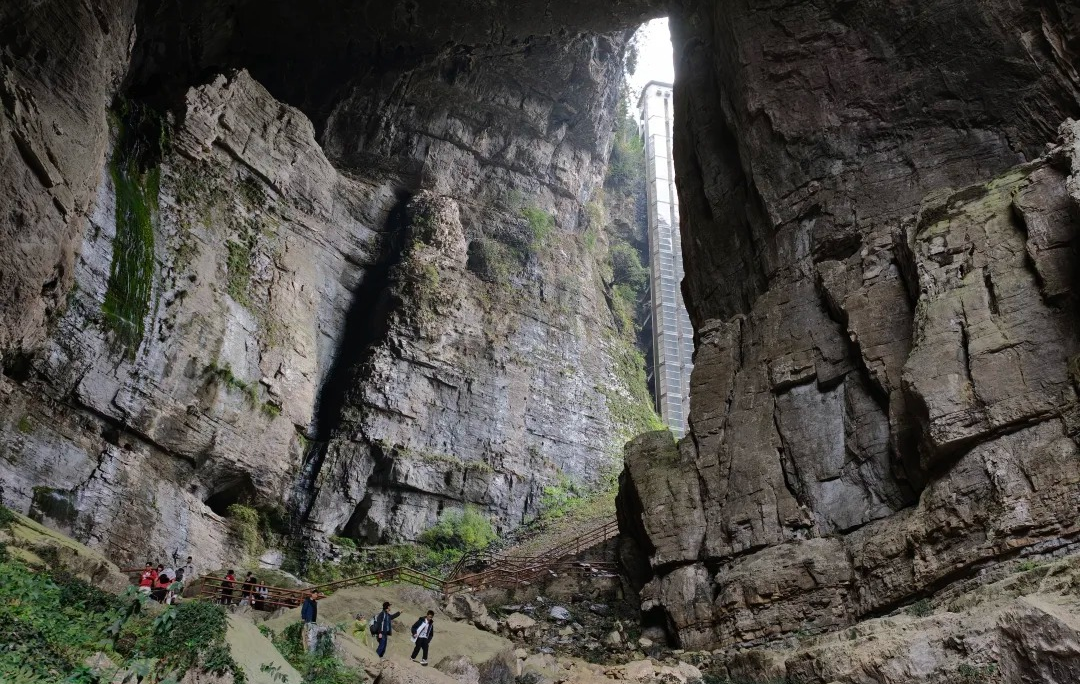
Tianlong Bridge is the most majestic of the three bridges; with its soaring archway and sheer, towering cliffs, it is hailed as the "gateway" to the Three Natural Bridges. Standing approximately 235 meters high and 150 meters thick, its colossal scale immediately impresses upon visitors—the moment they enter the canyon—the absolute majesty of nature. Gazing upward from beneath the bridge, the arching vault resembles a celestial dome, beneath which human beings appear as tiny as ants. Most astonishing of all is the massive natural cavern situated at the center of the bridge structure; shaped like a colossal eye gazing up at the heavens, it is known locally as the "Eye of Heaven." Standing beneath this giant eye and looking skyward, one witnesses sunlight pouring down through the opening—a sacred radiance seemingly descending from the celestial realm, captivating the soul. As you pass beneath the bridge, a close inspection of the sheer granite walls reveals the erosive textures left behind by millions of years of flowing water—resembling the "tree rings" of the earth, they silently narrate the epic transformations of the landscape over the ages.

Qinglong Bridge: The Magic of Light and Shadow—and the Transformers Imprint

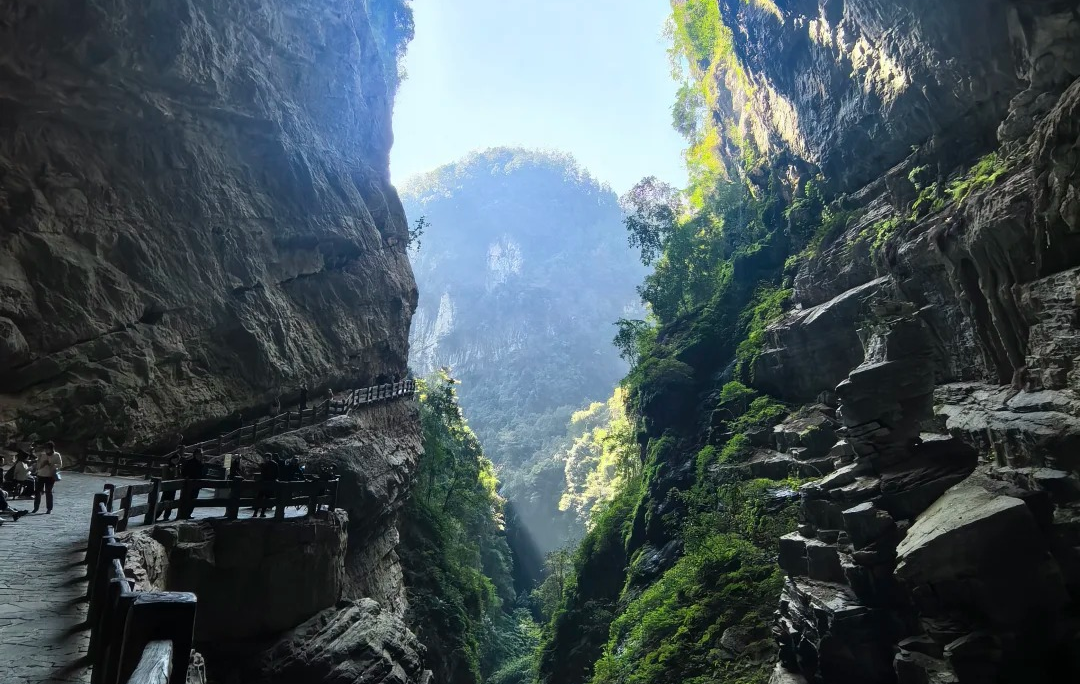
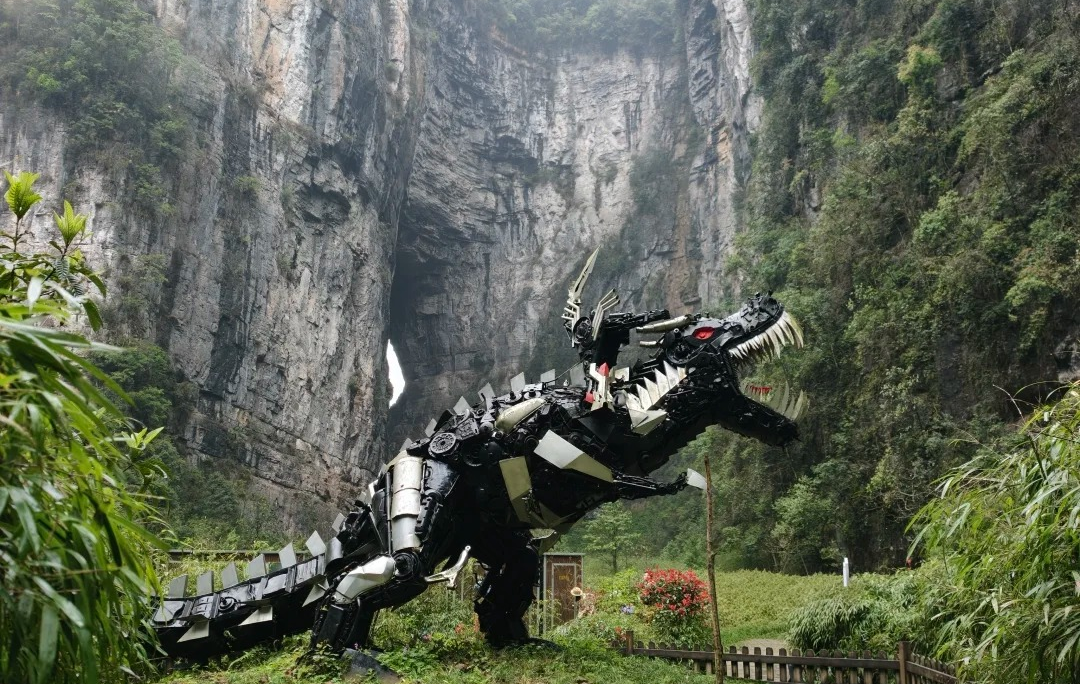
The second bridge, Qinglong Bridge (Azure Dragon Bridge), is renowned for its spectacular interplay of light and shadow. Standing approximately 281 meters high and 168 meters thick, it is the tallest of the three bridges. Every evening at dusk, as sunlight filters through the canyon from a specific angle, it casts mysterious patches of light and silhouettes onto the rocky walls within the bridge's archway. The rock surfaces on the interior walls, polished by the ceaseless flow of water over the centuries, have acquired a lustrous, azure hue—perfectly embodying the spiritual essence implied by the bridge's name: "Azure Dragon." This site served as one of the primary filming locations for the movie Transformers: Age of Extinction; the animated film's awe-inspiring scene—in which the Dinobots burst forth from the valley—was captured right here. A slender stream of water perpetually seeps from the rock face beneath the bridge; during certain seasons, this creates a drifting mist that, when pierced by sunlight, occasionally reveals miniature rainbows, adding a touch of delicate beauty to the otherwise rugged and dramatic canyon landscape.

The Black Dragon Bridge: Gloomy Depths and Sculptures of Water

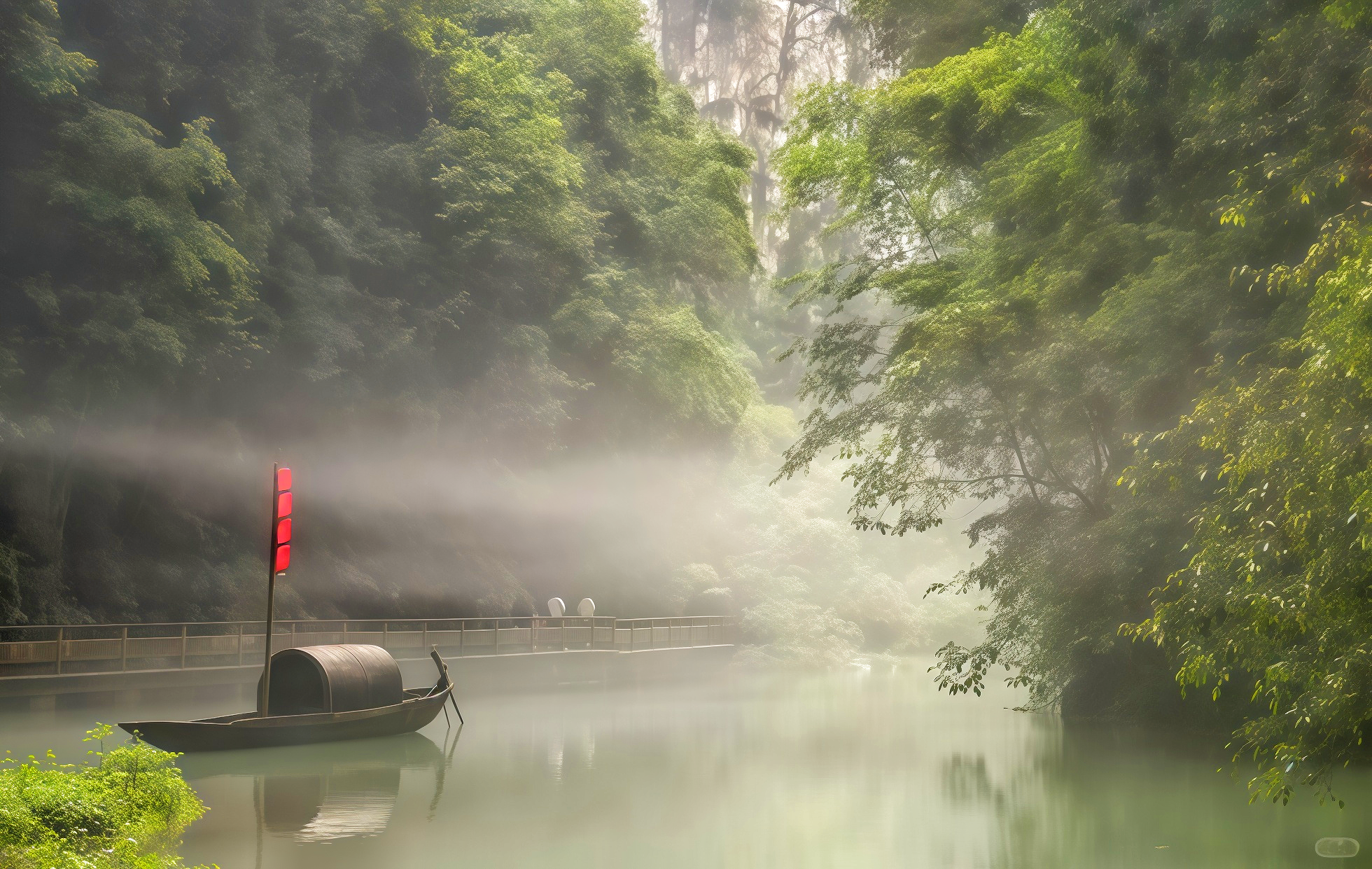
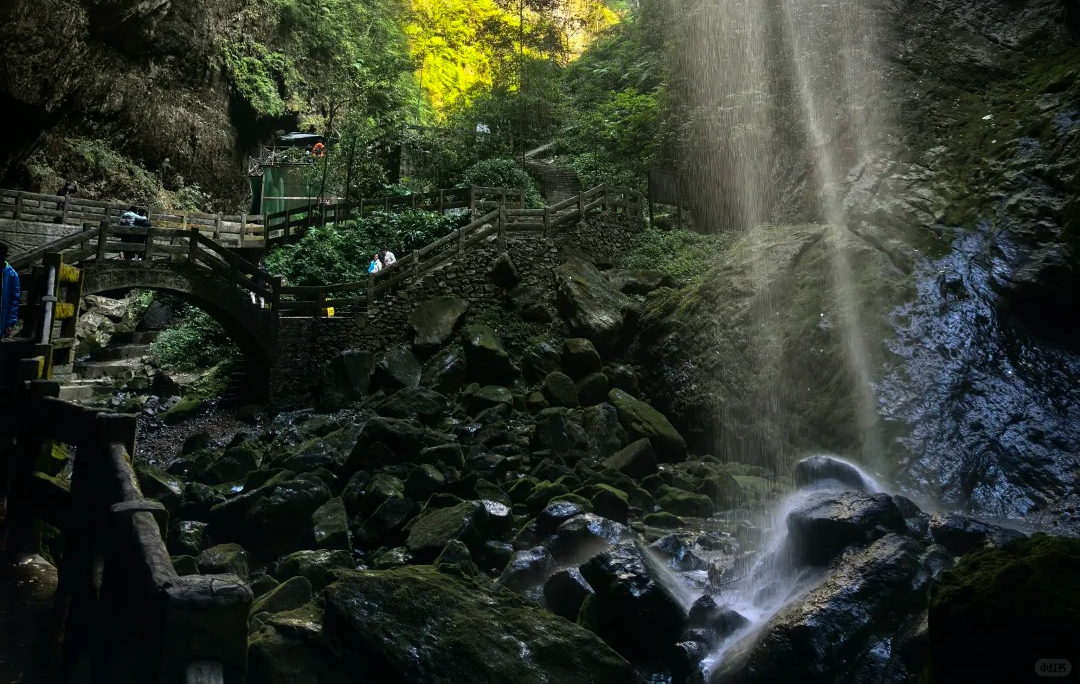
The third structure, the Black Dragon Bridge, is the most profound and mysterious of the three; it earned its name from the dim lighting within the cave-like passage and the rocks' deep, ink-black coloration. The bridge stands approximately 223 meters high and measures about 107 meters in thickness. Upon stepping onto this bridge, the canyon narrows abruptly, the light dims, and the humidity in the air noticeably increases—creating the sensation of having entered a hidden chamber deep within the very core of the earth. The Black Dragon Bridge features a unique natural wonder known as the "Thread Spring"—a stream of crisp, clear groundwater that seeps from a fissure in the bridge's ceiling and plunges straight down to the valley floor like a slender thread, shimmering with crystalline brilliance in the sunlight. Emerging from the Black Dragon Bridge, the canyon suddenly opens up into a vast expanse, evoking a sense of sudden relief and discovery—like finding light after passing through darkness.

The Heavenly Dragon Sinkhole and the Divine Eagle Sinkhole

The two colossal sinkholes situated between the three bridges—the Heavenly Dragon Sinkhole and the Divine Eagle Sinkhole—constitute the pivotal elements of the site's unique "three bridges flanking two sinkholes" geological formation. The Heavenly Dragon Sinkhole lies between the Heavenly Dragon Bridge and the Azure Dragon Bridge; its floor is flat and expansive, serving as the very site where the historic Tianfu Official Post Station is situated. Standing at the bottom of the sinkhole and gazing upward at the surrounding cliffs, one feels as though they have been placed at the bottom of a massive natural well hundreds of meters in diameter; with sheer rock walls towering on all sides and lush green vegetation clinging to their surfaces, the setting evokes the sensation of having stumbled into a lost world deep within the earth's interior. The Divine Eagle Sinkhole is located between the Azure Dragon Bridge and the Black Dragon Bridge; while slightly smaller in scale, it possesses a more secluded and tranquil atmosphere. It derives its name from a massive boulder situated at the bottom of the sinkhole, which bears a striking resemblance to a majestic eagle with its wings spread wide.

> Photography Tip:

The optimal vantage point for capturing a panoramic view is the glass observation deck. From this perch hundreds of meters above the ground, you can look down upon the entire cluster of three bridges, capturing an epic "God's-eye view" of the landscape. The plaza in front of the Tianfu Official Post Station offers a classic vantage point ideal for capturing the visual contrast between human figures and the colossal bridges; framing ancient architecture alongside these massive natural spans creates a scene of immense visual tension.

After passing through the Heilong Bridge, turn around and shoot upward against the light to capture the "divine light" effect—sunbeams streaming through the fissures at the crown of the bridge. At dusk, the side-backlighting at the Qinglong Bridge allows you to capture the rich textures and intricate layers of the rock formations. Drone flight is permitted within the scenic area, though pilots must avoid areas with dense crowds.

Human Imprints: The Legend of the Ancient Post Station Beneath the Cliffs

If the Three Natural Bridges represent the uncanny craftsmanship of nature, then the Tianfu Official Post Station—nestled at the bottom of the Tianlong sinkhole—stands as the ultimate testament to the dialogue between human civilization and natural wonder.

Tianfu Official Post Station: A Tang Dynasty Relay Station Embedded in the Earth's Core

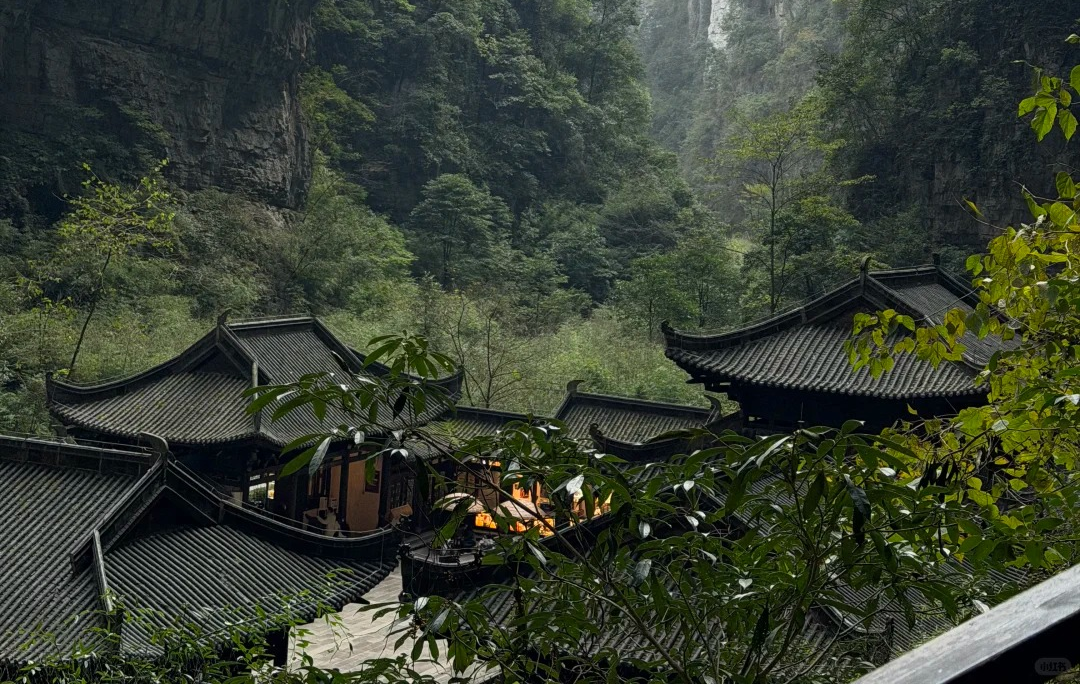
This structure is a siheyuan (courtyard complex) restored in the architectural style of the Han and Tang dynasties, featuring gray walls and blue-tiled roofs. It stands quietly on the valley floor situated between the Tianlong and Qinglong Bridges, tightly embraced on all sides by towering, sheer cliffs. Its historical prototype dates back to the Tang Dynasty; in ancient times, this served as a vital relay station along the trade route connecting Chongqing and Guizhou—a place where caravans of packhorses would pause to rest and resupply while traversing the Ujiang River Gorge. Although the current structure was reconstructed by director Zhang Yimou for the filming of Curse of the Golden Flower, it faithfully replicates the architectural style and layout of ancient Bayu (Chongqing-region) post stations. The courtyard houses exhibits dedicated to the history of ancient postal and relay systems, alongside displays featuring the memorable "Golden Armor" guards and prop weaponry from the film. Standing in the center of the courtyard and gazing upward, one sees only a sliver of sky partially obscured by the bridge overhead, flanked on either side by sheer gray rock faces rising to dizzying heights. This spatial sensation—a blend of enclosure and sanctuary—allows one to instantly grasp why ancient travelers regarded this place as a haven amidst an otherwise impassable wilderness.

The Legend of the Post Road: Tales of a Forgotten Trade Route

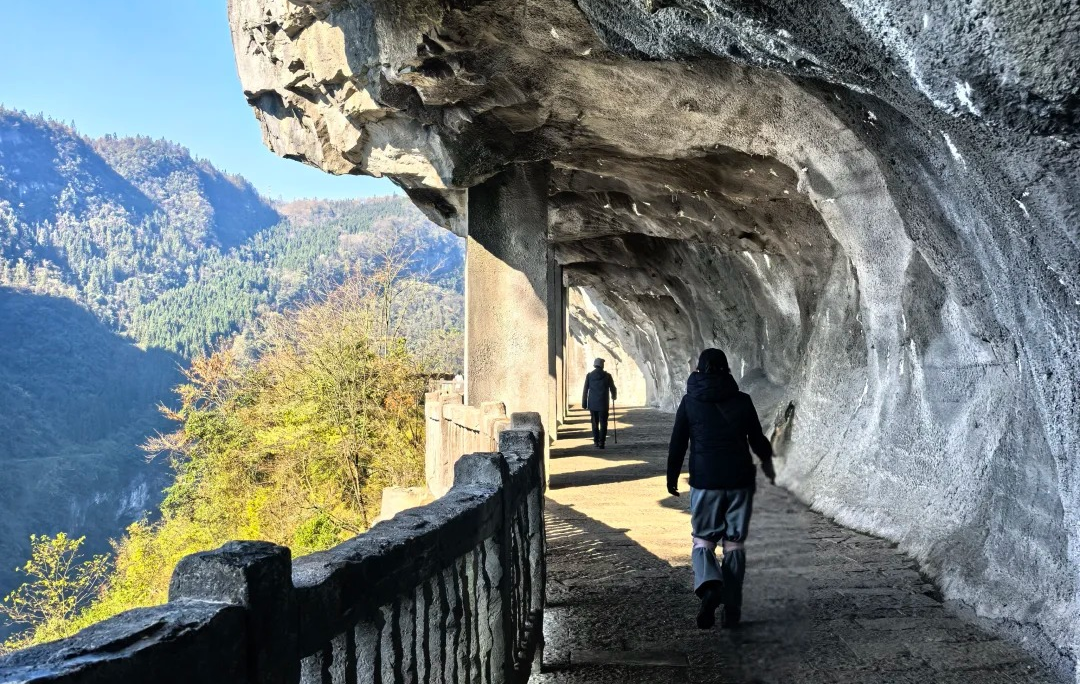
The region encompassing Baiguo Township and Hetao Township—home to the Three Natural Bridges—historically served as one of the clandestine passageways connecting southeastern Chongqing with northern Guizhou. Although the Yangshui River Gorge is exceptionally rugged, the naturally formed "tunnel" passage within the Natural Bridges complex once served as a vital shortcut for merchant caravans navigating the mountains. Today, along the scenic area's walking trails, visitors can still spot traces of the ancient post road—sections that were painstakingly carved into the cliff face by human hands. Informational plaques placed along the route recount the history of this ancient thoroughfare, helping visitors understand the cultural exchanges and civilizations that once flourished in this magical land.

Core Experience: An Immersive Guide to the "Journey to the Earth's Core"

Furong Ancient Town Furong Ancient Town Furong Ancient Town

Five Must-Do Activities to Unlock the Complete Sinkhole Adventure

1. Stand atop the cliffs and gaze down into the Earth's fissure.

- Location: The glass observation deck located at the scenic area's entrance (requires a separate ticket purchase).

- Experience: Perched at an altitude of 1,200 meters, this cantilevered glass platform allows you to stand on transparent glass and look down hundreds of meters to behold the panoramic view of the sinkholes and the Natural Bridges complex below. The three bridges—Tianlong, Qinglong, and Heilong—appear like three colossal ancient beasts crouching over the fissure in the earth, creating a truly breathtaking and spectacular sight.

- Tip: This activity requires a certain amount of courage; those with a fear of heights may opt for the adjacent standard observation deck instead.

2. Capture a cinematic-style photo worthy of a "Journey to the Earth's Core" adventure.

- Timing: Between 10:00 AM and 11:00 AM, when sunlight streams down from above the gorge, creating the most dramatic and layered lighting effects.

- Locations: The plaza in front of the Tianfu Post Station (to frame yourself alongside the colossal bridge); looking up from beneath the Tianlong Bridge (to capture the overwhelming sense of massive rock formations looming overhead); and at the "Yixian Spring" (Thread-of-Water Spring) beneath the Heilong Bridge (to capture the ethereal beauty of mist and water surrounding your figure).

- Attire: We recommend wearing outdoor-style sportswear or simple, solid-colored clothing to create a striking contrast against the cool-toned rock formations. Sturdy, lightweight hiking shoes are an absolute necessity—not merely an option.

3. Embark on a hiking expedition traversing the "Three Bridges and Two Sinkholes."

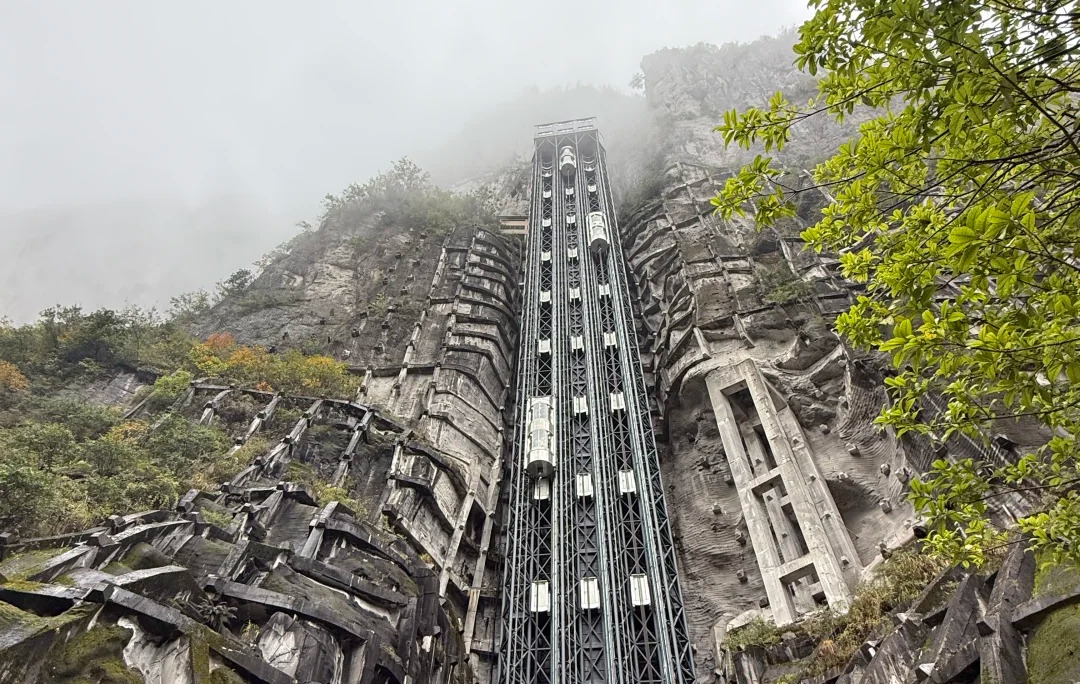
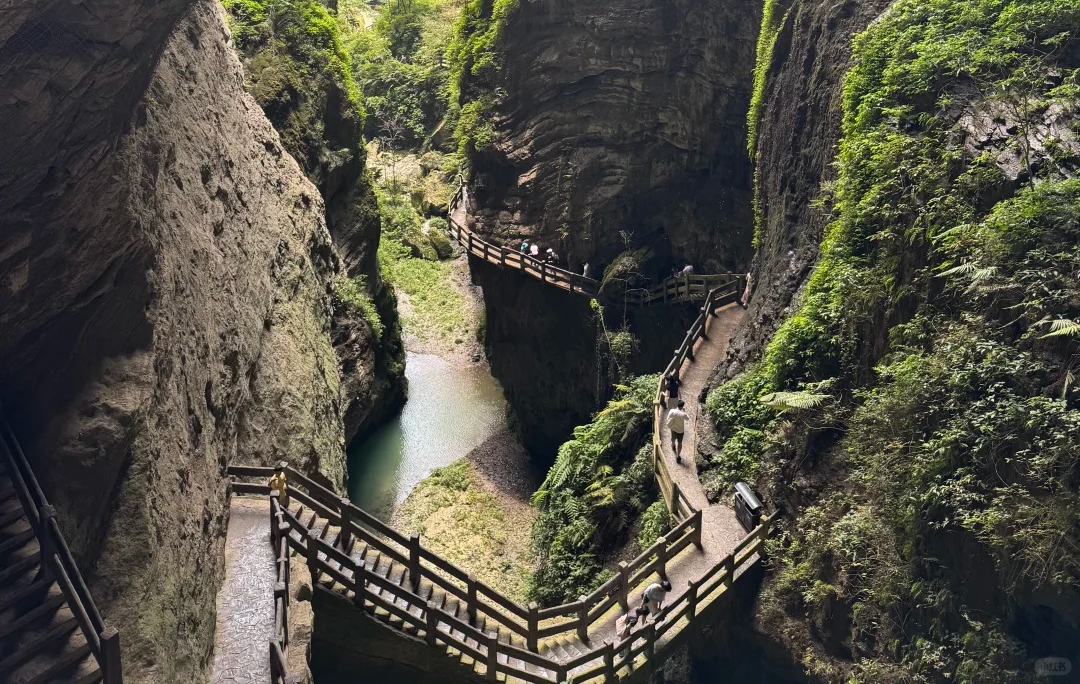
- Route: Begin at the upper entrance of the Tianlong Bridge area, take the vertical elevator straight down to the valley floor (a descent of approximately 80 meters), and then follow the trail to sequentially traverse the Tianlong Bridge → Tianlong Sinkhole → Qinglong Bridge → Shenying Sinkhole → Heilong Bridge. The entire route covers a distance of approximately 3 kilometers and takes about 2 to 2.5 hours to complete on foot. - Experience: This is a top-to-bottom journey through the heart of the earth. The perspective shifts abruptly from a sweeping, macro-level aerial view to a micro-level, upward gaze from the valley floor—a dramatic shift in viewpoint that delivers a completely unique sensory impact. The path along the way is smooth and consists primarily of gentle slopes, making it suitable for visitors of most age groups.

4. Explore Tianfu Ancient Post Station: Touch the Worlds of Cinema and History

- Location: At the bottom of the Tianlong Sinkhole.

- Experience: Step into this ancient post station to view exhibits on the historical postal relay system, and see original props and armor models used during the filming of Curse of the Golden Flower. Within the courtyard stands an ancient well, fabled to have served as the water source for ancient horse caravans.

- Tip: The post station houses an official souvenir shop where you can purchase limited-edition merchandise themed around Transformers and Curse of the Golden Flower.

5. Listen to the Sounds of Life Beneath the Earth

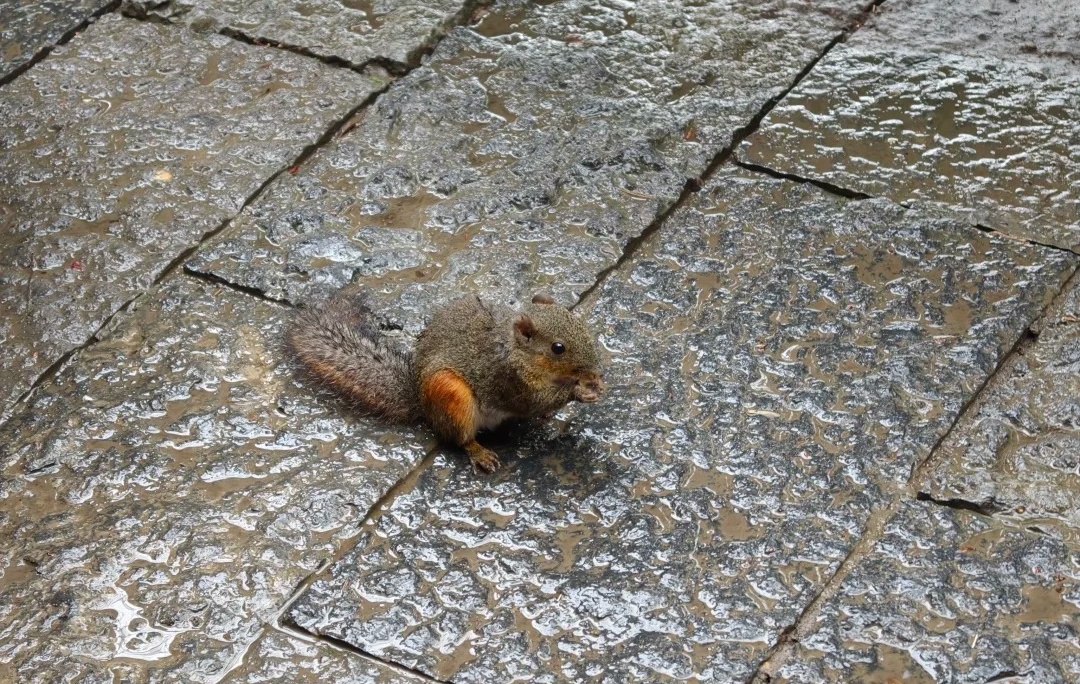
- Canyon Ecology Experience: The area surrounding the Three Natural Bridges boasts lush forest vegetation, where songbirds—such as Hwamei and Silver-eared Mesias—are frequently spotted flitting through the trees. The Yangshui River winds its way along the canyon floor, while groundwater seeping continuously from the rock faces forms clusters of miniature waterfalls during certain seasons. Take a deep breath—the concentration of negative oxygen ions here is exceptionally high, creating a natural "oxygen bar" within this subterranean forest.

Suggested Itineraries

One-Day "Essential Traverse" Tour (Recommended for Most Visitors):

Arrive at the Wulong Xiannv Mountain Town Visitor Center at 9:00 AM → Transfer via the scenic area shuttle bus to the entrance of the Three Natural Bridges (approx. 15 minutes) → Walk to the Glass Viewing Platform to overlook the panoramic scenery (30 minutes) → Take the vertical elevator directly down to the valley floor → Walk through Tianlong Bridge and visit the Tianfu Official Post Station (40 minutes) → Traverse Qinglong Bridge and seek out the filming angles used in Transformers (30 minutes) → Pass through the Shenying Sinkhole to reach Heilong Bridge, and view the "Thread of Spring" waterfall (30 minutes) → Walk or take a sightseeing shuttle to the scenic area exit (involves an uphill walk of approx. 1 km; alternatively, you may choose to take the sightseeing shuttle for 15 RMB) → Conclude the tour around 12:30 PM; enjoy lunch in Xiannv Mountain Town, then spend the afternoon visiting the Longshuixia Gap or returning to Chongqing.

IntoTravelChina Advantage: We can book the most suitable accommodation for you, coordinate the seamless transition between all activities, and provide detailed hiking route maps and safety guidelines.

> Professional Guides: IntoTravelChina offers fully customized itineraries, including a dedicated private guide, transportation, and activity arrangements, ensuring a worry-free and in-depth travel experience. > Inquire Now for Customization

Two-Day "In-Depth Exploration" Tour (Ideal for Photography Enthusiasts and Outdoor Lovers):

Day 1: Depart from Chongqing in the morning for Wulong Xiannv Mountain Town (approx. 1–1.5 hours via High-Speed Rail) and check into your hotel. At lunchtime, savor local specialty farmhouse cuisine—we recommend Wulong's Wanwan Mutton (Mutton in Small Bowls) and Wujiang Tofu Fish. In the afternoon, head to the Three Natural Bridges Scenic Area; follow the "One-Day Essential Traverse" route, but proceed at a more leisurely pace, allowing ample time at each viewing platform for photography. In the evening, return to Xiannv Mountain Town to attend the grand outdoor landscape performance, Impression Wulong (a seasonal show themed around the traditional Chuanjiang boatman chants, featuring truly spectacular scenes). Day 2: In the early morning, head to the Longshuixia Fissure Gorge (approximately a 15-minute drive from Fairy Mountain Town). This deep, subterranean rift valley offers a profound and secluded experience—a stark contrast to the grandeur of the Three Natural Bridges. Spend the morning exploring the depths of the gorge (approx. 2 hours), where you will encounter cascading waterfalls and deep pools along the way. Return to Fairy Mountain Town for lunch at noon. In the afternoon, you have the option to visit Fairy Mountain National Forest Park—an alpine grassland situated at an altitude of 1,900 meters, renowned as the "Switzerland of the East." Here, coniferous forests alternate with lush meadows, presenting a distinct form of natural beauty entirely different from that of the bridge and gorge complex. In the evening, take a vehicle back to the main urban area of Chongqing.

> Professional Guides: IntoTravelChina offers fully customized itineraries, including exclusive guides, transportation, and activity arrangements, ensuring a worry-free and in-depth travel experience. >> [Request a customized itinerary new]

Comprehensive Travel Guide: Transportation, Accommodation, and Seasons

Furong Ancient Town Furong Ancient Town Furong Ancient Town

How to Get There: A Seamless Connection Guide

The Three Natural Bridges scenic area is located in Wulong District. Visitors must first arrive at the Wulong Fairy Mountain Town Visitor Center, where they will transfer to a designated scenic area shuttle bus to enter the Three Natural Bridges site.

- Departing from Chongqing (the most popular option): High-speed or EMU trains are highly recommended. Travel Tip: We suggest departing from Chongqing North Railway Station to Wulong Station; the journey takes approximately 1 to 1.5 hours, with ticket prices ranging from 24.5 to 80 RMB. There are over 20 trains available daily. Upon exiting Wulong Station, transfer to the blue scenic area shuttle bus, which travels directly to the Fairy Mountain Town Visitor Center (approx. 40-minute ride). Alternatively, you can drive directly via the expressway (approx. 2.5 to 3 hours); however, as the mountain roads are winding, this option is recommended only for experienced drivers. A large parking lot is available at the Fairy Mountain Town Visitor Center. From locations such as Jiefangbei or Longtousi, the drive to Fairy Mountain Town takes approximately 2.5 to 3 hours.

- Departing from Fairy Mountain Town: The designated scenic area shuttle bus is recommended. From the Visitor Center, transfer to the internal shuttle bus that takes you directly to the entrance of the Three Natural Bridges scenic area (approx. 15-minute ride).

Travel Tip: Private vehicles must be parked at the Fairy Mountain Town Visitor Center parking lot and are not permitted to drive directly into the scenic area itself. The Glass Viewing Platform is located approximately a 5-minute walk from the scenic area entrance.

- Travel Times and Transport: Fairy Mountain National Forest Park (approx. 30-minute drive); Longshuixia Fissure Gorge (approx. 10-minute drive); Furong Cave (approx. 40-minute drive); Chongqing City Center (approx. 2.5–3-hour drive).

Travel Tip: These attractions are ideal for combining into a multi-stop itinerary.

Important Return Travel Note: The last high-speed train departing from Wulong Station for Chongqing North Station typically leaves around 9:00 PM (21:00). We recommend allowing at least 1.5 hours after finishing your sightseeing to travel from the scenic area back to Wulong Station.

Best Time to Visit

The Three Natural Bridges (Tiansheng Sanqiao) can be visited in any season, each offering its own unique charm; however, the best times to visit are spring and autumn.

- Spring & Autumn (Peak Seasons: March–May, September–November): The climate is pleasant, and the skies are exceptionally clear. The interplay of light and shadow within the gorge is at its most dynamic, making this an excellent time for photography. In spring, wild azaleas and Dove Trees bloom in succession along the gorge walls; in autumn, the vegetation on the rock faces transforms into a vibrant tapestry of shifting colors.

- Summer (Cooling-off Season: June–August): Temperatures at the bottom of the gorge are typically 8–10°C lower than in downtown Chongqing, offering a refreshing escape—like a natural air-conditioned room. Rainfall is abundant during this period, causing the waterfalls cascading down the rock faces and the seeping springs to flow at their fullest volume; the gorge becomes shrouded in mist, creating an ethereal, fairyland-like atmosphere. However, visitors should come prepared with rain gear and exercise caution regarding slippery surfaces.

- Winter (Tranquil Season: December–February): With fewer visitors, the gorge appears even more majestic and solemn. On the rare occasions when snow falls, the pristine white snow creates a stunning contrast against the gray rock walls. During this season, the ski resort at Fairy Mountain is also open, allowing for a combined itinerary. Note that some outdoor trails may become icy, so visitors should remain vigilant regarding safety.

Accommodation Options

- Fairy Mountain Town (Recommended Choice: Most Convenient):

1. Fairy Mountain Resort Hotel Cluster (4-Star to 5-Star):

Experience: The town offers a comprehensive range of accommodation options, from charming boutique guesthouses to high-end luxury resorts, complete with full amenities such as dining establishments and supermarkets. Hotels located within walking distance of the Visitor Center are particularly ideal for those wishing to be among the very first visitors to enter the scenic area in the morning.

Suitable For: Most travelers, particularly those who prioritize convenience and comfort. 2. Xiannvshan Town Boutique Guesthouses:

Experience: Diverse architectural styles; some guesthouses feature scenic balconies and offer excellent value for money. Provides an opportunity to immerse yourself in the local rural atmosphere.

Best For: Travelers with a moderate budget and families traveling together.

- Accommodation within the Xiannvshan Scenic Area (A Unique Experience):

Resort Hotels inside Xiannvshan National Forest Park:

Experience: Situated at a higher elevation, these properties offer extremely cool temperatures in the summer and convenient access to skiing in the winter. In the early morning, you can enjoy moments of absolute solitude amidst the alpine meadows and coniferous forests.

Cons: Located approximately a 30-minute drive from the Three Natural Bridges (Tiansheng Sanqiao) site, and dining options in the immediate vicinity are limited.

Best For: Travelers seeking to completely unwind in nature and experience the unique allure of alpine grasslands.

- Accommodation in Wulong City Center (An Economical Choice):

Affordable pricing with an abundance of authentic local dining options. However, a daily round-trip commute of approximately 40 minutes is required to reach Xiannvshan Town. Suitable for budget-conscious travelers or those with modest requirements regarding accommodation amenities.

IntoTravelChina Accommodation Booking Tips:

We recommend booking your accommodation at least 2 to 4 weeks in advance—especially during peak seasons such as the May Day holiday, National Day, and the summer vacation period. By booking through us, you gain access to real-time room availability and the ability to bundle your accommodation, attraction tickets, and transportation into a single itinerary. This often results in package discounts and ensures a seamless, hassle-free travel experience. Simply share your budget and preferences with us, and we will match you with the perfect place to stay. >> [Click to contact an IntoTravelChina travel consultant]

Extended Journeys: A Loop Route Connecting the Highlights of Southeast Chongqing

Furong Ancient Town

The Three Natural Bridges is by no means the end of your journey, but rather the perfect starting point for exploring the spectacular region of Southeast Chongqing.

- Classic 2-Day Wulong Loop: Xiannvshan Town (Three Natural Bridges) → Longshuixia Gorge (The "Earth Crack") → Xiannvshan National Forest Park (The "Switzerland of the East") → Furong Cave (The "Underground Art Palace"). This itinerary offers a condensed yet comprehensive journey, allowing you to admire the diverse forms of karst topography found in this region. 

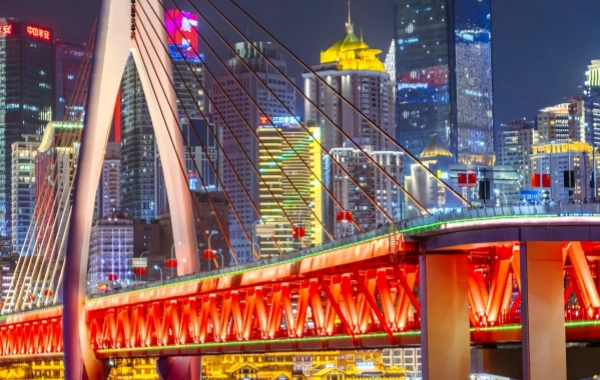
- 3-Day Southeast Chongqing Highlights Tour: Chongqing City Center (Hongyadong, Liziba Light Rail Station) → Wulong (Three Natural Bridges + Fairy Mountain) → Pengshui (Wujiang River Gallery Cruise) → Qianjiang (Zhuoshui Ancient Town). From an "8D Magic City" to a World Natural Heritage site, and finally to the hundred-mile-long Wujiang River Gallery—this is a diverse journey spanning the realms of modern urban life and pristine nature.

Partner with IntoTravelChina to Embark on Your Exclusive "Journey to the Center of the Earth"

Furong Ancient Town

The story of the Three Natural Bridges is one of the Earth's breathing over billions of years, the interplay of light and shadow, and the subtle yet pivotal role of human civilization within nature's grand narrative. IntoTravelChina specializes in crafting in-depth, personalized, and hassle-free travel experiences across China. Our travel experts can assist you with:

- Tailored Itineraries: Designing the perfect route—including the Three Natural Bridges and surrounding attractions—based on your specific interests and available time.

- One-Stop Service: Handling all arrangements, including entrance tickets, unique accommodations, transportation transfers, local guides, and activity bookings.

- Exclusive Experiences: Arranging guided tours during prime photography hours, outdoor hiking expeditions, VIP fast-track access, and more.

Let your visit to the Three Natural Bridges be more than just sightseeing; make it an immersive journey through a geological wonderland.

> Start Planning Your Journey Now

> We invite you to contact our professional travel consultants; we will provide you with a personalized itinerary proposal and price quote within 24 hours. >> [Click to contact an IntoTravelChina travel consultant]
What Our Clients Say?

Based on 10,000+ traveler reviews

...
Daniel Dorothea
Canada
Reviewed on April 29,2025
Shopping on Nanjing Road in Shanghai was just amazing! It's truly the "First Commercial Street of China", where tradition and modernity blend perfectly. You can find awesome souvenirs and experience the trendy vibes in cool stores. The neon lights at night are just spectacular, shining bright like Times Square in New York. The food here is incredible too. I had a feast for my taste buds. Shanghai, I'll definitely be back!
Destination(s): Shanghai
Date of Experience: May 08,2024
...
...
Elvis Eva
Canada
Reviewed on June 20,2025
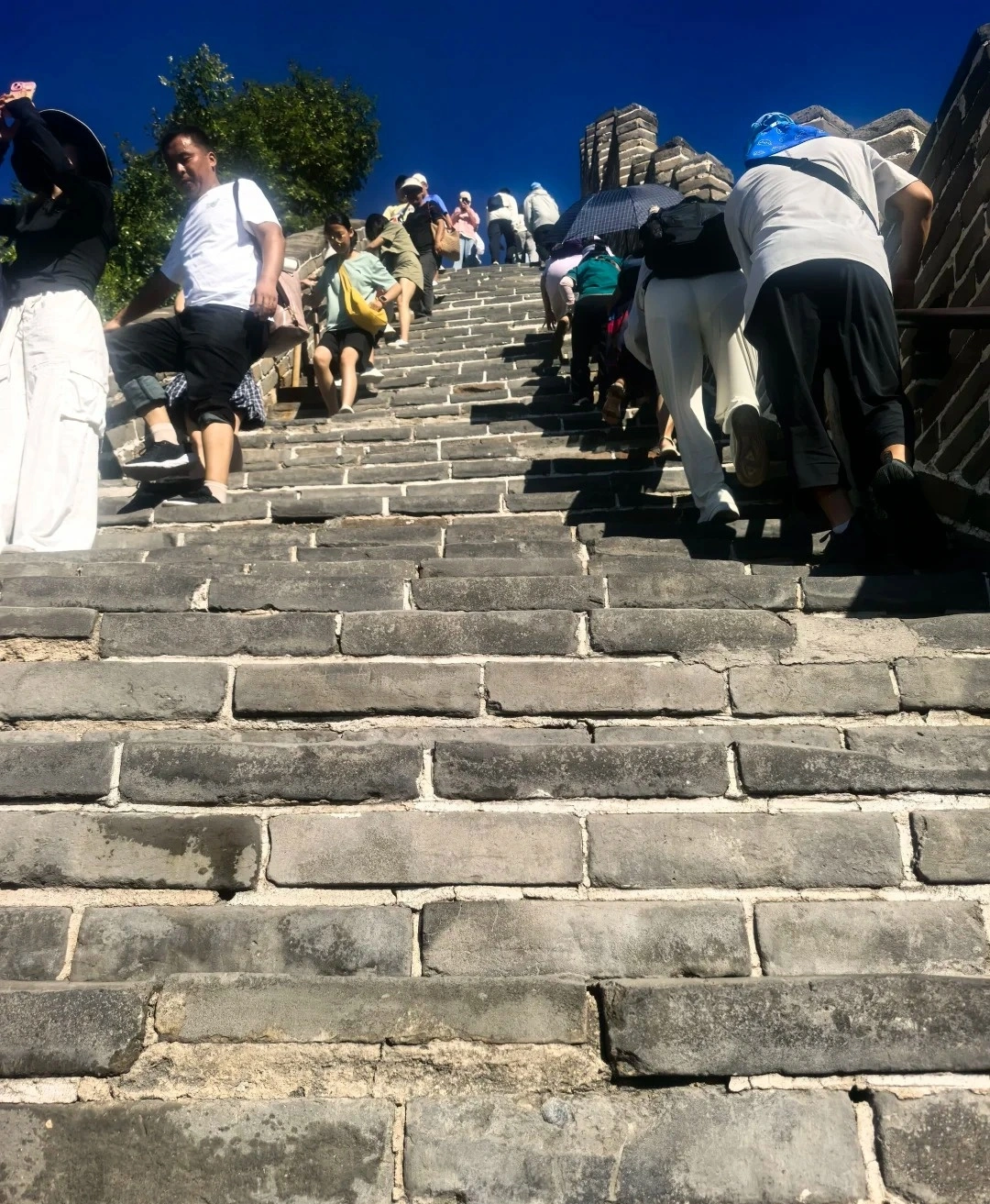
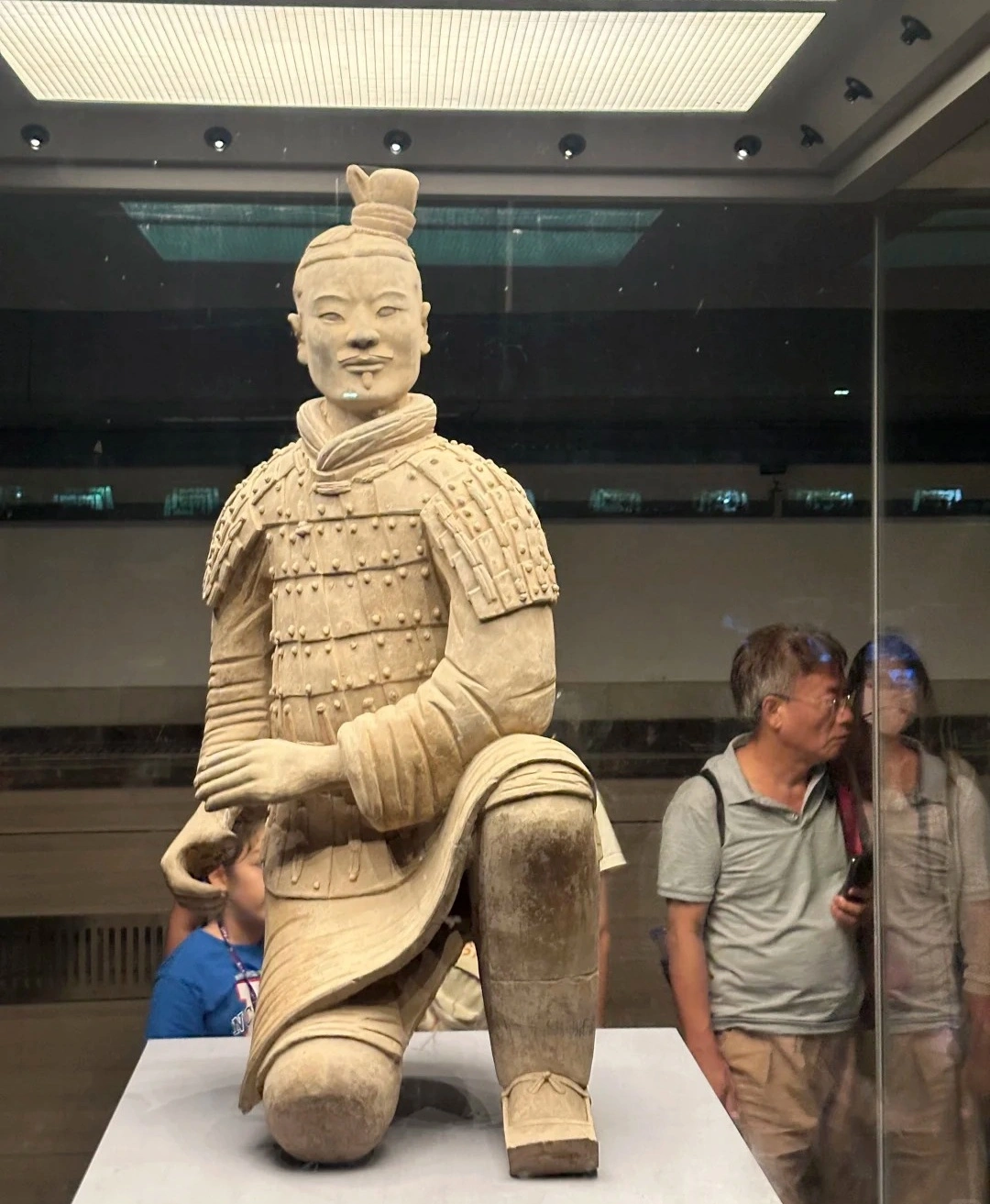
As a solo traveler from Canada, I was nervous about navigating China alone—but this 11-day tour was PERFECT! From hiking the Great Wall at sunrise (Day 3) to gasping at the Terracotta Army (Day 5), every day delivered ‘pinch-me’ moments. The real showstopper? Zhangjiajie’s Avatar Mountains (Day 7)! Our guide made the stone pillars come alive with stories. Massive thanks for handling all logistics—bullet train tickets, entry passes, car! And the 4-star hotels surprised me.
Destination(s): Beijing Xian Zhangjiajie Shanghai
Date of Experience: June 02,2025
... ... ...
...
Simon
America
Reviewed on May 29,2025
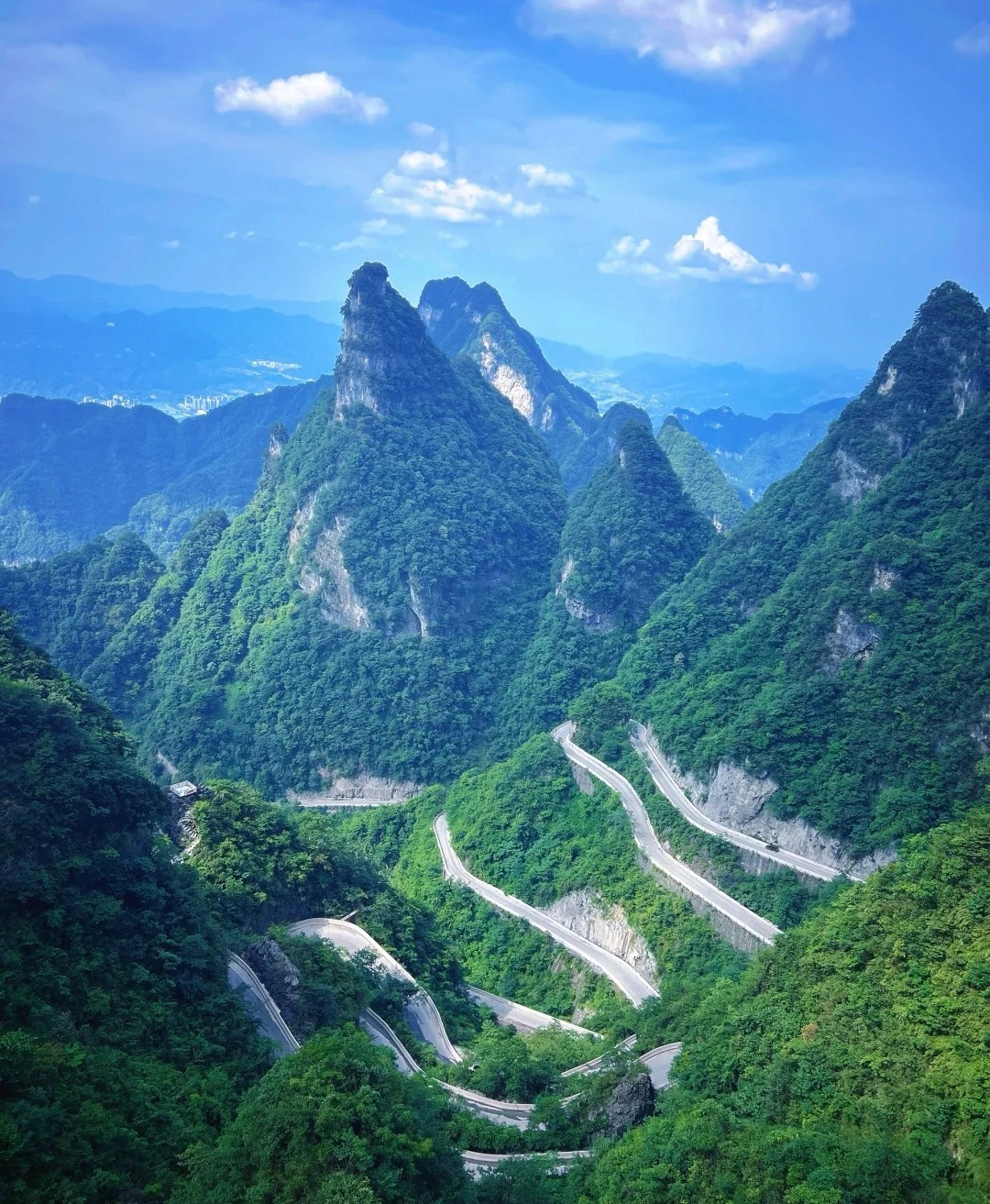
Our 2-day Zhangjiajie tour was beyond spectacular! As someone who’s visited Beijing and Shanghai for work, this trip revealed China’s wild, magical heart. Day 1 in Zhangjiajie National Forest Park felt like stepping onto Pandora—I’m a huge Avatar fan, and Yuanjiajie’s floating peaks left me breathless. The misty pillars and lush valleys like pure movie magic! Then came Fenghuang Ancient Town, we eat dinner beside the thundering waterfall. It seems Unreal! The night views of stilt houses glowing over the river were straight from a fairy tale. For fellow Avatar lovers and adventure seekers: Don’t miss this bucket-list experience! 10/10 would return. A Well-Traveled Film Buff, May 2025
Destination(s): Zhangjiajie
Date of Experience: May 08,2025
... ...

Ask a Question

Question Summary (100 characters)
Details (optional) (2,000 characters)
Name
Country
Phone
Email