Nature's Creation: An Ecological Miracle of Intertwined Sand and Water
The natural scenery of Shahu is a grand symphony composed of sand, water, reeds, birds, fish, and mountains. Here, these seven elements converge to form a vivid, ever-shifting tableau—a dynamic masterpiece of nature distinguished by its rich layers and boundless variety.
A Golden Sea of Sand: A Poetic Extension of the Vast Desert
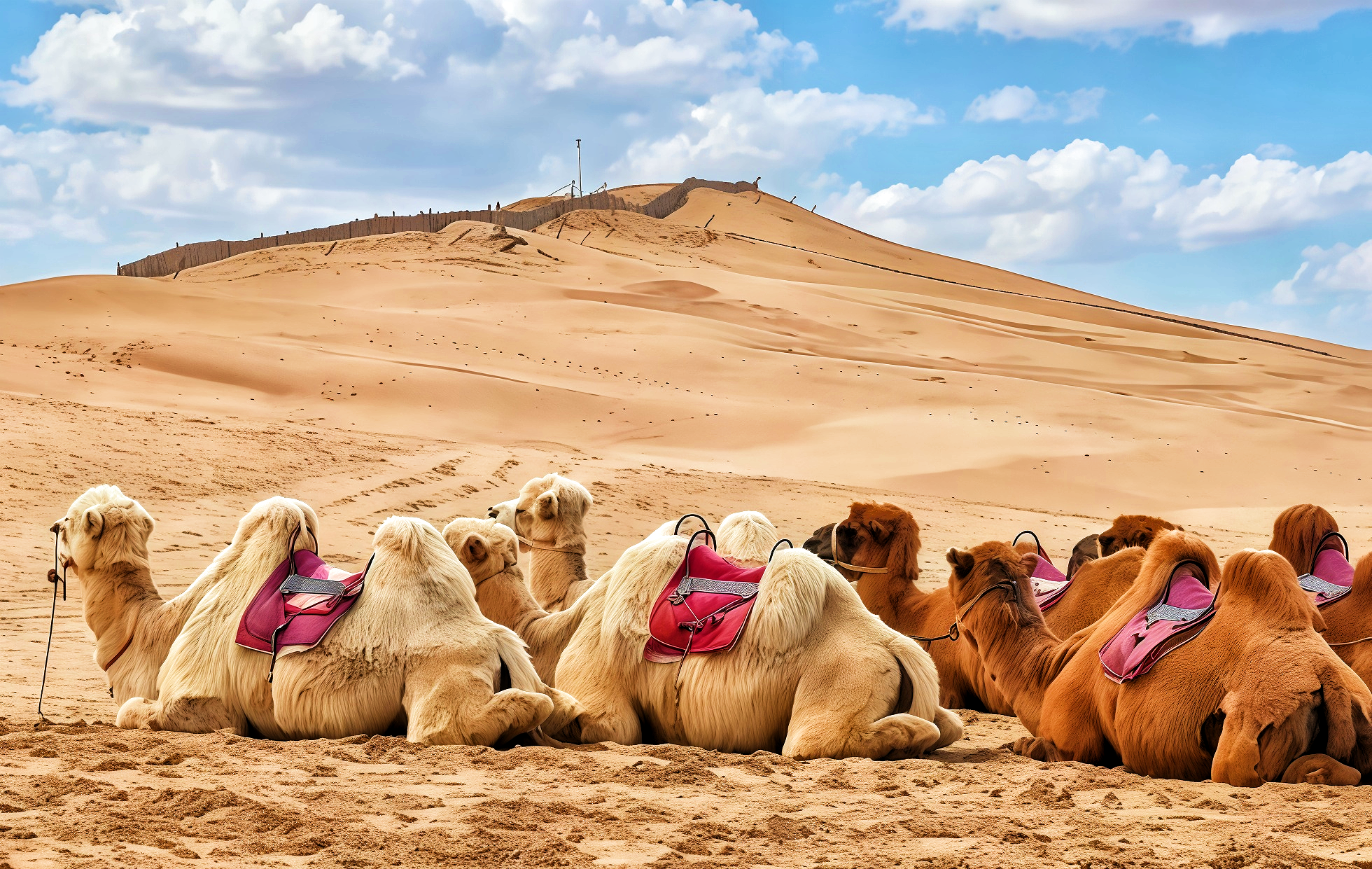
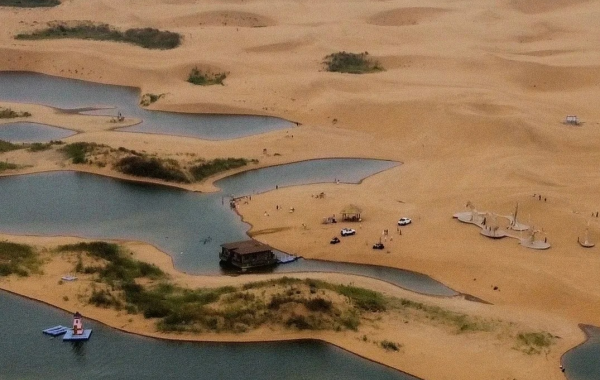
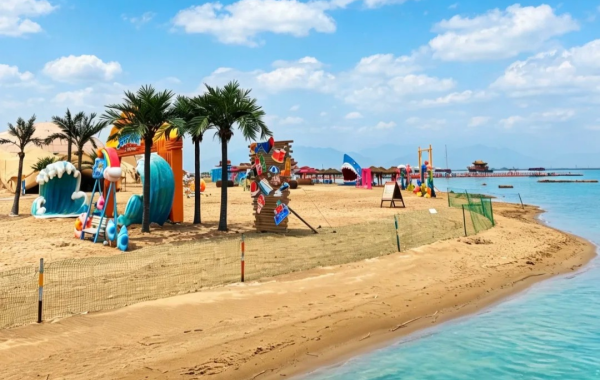
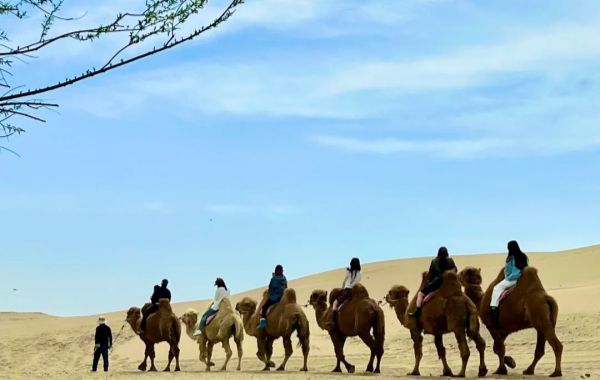
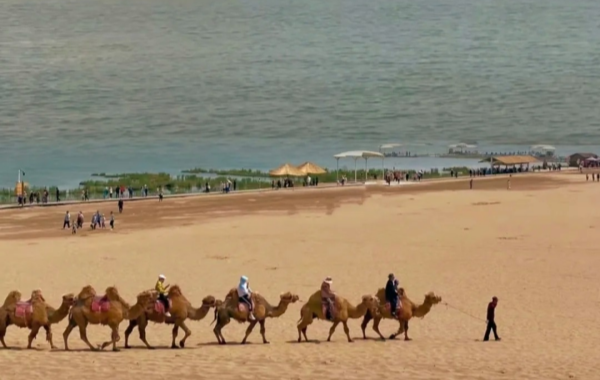
The desert terrain at Shahu Lake spans an impressive 22.52 square kilometers, featuring undulating golden dunes that stretch endlessly toward the horizon. The sand here is fine and soft, shimmering with a metallic luster under the sunlight. Most astonishing of all is that, despite being far removed from the main body of the Tengger Desert, these dunes have remained steadfast for millennia—unmoved by the winds and undiminished by the tread of countless visitors—standing in eternal companionship with the lake waters. Standing atop the highest dune and gazing into the distance, one beholds a boundless golden sea of sand on one side, and on the other, a vast expanse of shimmering azure water; these two starkly contrasting landscapes converge at this very moment to create a visually stunning spectacle. At dawn and dusk, the soft light bathes the dunes in hues of orange and red; as camel caravans slowly traverse the landscape—their bells gently chiming—one feels transported back in time to the ancient Silk Road of a thousand years ago.
Vast Azure Waters: A "Jiangnan" Water Village Beyond the Great Wall
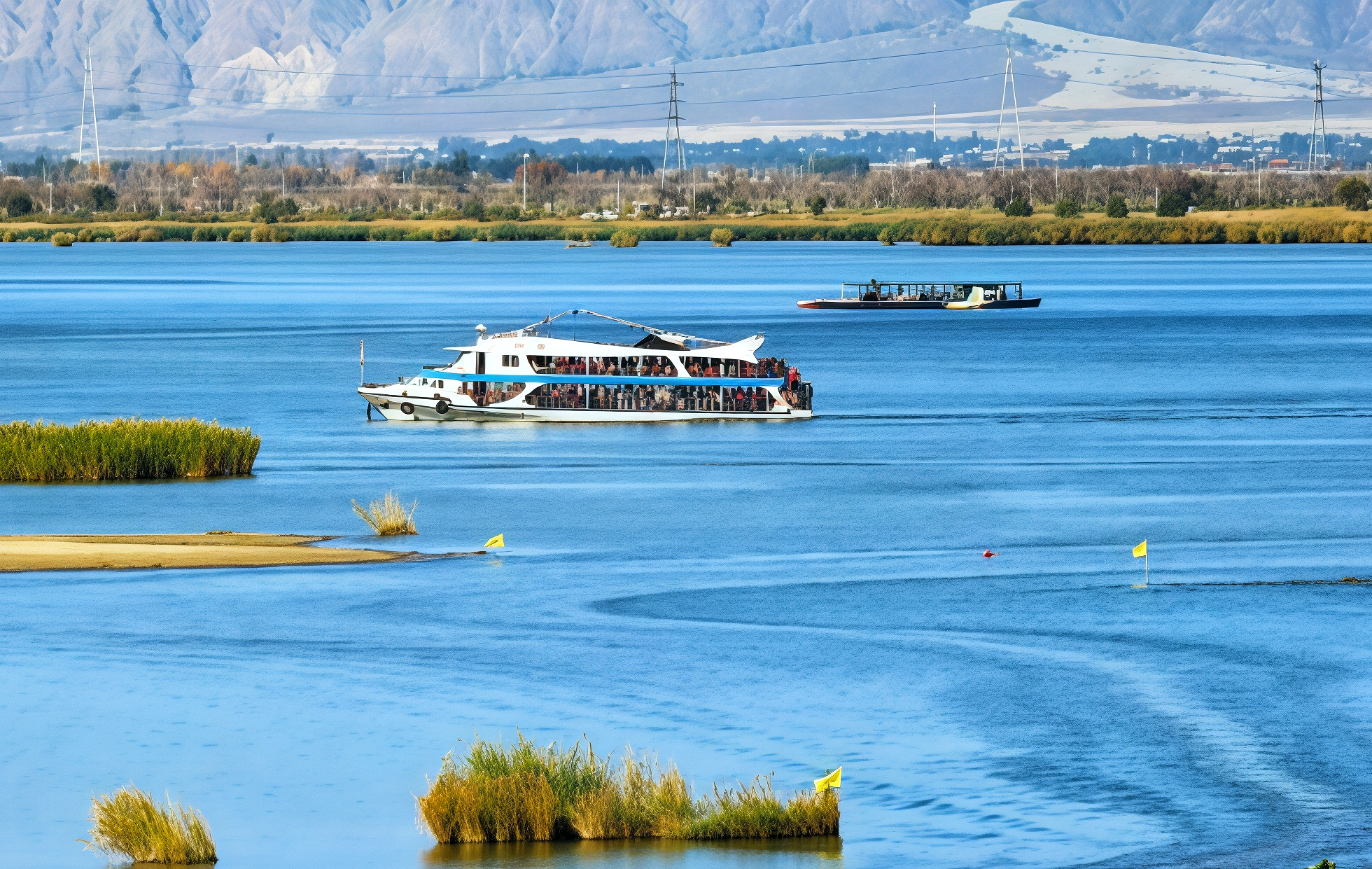
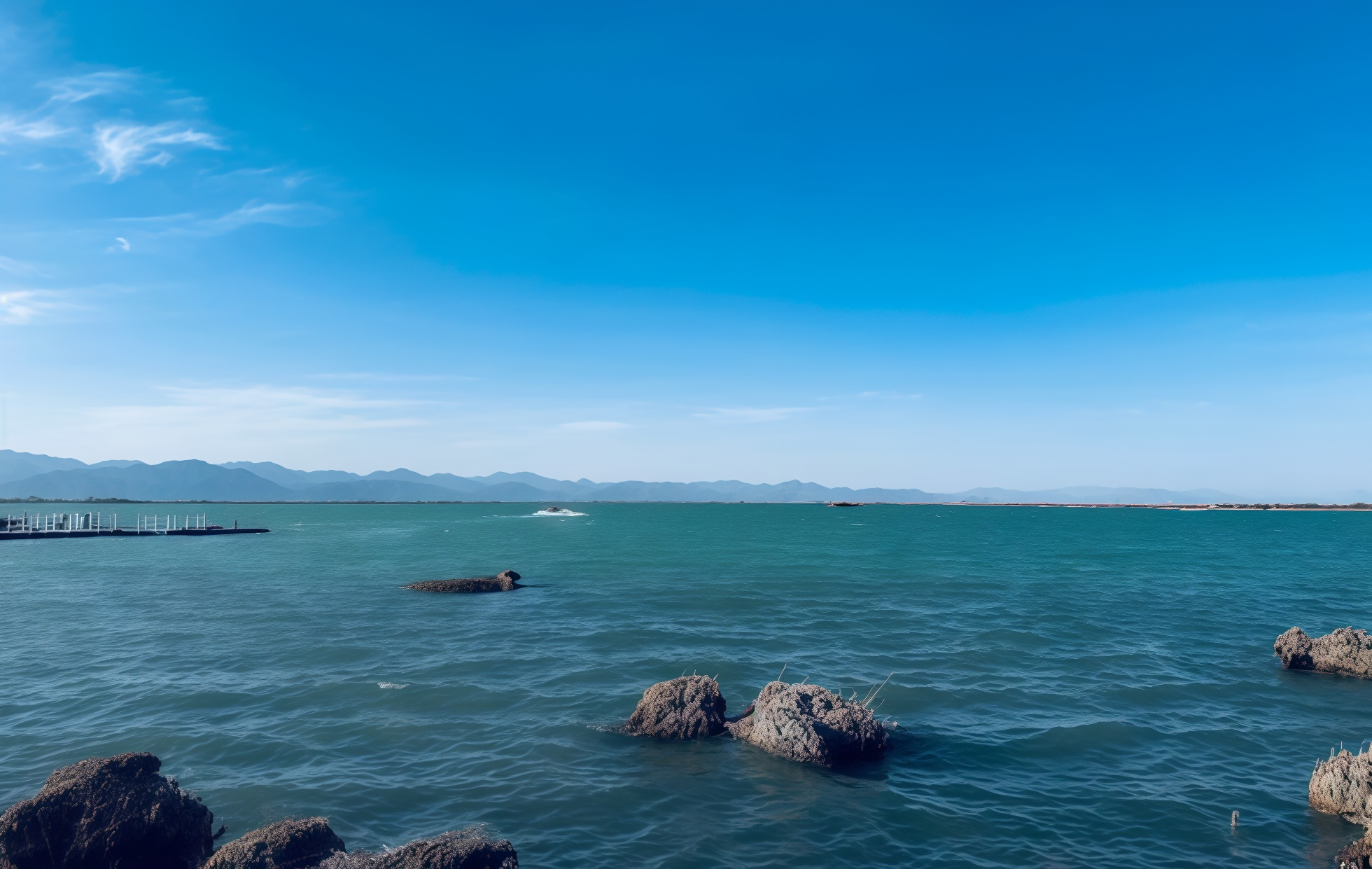
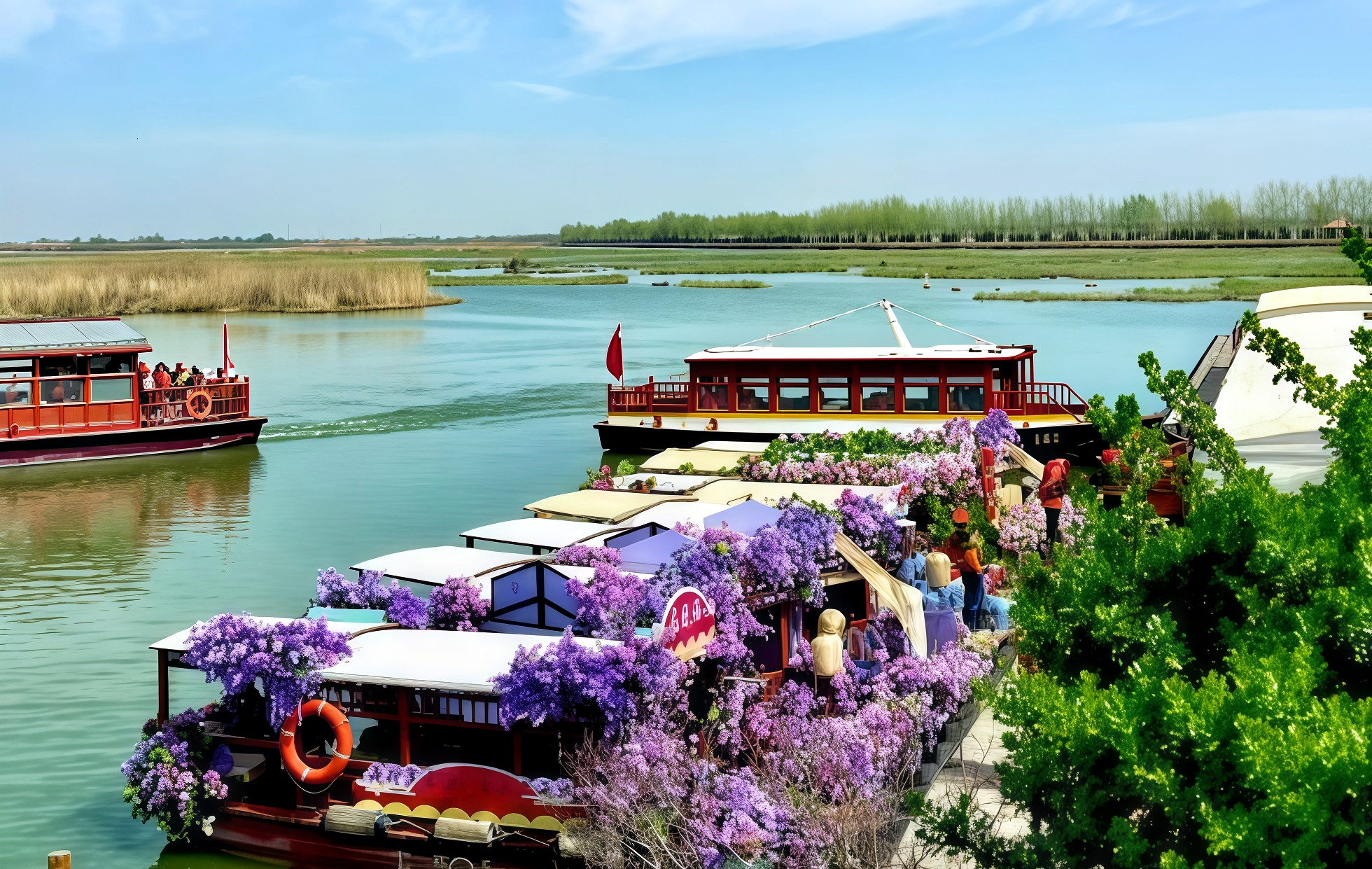
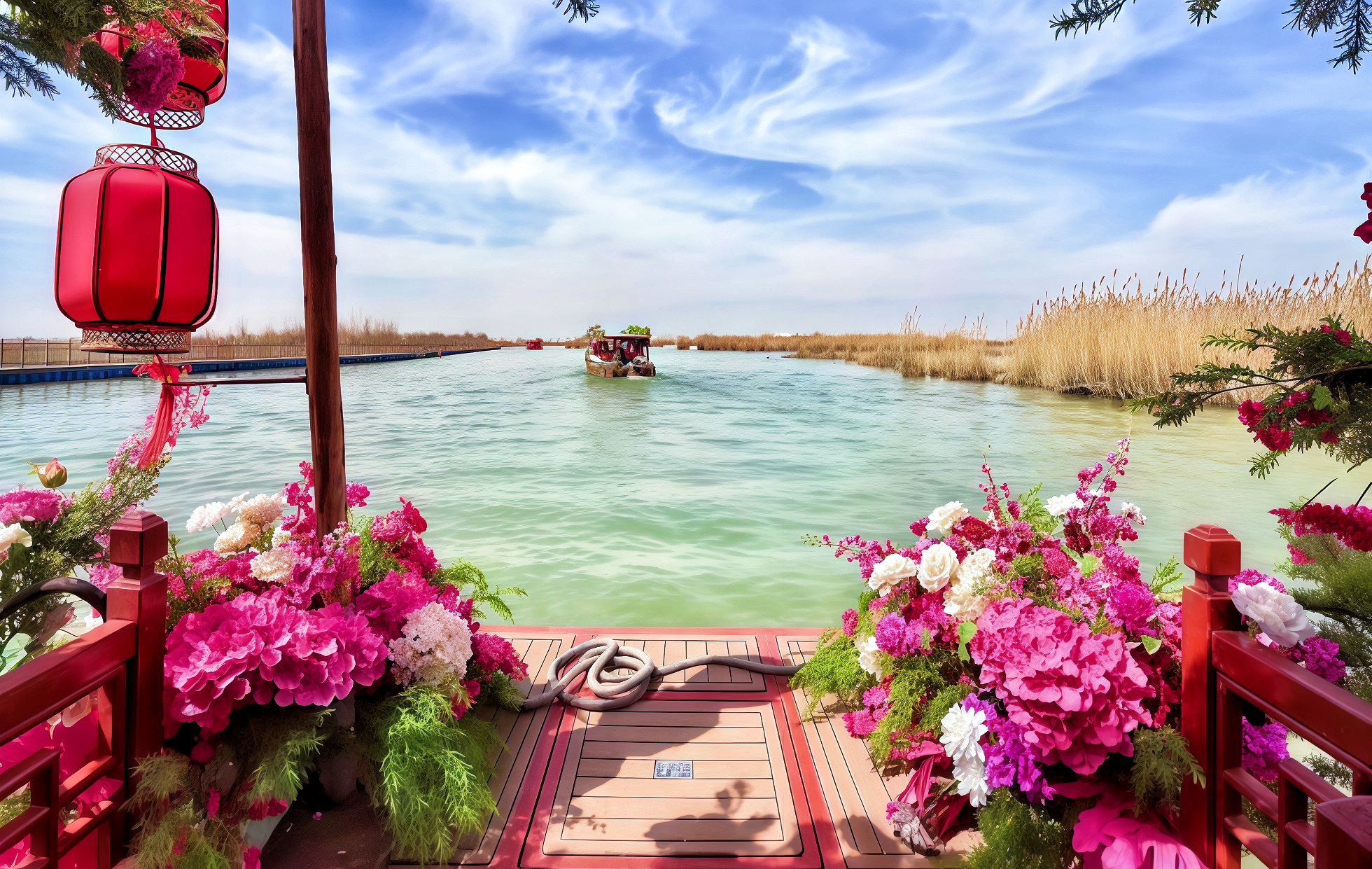
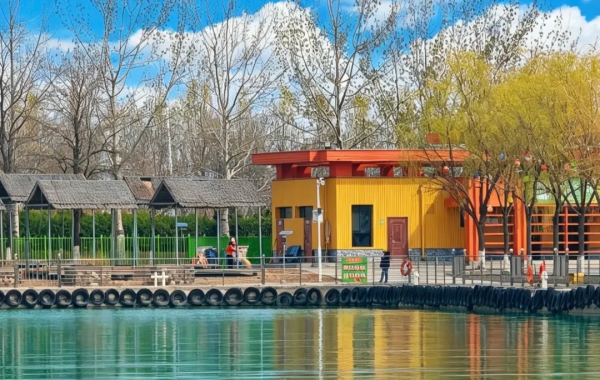
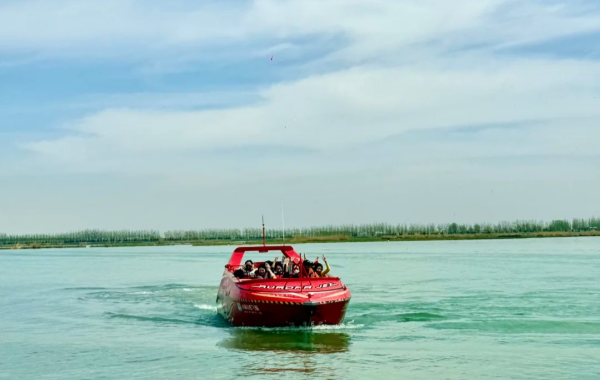
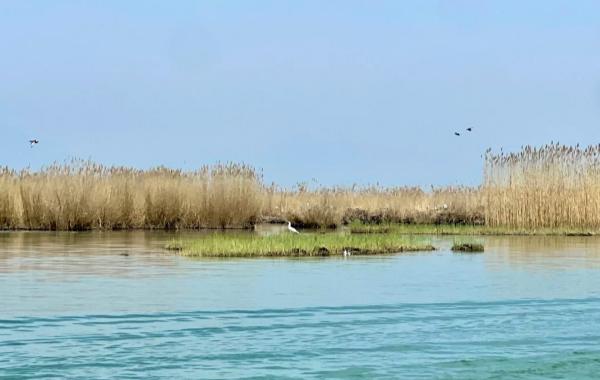
Covering an area of 45 square kilometers, the water body serves as the most captivating backdrop of Shahu Lake. The water is crystal clear—averaging 2.2 meters in depth—and, set against the majestic backdrop of the Helan Mountains, it resembles a colossal, gleaming mirror. As you drift gently toward the center of the lake aboard a painted pleasure boat—amidst rippling azure waves, a gentle breeze caressing your face, and distant mountains appearing as dark, misty silhouettes—you might momentarily feel as though you have been transported to the picturesque water villages of Jiangnan. The lake’s colors shift with the changing light of the sky: on sunny days, it shines a sapphire blue like a precious gem; on overcast or rainy days, it takes on a misty, ethereal quality akin to an ink-wash painting; and at dusk, it is bathed in the golden-red glow of the setting sun. The lake abounds with fish, most notably the renowned "Shahu Big Fish Head"—hailed as a natural source of "brain gold" and celebrated as a delicacy worthy of state banquets. Choose a lakeside restaurant, order a dish of steamed fish head, and savor not only its exquisite freshness but also the bountiful gifts bestowed by these rich waters.
A Labyrinth of Emerald Reeds: A Swaying Forest on the Water
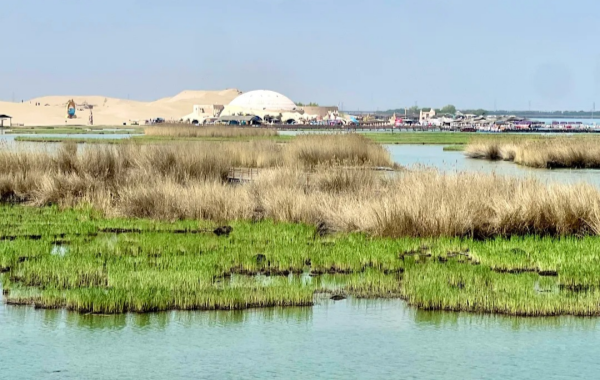
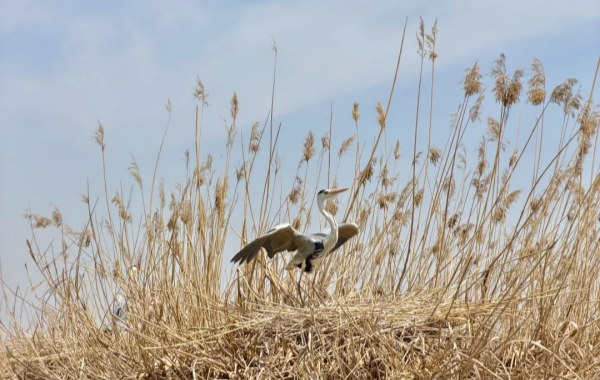
The reed marshes at Shahu Lake occupy one-third of the lake's surface area, constituting one of the scenic area's most iconic features. Rising tall and dense in clusters and clumps directly from the water, the reeds form a lush, verdant landscape that resembles a forest floating upon the lake. As boats navigate the narrow waterways winding through the reeds, it feels as though one has stepped into a natural green labyrinth; dappled with light and shadow, with the reeds swaying gently in the breeze, every snapshot here looks like a masterpiece. In spring and summer, the reeds are lush and verdant, brimming with vibrant vitality; come autumn, they turn a golden hue, shimmering against the backdrop of blue skies and clear waters to create a breathtaking autumnal tableau. Even in winter, though withered, they reveal a unique, stark beauty amidst the ice and snow. Hidden within these reed beds lie countless nests, serving as an ideal sanctuary for migratory birds to breed and thrive.
A Paradise for Migratory Birds: An Ecological Tapestry of Soaring Wings
Shahu Lake serves as a vital corridor and breeding ground along the Western and East Asia–Australasia migratory flyways. Home to over 200 bird species—spanning 17 orders and 44 families—the site hosts a total population exceeding two million individuals. Among them are rare and precious species designated as Class I National Protected Birds, including the Great Bustard, Black Stork, Scaly-sided Merganser, and White-tailed Sea Eagle. In recent years, Shahu has steadfastly advanced its ecological restoration efforts; consequently, the number of bird species recorded has risen from 178 in 2011 to 216 today. By "voting with their feet"—returning to this site in ever-greater numbers—these migratory birds offer the most compelling proof of Shahu’s continuously improving ecological health.
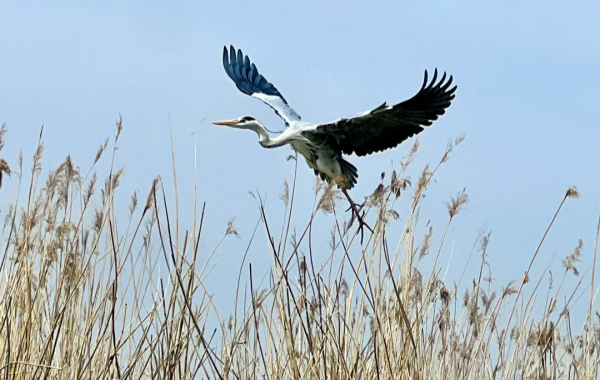
From March to June each year, the region enters the peak season for bird migration, as tens of thousands of mute swans, ruddy shelducks, grey herons, and Eurasian spoonbills stop here to rest, forage, and breed. At dawn and dusk, flocks of waterfowl take flight, circling and soaring above the lake's surface to form a flowing "wave of birds"—a truly spectacular sight. The scenic area features dedicated bird-watching towers and a "Bird Paradise" (Bird Island), allowing visitors to observe the graceful forms of these "spirits of the sky" at close range. Shahu hosts an annual International Bird-watching Festival and was once hailed by CNN as "China's Premier Bird-watching Destination," making it an unmissable paradise for both ornithology enthusiasts and avid photographers alike. Distant Peaks Like Painted Brows: The Eternal Vigil of the Helan Mountains
Sha Lake lies to the west of the majestic Helan Mountains—a range stretching over 200 kilometers from north to south. Acting as a natural barrier, this mountain range shields Sha Lake from the encroaching winds and sands of the Tengger Desert. In the Mongolian language, "Helan" signifies a "blue-grey steed"; indeed, the mountains reveal a rich tapestry of textures and layers amidst the shifting light of dawn and dusk—dyed a golden-purple hue by the rising sun in the morning, and transforming into a deep, profound silhouette as twilight falls. This unique trinity of mountains, sand, and water forms the quintessential panoramic vista of Sha Lake—a classic subject captured time and again through the lenses of photographers.
Human Ingenuity—Creative Imprints in the Desert
While the cultural landscapes of Sha Lake may not possess the deep, ancient resonance found in places like Wangxian Valley, they nonetheless infuse this natural wonderland with a distinct human warmth through their unique creativity and diverse range of experiences.
International Sand Sculpture Park: An Artistic Realm Within the Sand
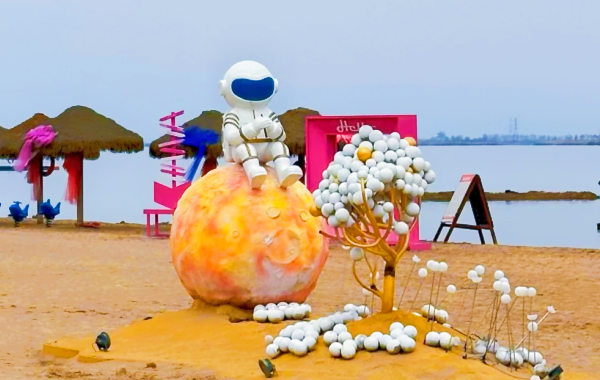
Located within the desert zone, the International Sand Sculpture Park stands as one of Sha Lake’s most iconic cultural attractions. Every year, sand sculptors from across the globe gather here, utilizing the fine sands of Sha Lake as their medium to craft a diverse array of lifelike sand sculptures. From mythological legends to historical tales, from the animal kingdom to modern landmarks, each sand sculpture is a transient work of art—fading away with the changing seasons, only to be reimagined and recreated anew in the coming year. Visitors can not only marvel at these breathtaking sand sculptures but also try their own hand at the art of sand sculpting in designated interactive zones.
Ningxia Wetland Museum: A Dialogue Between Knowledge and Nature
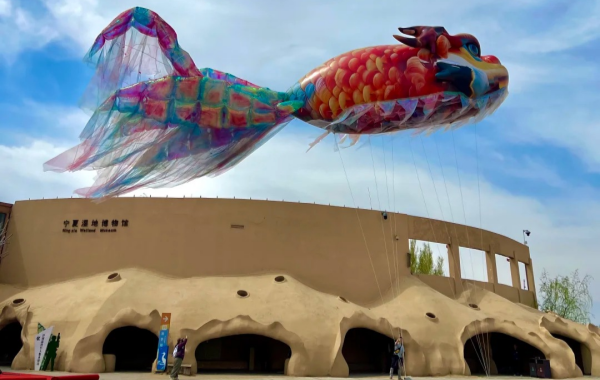
Situated on the lakeshore, the Ningxia Wetland Museum is a modern exhibition hall dedicated to promoting wetland conservation awareness and showcasing local avian diversity. Through the innovative use of multimedia technologies—including sound, light, and digital displays—the museum vividly unveils the mysteries of the Sha Lake wetland ecosystem, as well as the rich variety of birds, fish, and plant life that call this place home. For families with children and nature enthusiasts alike, this serves as an educational sanctuary where learning meets leisure—offering the opportunity to first gain knowledge through the exhibits, and then venture out for a firsthand exploration of the site, thereby enriching the travel experience with deeper insight.
Chairman Mao Badge Museum: A Red Memory
Located at Nanshatan, the Chairman Mao Badge Museum showcases a curated collection of 200,000 exquisite Mao Zedong badges, meticulously preserved by collector Yang Weifu. The collection encompasses over 30 different materials—including gold, silver, copper, iron, aluminum, and wood—and features various series of badges manufactured across China's 29 provinces, municipalities, and autonomous regions. For visitors interested in modern Chinese history, this museum serves as a unique window into that distinctive era.
The "Fisherwoman of Shahu" Sculpture: A Tribute to the Harmony Between Humanity and Nature
Standing gracefully by the lakeside, the "Fisherwoman of Shahu" sculpture embodies the harmonious beauty shared between humanity, nature, and the environment. It serves as a spiritual reflection of the Shahu people's deep love for their lake, their lives, and the natural world. Seamlessly blending with the scenic lake and surrounding landscape, the sculpture has become a highly sought-after photo spot where visitors eagerly gather to capture memorable snapshots.
> Photography Tips:
The best vantage point for a panoramic shot is the upper deck of the painted pleasure boat anchored in the center of the lake, offering a view that simultaneously captures the golden desert, the azure waters, and the lush green reed beds.
The crest of the sand dunes is an excellent location for photographing the spectacular "interplay of sand and water"; the lighting is softest and most beautiful one hour after sunrise or two hours before sunset.
From the bird-watching tower, use a telephoto lens to capture thrilling moments of migratory birds soaring through the sky.
The boats navigating through the reed maze make for excellent photographic subjects in their own right.
Drone flight is permitted, allowing you to capture breathtaking "God's-eye-view" shots of the dramatic interface where the desert meets the lake.