Natural Creation - The Layout of Water Towns and the Marks of Time
The natural landscape of Shawan has been seamlessly integrated with its humanistic history, jointly shaping its unique spatial features.
Water network Texture: The Lingering Charm of Lingnan Water Towns
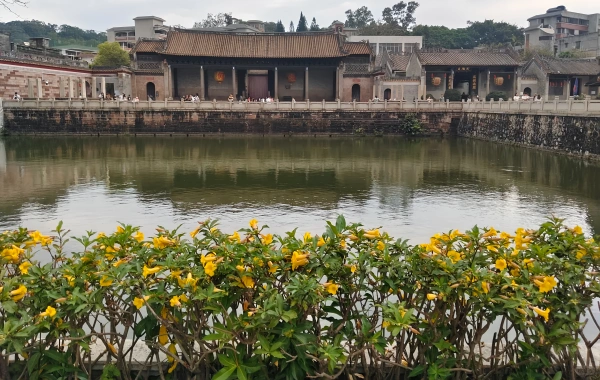
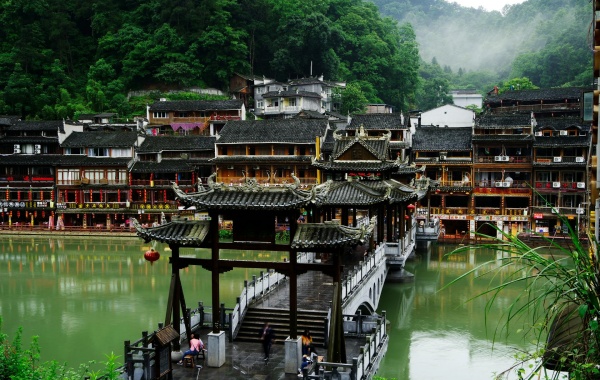
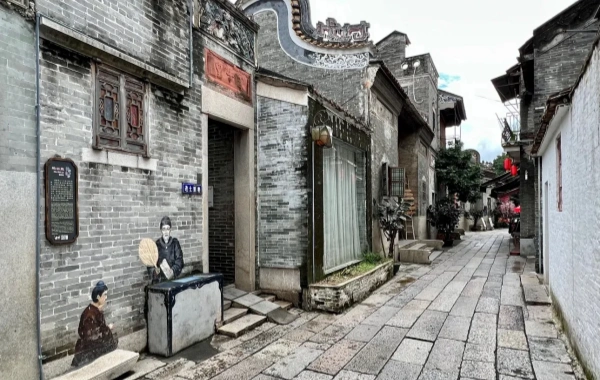
The ancient town was originally an alluvial plain with a well-developed water system. Although some of the waterways have been submerged, the pattern of "main streets (Chebei Street), small alleys (Li Lane), and waterways" standing side by side is still clearly visible. The relics of historical water areas such as Qingluodong tell of the past where people could see water as soon as they opened their doors and board boats with every step. Water, not only the lifeblood of transportation, but also nourishes the refined and gentle cultural character of the people of Shawan.
Ancient and famous trees: Witnesses of time
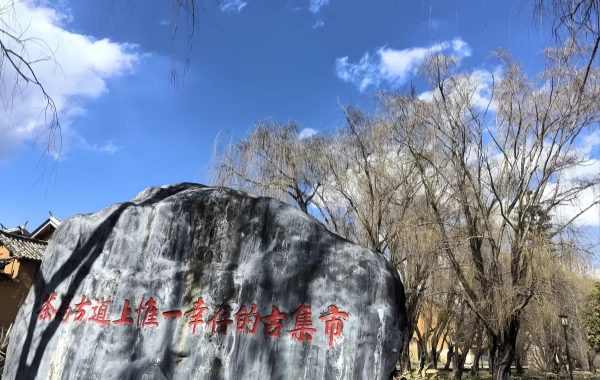
The ancient banyan trees scattered in front of the ancestral hall and beside the square have crowns like canopies and roots hanging down to the ground. They are silent witnesses to the ancient town's eight-hundred-year history, casting vast stretches of cool green shade over the streets and alleys, and also serving as natural living rooms for residents' daily gatherings and relaxation. Under these ancient trees, it is easiest to sense the "living" atmosphere of life in the ancient town.
Oyster shell Wall: A unique mark of the Pearl River Delta
This is a distinctive architectural wonder in Shawan and even the coastal areas of Lingnan. The ancients ingeniously utilized the abundant oyster shell resources, mixing them with yellow mud, brown sugar, glutinous rice and other ingredients, and piling them up layer by layer to form walls. The walls are solid and durable, heat-insulating and moisture-proof. Moreover, the uneven oyster shells create rich light and shadow effects under the sunlight, exuding a rugged and simple beauty. In the area of Anning West Street and Chebei Street, one can still find many well-preserved oyster shell walls, which are excellent backgrounds for photography.
Humanistic craftsmanship - Ancestral halls, Alleys and music palaces
Every building here is a frozen chapter of family history and cultural history.
Liu Geng Hall: The pinnacle of ancestral hall architecture in Lingnan
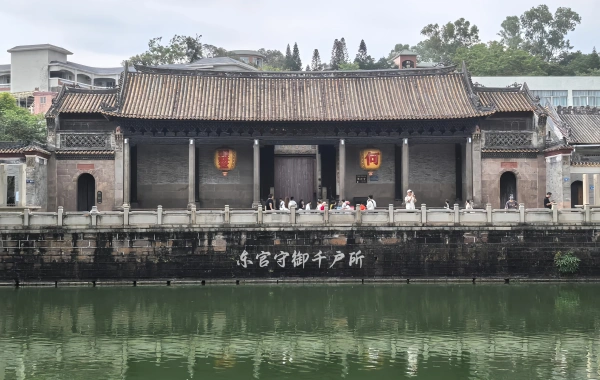
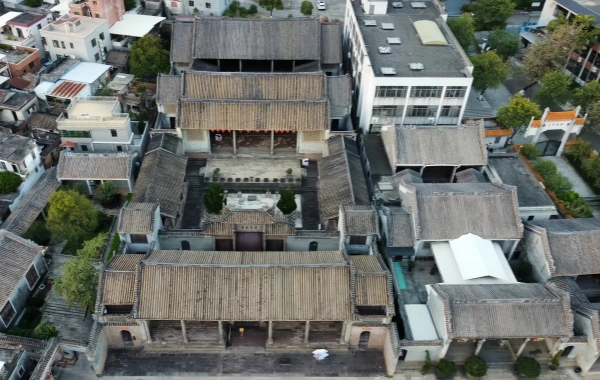
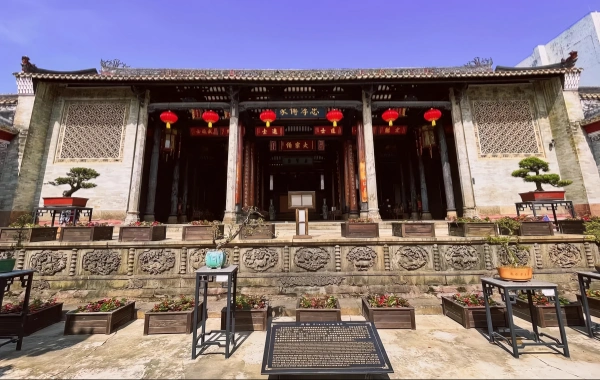
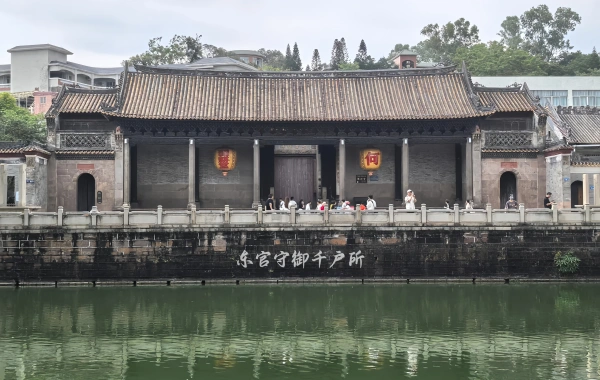
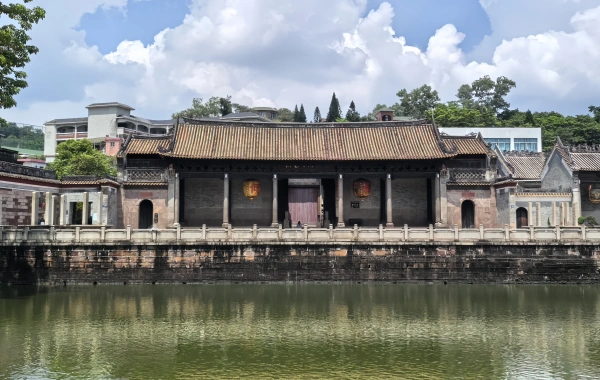
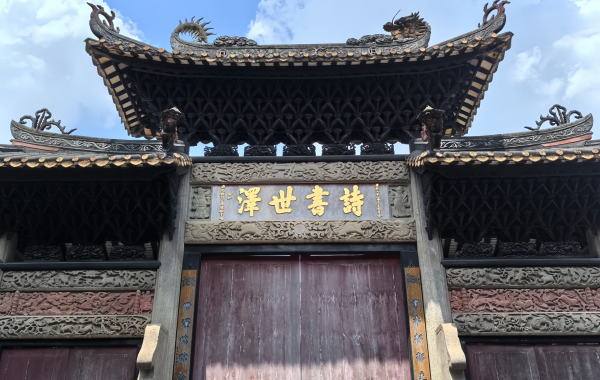
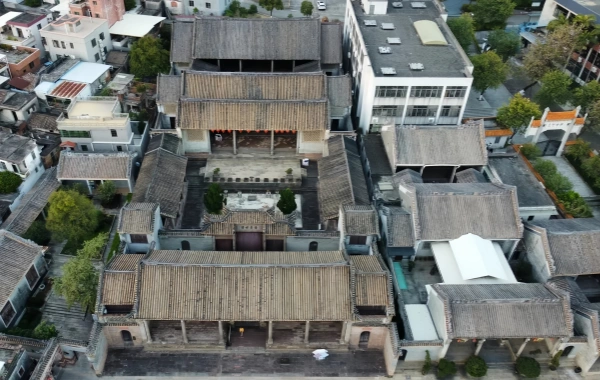
The ancestral hall of the He family in Shawan is also one of the largest, best-preserved and most exquisitely decorated ancestral halls still existing in Guangdong. Its name is derived from the couplet that reads, "Yin De is cultivated by the ancestors, and the heart is left to the descendants to cultivate." With five bays and five courtyards, it is grand and imposing, integrating architectural styles from different periods such as the Yuan, Ming and Qing dynasties. The wood carvings, stone carvings, brick carvings, plaster sculptures and murals inside are exquisitely crafted. Especially the dougong and hump wood carvings on the beam archway are exquisitely made, making it a museum of folk decorative art.
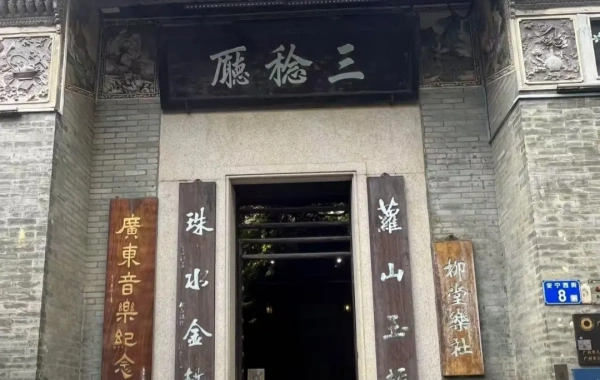
Sanren Hall (Shawan Hall) : The "Cradle" of Guangdong Music
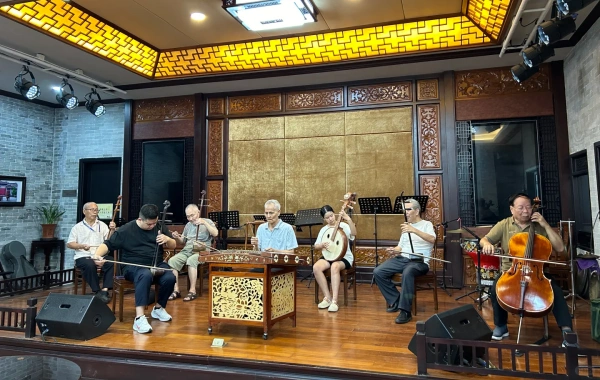
A seemingly simple ancestral hall made of blue bricks is actually the most important sacred place in the history of Guangdong music. The Three Masters of the He family once devoted themselves to composition, performance and teaching here. There used to be three myrtle trees planted in front of the hall, hence its name. Nowadays, this place has been turned into the Guangdong Music Memorial Hall, where ancient musical scores and instruments (such as pipa, yangqin, etc.) are on display. It seems as if one can hear the crisp melody of "Rain Beating on Banana Leaves" echoing here.
Wenfeng Pagoda and the Ancient Town's streets and alleys: A spatial symbol of valuing culture and education
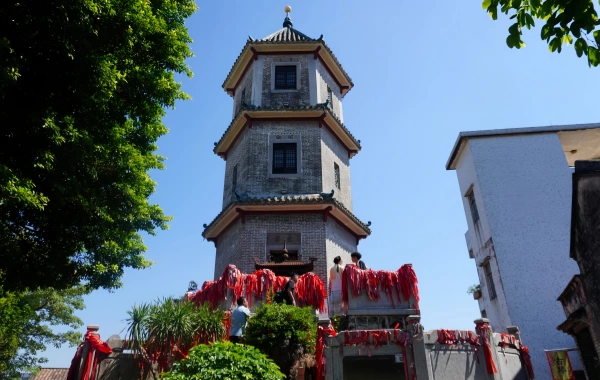
Wenfeng Pagoda (also known as "Shui Lv Shan Qing Wen Ge") stands in the southeast corner of the ancient town. It is a Fengshui pagoda where the people of Shawan pray for a prosperous literary career. The hexagonal three-story structure is exquisite and elegant, complementing the blue bricks and black tiles of the ancient town.
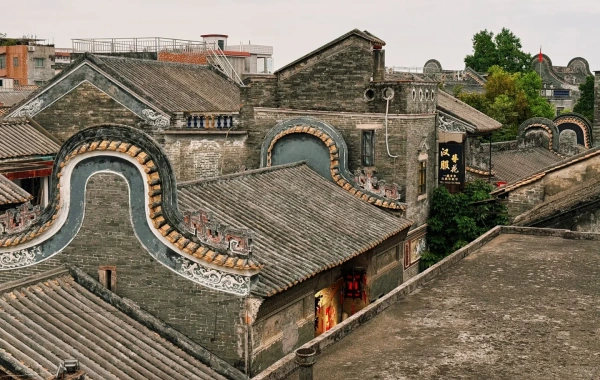
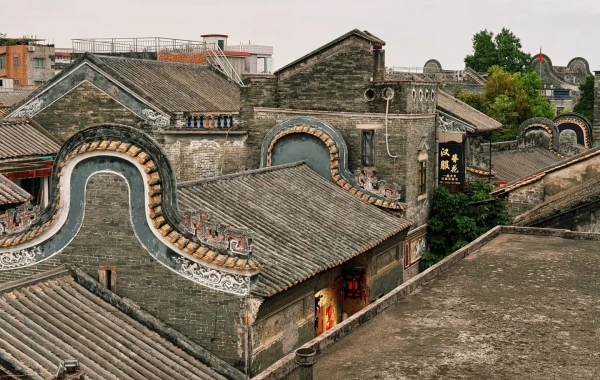
The ancient streets and alleys such as Chebei Street and Anning West Street: The stone-paved roads wind their way, with continuous rows of residences from the Ming and Qing dynasties and the Republic of China period on both sides. The gable walls are of varying heights, and elements such as blue brick walls, red sandstone door frames, and Manchu Windows can be seen everywhere. Wandering through it, there's no need to deliberately search for scenic spots. Every door and every wall might hold a story.
Derivative architectural complexes: Guangyu Hall, Chichang Hall, etc
In addition to the Liugeng Hall, the various branches of the He family also built numerous branch ancestral halls and private ancestral halls, such as the Guangyu Hall and the Chichang Hall. They are slightly smaller in scale but each has its own unique features, scattered throughout the ancient town. Together, they form a grand and orderly clan architectural system in Shawan, serving as the best physical textbook for understanding the traditional social structure of China.
Photography Secrets:
The panoramic view of the main entrance of the Liugeng Hall can showcase its grandeur and magnificence, using symmetrical composition.
A close-up of the oyster shell wall on Anning West Street, with the best texture under side light.
A group photo of Wenfeng Pagoda and the surrounding houses is suitable to be taken at dusk.
In the alleys of the ancient town, capturing the moments of residents chatting under the ancient banyan trees and children running around is the most culturally rich.