Nature's Creation—Tranquil Vitality in the Garden
Despite being located in a bustling city, Dafosi Temple has meticulously created a small world full of Zen and vitality within its limited space.
Ancient trees and shade: an urban oasis
Passing through the mountain gate and stepping into the front courtyard, the hustle and bustle of the city is instantly filtered out. Ancient trees tower in the courtyard, their branches and leaves spreading wide, especially several centuries-old banyan trees. Their intertwined roots and verdant canopies provide coolness for pilgrims and tourists in summer and dappled sunlight in autumn. A gentle breeze rustles the leaves, harmonizing with the occasional sound of wind chimes from the eaves, creating a natural melody of tranquility. This "urban oasis" is a vivid classroom for observing the changing seasons and experiencing the Buddhist principle of "a single leaf heralding autumn," allowing one to feel the rhythm and serenity of nature within a small space.
Bonsai and Horticulture: The Zen of the Microscopic World
Throughout the temple, in the corridors and corners, meticulously maintained bonsai and flowers are often displayed. These bonsai are mostly in the Lingnan style, with simple and unadorned shapes, displaying strength within their small size and a sense of vastness in their miniature form. A potted pine tree or a few clumps of orchids are not merely decorations, but also an external manifestation of the "cultivation of mind and nature" practiced by monks and laypeople in their daily spiritual practice. They remind every visitor that spiritual practice and enlightenment lie in the careful care of every plant and tree.
Humanistic Ingenuity – Solemn Dharma Images and Wise Space
The architecture, statues, and contemporary functions of Dafosi Temple are the essence of its status as a thousand-year-old Buddhist center.
The Grand Hall of the Great Buddha and the Three Jewels Buddha, the "Crown of Lingnan": A Solemnity That Touches the Soul
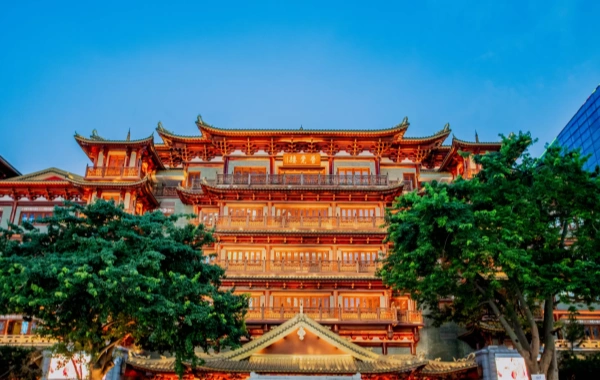
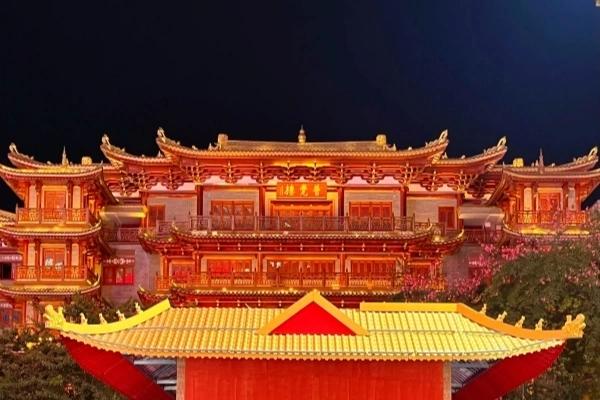
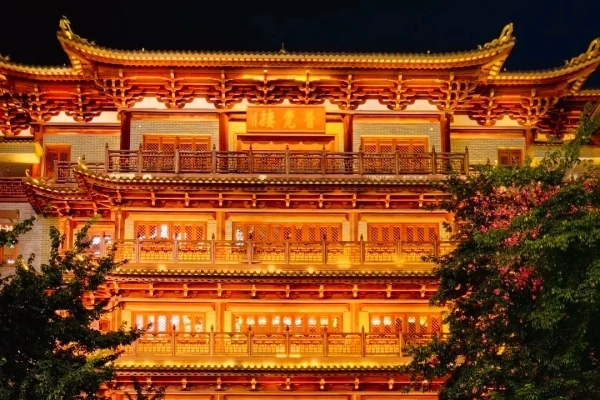
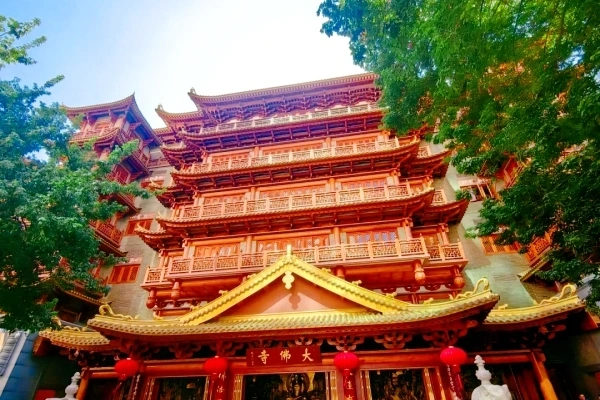
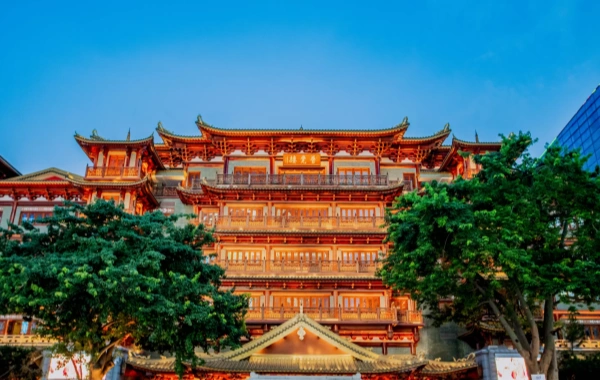
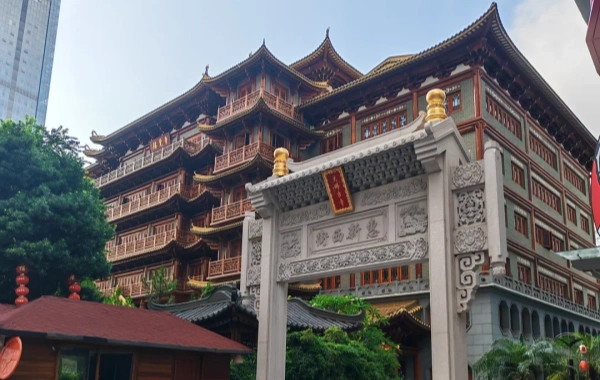
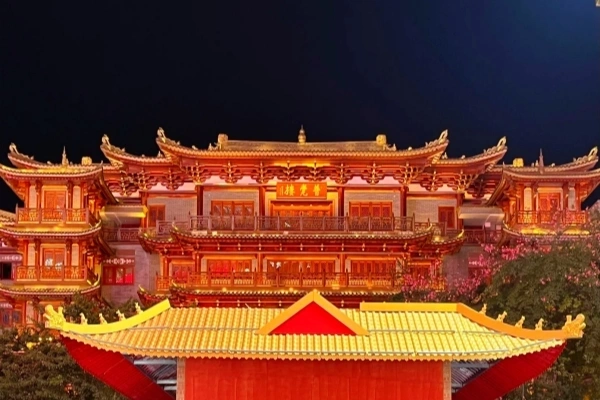
- Majestic Hall: The Mahavira Hall is the core building of the temple. It adopts the architectural style of the Beijing palace with a hip roof, yellow glazed tiles, and vermilion walls and pillars. It is magnificent and unique in the Lingnan region, silently telling the story of its historical connection with the early Qing Dynasty imperial family.
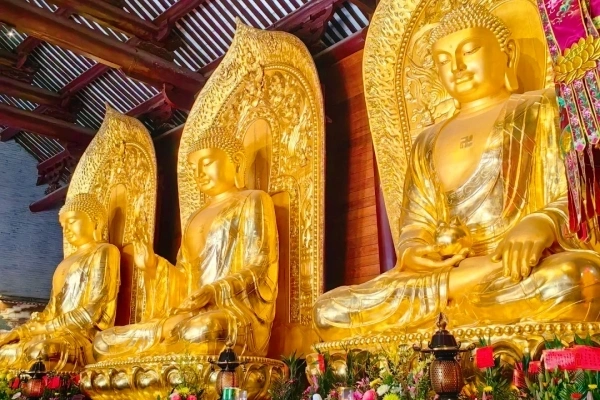
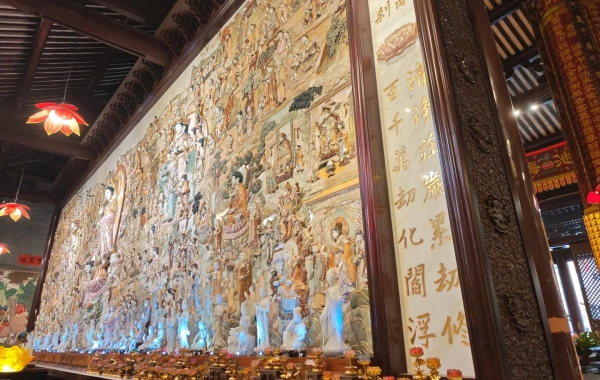
- The Three Treasures Buddhas: The three Buddhas (Shakyamuni, Amitabha, and Bhaisajyaguru) cast in exquisite brass and enshrined in the hall are the temple's most prized treasures. Each statue is 6 meters tall, weighs 10 tons, and possesses a solemn appearance. Exquisitely crafted, they retain their golden luster even after more than 300 years, earning them the title of "Crown of Lingnan." Gazing up at the statues, one can deeply feel the awe-inspiring power of the ancient artisans' piety and skill.
Dafosi Library: A Beacon of Wisdom in the City
This is the most modern Dharma propagation space in Dafosi Temple, and also the first modern Buddhist library in mainland China open to the public. The library boasts a rich collection of books, a serene and elegant environment, and comfortable reading areas. Whether or not one is a Buddhist, anyone can read Buddhist scriptures, philosophical works, and art books here free of charge, enjoying a peaceful time surrounded by books. It is not only a treasure trove of knowledge, but also an excellent place for urban dwellers to relax, engage in in-depth reading, and reflect.
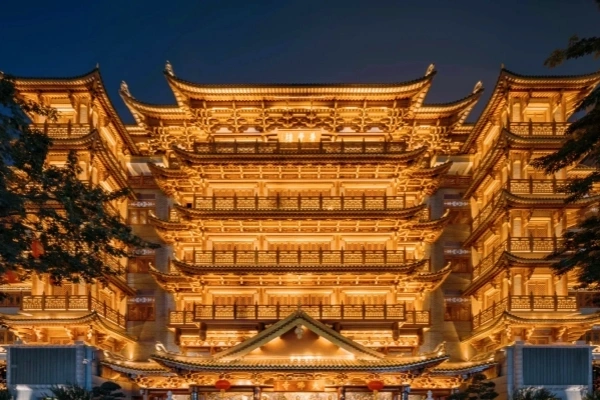
Pujue Tower and Vegetarian Pavilion: Modern Practices of Compassion and Health
- Vegetarian Cuisine: Offering exquisite vegetarian meals, this restaurant presents traditional vegetarian culture using modern culinary techniques. The food is visually appealing, fragrant, and delicious, making it popular with locals and tourists alike. Enjoying a vegetarian meal is not only a treat for the taste buds but also a convenient way to practice the principles of compassion and the protection of life.
- Dharma propagation activities: The temple regularly holds Dharma assemblies, meditation experiences, cultural lectures and other activities, actively combining ancient Buddhist wisdom with modern life, demonstrating the vitality and responsibility of a modern urban temple.
Photography Tips:
The best time to photograph the exterior of the Mahavira Hall is on a sunny morning when the sunlight shines on the glazed tiles, making them glitter like gold.
When photographing the Three Jewels Buddha inside the hall, please note that out of respect, please do not use flash. Instead, use the natural light inside the hall and employ a high ISO setting to capture its solemn atmosphere.
The tiered bookshelves and reading areas inside the library are perfect for capturing the sense of space and tranquility with a wide-angle lens.
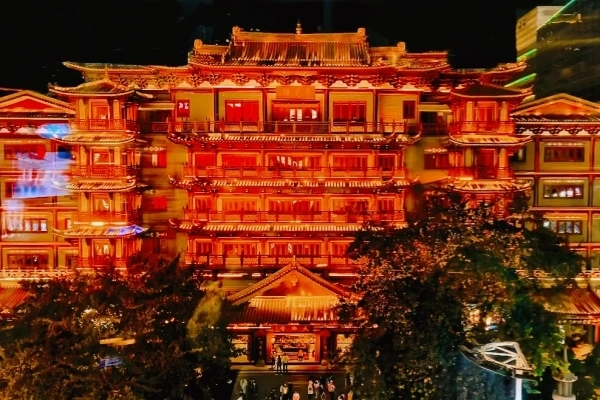
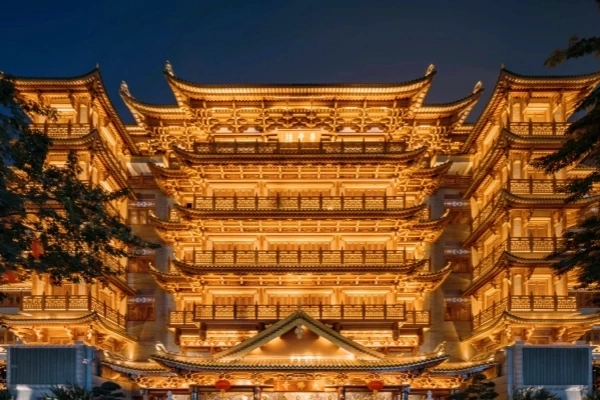
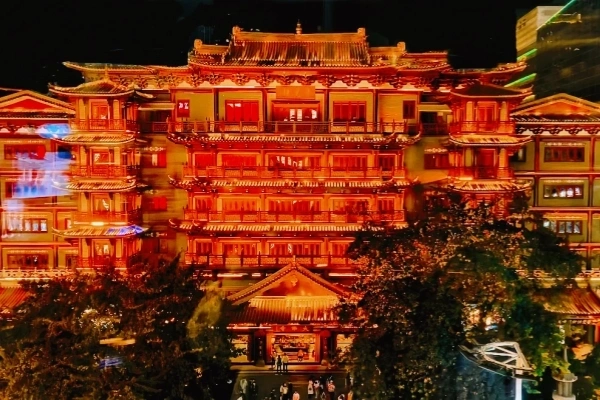
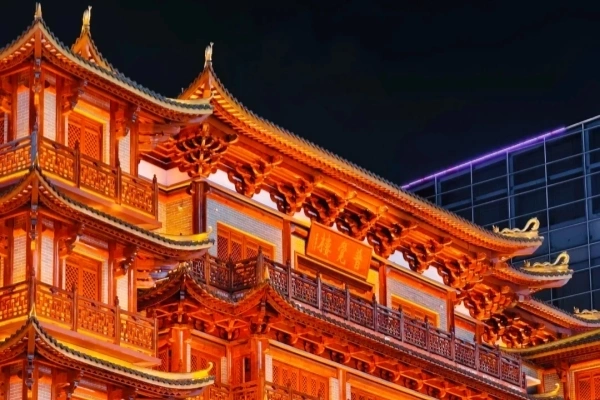
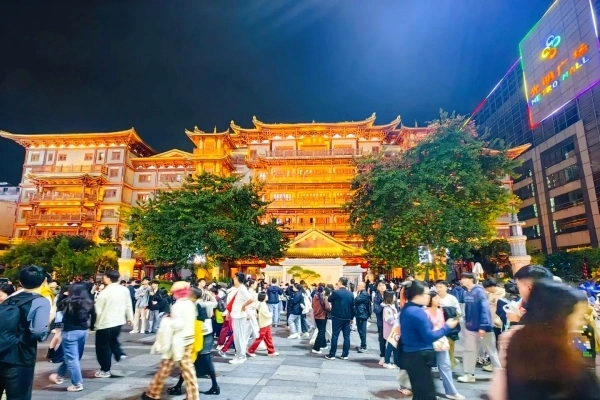
After the temple lights are turned on at night, the ancient buildings take on a unique charm against the backdrop of the city nightscape.