Nature's Handiwork: The Breath and Pulse of the Min River
Surging Azure Waters: A Wild Gift from the Snow-Capped Mountains
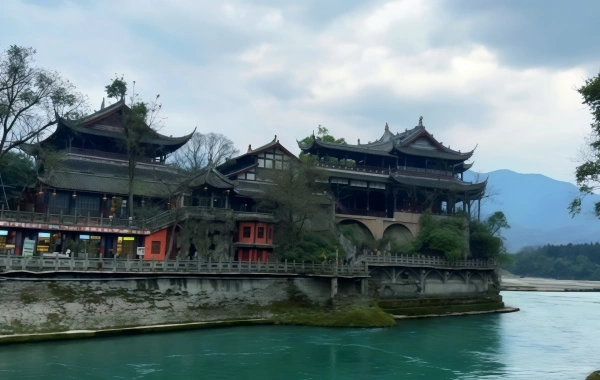
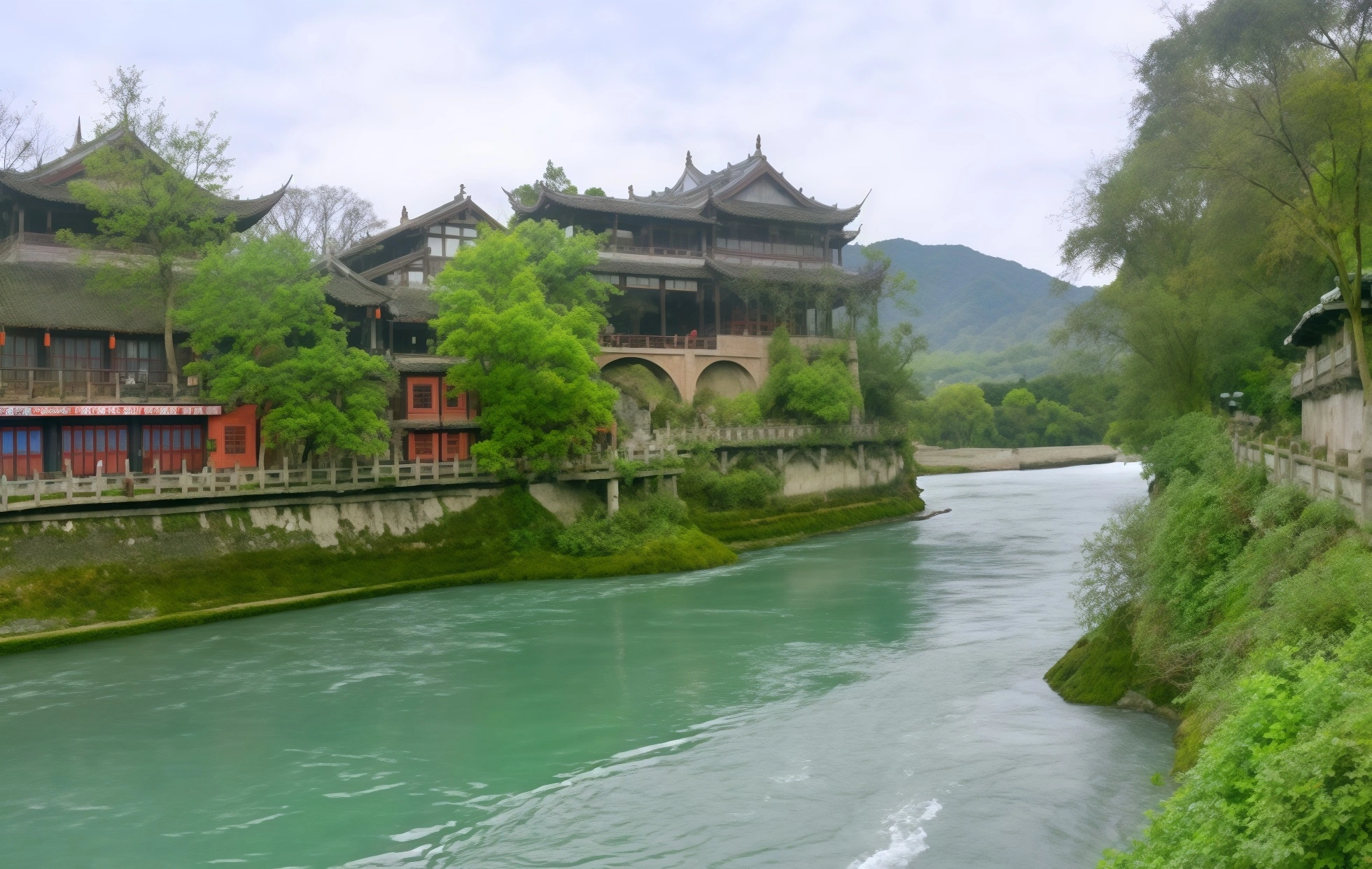
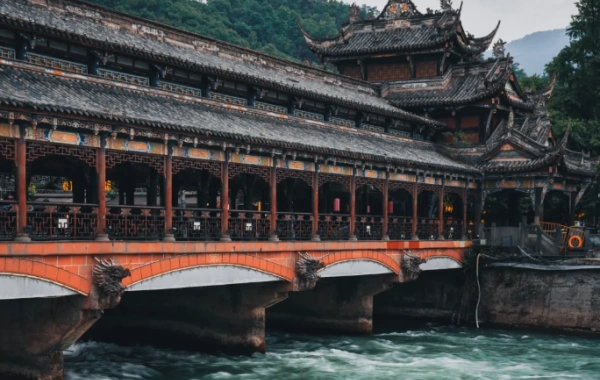
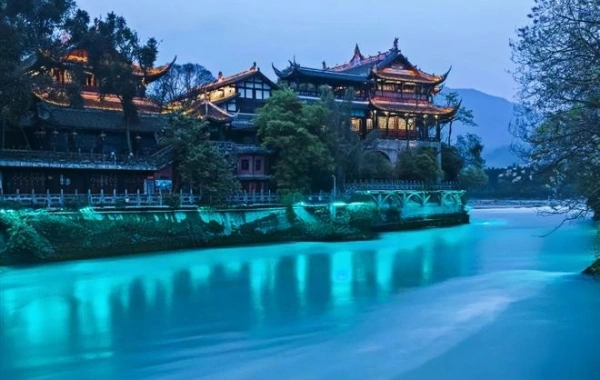
The water flowing beneath the South Bridge possesses none of the gentle, lyrical grace typical of the "small bridges and flowing waters" found in the Jiangnan region; instead, it carries the untamed spirit of the Min River’s snowmelt. The river water, diverted from the Yuzui (Fish Mouth) section of the Dujiangyan Irrigation System, flows in a hue ranging from emerald green to deep azure. It surges through the bridge arches, kicking up layers of white foam with a thunderous roar that can be heard from a great distance. Standing by the bridge railing, one is met by a refreshing mist rising from the water, instantly dispelling much of the stifling summer heat. The best time to visit is during the high-water season in July and August; when the water volume is at its peak, the river appears as clear and translucent as jade, exuding a truly majestic aura.
"Blue Tears": A Nighttime Spectacle of Light and Shadow
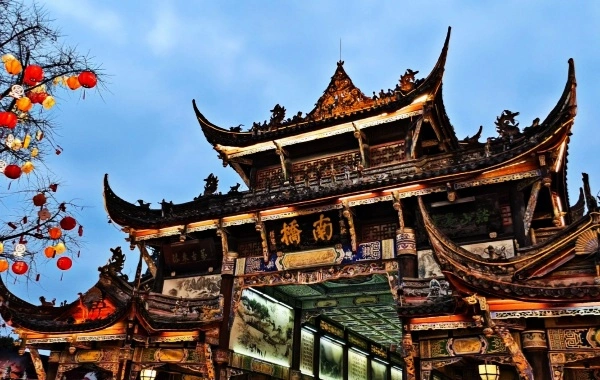
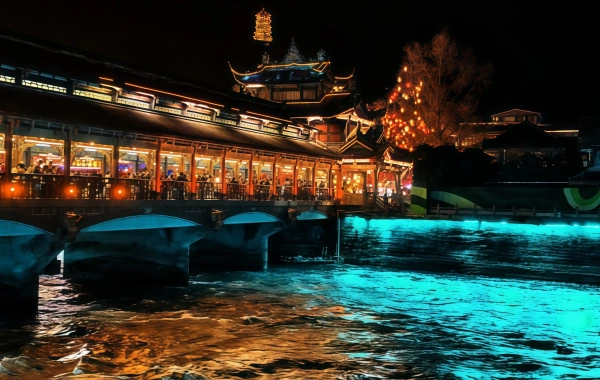
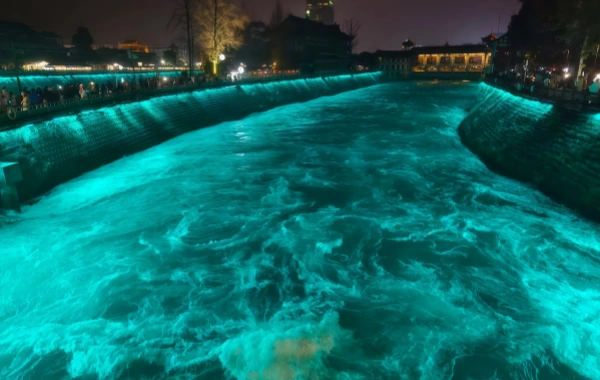
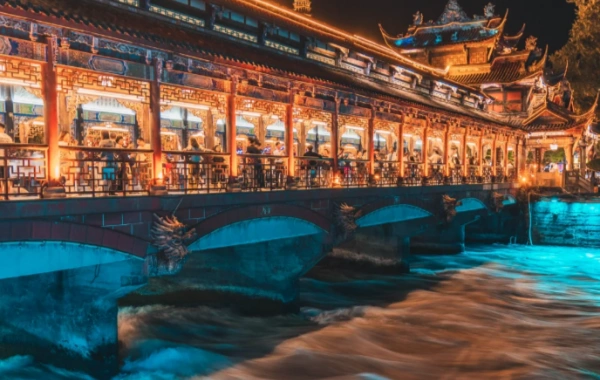
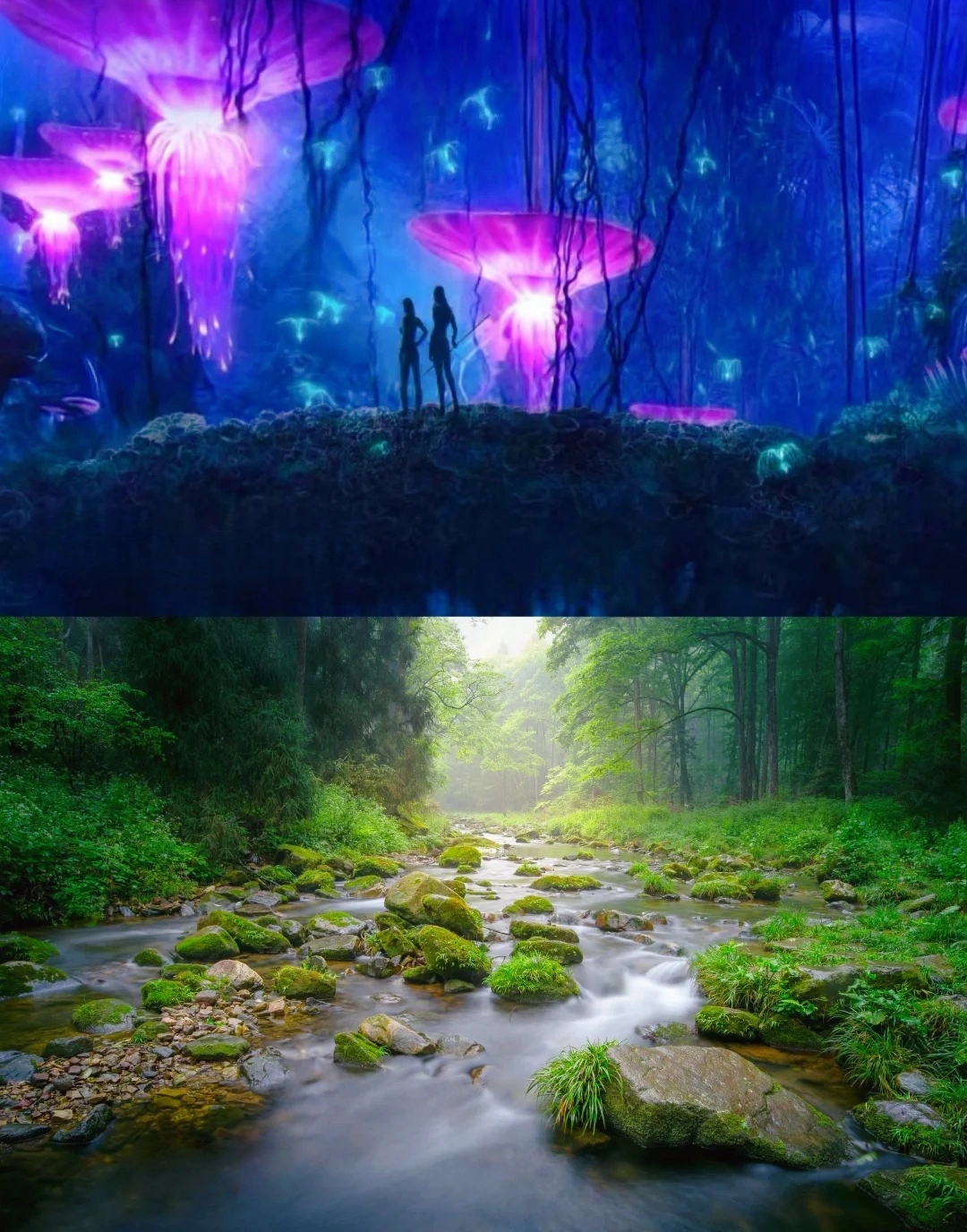
This is the most magical moment at Nanqiao Bridge. At night, illuminated by cool-toned LED lighting, the waters of the Min River transform into a flowing stream of "Tiffany Blue." It resembles a cascading river of stars, and when captured on a mobile phone, it yields a fantastical deep-blue image—much like "Blue Tears." Interestingly, while the water appears green to the naked eye, cameras and phones capture it as blue—a fascinating phenomenon explained by the principles of light refraction. The best vantage point for photography is not on Nanqiao Bridge itself, but rather about 400 meters downstream at the Yangtianwo Sluice Bridge (also known as the Tianfuyuan Covered Bridge). Here, the crowds are thinner, the scenery is stunning, and the blue light ripples like flowing satin, creating an atmosphere of pure enchantment.
> Photography Tip: When photographing the "Blue Tears," turn off your flash and lower the exposure settings to make the blue tones appear more vivid. It is also recommended to wear light-colored clothing, as this tends to produce more striking photos.
The Beauty of the Four Seasons: Spring Crabapples and Winter Mists
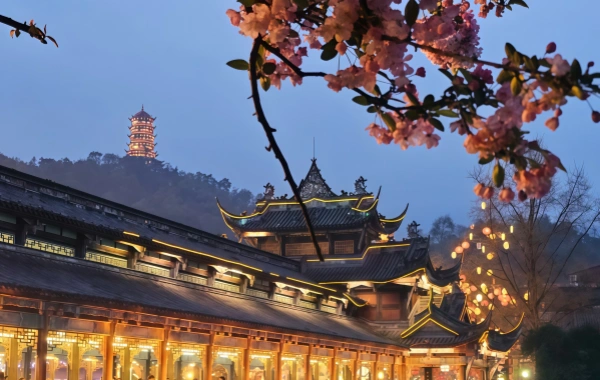
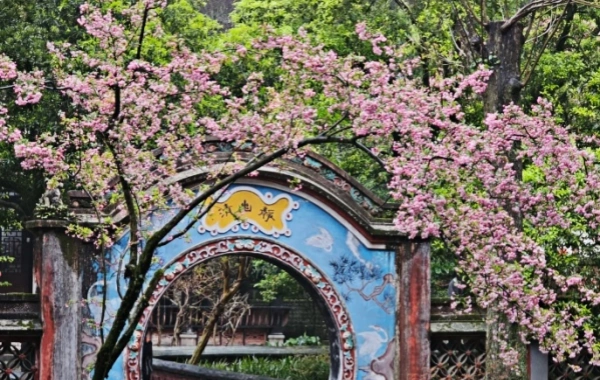
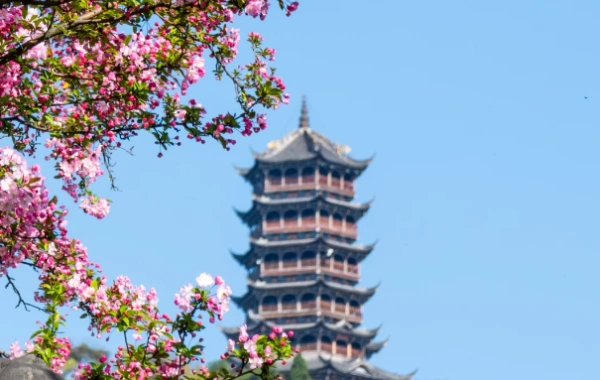
Nanqiao Bridge offers picturesque scenery throughout the year, each season possessing its own unique charm. In spring (late March to April), the weeping crabapple trees lining the riverbank burst into bloom; their pink and white blossoms cascade downward like waterfalls, creating a poetic tableau as they harmonize with the thousand-year-old bridge, the emerald waters, and the lush green hillsides. Summer (July and August) marks the peak of the river's flow—the ideal time to witness the "Blue Tears" and escape the heat, as the ambient temperature by the river is typically 3 to 5°C cooler than in the city center. During the autumn and winter months, visitor numbers dwindle, and the ancient bridge is often shrouded in a delicate morning mist, offering the perfect setting for capturing serene, ink-wash-style imagery.
Human Ingenuity and Craftsmanship: An Artistic Promenade Suspended Over the River
Covered Bridge Architecture: An "Aquatic Art Gallery" of Carved Beams and Painted Pillars
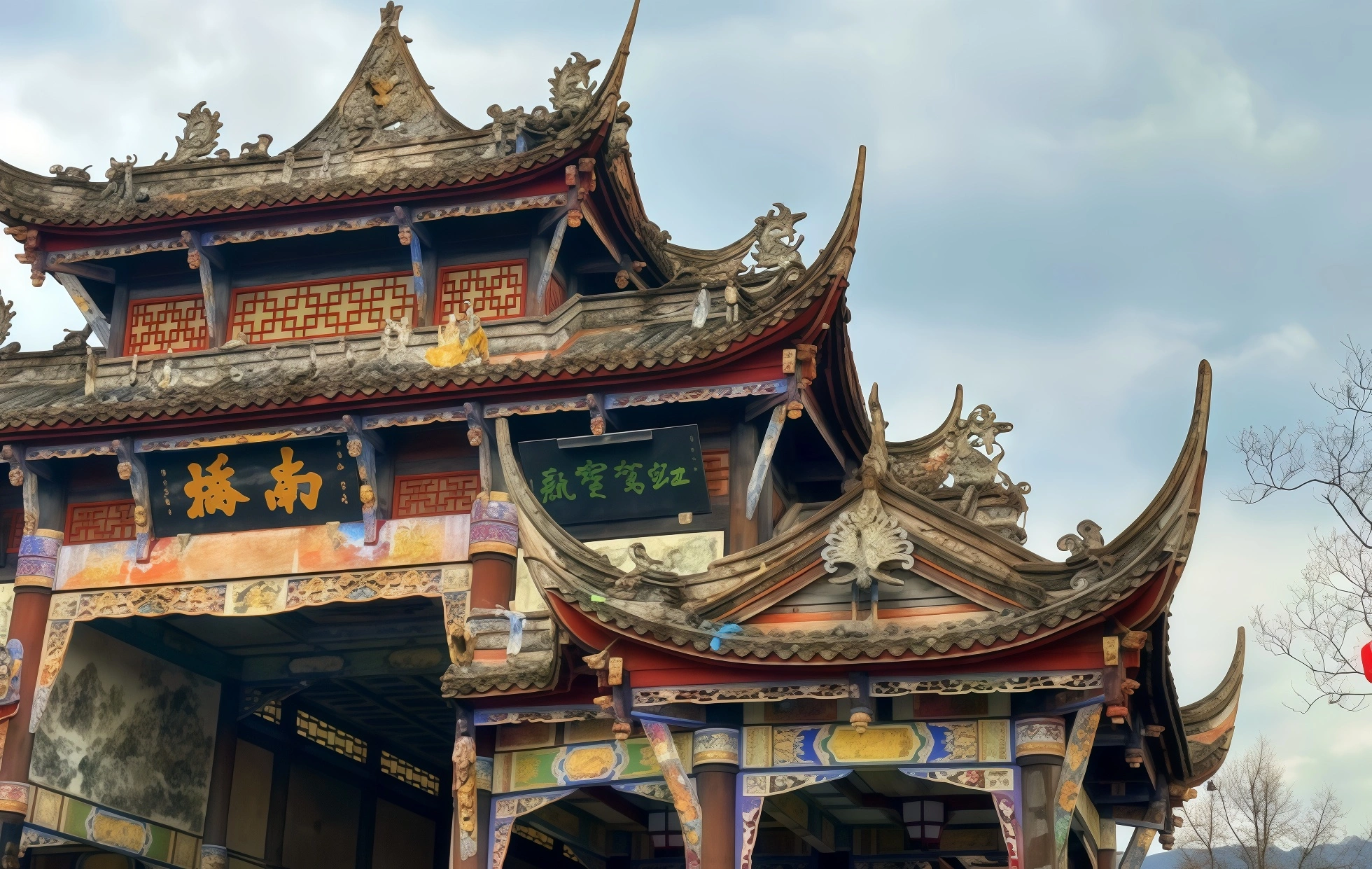
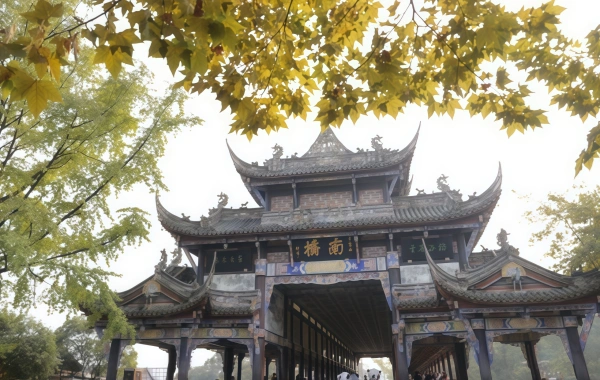
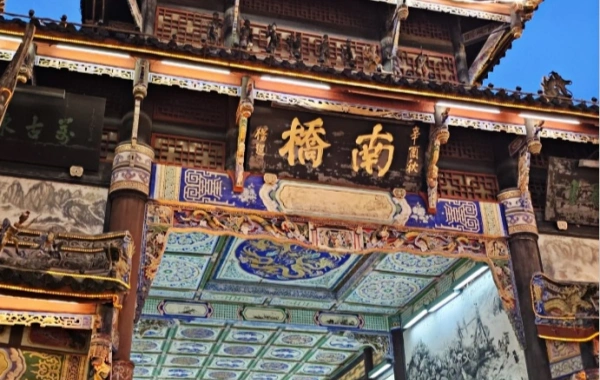
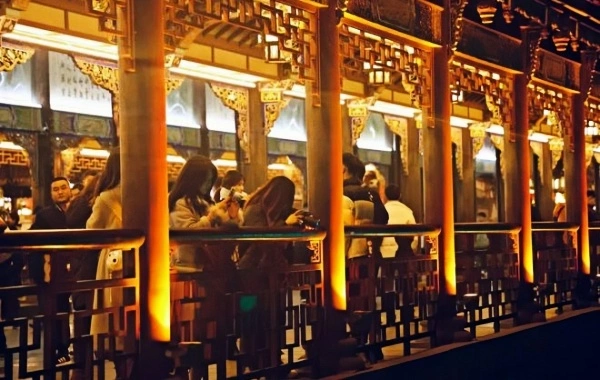
Nanqiao Bridge is a quintessential example of a covered bridge dating back to the Ming and Qing dynasties, characterized by its double-eaved roofline, upturned eaves, and intricate ornamentation featuring carved beams and painted pillars. Most striking of all are the painted decorations—dragons and phoenixes, flowers and birds, and historical narratives—painted densely across the beams, pillars, and ceilings. The inner walls of the covered bridge are exquisitely adorned with numerous murals and calligraphy works, while the beams and pillars feature no fewer than 34 pairs of poetic couplets. Upon closer inspection, one notices that some of the paint has begun to flake, revealing the underlying wood grain; far from detracting from the aesthetic, this patina of age actually enhances the bridge's sense of history and timelessness. The bridgehead features a broad, three-bay facade and a monumental, triple-eaved gateway reminiscent of a traditional pailou (archway). The roof is covered in traditional cylindrical tiles and adorned with elaborate clay sculptures—including ridge ornaments, decorative finials, mythical beasts, and human figures—all crafted with exceptional artistry.
Guancheng Ancient City: The Vibrant Pulse of Daily Life at the Bridgehead
The true charm of the South Bridge lies in its role as a connector between two entirely different worlds. To the west of the bridge lies Guancheng Ancient City, characterized by its blue-stone paved streets, historic shops, and renowned local delicacies—such as "Zhang Fei Beef" and "Guo's Tangyuan" (sweet rice balls)—all brimming with the lively, down-to-earth atmosphere of everyday life. The eastern side of the bridge offers a more intimate, residential vibe; a labyrinth of interconnecting alleys conceals a number of old teahouses known only to locals. Here, for the price of a five-yuan cup of jasmine tea, one can sit for an entire afternoon, listening to conversations at neighboring tables that range from tales of the Romance of the Three Kingdoms to complaints about losing a few dozen yuan at mahjong the day before.
Couplets on the Ancient Bridge: A Legacy of Culture
The beams and pillars of the South Bridge bear a remarkable total of 34 poetic couplets. Their themes span the wisdom of ancient water management, the unique cultural ethos of the Ba-Shu region, and various historical anecdotes. To walk across the bridge and read these verses closely feels akin to engaging in a dialogue with the ancients. One couplet, in particular, reads: "South of Guancheng, beneath the Liduī Mound, stands a bridge—lofty and majestic." These lines perfectly encapsulate the geographical and cultural significance of the South Bridge.
Photography Tips:
Best Panoramic Viewpoint: Head toward the Baige Bridge; from there, you can capture a sweeping vista that encompasses the South Bridge, the Baopingkou (Treasure Bottle Mouth) weir, and the ancient city skyline all in a single frame.
Reflections and River Details: The Lanyue Bridge is the ideal spot for photographing the South Bridge's reflection in the water, as well as the dynamic details of the rushing river currents.
The "Blue Tears" Phenomenon: The Yangtianwo Sluice Bridge offers the prime vantage point for capturing the mesmerizing "Blue Tears" phenomenon—a spot where the scenery is stunning and the crowds are sparse.
Drone Photography: Drone flight is permitted in this area, allowing you to capture epic, integrated perspectives of the river and bridge that are simply impossible to achieve from the ground.