
Daxingshan Temple: The Spiritual Heart of Ancient Xi'an – A Complete Visitor’s Guide
Daxingshan Temple, located in the bustling city of Xi’an, is the oldest Buddhist temple in the region and a must-visit for history lovers. Established in 166 AD, this imperial monastery offers a peaceful escape from the modern noise. If you are planning a trip to Xi’an, understanding Daxingshan Temple is key to unlocking the city’s deep cultural soul beyond the famous Terracotta Warriors.
Unlike many tourist spots filled with crowds, this temple feels like a hidden gem where time slows down. It served as a major translation center for Buddhist scriptures during the Tang Dynasty, making it a cornerstone of Chinese Esoteric Buddhism. Walking through its cypress-shaded courtyards, you can almost hear the echoes of ancient monks chanting sutras. The air carries the scent of incense, creating an atmosphere of instant tranquility.
For foreign travelers, the temple provides a rare chance to see authentic Chinese Buddhism in action. It is not just a museum; it is a living, breathing spiritual center. You will see local elders spinning prayer wheels and monks going about their daily rituals. This blend of history and daily life makes it one of the most genuine Xi’an attractions for cultural immersion.
The Rich History of Daxingshan Temple in Xi'an
Founded during the Eastern Han Dynasty, the temple has witnessed over 1,800 years of Chinese history. It reached its peak during the Tang Dynasty when it became the national center for Buddhist dissemination. Masters like Śubhakarasiṃha and Vajrabodhi translated esoteric texts here, shaping the course of Buddhism in East Asia.
The temple’s name reflects its setting. "Daxing" means great prosperity, and "Shan" means mountain, though it sits on a flat plain in the city center. Over the centuries, it has been destroyed and rebuilt multiple times, most recently during the Ming and Qing dynasties. Despite these changes, the layout retains the grandeur of an imperial monastery.
During the Cultural Revolution, the complex suffered significant damage, but restoration efforts have revived its former glory. Today, it stands as a protected national heritage site. The surviving structures, including the Mahavira Hall and the Bell Tower, showcase traditional Tang Dynasty architecture elements adapted through later styles.
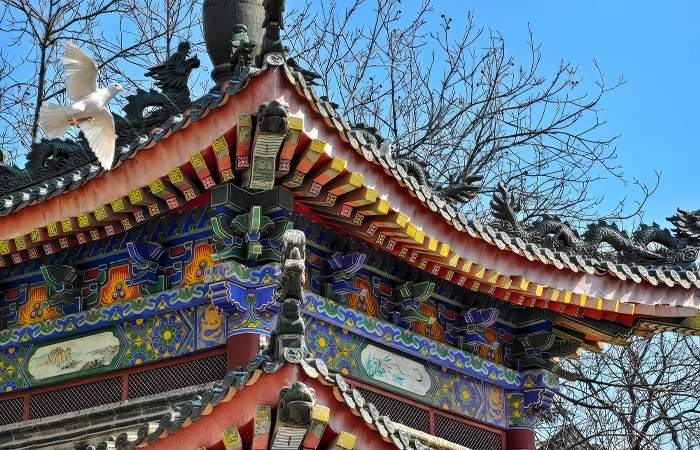
What to See: Architectural Highlights and Relics
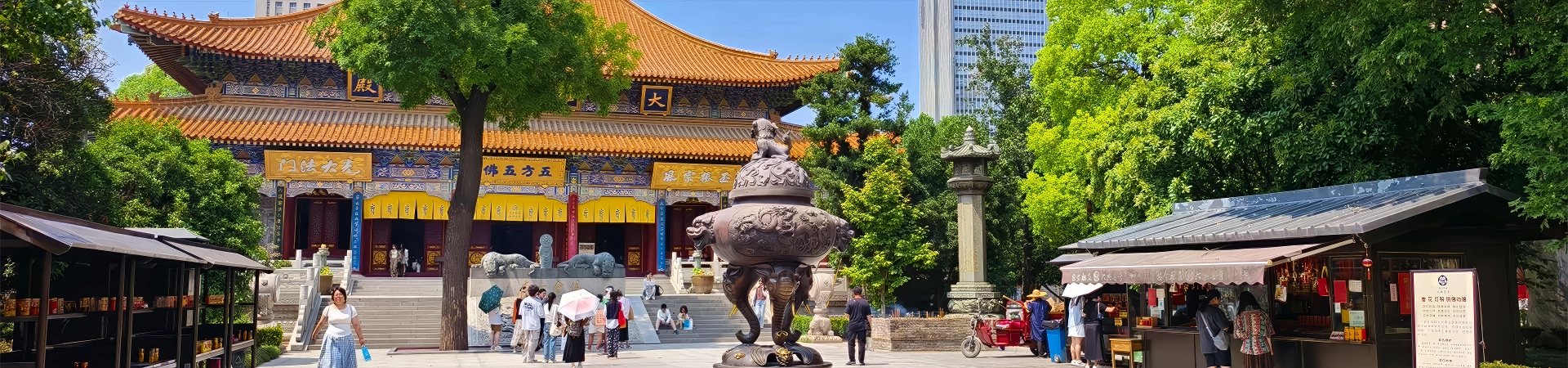
As you enter through the Shanmen (Mountain Gate), you are greeted by a pair of stone lions from the Ming Dynasty. The gate features glazed tiles and upturned eaves, a classic feature of ancient Chinese architecture. Inside, the main axis is lined with halls housing bronze Buddha statues that date back centuries.
The Mahavira Hall is the heart of the complex. It enshrines three majestic Buddhas representing the past, present, and future. The statues are adorned with gold leaf and colorful robes, demonstrating incredible craftsmanship. Behind the hall, you can find a small garden with blooming peonies and ancient stone tablets inscribed with calligraphy.
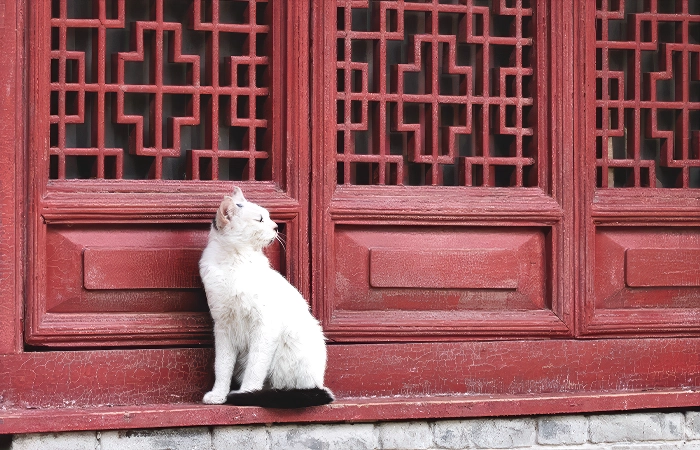
One of the most fascinating spots is the Scripture Library. It houses a collection of Buddhist texts, including rare woodblock prints. For photography enthusiasts, the contrast between the red temple walls, green cypress trees, and blue sky offers perfect framing. Every corner tells a story of devotion and artistry.
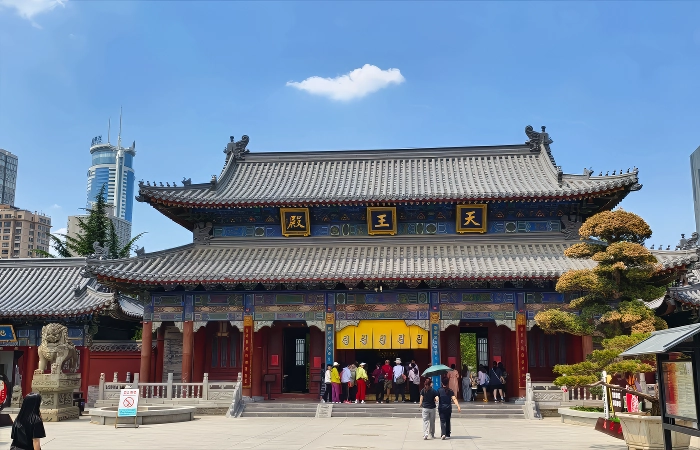
Visiting Daxingshan Temple: Practical Tips for Travelers
Located on Xingjiao Road in the Yanta District, the temple is easily accessible by taxi or subway. The nearest metro station is Xiaozhai (Line 2 or 3), followed by a short 10-minute walk. Its central location makes it easy to combine with other Xi’an city wall tours or visits to the Shaanxi History Museum.
Opening Hours: 08:00 AM – 17:00 PM daily.
Entrance Fee: Free (donations are appreciated).
Dress Code: Modest clothing is recommended out of respect for the religious setting. Avoid wearing hats inside the main halls.
The best time to visit is early morning or late afternoon. Mornings are perfect for catching the monks’ chanting ceremonies and seeing locals practice Tai Chi. Afternoons offer softer light for photos, but it can be busier. Try to avoid major Chinese public holidays like Chinese New Year if you prefer a quieter experience.
Inside the grounds, please maintain silence and do not take photos of monks without permission. You can purchase incense sticks near the entrance to offer at the burners. There are also vegetarian noodle shops nearby if you get hungry, offering a taste of local Shaanxi cuisine without meat.
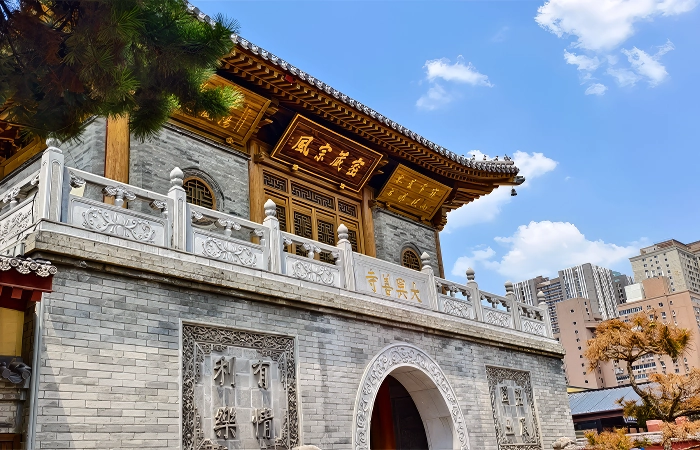
The Living Culture of Chinese Esoteric Buddhism
What sets Daxingshan Temple apart from other temples is its specific affiliation with Esoteric Buddhism (Mi Zong). This sect focuses on secret rituals, mantras, and mandalas. While the complex is open to the public, certain areas remain restricted to practitioners, adding an air of mystery.
You might witness rituals involving mudras (hand gestures) and the ringing of bells. These practices are deeply symbolic and visually captivating. For those interested in comparative religion, this offers a stark contrast to the Zen Buddhism found in Japan or Theravada traditions in Southeast Asia.
The temple also hosts cultural events, such as Dharma lectures and calligraphy exhibitions. These activities bridge the gap between ancient wisdom and modern life. It is a place where you don't just look at history; you feel the spiritual energy that has persisted for millennia.
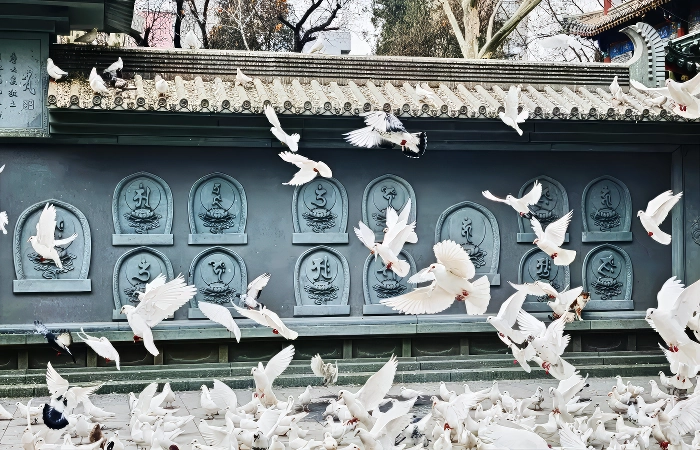
Daxingshan Temple is more than just a stop on a sightseeing list; it is the spiritual anchor of Xi’an. From its origins as a Han Dynasty translation hub to its role as a center for Esoteric Buddhism, the temple encapsulates the resilience of Chinese culture. Whether you are admiring the intricate Tang Dynasty architecture, seeking inner peace, or simply escaping the city heat, this imperial sanctuary delivers a profound experience. Do not miss the chance to witness the living legacy of one of China’s most significant religious sites on your next journey.


Contact Us
What Our Clients Say?
Based on 10,000+ traveler reviews

Daniel Dorothea
Canada
Reviewed on April 29,2025
Shopping on Nanjing Road in Shanghai was just amazing! It's truly the "First Commercial Street of China", where tradition and modernity blend perfectly. You can find awesome souvenirs and experience the trendy vibes in cool stores. The neon lights at night are just spectacular, shining bright like Times Square in New York. The food here is incredible too. I had a feast for my taste buds. Shanghai, I'll definitely be back!
Destination(s):
Shanghai
Date of
Experience:
May 08,2024


Elvis Eva
Canada
Reviewed on June 20,2025
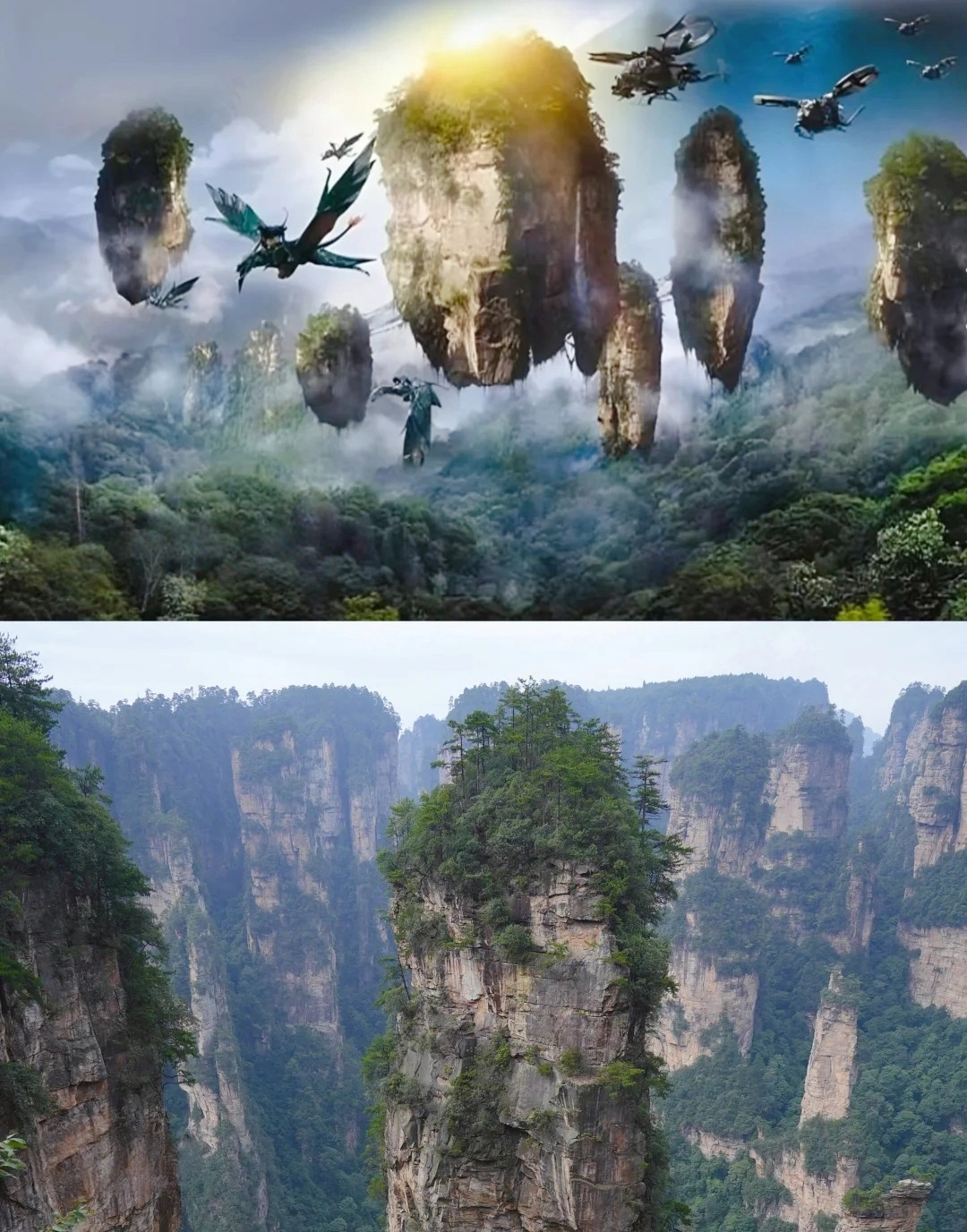
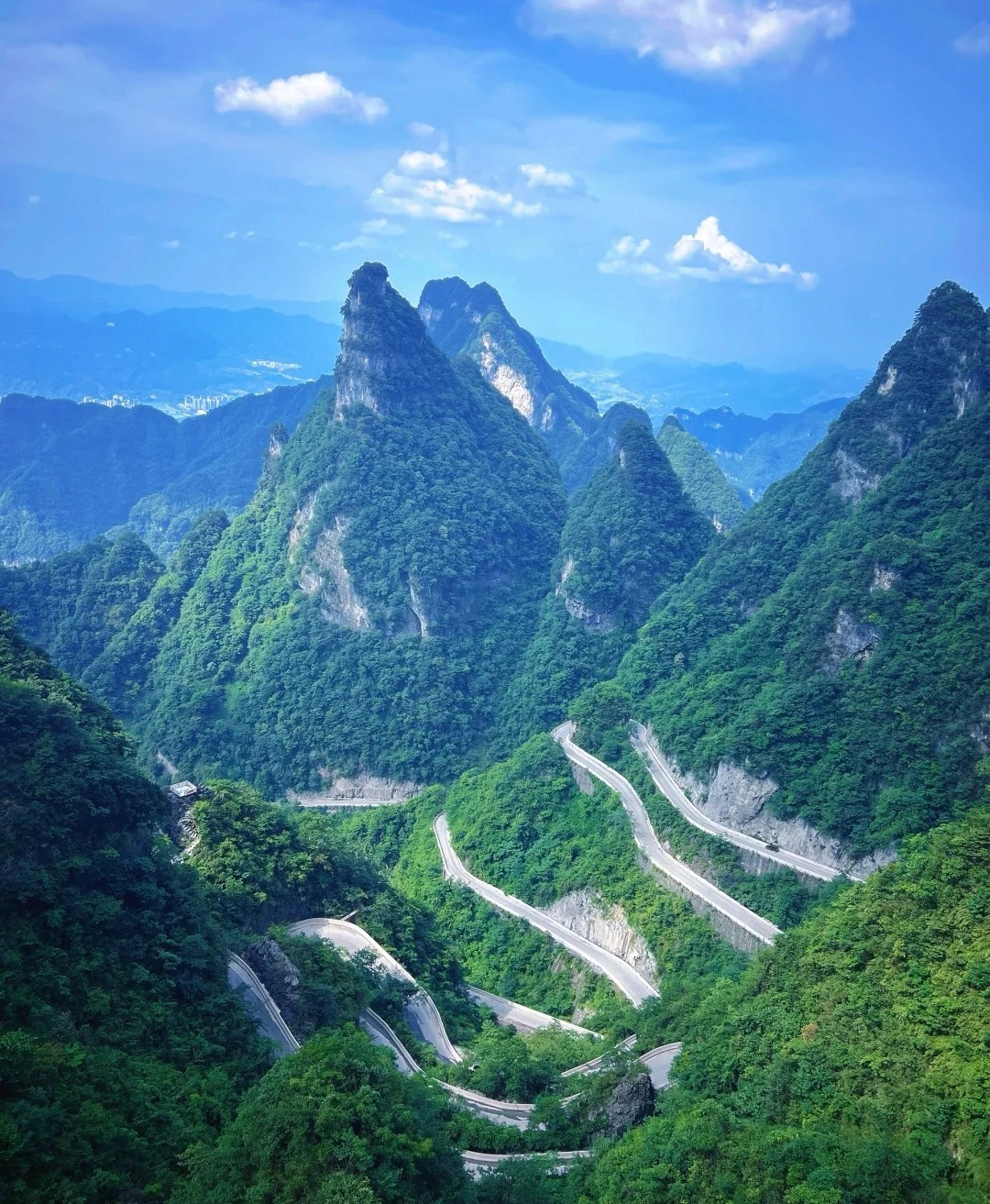
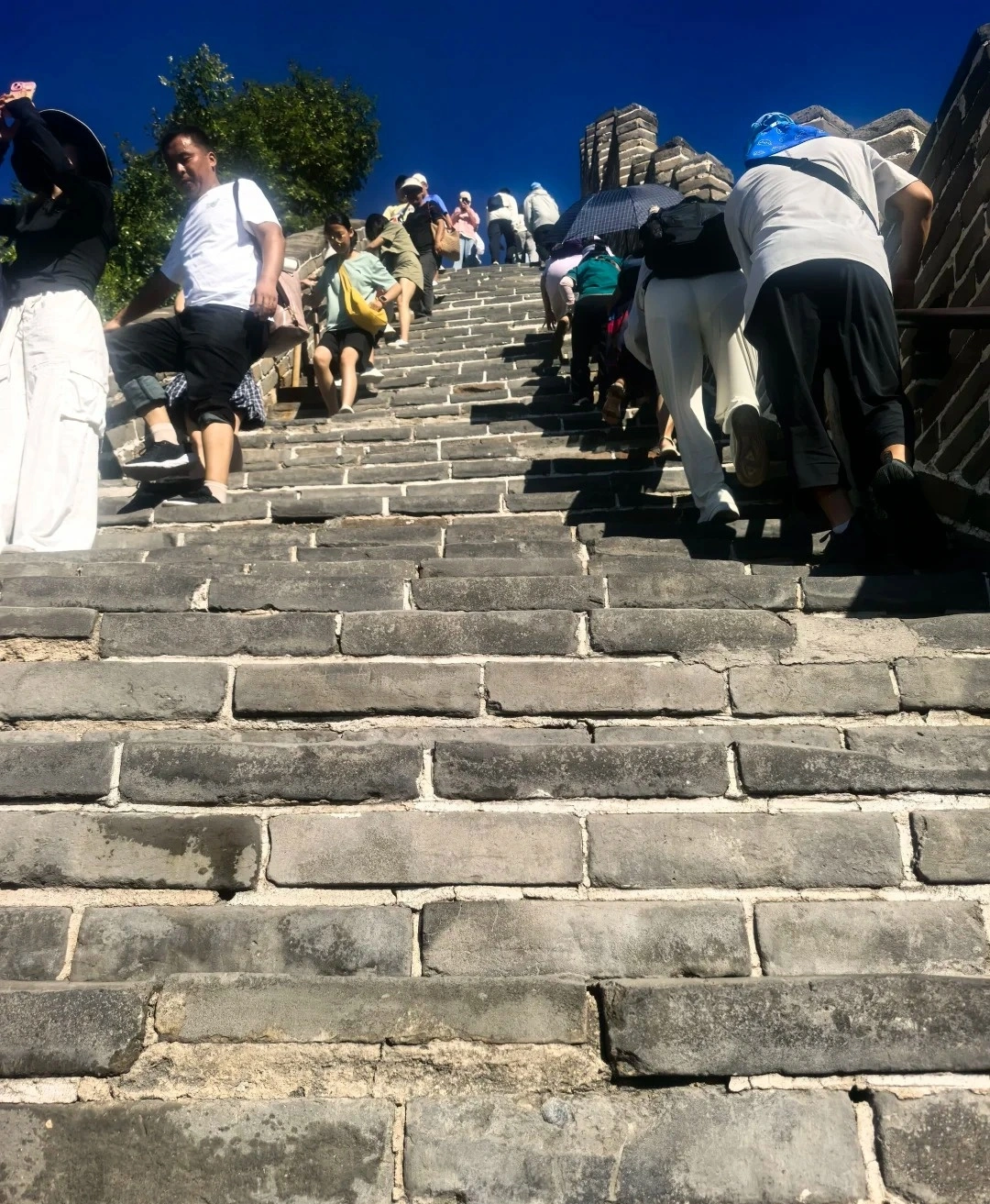
As a solo traveler from Canada, I was nervous about navigating China alone—but this 11-day tour was PERFECT! From hiking the Great Wall at sunrise (Day 3) to gasping at the Terracotta Army (Day 5), every day delivered ‘pinch-me’ moments. The real showstopper? Zhangjiajie’s Avatar Mountains (Day 7)! Our guide made the stone pillars come alive with stories.
Massive thanks for handling all logistics—bullet train tickets, entry passes, car! And the 4-star hotels surprised me.
Destination(s):
Beijing Xian Zhangjiajie Shanghai
Date of
Experience:
June 02,2025

Simon
America
Reviewed on May 29,2025
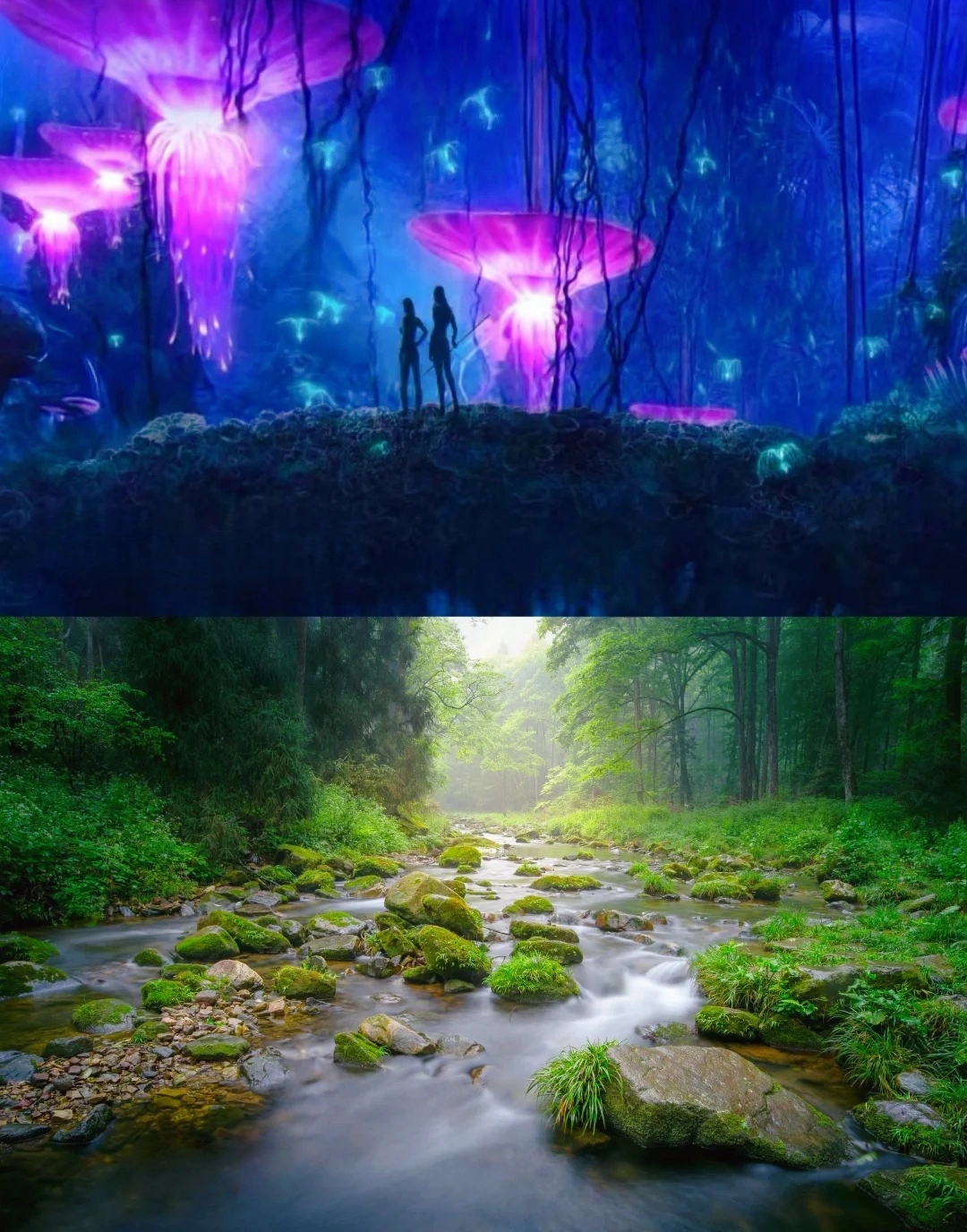
Our 2-day Zhangjiajie tour was beyond spectacular! As someone who’s visited Beijing and Shanghai for work, this trip revealed China’s wild, magical heart. Day 1 in Zhangjiajie National Forest Park felt like stepping onto Pandora—I’m a huge Avatar fan, and Yuanjiajie’s floating peaks left me breathless. The misty pillars and lush valleys like pure movie magic!
Then came Fenghuang Ancient Town, we eat dinner beside the thundering waterfall. It seems Unreal! The night views of stilt houses glowing over the river were straight from a fairy tale.
For fellow Avatar lovers and adventure seekers: Don’t miss this bucket-list experience! 10/10 would return.
A Well-Traveled Film Buff, May 2025
Destination(s):
Zhangjiajie
Date of
Experience:
May 08,2025